Managing a global team of remote employees can quickly become overwhelming without the right tools. You need a system that keeps everything organized, tracks performance, and simplifies communication—no matter where your team members are located.
Cloud HR software is designed exactly for this purpose. It gives you real-time insights, automates repetitive tasks, and helps you stay connected with your workforce around the world. If you want to make managing your remote team easier and more efficient, keep reading to discover how cloud HR software can transform your approach to global employee management.

Credit: apps.apple.com
Benefits Of Cloud Hr Software
Cloud HR software offers many advantages for managing global remote employees. It simplifies HR processes and improves decision-making. Companies can access data anytime and anywhere. This software supports teams spread across different locations and time zones. It also helps reduce errors and save time by automating routine tasks. The right tools enhance employee experience and boost productivity. Below are key benefits of using cloud HR software.
Real-time Data And Analytics
Cloud HR software provides instant access to employee data. Managers can track attendance, performance, and payroll in real-time. Quick data updates help solve issues faster. Analytics tools reveal trends that guide better decisions. Remote teams benefit from clear, up-to-date information. This transparency improves trust and accountability across the company.
Automation Of Hr Tasks
Many repetitive HR tasks become automatic with cloud software. Payroll calculations, leave approvals, and report generation happen without manual work. Automation reduces mistakes and speeds up processes. HR staff can focus on strategic tasks instead of paperwork. This efficiency supports smoother management of remote employees worldwide.
Enhanced Employee Engagement
Cloud HR platforms often include communication and feedback features. Employees can easily access their information and update details. Regular feedback and surveys help managers understand team needs. Engaged employees feel valued and connected despite working remotely. Better engagement leads to higher job satisfaction and lower turnover.
Key Features For Remote Teams
Managing global remote teams requires specialized tools to keep everyone connected and productive. Cloud HR software offers key features that simplify team management across different locations and time zones. These features help HR managers onboard, track, communicate, and monitor employees efficiently.
Virtual Onboarding Tools
Virtual onboarding tools help new hires start smoothly, even from afar. They provide digital forms, training modules, and welcome materials online. These tools reduce paperwork and speed up the integration process. New employees feel supported and ready to contribute quickly.
Performance Tracking
Performance tracking systems monitor employee progress and goals. Managers can set targets, give feedback, and review achievements remotely. This feature keeps teams aligned and motivated. It also helps identify areas for growth and training needs.
Employee Communication Portals
Communication portals create a central space for team interaction. Employees can chat, share files, and attend virtual meetings. These portals reduce misunderstandings and build team spirit. Clear communication boosts collaboration across different locations.
Time Tracking And Monitoring
Time tracking tools record work hours accurately for remote workers. They help ensure fair pay and manage productivity. Some systems also monitor task progress without invading privacy. This feature keeps projects on schedule and supports accountability.
Top Cloud Hr Software Options
Choosing the right cloud HR software is vital for managing global remote employees effectively. The right tool helps streamline HR tasks, improve communication, and ensure compliance across different countries. Here are some top cloud HR software options that support remote workforce management efficiently.
Hr Cloud
HR Cloud offers easy onboarding and employee engagement tools. It helps track performance and manage workflows in one place. The platform supports remote teams with real-time communication features. HR Cloud simplifies HR tasks for companies with global employees.
Workday
Workday provides a comprehensive HR solution for large organizations. It covers payroll, talent management, and workforce planning. The software adapts well to complex global compliance needs. Workday supports remote employee management with strong analytics.
Paylocity
Paylocity focuses on payroll and HR automation for mid-sized companies. It offers time tracking and employee self-service portals. The platform makes managing diverse and remote teams simpler. Paylocity is known for easy integration with other business tools.
Skuad
Skuad is designed for hiring and paying remote employees worldwide. It handles global payroll, taxes, and compliance automatically. The software supports contractors and full-time remote workers. Skuad helps businesses expand globally without HR headaches.
Apploye
Apploye offers employee monitoring and time tracking features. It tracks productivity with screenshots, activity levels, and app usage. The tool works well for managing remote teams and freelancers. Apploye helps ensure accountability without being intrusive.
Managing Global Compliance
Managing global compliance is critical for companies with remote employees in multiple countries. Each country has unique laws and regulations affecting payroll, taxes, labor rights, and data protection. Cloud HR software helps businesses handle these complex requirements efficiently. It reduces risk by automating compliance tasks and providing up-to-date information on local rules.
Using cloud HR tools ensures your global workforce stays compliant with changing regulations. It also simplifies administrative work, freeing your HR team to focus on employee engagement and growth. Compliance management becomes more accurate and less time-consuming.
Payroll And Tax Solutions
Payroll processing varies widely across countries. Cloud HR software supports multi-currency payments and calculates local taxes automatically. It handles social security contributions, income tax deductions, and benefits compliance. This reduces errors and penalties from miscalculations.
Automated payroll reports help you stay transparent with authorities. Cloud platforms can also file tax forms and submit payments on time. This ensures your global payroll runs smoothly and follows local laws.
Legal And Regulatory Compliance
Employment laws differ in work hours, contracts, and termination rules. Cloud HR software tracks these regulations for each country where you employ staff. It helps create compliant contracts and manage employee rights fairly.
Regular updates from the software keep your policies aligned with new legal changes. This reduces the risk of lawsuits or fines. Your HR team stays informed without manual research.
Data Privacy And Security
Protecting employee data is vital under laws like GDPR or CCPA. Cloud HR software ensures data is stored securely and accessed only by authorized users. It uses encryption and secure servers to prevent breaches.
Privacy settings allow control over what data is shared across borders. This helps comply with local privacy laws. Regular security audits and backups safeguard sensitive information.
Boosting Productivity Remotely
Managing productivity in a remote work environment can be challenging. Cloud HR software provides tools that help track and enhance employee output. These tools give managers clear insights and control without micromanaging.
Using technology, companies can support employees to stay focused and efficient. Remote teams benefit from data-driven methods that encourage accountability and timely task completion.
Ai-powered Productivity Reports
AI-powered reports analyze work patterns and output automatically. These reports highlight areas where employees excel or need improvement. Managers receive clear, easy-to-understand data to make smart decisions. This helps in setting realistic goals and deadlines for remote teams.
Employee Monitoring Techniques
Monitoring techniques track time spent on tasks and software usage. They ensure employees stay on task without invading privacy. Cloud HR software can capture screenshots or activity logs at set intervals. This builds trust and maintains transparency between managers and staff.
Geofencing And Gps Tracking
Geofencing sets virtual boundaries for remote workers’ locations during work hours. GPS tracking confirms employees are where they should be for jobs requiring location presence. These features help verify attendance and improve scheduling accuracy. They also ensure compliance with company policies and local labor laws.
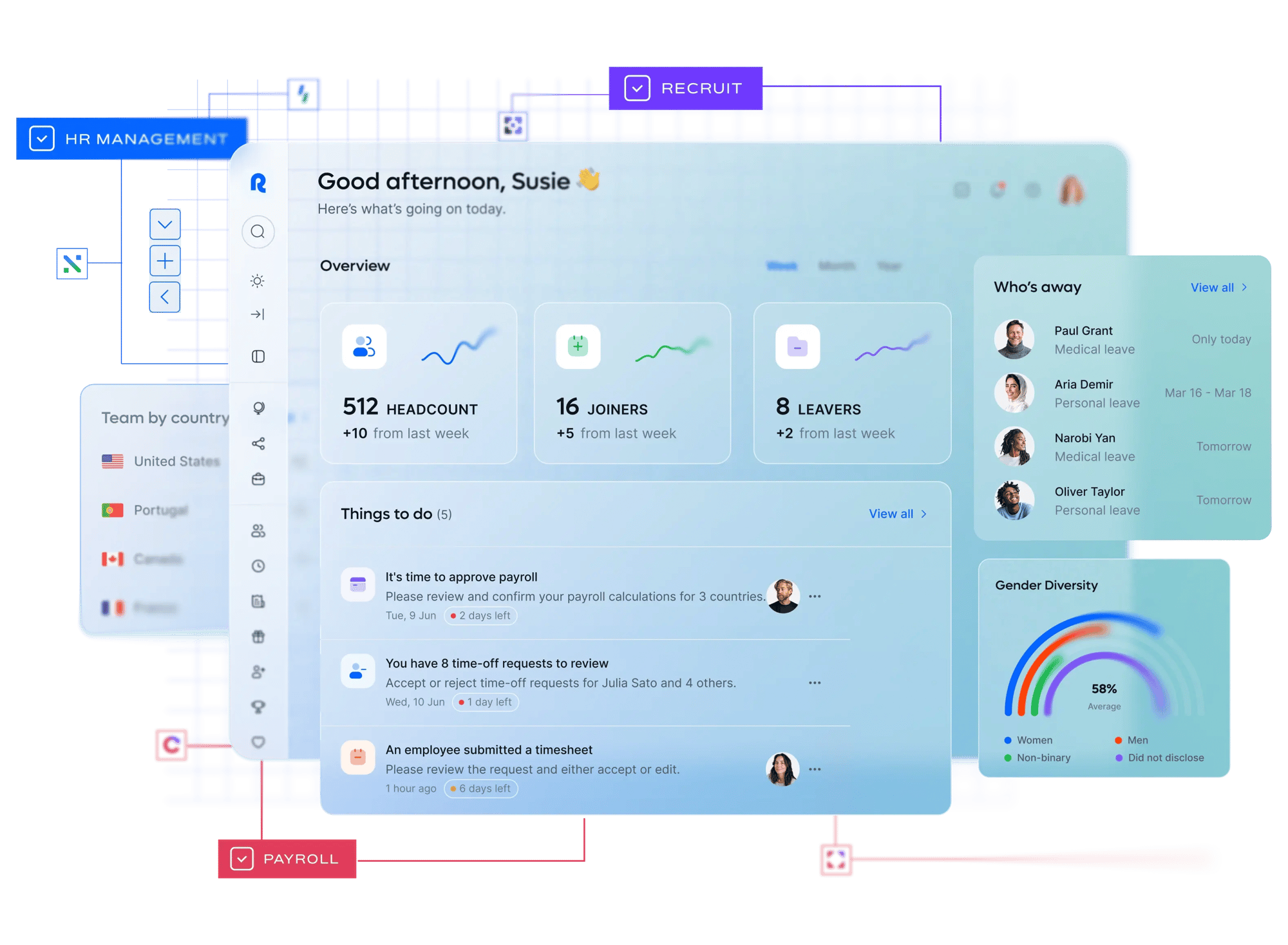
Credit: remote.com
Integrating Hris With Other Systems
Integrating HRIS with other systems is essential for smooth HR operations. It creates a connected environment where data flows freely. This integration reduces manual work and errors. It helps HR teams focus on strategic tasks rather than routine updates. The synergy between HRIS and other business systems supports global remote employee management effectively.
Finance And It Collaboration
HRIS integration with finance systems ensures accurate payroll and budgeting. Payroll data automatically updates in finance software. This reduces delays and mistakes in salary payments. IT systems integration improves security and user access controls. It helps manage permissions for global remote workers securely. Collaboration between HR, finance, and IT departments leads to better decision-making and compliance.
Unified Hr Management
Connecting HRIS with recruitment, performance, and learning systems centralizes employee data. Managers access all information from one platform. This unified system simplifies tracking employee progress and goals. It also streamlines onboarding and training processes. Employees experience consistent communication and support regardless of location. A unified HR system boosts engagement and productivity for remote teams.
Scalability For Growing Businesses
Integrated HRIS systems grow with the business needs. Adding new modules or users is easy and quick. Cloud-based integration supports multiple locations and time zones effortlessly. It adapts to changes in workforce size and structure. Scalability ensures that global remote employee management stays efficient. Businesses avoid disruption and maintain smooth HR functions during growth phases.
Choosing The Right Software
Choosing the right cloud HR software is key to managing global remote teams effectively. The software must fit your company’s unique needs. It should simplify employee management across different countries and time zones.
Careful selection helps avoid costly mistakes. The right tool improves communication, tracks performance, and keeps data secure. Consider several factors before making a decision. This section breaks down the process into clear steps.
Assessing Business Needs
Start by listing your company’s HR challenges. Consider the size of your remote workforce. Identify tasks that take too much time or cause errors. Think about compliance with local labor laws. Check if the software supports multiple languages and currencies. Prioritize features that match your core needs. This step ensures you choose a tool that fits your business well.
Evaluating Features And Pricing
Compare software options based on their features. Look for attendance tracking, payroll integration, and performance management. Check if the software offers mobile access for remote employees. Review pricing plans carefully. Understand what is included in each package. Consider subscription fees and extra costs for add-ons. Choose software that offers good value without overspending.
User Experience And Support
Test the software’s ease of use. A simple interface reduces training time and errors. Ask if the platform provides customer support in your time zone. Check for available help channels like chat, phone, or email. Read reviews from other users about support quality. Reliable support keeps your HR operations smooth and stress-free.
.png)
Credit: www.hrcloud.com
Frequently Asked Questions
What Software Is Used To Monitor Remote Employees?
Popular software for monitoring remote employees includes Buddy Punch, WebWork Time Tracker, Veriato, and Apploye. These tools track productivity, keystrokes, GPS, and compliance efficiently.
What Are Cloud-based Hr Systems?
Cloud-based HR systems store employee data online, enabling real-time access, automation of tasks, and improved decision-making for HR teams.
What Are The 5 Types Of Hris?
The five types of HRIS are operational, tactical, strategic, comprehensive, and limited-function systems. Each serves distinct HR needs effectively.
Is Hr Cloud An Hris System?
HR Cloud is a cloud-based HRIS system that streamlines employee engagement, onboarding, communication, and performance management.
Conclusion
Cloud HR software simplifies managing remote teams across countries. It keeps employee data organized and easy to access. Managers can track work hours and performance quickly. Automation reduces manual tasks and human errors. Teams stay connected with built-in communication tools.
Such software supports compliance with local labor laws. It helps create a fair and productive work environment. Choosing the right cloud HR system improves team coordination. It saves time and allows focus on business growth. Embracing cloud HR tools meets the needs of global remote work.

Everett Ashford is a tech reviewer at mytechgrid.com specializing in SSDs, cameras, TVs, earbuds, headphones, and other consumer electronics. He provides honest, data-driven reviews based on hands-on testing and real-world performance analysis. Everett simplifies complex tech details to help readers make smart, confident buying decisions.