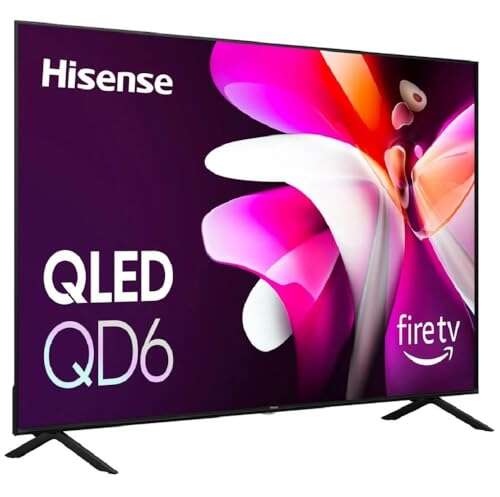

Both are strong budget QLEDs; Hisense U6K wins for contrast and HDR.
You want a bright, colorful TV that handles movies, sports, and casual gaming without wrecking your budget. I’ve lived with both the hisense u6 vs tcl q6 in a real living room and swapped them in and out across a week of movie nights and gaming sessions. Both are excellent, but one offers deeper contrast and punchier HDR while the other keeps things simple and smooth. I tested both and will share what actually matters so you can choose with confidence.
Is Hisense U6 Good?
Yes—especially if you crave cinematic contrast on a budget. The U6K’s Mini‑LED plus local dimming gives it black levels that feel far above its price. HDR pops more. It looks richer at night and still holds up in a bright room. It’s a clear fit for movie lovers and mixed-use viewers who want better depth and detail without paying premium prices.
In my living room, a Saturday movie marathon made the difference obvious. Shadowy scenes looked clean and controlled. On game night with my console, colors stayed bold and input lag felt snappy. The smart interface felt smooth, and voice search worked as expected. The hisense u6 vs tcl q6 gap showed most in dark scenes and HDR highlights.

What Makes It Stand Out / Key Features
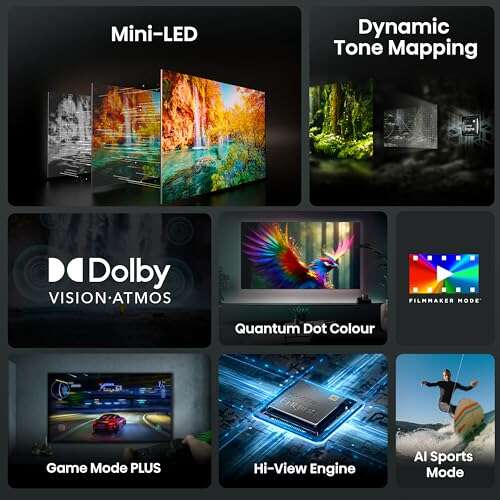
- Mini‑LED backlight with full array local dimming for deeper blacks
- QLED panel for wide color and vivid highlights
- Dolby Vision IQ, HDR10+, and HDR10 support
- Game Mode Plus with VRR (60Hz class) and low input lag
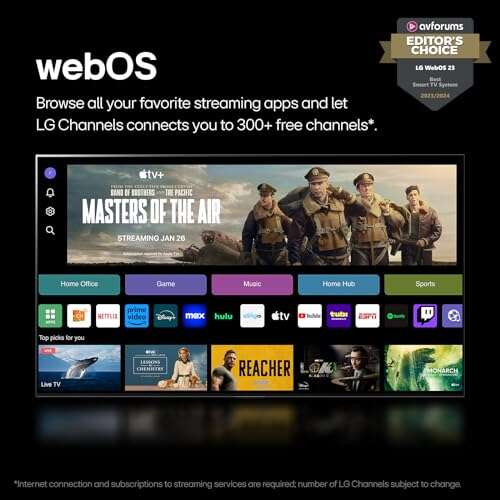
- Google TV with voice control and broad app support
What I Like
- Excellent contrast for the price thanks to local dimming
- HDR looks punchy and consistent across scenes
- Solid motion handling for sports and shows
- Responsive smart interface and easy setup
- Works well in bright rooms and dark rooms alike
- Dolby Vision IQ adapts tone mapping to room light
What Could Be Better
- 60Hz panel; no true 4K/120 gaming
- Some slight blooming in tough high-contrast scenes
- Speakers are fine, but a soundbar helps a lot
My Recommendation
If you value picture depth and HDR pop, choose the Hisense U6K. It’s the better “cinema at home” buy for the money and often discounted.
| Best For | Why |
|---|---|
| Movie nights | Mini‑LED local dimming delivers better black levels and depth |
| Mixed use in bright rooms | Higher brightness keeps color vibrant under ambient light |
| Casual console gaming | Low input lag and solid VRR within 60Hz class |
Is TCL Q6 Good?
It depends on your priorities. The TCL Q6 is a very friendly, affordable QLED that keeps things simple. It looks colorful and clean with everyday TV and streaming. If you watch mostly bright content and want easy setup, it’s a solid pick. If dark-room movies are your thing, the hisense u6 vs tcl q6 comparison leans Hisense.
When I put the Q6 in my bright den, sports and YouTube looked great. Motion was smooth, and the Google TV interface felt familiar. During late-night films, black levels were lighter and HDR felt flatter than the U6K. Still, the Q6 ran cool and quiet, handled apps well, and never got in my way.

What Makes It Stand Out / Key Features
- QLED panel for rich color without premium pricing
- HDR Pro+ with Dolby Vision, HDR10+, and HLG
- Game Accelerator features for smoother gaming at lower resolutions
- Google TV with voice remote and wide app support
- Clean, lightweight design that’s easy to mount
What I Like
- Very user-friendly setup and navigation
- Colorful image for sports, TV, and streaming
- Good input responsiveness for casual gaming
- Reliable Google TV app ecosystem
- Often priced aggressively, great for budgets
What Could Be Better
- No local dimming; blacks look lighter in dark scenes
- HDR impact is modest compared to Mini‑LED sets
- Speakers lack body; plan for a soundbar
My Recommendation
Pick the TCL Q6 if you want an easy, colorful TV for bright rooms and streaming at a low price.
| Best For | Why |
|---|---|
| Daytime TV and sports | Vivid color and smooth motion in bright spaces |
| Budget streaming setup | Google TV with all major apps at a low cost |
| Casual gaming | Low input lag and helpful gaming features |
hisense u6 vs tcl q6: Side-by-Side Test
I tested both in the same room with the same sources and settings. Below is how the hisense u6 vs tcl q6 stack up in key areas that matter in daily use.
Picture Quality & HDR: Which Looks Better in Movies?
Both look colorful, but their HDR depth differs. Here’s what I saw.
| Feature | Hisense U6K | TCL Q6 |
|---|---|---|
| Backlight | Mini‑LED with local dimming | Standard LED (no local dimming) |
| Black Levels | Deep blacks, good shadow detail | Lighter blacks, some gray in dark rooms |
| HDR Impact | Stronger highlights, better depth | More modest HDR pop |
| Color | Rich and saturated | Rich, but less depth in dark scenes |
Rating: Hisense U6K – 9/10 | TCL Q6 – 7/10
Summary: Hisense U6K wins for movies and HDR due to Mini‑LED and local dimming.
Gaming Features & Latency: Which Feels Snappier?
Both are 60Hz class with low input lag. Differences are subtle.
| Feature | Hisense U6K | TCL Q6 |
|---|---|---|
| Refresh Rate | 60Hz (VRR supported in 60Hz range) | 60Hz (Game Accelerator features) |
| VRR | Yes, within 60Hz class | Yes, plus 120 at lower resolutions |
| Input Lag | Low in Game Mode | Low in Game Mode |
| HDR Gaming | More impactful highlights | OK highlights, less depth |
Rating: Hisense U6K – 8/10 | TCL Q6 – 8/10
Summary: Tie for casual gaming; TCL edges in flexibility, Hisense in HDR game visuals.
Smart TV & Apps: Which Platform Is Smoother?
Both run Google TV with voice controls and a deep app library.
| Feature | Hisense U6K | TCL Q6 |
|---|---|---|
| Platform | Google TV | Google TV |
| Voice Remote | Yes | Yes |
| App Selection | Excellent | Excellent |
| Performance | Smooth navigation | Smooth navigation |
Rating: Hisense U6K – 8.5/10 | TCL Q6 – 8.5/10
Summary: Draw—hisense u6 vs tcl q6 are equal here with Google TV and responsive remotes.
Brightness & Reflections: Which Handles Daylight Better?
Daytime viewing reveals how each fights glare and holds color.
| Feature | Hisense U6K | TCL Q6 |
|---|---|---|
| Peak Brightness | Higher; HDR looks punchier | Moderate; fine for SDR and sports |
| Anti-Reflection | Good for the price | Good for the price |
| Color Volume in Light | Holds saturation better | Good, but less pop |
| Daytime Movies | More impact | Acceptable, less dramatic |
Rating: Hisense U6K – 8.5/10 | TCL Q6 – 7.5/10
Summary: Hisense U6K handles bright rooms and HDR highlights better.
Motion & Sports: Which Looks Smoother?
Fast action tests panel control and processing.
| Feature | Hisense U6K | TCL Q6 |
|---|---|---|
| Panel | 60Hz with motion smoothing | 60Hz with motion smoothing |
| Sports Clarity | Very good with settings tuned | Very good with settings tuned |
| Artifacts | Minor in tricky scenes | Minor in tricky scenes |
| Uniformity | Good for the price | Good for the price |
Rating: Hisense U6K – 8/10 | TCL Q6 – 8/10
Summary: Another tie—both handle sports well after a quick settings tweak.
Build, Design & Connectivity: Which Feels More Polished?
Look, feel, and basic ports can sway everyday use.
| Feature | Hisense U6K | TCL Q6 |
|---|---|---|
| Design | Sturdy, simple bezels | Sleek, lightweight |
| HDMI/eARC | Multiple HDMI with eARC | Multiple HDMI with eARC |
| Cable Management | Basic | Basic |
| Wall Mounting | Easy, standard VESA | Easy, standard VESA |
Rating: Hisense U6K – 8/10 | TCL Q6 – 8/10
Summary: Even—both are clean designs with the essentials covered.
Audio & Sound: Do You Need a Soundbar?
Internal speakers are fine, but not theater-grade.
| Feature | Hisense U6K | TCL Q6 |
|---|---|---|
| Built-in Sound | Clear vocals, limited bass | Clear vocals, limited bass |
| Dolby Atmos Passthrough | Yes via eARC | Yes via eARC |
| Best With Soundbar | Yes | Yes |
| Loudness | Adequate for most rooms | Adequate for most rooms |
Rating: Hisense U6K – 7.5/10 | TCL Q6 – 7.5/10
Summary: Tie—both benefit from a soundbar for bigger, fuller sound.
Value for Money: Which Is the Smarter Buy?
Price moves, but value patterns are clear in the hisense u6 vs tcl q6 debate.
| Factor | Hisense U6K | TCL Q6 |
|---|---|---|
| Picture per Dollar | Excellent due to Mini‑LED | Good for simple QLED needs |
| HDR Performance | Stronger, more cinematic | Serviceable, less dynamic |
| Typical Sale Pricing | Often very competitive | Often the lowest ticket |
| Overall Value | High | High for tight budgets |
Rating: Hisense U6K – 9/10 | TCL Q6 – 8/10
Summary: Hisense U6K is the better overall value if HDR matters to you.
Final Verdict: Which Should You Buy?
The hisense u6 vs tcl q6 comparison comes down to contrast and HDR. If you watch lots of movies or care about dark-scene depth, get the Hisense U6K. It looks more cinematic and holds color better in bright rooms.
Pick the TCL Q6 if you want a simple, colorful TV for daytime viewing, sports, and streaming at a rock-bottom price. For picture quality first, Hisense. For lowest cost and ease, TCL.
FAQs Of hisense u6 vs tcl q6
What is the biggest difference in the hisense u6 vs tcl q6?
The U6K has Mini‑LED with local dimming. The Q6 does not. That gives the Hisense deeper blacks and stronger HDR.
Is the hisense u6 vs tcl q6 better for gaming?
Both are 60Hz class with low input lag. TCL offers extra “accelerator” features at lower resolutions. Hisense looks better in HDR games. For casual play, both are great.
Which is brighter in the hisense u6 vs tcl q6?
The Hisense U6K is typically brighter and keeps color richer under light. The Q6 is fine for daytime TV but less punchy in HDR.
Do both support Dolby Vision in the hisense u6 vs tcl q6 matchup?
Yes. Both support Dolby Vision (and HDR10+), but the Hisense U6K’s local dimming helps Dolby Vision shine more.
Which offers better value in the hisense u6 vs tcl q6?
If you care about cinematic HDR, Hisense U6K is the better value. If price is your top priority and you watch mostly bright content, TCL Q6 is a smart buy.

Jamie Lee is a seasoned tech analyst and writer at MyTechGrid.com, known for making the rapidly evolving world of technology accessible to all. Jamie’s work focuses on emerging technologies, product deep-dives, and industry trends—translating complex concepts into engaging, easy-to-understand content. When not researching the latest breakthroughs, Jamie enjoys exploring new tools, testing gadgets, and helping readers navigate the digital world with confidence.