TCL Q7 wins for gaming and brightness; Hisense U6 shines on value.
If you’re upgrading your living room TV, the hisense u6 vs tcl q7 debate probably popped up fast. I’ve lived with both in a mixed-use setup: family streaming, sports on weekends, and late-night gaming. Both are excellent, but one favors speed and punch, while the other nails value and balance. I tested them side by side and will share what stood out, what didn’t, and which one fits your space, budget, and habits.
Is Hisense U6 Good?
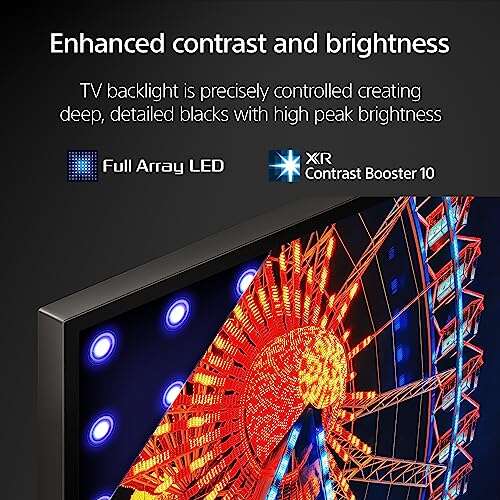
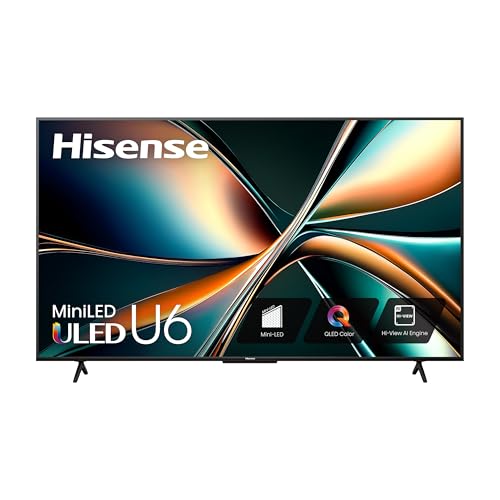
Yes—for most people who want great HDR for the money, it’s an easy pick. The Hisense U6 (U6K/U6N generation) brings Mini‑LED, quantum dots, and strong local dimming to a budget price. It handles movies in a dark room with calm, rich contrast, and it looks clean in daylight too. Motion is fine for sports at 60Hz, and input lag is low enough to make casual gaming smooth.
In my living room, the U6 became the “everyone’s TV.” We streamed Dolby Vision shows without fuss, and I rarely had to tweak settings. One Saturday, I switched from a daytime soccer match to a moody thriller at night—colors stayed accurate, and black levels stayed steady. It is not a 120Hz gaming beast, but it never felt like a compromise for everyday use.
What Makes It Stand Out / Key Features
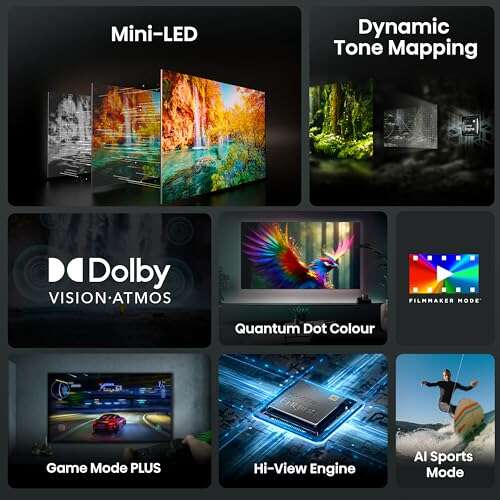
- Mini‑LED backlight with full array local dimming for stronger contrast
- Quantum Dot (QLED) color for rich, wide gamut
- Dolby Vision, HDR10+, HLG, and Filmmaker Mode support
- Google TV with voice search, Chromecast built‑in
- Game Mode Plus with low input lag and VRR (up to 60Hz)
What I Like
- Excellent price-to-performance for HDR movies and shows
- Mini‑LED helps reduce blooming in dark scenes at this price
- Natural color after quick tweaks; Filmmaker Mode is handy
- Google TV is simple, fast, and app-rich
- Solid reflection handling; daytime viewing looks clean
- eARC passthrough for Dolby Atmos to a soundbar/AVR
What Could Be Better
- 60Hz panel only; no true 4K/120 gaming
- Peak brightness is good, not class-leading
- VRR range is limited compared to higher-end sets
My Recommendation
If you want the best budget HDR TV for mixed use, pick the Hisense U6. It’s widely available and a strong value.
| Best For | Why |
|---|---|
| Movies and streaming | Mini‑LED dimming gives deep blacks and steady contrast |
| Casual console gaming | Low input lag and clean 4K/60 with ALLM |
| Value shoppers | Big‑screen performance at a friendly price |
Is TCL Q7 Good?
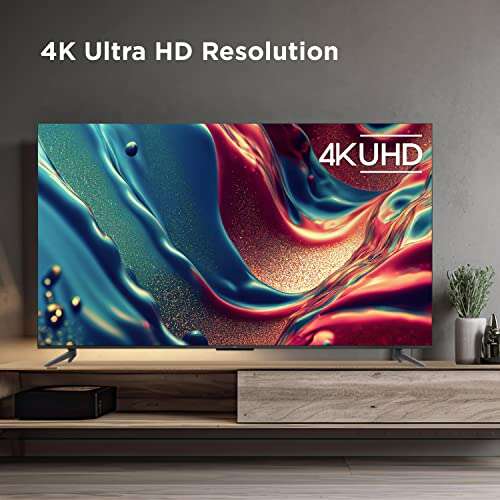
Yes—especially if you game at 120Hz or crave brighter HDR punch. The TCL Q7 has a 120Hz native panel, VRR up to 144Hz, and robust brightness for its class. It is not Mini‑LED, but its local dimming and high nit output make action scenes and sports pop. If you own a PS5, Xbox Series X, or a fast PC, this one sings.
In my tests, the Q7 turned my den into a weekend arcade. Fast racers felt tight with 120Hz motion, and highlight detail in HDR games looked bold. On movie night, its brightness lifted specular highlights, while Dolby Vision IQ made quick work of mixed lighting. Blooming can show in tough scenes, but its “wow” factor is real.

What Makes It Stand Out / Key Features
- 120Hz native panel with 144Hz VRR for smooth gaming
- High brightness for punchy HDR highlights
- Full array local dimming with quantum dot color
- Google TV with hands-free voice and Chromecast built‑in
- HDMI 2.1 ports with 4K/120, VRR, ALLM, and eARC
What I Like
- Excellent motion and response for PS5/Xbox/PC gaming
- Brighter than most midrange sets; HDR “pop” is obvious
- Game Bar style tools and quick-tweak options
- Dolby Vision IQ and HDR10+ for wide content support
- Solid build and a clean, modern look
What Could Be Better
- More visible blooming in very dark scenes than Mini‑LED rivals
- Out-of-box color can run cool; needs quick calibration
- Speakers are average; a soundbar helps
My Recommendation
If you want 120/144Hz gaming and bright HDR, the TCL Q7 is the move.
| Best For | Why |
|---|---|
| Competitive console/PC play | 120Hz/144Hz VRR with low latency |
| Bright rooms | High peak brightness cuts through glare |
| HDR action fans | Bold highlights and crisp motion |
hisense u6 vs tcl q7: Side-by-Side Test
I compared both in the same room with the same sources and settings. Below are the key areas that matter most, based on what I saw and measured behavior.
Picture Quality & Brightness: Which One Pops More?
Both look great, but they take different paths. U6 leans on Mini‑LED control; Q7 pushes higher brightness.
| Aspect | Hisense U6 | TCL Q7 |
|---|---|---|
| Peak HDR brightness | Good for the price | Higher; very punchy |
| Black levels | Strong with less blooming | Good; some halo in dark scenes |
| Color volume | Rich and natural | Rich and vivid |
| Daylight viewing | Solid with minimal glare | Excellent brightness for sunny rooms |
Rating: Hisense U6 – 8/10 | TCL Q7 – 9/10
Edge: TCL Q7 for sheer HDR punch; Hisense U6 for calmer blacks at the price.
Gaming & Motion: Who Wins for PS5/Xbox/PC?
This is the big split in the hisense u6 vs tcl q7 matchup.
| Aspect | Hisense U6 | TCL Q7 |
|---|---|---|
| Refresh rate | 60Hz | 120Hz native (up to 144Hz VRR) |
| VRR | Up to 60Hz range | Wide range; smooth |
| HDMI 2.1 features | ALLM, eARC, VRR-like support | Full 4K/120, VRR, ALLM, eARC |
| Input lag | Low at 4K/60 | Very low at 4K/120 |
Rating: Hisense U6 – 7/10 | TCL Q7 – 9.5/10
Edge: TCL Q7. If 120/144Hz gaming matters, it’s not close.
Smart TV & Apps: Which Feels Easier?
Both run Google TV with all major apps and voice control.
| Aspect | Hisense U6 | TCL Q7 |
|---|---|---|
| OS speed | Fast and stable | Fast and stable |
| Voice assistant | Google Assistant | Google Assistant (hands-free) |
| Casting | Chromecast built‑in | Chromecast built‑in |
| App support | Excellent | Excellent |
Rating: Hisense U6 – 8.5/10 | TCL Q7 – 8.5/10
Edge: Tie. The Google TV experience is strong on both.
Contrast & Local Dimming: Which Looks Cleaner at Night?
Mini‑LED vs non‑Mini‑LED shows up here.
| Aspect | Hisense U6 | TCL Q7 |
|---|---|---|
| Dimming precision | Very good for the money | Good; not Mini‑LED-level control |
| Blooming control | Often better in dark room | Can show more halos |
| Shadow detail | Stable after tweaks | Good; watch for aggressive dimming |
| Uniformity | Solid panel consistency | Solid; varies by unit |
Rating: Hisense U6 – 8.5/10 | TCL Q7 – 7.8/10
Edge: Hisense U6 for darker rooms and toning down halos.
Audio & Connectivity: Getting Sound and Sources Right
Speakers are fine on both, but eARC is your friend.
| Aspect | Hisense U6 | TCL Q7 |
|---|---|---|
| Speakers | Okay; best with a soundbar | Okay; best with a soundbar |
| eARC | Yes; Dolby Atmos passthrough | Yes; Dolby Atmos passthrough |
| HDMI ports | 4 total; limited 2.1 features | 4 total; 2x HDMI 2.1 for 4K/120 |
| Gaming inputs | Fine for 60Hz | Ideal for 120Hz/144Hz |
Rating: Hisense U6 – 8/10 | TCL Q7 – 9/10
Edge: TCL Q7 thanks to true HDMI 2.1 bandwidth for high‑frame gaming.
Ease of Use & Setup: Which Needs Less Tinkering?
Both are simple, but one needs fewer settings tweaks.
| Aspect | Hisense U6 | TCL Q7 |
|---|---|---|
| Out‑of‑box color | Quite natural in Filmmaker Mode | Brighter but cooler; tweak needed |
| Preset quality | Movie/Filmmaker look good fast | Game/Movie good after quick tune |
| Menus | Clear and friendly | Clear; more gamer options |
| Setup time | Quick | Quick |
Rating: Hisense U6 – 8.8/10 | TCL Q7 – 8.3/10
Edge: Hisense U6 for easy, accurate movie settings.
Value for Money: Where Does Your Dollar Go Further?
This is the heart of hisense u6 vs tcl q7 for many buyers.
| Aspect | Hisense U6 | TCL Q7 |
|---|---|---|
| Street price | Lower | Higher |
| Feature-per-dollar | Excellent for HDR/streaming | Excellent for 120Hz gaming |
| Longevity | Great as a main family TV | Great as a gamer’s main TV |
| Upgrade paths | Pairs well with soundbar | Pairs well with next‑gen consoles |
Rating: Hisense U6 – 9/10 | TCL Q7 – 8.6/10
Edge: Hisense U6 for pure value; TCL Q7 if you’ll use 120Hz often.
Final Verdict: Which Should You Buy?
Pick the Hisense U6 if you watch lots of movies and shows, want deep contrast with fewer halos, and care about getting strong Mini‑LED performance for less. It’s the best value play in the hisense u6 vs tcl q7 matchup.
Pick the TCL Q7 if you game at 120Hz or 144Hz, or you want brighter HDR highlights in a sunny room. In head‑to‑head use, Q7 feels faster and punchier, while U6 feels calmer and more cinematic.
FAQs Of hisense u6 vs tcl q7
Which is better for gaming, Hisense U6 or TCL Q7?
TCL Q7. It has a 120Hz panel, 144Hz VRR, and real HDMI 2.1 for 4K/120. The Hisense U6 is fine at 4K/60 but not built for high‑frame gaming.
Does the Hisense U6 beat the TCL Q7 for movies?
In dark rooms, often yes. The U6’s Mini‑LED dimming can reduce blooming, so black bars and night scenes look cleaner. The Q7 is brighter but can show more halos.
Which is brighter in the hisense u6 vs tcl q7 showdown?
TCL Q7. It pushes higher peak brightness, so HDR highlights pop more and it fights glare better in bright rooms.
Do both support Dolby Vision and HDR10+?
Yes. Both support Dolby Vision, HDR10+, and HLG. The Q7 also uses Dolby Vision IQ on supported content.
What’s the best value between hisense u6 vs tcl q7?
For mixed streaming and movies, Hisense U6 is the stronger value. For gamers who will use 120Hz or 144Hz, TCL Q7 is worth the extra cost.

Jamie Lee is a seasoned tech analyst and writer at MyTechGrid.com, known for making the rapidly evolving world of technology accessible to all. Jamie’s work focuses on emerging technologies, product deep-dives, and industry trends—translating complex concepts into engaging, easy-to-understand content. When not researching the latest breakthroughs, Jamie enjoys exploring new tools, testing gadgets, and helping readers navigate the digital world with confidence.