5D Mark IV is the pro workhorse; 6D Mark II is the value-friendly all‑rounder.
Picture this: you need a full-frame Canon that nails portraits on Saturday, then films a quick brand video on Monday. I’ve shot real jobs with both cameras, so the canon 6d mark ii vs 5d mark iv dilemma is fresh for me. Both deliver, but in different ways: the 6D Mark II wins on price, tilt screen, and battery life; the 5D Mark IV wins on dynamic range, autofocus depth, and 4K. I tested both side by side. Here’s what actually matters so you can choose with confidence.
Is Canon EOS 6D Mark II Good?
Yes—for most creators and hobbyist pros, it’s a smart buy. It gives you full-frame image quality, a fully articulating touchscreen, class-leading battery life, and Canon’s excellent Dual Pixel AF for smooth focus in live view. It’s ideal for weddings, travel, family work, and content creators who value ease of use and light weight over bleeding-edge specs.
I shot a rainy elopement with the 6D Mark II and appreciated the flip screen for low-angle ring shots without soaking my knees. Another time, I recorded a handheld talking-head video in a cramped café; that articulating screen and sticky face AF saved my take. It’s not the most “spec-heavy,” but it is reliable and fun.
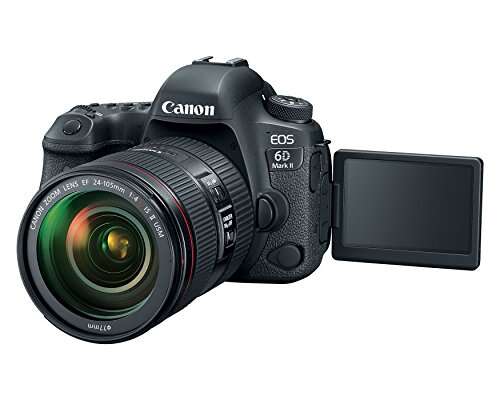
Canon EOS 6D Mark II DSLR Camera with EF 24-105mm USM Lens – WiFi Enabled (Renewed)

What Makes It Stand Out / Key Features
- 26.2MP full-frame CMOS sensor with DIGIC 7
- 45-point all cross-type AF (OVF) + Dual Pixel CMOS AF (Live View)
- Fully articulating 3.0″ touchscreen for flexible angles
- Full HD 1080p up to 60p with digital video stabilization
- Built-in Wi‑Fi, Bluetooth, and GPS; single SD card slot
What I Like
- Variable-angle screen makes selfies, vlogs, and low/high angles easy
- Reliable Dual Pixel AF for stills in Live View and smooth video focus
- Excellent battery life for long wedding days or travel shoots
- Light, comfortable body that pairs well with small primes
- Straightforward menus and controls; classic Canon ergonomics
What Could Be Better
- No 4K video and no headphone jack for monitoring
- Single SD card slot limits redundancy for paid work
- Dynamic range at base ISO trails higher-end bodies
My Recommendation
If you want full-frame on a budget with a flip screen and great battery life, get the 6D Mark II. It’s widely available and often discounted, which boosts its value.
| Best For | Why |
|---|---|
| Weddings on a budget | Great AF, battery, and skin tones without breaking the bank |
| Travel and content | Flip screen, light body, reliable Live View AF |
| First full-frame upgrade | Easy to use, strong value, familiar Canon feel |
Is Canon EOS 5D Mark IV Good?
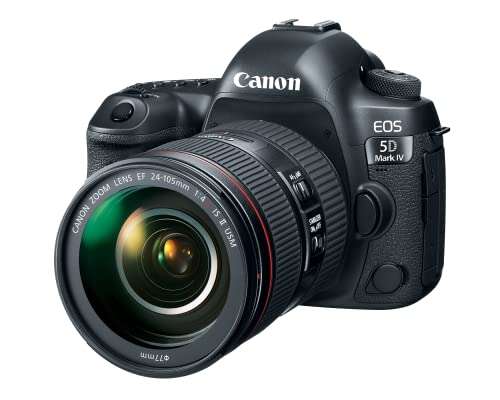
Yes—the 5D Mark IV is a proven workhorse for professionals. It brings a 30.4MP sensor with better dynamic range, a robust 61‑point AF system, dual card slots, and 4K video (with a crop). It’s built tough, with better sealing and a faster top shutter speed, making it ideal for commercial and editorial work.
On a commercial portrait day, the 5D Mark IV gave me cleaner shadows when I lifted exposure, which saved retouching time. Shooting indoor action for a school event, the 61‑point AF locked faster across the frame. It’s heavier and pricier, but when I need “no‑miss” confidence, this is the body I grab.
Canon EOS 5D Mark IV Digital SLR Camera (Body Only), Full-Frame DSLR Camera, 30.4 Megapixel CMOS Sensor, 4K Video, Content Creator Camera, EF Mount, Black

What Makes It Stand Out / Key Features
- 30.4MP full-frame CMOS sensor with stronger dynamic range
- 61-point AF system with wide coverage and low-light sensitivity
- 4K DCI video up to 30p (crop) + Dual Pixel AF in Live View
- Dual card slots (CF + SD), better sealing, 1/8000s max shutter
- Built-in Wi‑Fi, GPS, and touch-enabled 3.2″ high-res LCD
What I Like
- Cleaner files when pushing shadows or recovering highlights
- More consistent AF coverage for fast-moving subjects
- Dual slots for instant backup on paid shoots
- 4K capture for higher-detail workflows and reframing
- Pro-grade build that shrugs off dust and light rain
What Could Be Better
- 4K uses a crop and a heavy codec that fills cards fast
- Heavier and pricier than the 6D Mark II
- Fixed rear screen limits odd-angle shooting
My Recommendation
Choose the 5D Mark IV if you shoot for clients and need durability, dynamic range, and dual slots. It’s a long-term tool that pays for itself.
| Best For | Why |
|---|---|
| Commercial/editorial work | Superior DR, AF reliability, and dual-slot safety |
| Hybrid shooters | 4K capture plus strong stills performance |
| Challenging weather | Better sealing and robust build |
canon 6d mark ii vs 5d mark iv: Side-by-Side Test
I shot portraits, events, and casual video to stress both bodies. Below is the canon 6d mark ii vs 5d mark iv comparison by feature, so you can match what matters to your work.
Image Quality & Dynamic Range: Which Files Stretch Further?
Both deliver great color. The difference shows when lifting shadows or pushing exposure.
| Aspect | 6D Mark II | 5D Mark IV |
|---|---|---|
| Resolution | 26.2MP | 30.4MP |
| Base ISO DR | Good | Better; cleaner shadow lifts |
| High ISO | Very usable | Very usable, slightly cleaner |
| Skin tones | Classic Canon look | Classic Canon with more flexibility |
Rating: 6D Mark II – 8/10 | 5D Mark IV – 9/10
Edge: 5D Mark IV for more flexible files and stronger dynamic range.
Autofocus & Tracking: Which Locks On Better?
Both use Dual Pixel AF in Live View. Through the viewfinder, coverage differs.
| Aspect | 6D Mark II | 5D Mark IV |
|---|---|---|
| OVF AF Points | 45 cross-type | 61 points, wide spread |
| Low-light AF | Good | Better sensitivity |
| Tracking | Solid for events | More consistent for action |
| Live View AF | Dual Pixel, smooth | Dual Pixel, smooth |
Rating: 6D Mark II – 8/10 | 5D Mark IV – 9/10
Edge: 5D Mark IV for broader coverage and more confident tracking.
Video Features & Content Creation: Which Shoots Better Video?
This is where the canon 6d mark ii vs 5d mark iv split stands out.
| Aspect | 6D Mark II | 5D Mark IV |
|---|---|---|
| Max Resolution | 1080p up to 60p | 4K DCI up to 30p (crop) |
| Screen | Fully articulating | Fixed |
| Audio I/O | Mic in; no headphone | Mic in + headphone out |
| AF for Video | Dual Pixel AF | Dual Pixel AF |
Rating: 6D Mark II – 8/10 | 5D Mark IV – 8.5/10
Edge: Tie for different needs—6D II for vlogging angles; 5D IV for 4K and monitoring.
Build, Weather Sealing & Handling: Which Feels Pro?
Both feel like real tools. One is tougher.
| Aspect | 6D Mark II | 5D Mark IV |
|---|---|---|
| Body Quality | Solid, lighter | Pro-grade, more robust |
| Weather Sealing | Good | Better |
| Weight | Lighter; easier all-day | Heavier; steadier in hand |
| Shutter | Up to 1/4000s | Up to 1/8000s |
Rating: 6D Mark II – 8/10 | 5D Mark IV – 9/10
Edge: 5D Mark IV for durability and control in tough conditions.
Speed & Buffer: Which Keeps Up?
I tested bursts during an indoor sports drill.
| Aspect | 6D Mark II | 5D Mark IV |
|---|---|---|
| Burst Rate | Up to ~6.5 fps | Up to ~7 fps |
| Buffer | Good for short bursts | Deeper for sequences |
| Viewfinder blackout | Manageable | Slightly better rhythm |
| Consistency | Solid | More consistent under load |
Rating: 6D Mark II – 7.5/10 | 5D Mark IV – 8.5/10
Edge: 5D Mark IV for sustained bursts and action reliability.
Connectivity, Storage & Battery: Which Is More Practical?
This is a key canon 6d mark ii vs 5d mark iv trade-off: redundancy vs runtime.
| Aspect | 6D Mark II | 5D Mark IV |
|---|---|---|
| Card Slots | Single SD | CF + SD dual slots |
| Battery Life | Excellent, lasts longer | Very good |
| Wireless | Wi‑Fi, Bluetooth, GPS | Wi‑Fi, GPS |
| Tethering | USB, Wi‑Fi | USB, Wi‑Fi; robust for studio |
Rating: 6D Mark II – 8.5/10 | 5D Mark IV – 8.5/10
Edge: Tie—6D II for battery and Bluetooth; 5D IV for dual slots safety.
Ergonomics & Usability: Which Is Easier Day-to-Day?
Menus and grip feel classic Canon. The screens make a difference.
| Aspect | 6D Mark II | 5D Mark IV |
|---|---|---|
| Rear Screen | Articulating touchscreen | Fixed touchscreen |
| Top LCD & controls | Clean layout | More direct controls |
| Live View Use | Easier for odd angles | Great, but less flexible |
| Learning Curve | Fast | Fast for experienced users |
Rating: 6D Mark II – 9/10 | 5D Mark IV – 8.5/10
Edge: 6D Mark II for the flip screen and friendly handling.
Value for Money: Which Gives More for Your Budget?
The canon 6d mark ii vs 5d mark iv price gap matters.
| Aspect | 6D Mark II | 5D Mark IV |
|---|---|---|
| Purchase Price | Lower; strong value | Higher; pro-grade |
| Cost to Kit | More budget room for lenses | Less budget margin |
| Longevity | Great for years of hobby/pro use | Built for heavy pro cycles |
| Resale | Stable | Strong for a 5D-series body |
Rating: 6D Mark II – 9/10 | 5D Mark IV – 8/10
Edge: 6D Mark II for affordability and everyday return on spend.
Final Verdict: Which Should You Buy?
If you shoot paid work where backup, dynamic range, and AF depth matter, the 5D Mark IV is the safer bet. It delivers cleaner files, dual slots, and tougher build. It’s the pro workhorse.
If you want full-frame goodness at a friendlier price, the 6D Mark II is wonderful. In the canon 6d mark ii vs 5d mark iv debate, it wins for vlogging angles, battery life, and ease.
FAQs Of canon 6d mark ii vs 5d mark iv
What is the biggest difference in the canon 6d mark ii vs 5d mark iv?
The 5D Mark IV has better dynamic range, a stronger AF system, dual card slots, and 4K. The 6D Mark II is cheaper, lighter, and has a fully articulating screen.
Is the 6D Mark II good enough for professional work?
Yes, for many jobs. I’ve shot weddings and corporate events with it. Just note the single card slot and no 4K. If redundancy is vital, pick the 5D Mark IV.
Does the 5D Mark IV’s 4K crop ruin wide shots?
It’s a tight crop, so you’ll need wider lenses. For talking-heads or tele work, it’s fine. For ultra-wide scenes, plan your lens choice or shoot 1080p.
Which autofocus is better for action in canon 6d mark ii vs 5d mark iv?
The 5D Mark IV. Its 61-point system has broader coverage and tracks motion more consistently, especially in low light.
Which is better for content creators?
If you vlog or work solo, the 6D Mark II’s flip screen and lighter body are great. If you need 4K detail and a headphone jack, the 5D Mark IV fits better.
Related Posts




Jamie Lee is a seasoned tech analyst and writer at MyTechGrid.com, known for making the rapidly evolving world of technology accessible to all. Jamie’s work focuses on emerging technologies, product deep-dives, and industry trends—translating complex concepts into engaging, easy-to-understand content. When not researching the latest breakthroughs, Jamie enjoys exploring new tools, testing gadgets, and helping readers navigate the digital world with confidence.