Both are excellent: Nikon Z f wins for full-frame look; X-T5 shines for resolution.
You want a retro-styled camera that shoots modern, clean files without fuss. I tested the nikon zf vs fujifilm xt5 on streets, travel, and video gigs. Both nailed the brief, but in different ways. The Nikon Z f brings full-frame depth and great AF. The Fujifilm X-T5 delivers huge detail and a smaller kit. I’ll share what mattered in real use so you can pick the right fit.
Is Nikon Z f Good?
Yes—especially if you want the full-frame look in a classic body. The Nikon Z f gives rich files, smooth skin tones, and strong dynamic range. Autofocus tracks eyes and subjects with confidence. It also records 10‑bit video internally. If you shoot people, low light, or mixed work, it fits like a glove.
On a rainy night walk, the Z f locked on faces under neon signs. The files felt clean and deep at high ISO. During a quick brand shoot, I used the vari‑angle screen to frame low angles. The focus stuck and the color graded well in post. It feels like a modern tool in a timeless shell.
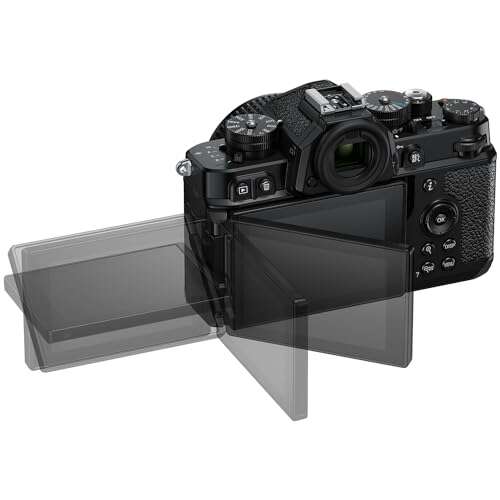
Nikon Z f | Full-Frame Mirrorless Stills/Video Camera with Iconic Styling | Nikon USA Model

What Makes It Stand Out / Key Features
- 24MP full‑frame BSI sensor with rich dynamic range
- EXPEED 7 processor with subject detection and 3D tracking
- In‑body stabilization up to 8 stops (with supported lenses)
- 4K up to 60p (DX crop), 10‑bit N‑Log/HLG internal recording
- Retro dials, vari‑angle screen, and a dedicated mono switch
What I Like
- Full‑frame look with smooth depth and great low‑light files
- Reliable AF tracking for people, pets, and vehicles
- Color that grades easily in log; skin tones look natural
- IBIS feels rock solid for slower shutter street shots
- Vari‑angle touchscreen is handy for video and vlogging
- Classic build that still feels modern in hand
What Could Be Better
- 4K60 uses a crop; not ideal for wide shots
- One SD slot plus microSD is an odd mix
- Heavier than most APS‑C options for travel
My Recommendation
If you want full‑frame depth, strong AF, and stylish ergonomics, choose the Z f. It’s great value for mixed photo and video.
| Best For | Why |
|---|---|
| Portraits and street | Full‑frame look, low‑light strength, sticky eye AF |
| Hybrid creators | 10‑bit internal log, solid IBIS, vari‑angle screen |
| Retro lovers | Classic dials with modern speed and tracking |
Is Fujifilm X‑T5 Good?
Yes—for detail‑hungry shooters who want a compact kit. The Fujifilm X‑T5 pushes 40MP on APS‑C, so landscapes and products pop. You also get dual UHS‑II card slots and 10‑bit video, plus great film simulations. If you print big or crop often, it shines.
I took the X‑T5 on a mountain trip. The files held crisp edges and fine leaves even at base ISO. The three‑way tilt screen made tripod work easy. On a food shoot, the 160MP pixel‑shift mode captured texture with stunning clarity. Color straight out of camera looked ready to share.
Fujifilm X-T5 Mirrorless Digital Camera Body – Black

What Makes It Stand Out / Key Features
- 40MP APS‑C X‑Trans sensor with high resolving power
- In‑body stabilization up to 7 stops
- 6.2K/30p and 4K/60p 10‑bit recording, F‑Log and F‑Log2
- 160MP Pixel Shift Multi‑Shot for studio and product work
- Dual UHS‑II SD card slots in a compact, stills‑first body
What I Like
- Incredible detail for landscapes, product, and macro
- Dual card redundancy for client work
- Film simulations that look great with little editing
- Light body and lenses for travel days
- Fast mechanical shutter for action (up to 15 fps)
- Battery life that holds up for long hikes
What Could Be Better
- AF tracking is good, but not as “sticky” as Nikon’s 3D tracking
- Electronic shutter rolling shutter can show with fast motion
- Video crop at some modes can limit wide shots
My Recommendation
If you value resolution, travel light, and love Fuji color, pick the X‑T5. It’s a sharp, efficient stills tool.
| Best For | Why |
|---|---|
| Landscapes and product | 40MP sensor and 160MP pixel shift add fine detail |
| Travel shooters | Small body, light lenses, strong battery life |
| SOOC fans | Film simulations deliver ready‑to‑share color |
nikon zf vs fujifilm xt5: Side-by-Side Test
I shot the nikon zf vs fujifilm xt5 on the same routes and jobs. Below are the key areas where day‑to‑day differences show up. Use this to match the camera to your work.
Sensor and Image Quality: Depth vs Detail
Full‑frame gives depth and low‑light leeway. High‑res APS‑C gives crisp detail and crop room.
| Feature | Nikon Z f | Fujifilm X‑T5 |
|---|---|---|
| Sensor | 24MP full‑frame BSI | 40MP APS‑C X‑Trans |
| Dynamic Range feel | Strong at high ISO | Excellent at base ISO |
| High‑Res Mode | Pixel Shift ~96MP | Pixel Shift 160MP |
| Look | Richer subject separation | Ultra‑sharp fine detail |
Ratings: Nikon Z f – 9/10 | Fujifilm X‑T5 – 9/10
“Tie: Z f for depth and low light; X‑T5 for sheer detail and big prints.”
Autofocus and Tracking: Which Locks Better?
Both detect faces, eyes, and more. Tracking behavior feels different in the field.
| Aspect | Nikon Z f | Fujifilm X‑T5 |
|---|---|---|
| Subject Detection | People, animals, vehicles | People, animals, birds, vehicles |
| Tracking Behavior | 3D tracking is very sticky | Improved; good, less “locked‑on” feel |
| Low‑Light AF | Confident with fast lenses | Good; slows in very dim light |
| Burst Use | Fast with dependable hit rate | Fast; best with center composition |
Ratings: Nikon Z f – 9/10 | Fujifilm X‑T5 – 8/10
“Edge: Nikon Z f. It tracks moving faces and subjects more confidently.”
Video Features: Hybrid Needs
Both are capable for 10‑bit workflows. The details differ.
| Spec | Nikon Z f | Fujifilm X‑T5 |
|---|---|---|
| Max Resolution | 4K up to 60p (DX crop) | 6.2K/30p; 4K/60p |
| Internal Codec | 10‑bit H.265 (N‑Log/HLG) | 10‑bit, F‑Log/F‑Log2 |
| Screen | Vari‑angle (great for video) | 3‑way tilt (great for tripod) |
| Stabilization | Up to 8 stops | Up to 7 stops |
Ratings: Nikon Z f – 8.5/10 | Fujifilm X‑T5 – 8.5/10
“Tie: Z f for ergonomics and IBIS; X‑T5 for 6.2K capture and F‑Log2.”
Speed and Buffer: Action Use
Short bursts and buffer behavior matter for sports and wildlife.
| Item | Nikon Z f | Fujifilm X‑T5 |
|---|---|---|
| Mechanical Burst | Fast for 24MP class | Up to 15 fps |
| Electronic Burst | 30 fps JPEG pre‑release | Up to 20 fps (crop) |
| Buffer Feel | Solid; recovers quick | Good; heavy RAW can fill |
| Rolling Shutter | Well managed for class | More visible at 20 fps |
Ratings: Nikon Z f – 8.5/10 | Fujifilm X‑T5 – 8/10
“Edge: Nikon Z f. Tracking plus pre‑release helps catch peak moments.”
Handling and Controls: Dials Done Right
Both have retro dials. Feel and screens differ.
| Area | Nikon Z f | Fujifilm X‑T5 |
|---|---|---|
| Body Feel | Heavier, solid, deep grip | Compact, balanced, lighter |
| Screen Type | Vari‑angle | 3‑way tilt |
| EVF | ~3.69M dots, clear | ~3.69M dots, clear |
| Customization | Plenty of function control | Deep custom and film sims |
Ratings: Nikon Z f – 8.5/10 | Fujifilm X‑T5 – 9/10
“Edge: Fujifilm X‑T5. Lighter body and tilt screen suit pure stills work.”
Storage, Power, and I/O
Card setup and battery life can decide pro use.
| Item | Nikon Z f | Fujifilm X‑T5 |
|---|---|---|
| Card Slots | 1x SD UHS‑II + 1x microSD | 2x SD UHS‑II |
| Battery Life | Good; shorter than X‑T5 | Strong for travel days |
| Ports | Mic, headphone, USB‑C, HDMI | Mic, USB‑C, micro HDMI |
| Redundancy | Mixed slot types | Full dual‑slot redundancy |
Ratings: Nikon Z f – 8/10 | Fujifilm X‑T5 – 9/10
“Edge: Fujifilm X‑T5. Dual UHS‑II and longer life favor paid shoots.”
Stabilization and Handheld Results
IBIS helps both stills and video, but tuning differs.
| Aspect | Nikon Z f | Fujifilm X‑T5 |
|---|---|---|
| Rated IBIS | Up to 8 stops | Up to 7 stops |
| Low‑light Stills | Excellent with fast primes | Very good for travel |
| Handheld Video | Stable with vari‑angle framing | Smooth, best with wider lenses |
| Pixel Shift Use | Tripod needed | Tripod needed |
Ratings: Nikon Z f – 9/10 | Fujifilm X‑T5 – 8.5/10
“Edge: Nikon Z f. A small bump in IBIS and full‑frame latitude help.”
Value for Money
Think about lenses, system costs, and long‑term fit.
| Factor | Nikon Z f | Fujifilm X‑T5 |
|---|---|---|
| Lenses | Full‑frame Z glass; bigger, pricier | XF lenses; smaller, more affordable |
| Body Price | Competitive for full‑frame | Strong value for 40MP |
| Use Case | Hybrid and portrait/street | Travel, landscape, product |
| System Weight | Heavier kits | Lighter kits |
Ratings: Nikon Z f – 8.5/10 | Fujifilm X‑T5 – 9/10
“Edge: Fujifilm X‑T5. High resolution and lighter, cheaper lenses add value.”
Final Verdict: Which Should You Buy?
The nikon zf vs fujifilm xt5 comes down to look versus detail. Choose the Nikon Z f if you want full‑frame depth, confident tracking, strong IBIS, and easy hybrid video work. It makes people and night scenes sing.
Pick the Fujifilm X‑T5 if you want maximum detail, dual UHS‑II, and a compact travel kit. It is perfect for landscapes, product, and big prints. Both are excellent; match the tool to your subject.
FAQs Of nikon zf vs fujifilm xt5
What is the main difference in the nikon zf vs fujifilm xt5?
The Nikon Z f uses a 24MP full‑frame sensor for depth and low‑light strength. The Fujifilm X‑T5 uses a 40MP APS‑C sensor for higher detail and lighter kits.
Which is better for video in the nikon zf vs fujifilm xt5?
Both record 10‑bit. The Z f wins for IBIS and a vari‑angle screen. The X‑T5 wins for 6.2K capture and F‑Log2 range.
Which autofocus is more reliable in the nikon zf vs fujifilm xt5?
The Nikon Z f has stickier tracking, especially for moving people. The X‑T5 is very good but not as “locked‑on” in tricky motion.
For travel, which is lighter in the nikon zf vs fujifilm xt5?
The Fujifilm X‑T5 body and lenses are lighter overall. It’s great for long days and compact kits.
Do both support high‑resolution multi‑shot modes?
Yes. The Nikon Z f offers a ~96MP pixel shift mode. The Fujifilm X‑T5 offers a 160MP pixel shift mode for studio detail.
Related Posts




Jamie Lee is a seasoned tech analyst and writer at MyTechGrid.com, known for making the rapidly evolving world of technology accessible to all. Jamie’s work focuses on emerging technologies, product deep-dives, and industry trends—translating complex concepts into engaging, easy-to-understand content. When not researching the latest breakthroughs, Jamie enjoys exploring new tools, testing gadgets, and helping readers navigate the digital world with confidence.