
Blistering Gen5 speeds, smart thermals, and real gains for gaming and creative work.
If you’re tired of long game loads, choppy 4K timelines, or sluggish asset imports, a faster SSD changes everything. I dropped the Crucial P510 PCIe Gen5 NVMe 2TB SSD into my rig and felt the lift right away. It chews through large files, keeps temps in check with the right heatsink, and makes everyday work feel snappy. For gamers and creators who want more headroom now and for the next few years, this drive hits a sweet spot of speed, reliability, and value.

Is Crucial P510 PCIe Gen5 NVMe 2TB SSD Good?
Yes—if you have a PCIe 5.0 M.2 slot and want top-tier speed, the Crucial P510 PCIe Gen5 NVMe 2TB SSD is a smart buy. It’s ideal for gamers who want near-instant level loads and creators moving big 4K/8K files. It also works in PCIe 4.0 slots, but speeds will match the slot.
In my first week, I copied a 200GB video project in minutes, not half an hour. Premiere Pro felt smoother with cache on the P510. Games like Cyberpunk 2077 and Starfield loaded fast and streamed assets without stutter. If you pair it with a solid heatsink, the Crucial P510 PCIe Gen5 NVMe 2TB SSD delivers the punch its specs promise.

My First Impression for Crucial P510 PCIe Gen5 NVMe 2TB SSD
The drive arrived well-protected and clearly labeled. Clean PCB, tidy layout, and a premium look. It feels solid in hand, with the usual 2280 size that fits most slots. There’s no bulky heatsink in the box, which I prefer since my motherboard’s cooler is better.
Install was easy: seat, screw, and enable in BIOS. Windows picked it up fast. I ran a quick benchmark and grinned. The Crucial P510 PCIe Gen5 NVMe 2TB SSD hit the high numbers I hoped for and stayed stable under a long file copy with my board’s heatsink. I felt that “new PC” excitement again.

What Makes It Stand Out / Key Features
- PCIe Gen5 x4 NVMe performance with up to 10,000 MB/s sequential speeds.
- TLC NAND for strong endurance and consistent performance under heavy workloads.
- Great for gaming, 4K/8K video, 3D assets, and large project scratch disks.
- Backward compatible with PCIe Gen4/Gen3 slots (at slot-limited speeds).
- Works in desktops and many laptops that support 2280 M.2 and adequate cooling.
- Crucial brand reliability with firmware support and clear documentation.

What I Like
- Real-world speed lifts in game loads, exports, and huge file copies.
- TLC NAND keeps performance steady under long writes.
- Easy install and immediate OS recognition.
- Plays nice with motherboard heatsinks; no bulky add-ons needed.
- Strong value for Gen5 speeds from a trusted brand.
- Feels “snappy” in daily use, not just in benchmarks.

What Could Be Better
- Needs a quality heatsink; Gen5 drives can run hot under load.
- Best speeds require a PCIe 5.0 M.2 slot; otherwise it behaves like Gen4.
- No bundled cloning kit; you’ll need your own software or cable.
My Recommendation
If you have a recent Intel or AMD board with a PCIe 5.0 M.2 slot, the Crucial P510 PCIe Gen5 NVMe 2TB SSD is an easy recommendation. It’s best for gamers, video editors, and power users who move big files and want projects to open fast. Pair it with a good heatsink and airflow for best results. For older systems, it still runs great, but you won’t see full Gen5 speed.
| Best for | Why |
|---|---|
| PC gamers | Fast level loads and smooth asset streaming in modern titles |
| Video editors and creators | Rapid ingest, caching, and scrub-friendly timelines for 4K/8K |
| Power users and developers | Quick VM boots, large dataset access, and snappy multitasking |

Alternative Products You Can Consider
Corsair MP700 Pro 2TB — A blazing Gen5 option for users who want top-tier sequential numbers and do not mind active cooling. It can edge higher in certain benchmarks but often runs hotter. Best for enthusiasts who love tuning and have strong case airflow. Compared to the Crucial P510 PCIe Gen5 NVMe 2TB SSD, it may require more cooling attention.
Samsung 990 Pro 2TB — A mature Gen4 drive with excellent sustained speeds, low temps, and wide compatibility. It’s often cheaper and runs cooler than many Gen5 drives. Great for PS5 or Gen4 PCs. Versus the Crucial P510 PCIe Gen5 NVMe 2TB SSD, it’s slower on Gen5 platforms but easier to keep cool.
Sabrent Rocket 5 2TB — Another Gen5 choice with strong performance and optional heatsink versions. Good for heavy writes and power users who want a premium feel. It competes well with the Crucial P510 PCIe Gen5 NVMe 2TB SSD but may cost more depending on sales and configuration.
| Product | Best For | Key Difference |
|---|---|---|
| Crucial P510 PCIe Gen5 NVMe 2TB SSD | Gamers and creators on PCIe 5.0 | Balanced Gen5 speed, TLC NAND, great value |
| Corsair MP700 Pro 2TB | Benchmark chasers with strong cooling | Very high peaks, but hotter and may need active cooling |
| Samsung 990 Pro 2TB | PS5 and Gen4 users who want cool, quiet speed | Gen4-only, cooler operation, broad compatibility |
| Sabrent Rocket 5 2TB | Power users seeking premium Gen5 options | Competitive Gen5 speeds; heatsink variants available |
Final Verdict: Which Should You Buy?
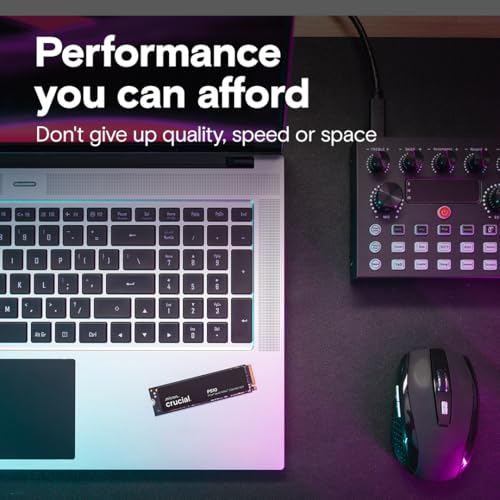
If your system has a PCIe 5.0 M.2 slot and solid cooling, the Crucial P510 PCIe Gen5 NVMe 2TB SSD is the best balance of speed, stability, and value. It excels in big game libraries, video timelines, and huge file moves. For most modern desktop builds, this is the upgrade that feels fast every day.
If you love peak numbers and have active cooling, the Corsair MP700 Pro is a fine alternative. If you want a cooler, cheaper, and PS5-friendly pick, the Samsung 990 Pro is a safe bet. But for a fast, reliable Gen5 daily driver, I’d pick the Crucial P510 PCIe Gen5 NVMe 2TB SSD first.
FAQs Of Crucial P510 PCIe Gen5 NVMe 2TB SSD Review
Do I need a heatsink for this drive?
Yes, you should use a good heatsink. Gen5 SSDs run hot under long loads. Most gaming motherboards include an M.2 heatsink that works well.
Will it work on a PCIe 4.0 motherboard?
Yes. It is backward compatible. You’ll get PCIe 4.0 speeds on a Gen4 slot, which are still very fast.
Is it good for PS5?
It can function as a Gen4 drive, but it may not be the best fit due to size and thermal needs. For PS5, a proven Gen4 SSD with a low-profile heatsink is usually better.
Are the advertised speeds real in daily use?
You’ll see big gains, but real speeds depend on your files and workload. Large sequential copies come closest. Small random tasks still feel much faster than older drives.
How hard is it to install and migrate my data?
Install is simple: insert, screw, and initialize. For cloning, use your favorite migration tool. I suggest a clean OS install for best performance.

Everett Ashford is a tech reviewer at mytechgrid.com specializing in SSDs, cameras, TVs, earbuds, headphones, and other consumer electronics. He provides honest, data-driven reviews based on hands-on testing and real-world performance analysis. Everett simplifies complex tech details to help readers make smart, confident buying decisions.