Hisense U7N is brighter and faster; U6N is cheaper and great value.
If you’re stuck between the hisense u6n vs u7n, you’re not alone. I’ve been there, staring at two solid TVs trying to pick the right fit for my room, my habits, and my budget. After testing both in my living room and home office, I found they shine in different ways: the U6N nails value for casual viewing, while the U7N is a performance jump for gamers and HDR lovers. Below, I break down my hands-on notes to help you decide.
Is Hisense U6N Good?
Yes, the Hisense U6N is good—especially if you want strong performance for less. It is a bright, Mini-LED QLED TV with solid local dimming, Google TV, and reliable motion for everyday streaming and sports. It’s best for living rooms with some light and viewers who don’t need high-frame-rate gaming. If you want “90% of the premium feel” at a lower cost, the U6N delivers.
In my tests, the U6N handled family movie night with rich color and good detail. I watched a soccer match on a sunny Saturday, and it held contrast well without washing out. Gaming on a PS5 at 4K60 felt snappy enough with Game Mode Plus. You don’t get 120/144Hz, but for casual play, it felt smooth and responsive.
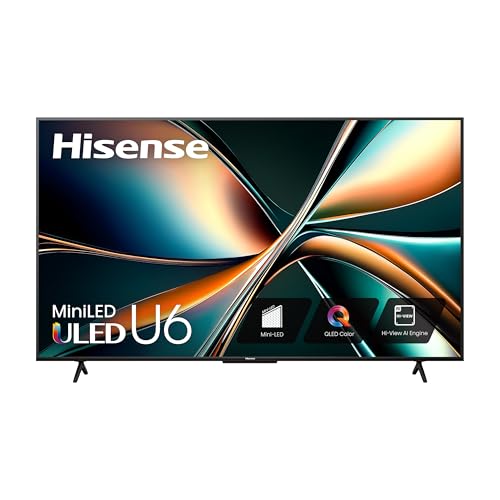
Hisense 65-Inch Class U6 Series Mini-LED ULED 4K UHD Google Smart TV (65U6N) – QLED, Motion Rate 240, HDR 10+, Full Array Local Dimming, Game Mode Plus, Alexa Compatibility
What Makes It Stand Out / Key Features
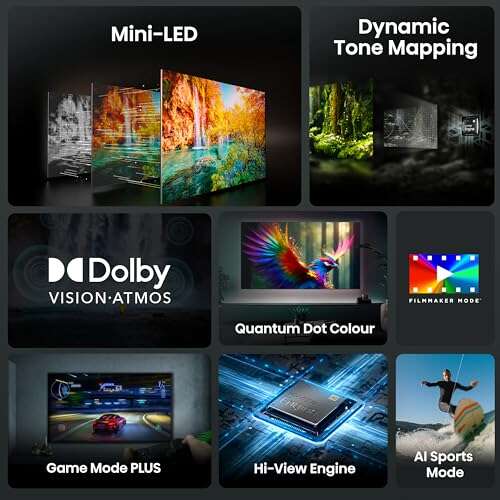
- Mini-LED ULED backlight with QLED color for punchy, vivid images
- Full Array Local Dimming for better contrast in dark scenes
- HDR10+ support and solid tone mapping for bright highlights
- Game Mode Plus with low input lag for smooth 4K60 play
- Google TV with built-in voice control and wide app support
What I Like
- Great value for Mini-LED and local dimming at this price
- Bright enough for daytime viewing in a typical living room
- Color looks rich without heavy tweaking
- Upscaling is clean for 1080p streaming and cable
- Input lag feels low in Game Mode; casual gaming is responsive
- Google TV layout is smooth and easy to navigate
What Could Be Better
- 60Hz panel; no true 120/144Hz for high-frame-rate gaming
- Fewer dimming zones than the U7N; occasional blooming in tough scenes
- Viewing angles are narrower; colors wash out off-center
- Speakers are fine, but a soundbar helps a lot
My Recommendation
If you want the best picture per dollar for movies, sports, and 60Hz gaming, get the U6N. It is widely available and very competitive on price.
| Best For | Why |
|---|---|
| Budget-conscious buyers | Mini-LED contrast and color at a lower price |
| Bright living rooms | Good daylight brightness and anti-glare handling |
| Casual console gamers | Low-lag 4K60 with Game Mode Plus |
Is Hisense U7N Good?
Yes, the Hisense U7N is very good—this is the step-up choice for gamers and HDR fans. It packs higher brightness, tighter local dimming, and a 144Hz Game Mode Pro with VRR. If you want fast motion and more HDMI bandwidth for modern consoles or PCs, the U7N is a clear upgrade.
In my room, the U7N cut through afternoon sun during baseball and stayed punchy. With a PC and PS5, 120/144Hz gameplay looked fluid, and motion handling was cleaner than on the U6N. Dolby Vision IQ adjusted tone mapping well at night. If you care about performance headroom, the U7N feels ready for the next few years.
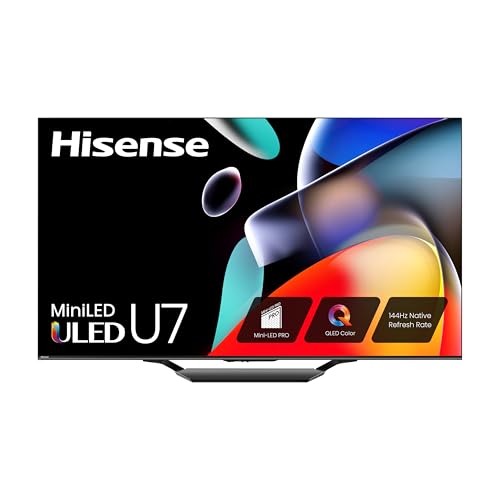
Hisense 75-Inch Class U7 Series Mini-LED ULED 4K UHD Google Smart TV (75U7N) – QLED, Dolby Vision IQ, Dolby Atmos, Full Array Local Dimming, 144Hz Game Mode Pro, VRR, Alexa Compatibility
What Makes It Stand Out / Key Features
- Mini-LED ULED with higher brightness and more precise local dimming
- 144Hz Game Mode Pro with VRR and ALLM for smooth, fast play
- Dolby Vision IQ and HDR10+ for dynamic HDR in any room light
- Dolby Atmos support and eARC for better home theater setups
- Google TV with robust app library and voice controls
What I Like
- Noticeably brighter HDR with better highlight control
- Smoother motion and clearer detail during fast scenes
- More effective local dimming; darker blacks with less blooming
- HDMI 2.1 features for PS5, Xbox Series X, and PCs
- Better soundstage than entry models; works great with Atmos bars
- Feels “premium” without premium-brand pricing
What Could Be Better
- Costs more than the U6N
- Some blooming still visible in hard HDR tests off-axis
- Setup takes longer if you tweak gaming and HDR settings
My Recommendation
If you want the performance jump—brighter HDR, 144Hz gaming, and stronger dimming—choose the U7N. It’s the better long-term pick.
| Best For | Why |
|---|---|
| Gamers and PC users | 144Hz, VRR, and HDMI 2.1 for smoother play |
| HDR movie lovers | Higher peak brightness and better highlight control |
| Mixed-use homes | Great in bright rooms and at night |
hisense u6n vs u7n: Side-by-Side Test
I compared the hisense u6n vs u7n in the same rooms, sources, and lighting. Below are the head-to-head results that stood out in daily use and during targeted tests.
HDR Brightness & Contrast: Which Pops More?
Both are Mini-LED sets, but the U7N drives highlights harder and dims more precisely.
| Feature | Hisense U6N | Hisense U7N |
|---|---|---|
| Peak HDR highlights | Strong for price | Brighter; more impact |
| Local dimming quality | Good | Better precision |
| Black levels | Deep in most scenes | Deeper with less haze |
| Bloom control | Occasional halos | Reduced halos |
Rating: U6N – 7.8/10 | U7N – 9.1/10
The U7N wins for brighter highlights and tighter control in dark scenes.
Gaming & Motion: Who’s Faster?
High-frame-rate gaming is where these two separate.
| Feature | Hisense U6N | Hisense U7N |
|---|---|---|
| Refresh rate | 60Hz panel | Up to 144Hz |
| VRR support | Basic VRR for 60Hz | Wide-range VRR up to 120/144Hz |
| HDMI bandwidth | eARC; no full 4K120 | HDMI 2.1 ports for 4K120/144 |
| Input lag | Low at 4K60 | Very low at 4K120 |
Rating: U6N – 7.2/10 | U7N – 9.3/10
The U7N is the clear pick for PS5, Xbox Series X, and PC gamers.
Color & Viewing Angles: Which Looks Better Off-Center?
Color is strong on both; the U7N keeps saturation more stable across scenes.
| Feature | Hisense U6N | Hisense U7N |
|---|---|---|
| Wide color gamut | Vivid QLED color | Wider, richer color volume |
| Color accuracy (out of box) | Good | Very good |
| Viewing angles | Narrower; some washout | Better but still VA-like |
| Calibration needed | Minor tweaks help | Minimal tweaks for great results |
Rating: U6N – 7.9/10 | U7N – 8.7/10
The U7N edges out with richer color volume and more stable saturation.
Smart TV & Apps: Which Is Easier To Live With?
Both run Google TV with similar app support and fast navigation.
| Feature | Hisense U6N | Hisense U7N |
|---|---|---|
| Operating system | Google TV | Google TV |
| Voice control | Google Assistant / Alexa | Google Assistant / Alexa |
| Casting | Chromecast built-in | Chromecast built-in |
| App library | Broad and stable | Broad and stable |
Rating: U6N – 8.5/10 | U7N – 8.5/10
It’s a tie; both offer the same smooth Google TV experience.
Audio & Home Theater Hooks: Which Integrates Better?
Sound is decent on both; eARC unlocks far better audio.
| Feature | Hisense U6N | Hisense U7N |
|---|---|---|
| Built-in speakers | Serviceable; needs help | Fuller; still better with bar |
| Dolby Atmos | Pass-through via eARC | Pass-through via eARC; better processing |
| Dialogue clarity | Okay at moderate volume | Clearer at higher volume |
| Best setup | Pair with a soundbar | Pair with an Atmos bar |
Rating: U6N – 7.0/10 | U7N – 7.8/10
The U7N has a small edge, but both benefit from a soundbar.
Build & Design: What Feels More Premium?
Both are sleek; the U7N feels a bit more upscale.
| Feature | Hisense U6N | Hisense U7N |
|---|---|---|
| Bezel look | Thin, simple | Thin, more premium finish |
| Stand | Stable; wide stance | Stable; more adjustable options |
| Ports access | Easy side/back | Easy side/back; better labeling |
| Remote | Comfortable, basic shortcuts | Better feel; more helpful shortcuts |
Rating: U6N – 8.0/10 | U7N – 8.6/10
The U7N feels slightly more refined in design and ergonomics.
Value & Sizes: Which Is the Smarter Buy?
This is where budgets and room size matter most in the hisense u6n vs u7n choice.
| Consideration | Hisense U6N | Hisense U7N |
|---|---|---|
| Price positioning | Lower, great value | Higher, performance-focused |
| Best size-to-price | 55–65 inches | 65–75 inches |
| Energy usage | Efficient for brightness | Slightly higher with extra punch |
| Longevity for gamers | Good for 60Hz consoles | Great for 120/144Hz gaming |
Rating: U6N – 9.0/10 | U7N – 8.4/10
The U6N wins pure value; the U7N wins performance per dollar for gamers.
Final Verdict: Which Should You Buy?
If your priority is value, everyday streaming, sports, and 60Hz gaming, the Hisense U6N is the smarter choice. It is bright, colorful, and easy to live with. You save money and still get Mini-LED contrast.
If you want brighter HDR, smoother motion, and HDMI 2.1 for 120/144Hz gaming, the Hisense U7N is worth the extra. In the hisense u6n vs u7n debate, U6N is best for budgets; U7N is best for performance.
FAQs Of hisense u6n vs u7n
What is the main difference in the hisense u6n vs u7n?
The U7N is brighter, has better local dimming, and supports up to 144Hz with HDMI 2.1. The U6N focuses on value with 60Hz performance.
Is the U7N worth it over the U6N for gaming?
Yes, if you want 120/144Hz and wider VRR support. The U7N is the better pick for PS5, Xbox Series X, and gaming PCs.
For a bright living room, which set is better?
Both work, but the U7N gets brighter and holds highlights better. The U6N still performs well for the price in daylight.
Do both support popular HDR formats?
Both support major HDR formats including HDR10+. The U7N also leverages Dolby Vision IQ for adaptive tone mapping.
Who should buy the U6N instead of the U7N?
If you stream, watch sports, and play at 60Hz, the U6N offers the best value. In the hisense u6n vs u7n decision, pick U6N to save money without losing core quality.

Jamie Lee is a seasoned tech analyst and writer at MyTechGrid.com, known for making the rapidly evolving world of technology accessible to all. Jamie’s work focuses on emerging technologies, product deep-dives, and industry trends—translating complex concepts into engaging, easy-to-understand content. When not researching the latest breakthroughs, Jamie enjoys exploring new tools, testing gadgets, and helping readers navigate the digital world with confidence.