Use art, shelving, lighting, and smart scale to make the TV wall your room’s focal point.
I’ve designed dozens of living rooms and learned what works and what doesn’t when you’re figuring out how to decorate wall behind tv stand. This guide gives clear, tested advice, simple plans, and real mistakes to avoid so you can create a balanced, stylish wall that highlights your TV without hiding it. Read on for practical tips, layout options, and budget ideas you can apply today.
Start with a plan: scale, layout, and focal point
Think of the wall behind your TV as a stage. Measure the wall height and width, plus the TV size and stand depth. Keep sightlines in mind so the TV sits at comfortable eye level when seated.
Decide whether the TV will be the sole focal point or part of a broader vignette. If the TV remains the main draw, use simple framing and balanced elements. If you want a decorative focal wall, integrate art, shelves, and lighting to share attention with the TV.
Practical tip from experience: I once put tiny art around a 65-inch TV. The pieces vanished. Scale up artwork or use fewer, larger pieces so the wall reads as intentional.

Choose a style and color palette
Match the wall treatment to your room’s style. Keep the palette tight: two main colors and one accent. Neutral walls with a single accent tone around the TV rarely fail.
If you’re unsure, try these quick combos:
- Soft gray wall with black TV frame and warm wood accents
- Deep navy wall with brass lighting and white shelving
- Textured wallpaper in a subtle pattern and muted artwork
I recommend paint or wallpaper behind the TV instead of loud patterns across the whole room. That focus helps the TV feel integrated, not stuck-on.
Create a gallery or art arrangement
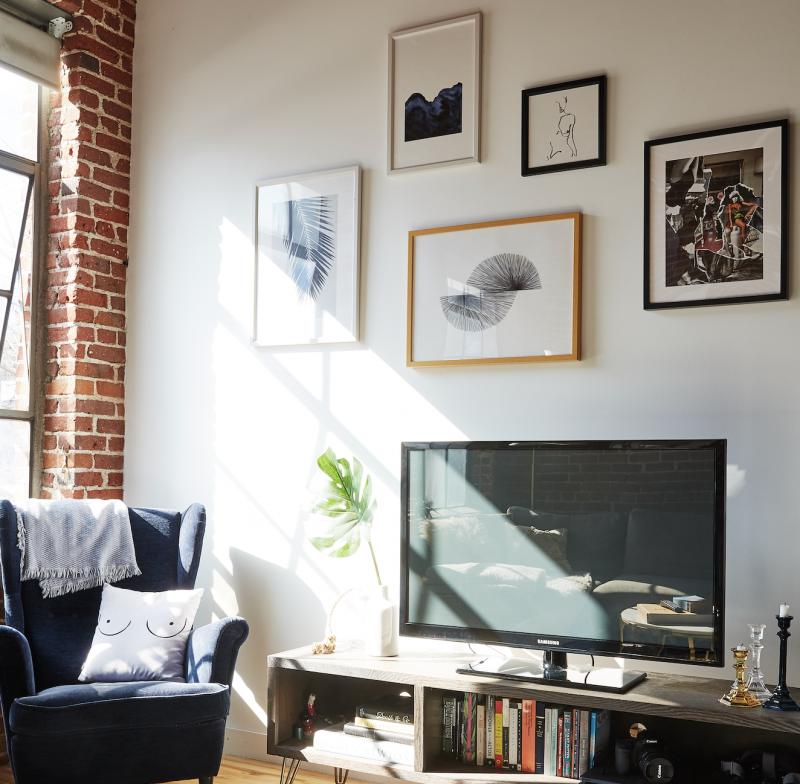
A gallery wall can frame the TV without clutter. Use larger frames and simple mats. Position artwork either side of the TV or create a balanced composition above a lower console.
Gallery layout tips:
- Measure and mark before you hang.
- Keep 2–3 inches between frames and at least 6 inches from the TV edge.
- Use a unifying element like consistent frames, a common mat color, or repeat colors in the art.
Personal note: I like using two vertical prints flank the TV for symmetry. It looks clean and directs the eye toward the screen.
Install shelving and storage for function and style
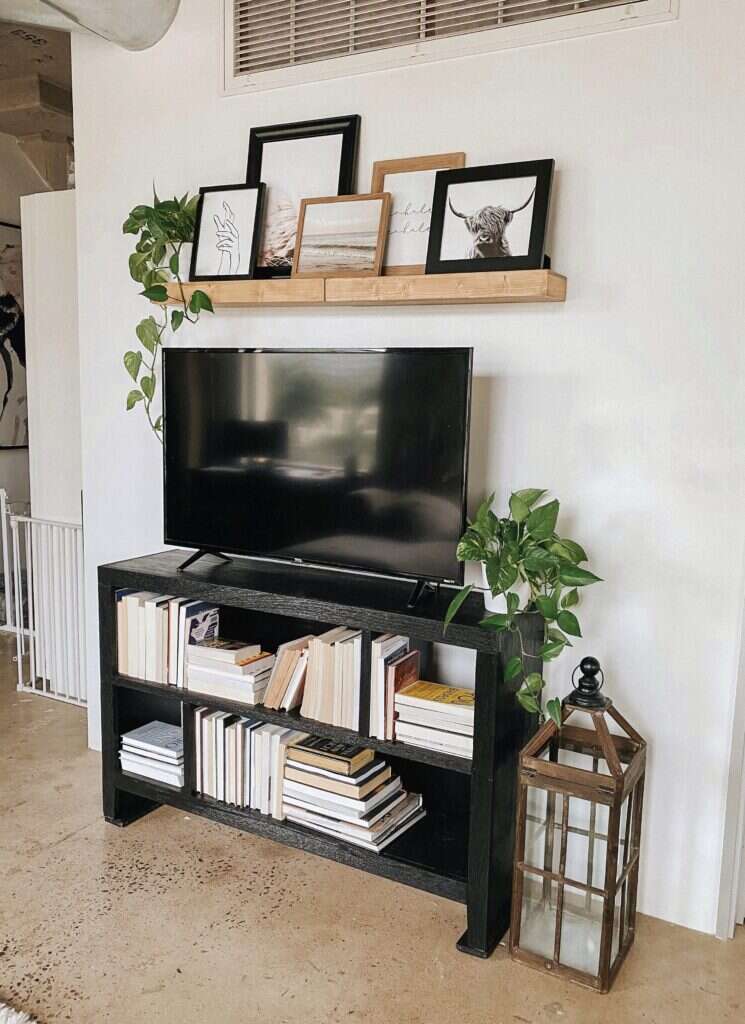
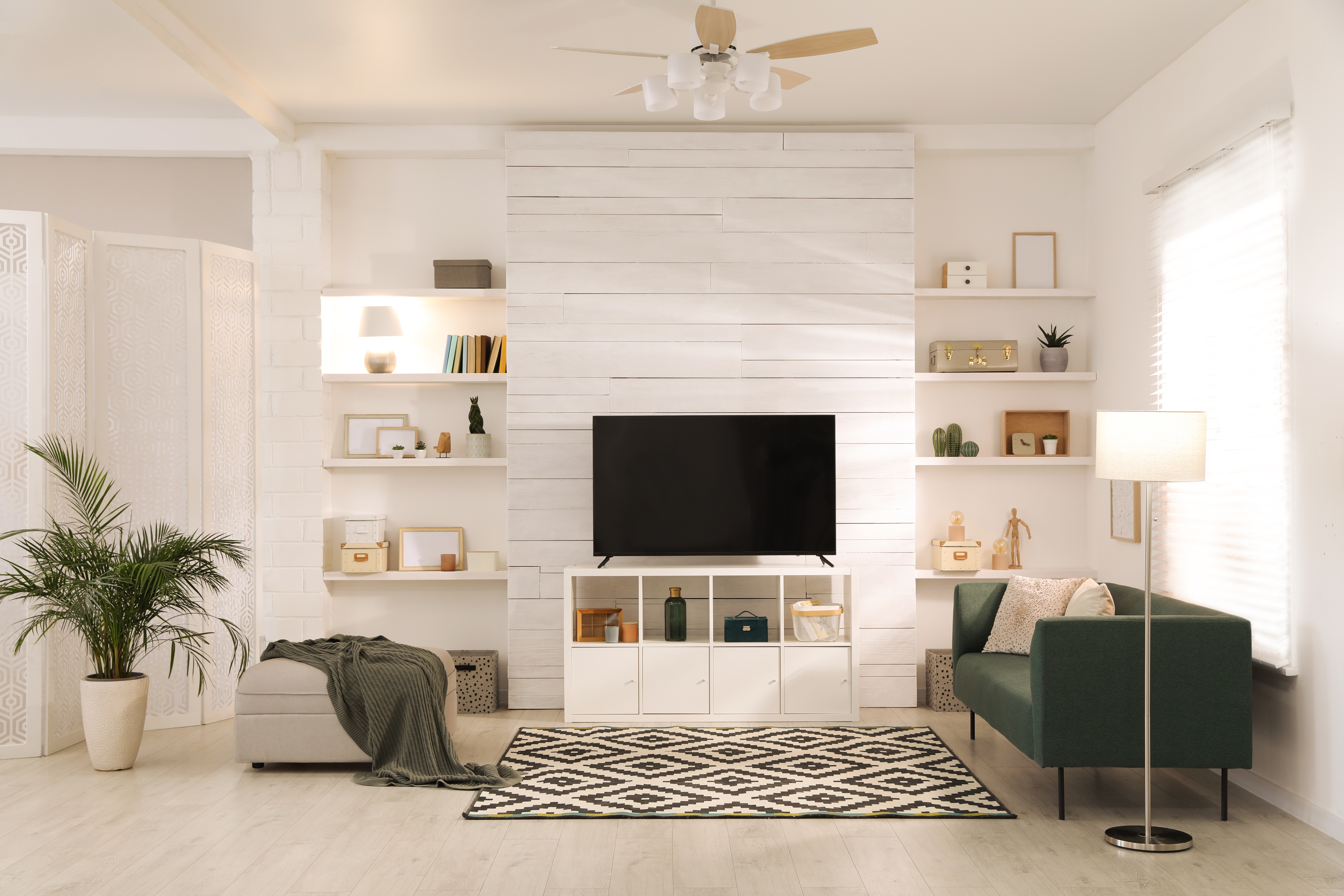
Shelves add storage and styling space. Floating shelves above a TV work best when they sit high enough to avoid glare and low enough to remain connected visually.
Shelf styling rules:
- Use odd-numbered groupings for objects.
- Alternate heights and textures: books, plants, ceramics.
- Keep electronics and remotes on lower closed storage to reduce visible clutter.
When I styled a client’s TV wall, closed cabinets hid gaming gear while a top shelf displayed plants. The result felt tidy and layered.

Lighting: highlight and reduce glare
Good lighting defines the TV wall. Combine ambient, task, and accent lighting. Use dimmable overhead lights and adjustable picture lights to control mood.
Lighting ideas:
- Install wall sconces on either side of the TV for balance.
- Add LED backlighting behind the TV to reduce eye strain and add depth.
- Use picture lights or track lighting for art and shelves.
Be careful with direct light on the screen. I always check sightlines at different times of day to prevent reflections.

Materials and textures that add depth
Mix finishes to keep the wall interesting. Wood, plaster, metal, and stone can coexist if you keep scale and color consistent. Textured panels or shiplap can add warmth behind the TV.
Texture tips:
- Use a wood accent panel to warm a modern setup.
- Consider acoustic panels that look good and improve sound.
- Keep highly reflective surfaces away from the screen.
I once used reclaimed wood behind a TV in a rustic living room. It added character and helped hide cables without feeling dated.
:strip_icc()/Living-room-dark-backdrop-7001114_33863_FamilyRoom_219-ANyOXJySqw8B0ZR8IAjC7Y-589b7063fd694f92836a657489d0f99a.jpg)
TV mounting, cable management, and ergonomics
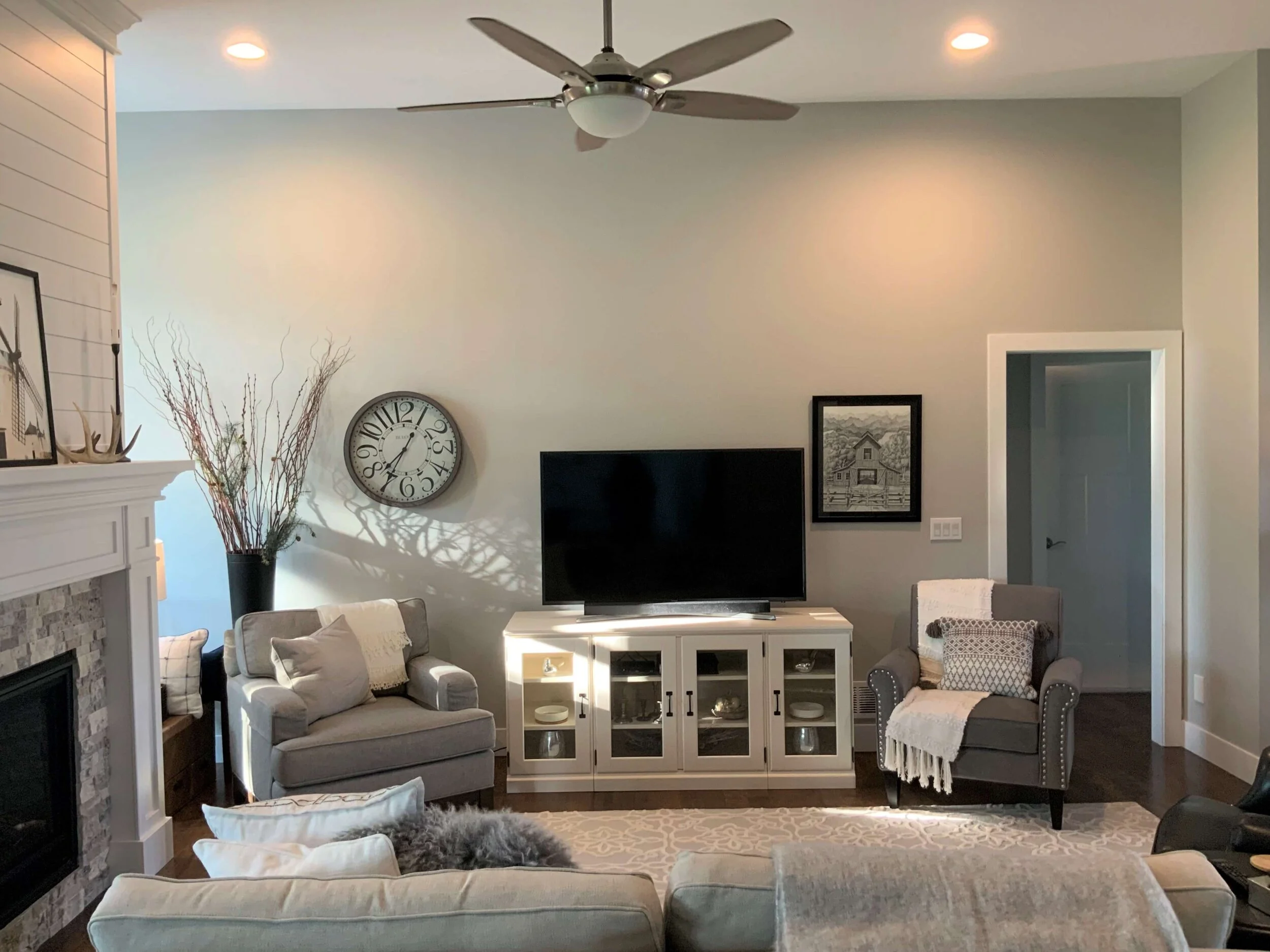
Mount the TV at eye level for comfort. Center the screen at seated eye height—roughly 42–48 inches from the floor to the center of most living rooms. Secure mounting and proper stud placement are critical.
Cable tips:
- Run cables through the wall or use a tidy raceway kit.
- Store streaming boxes in a nearby cabinet or on a shelf with ventilation.
- Consider a power bridge or in-wall power kit for a clean look.
A mistake I made early on was placing the TV too high above the console. Viewers strained their necks. Keep it comfortable first, stylish second.
Small-space and budget-friendly ideas
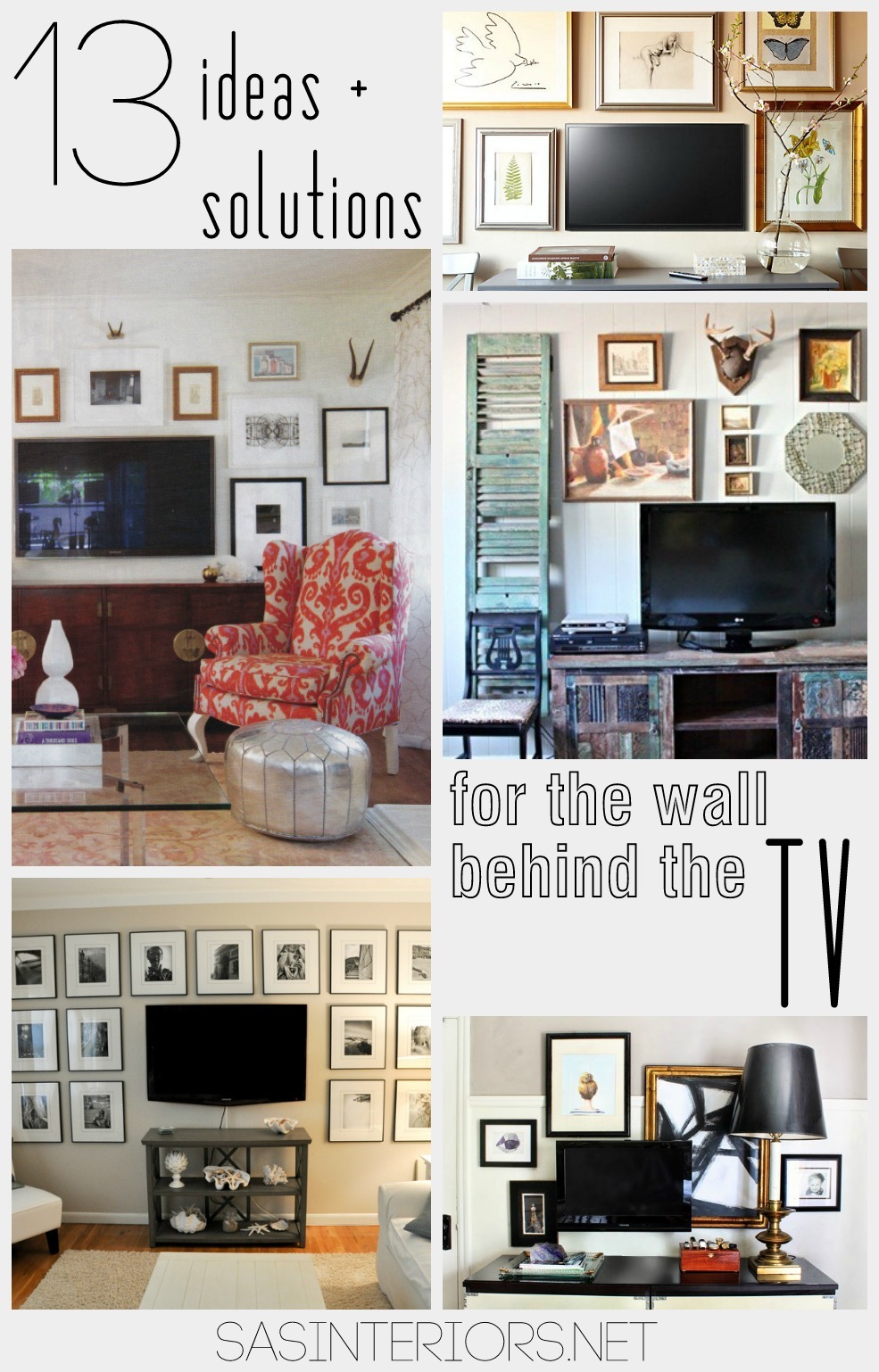
You don’t need a big budget to make a strong statement. Paint, well-placed art, and clever lighting can transform the space for less.
Budget-friendly options:
- Paint an accent rectangle around the TV to “frame” it.
- Use affordable floating shelves and thrifted frames for a gallery wall.
- Add LED strip lights behind the TV for an instant upgrade.
I helped a renter create a dramatic TV wall with peel-and-stick wallpaper and floating shelves—no permanent changes, big impact.

Maintenance and long-term tips
Design the wall so it’s easy to change. Use removable hooks for art and adaptable shelving. Keep electronics updated and vents clear for device longevity.
Long-term advice:
- Reassess every 2–3 years to refresh decor.
- Use neutral anchors so you can swap accent pieces easily.
- Keep a clutter-free zone around devices to avoid overheating.
From personal trials, walls that are easy to update stay fresh longer and prevent costly redo projects.
Frequently Asked Questions of how to decorate wall behind tv stand
How high should I mount my TV above a console?
Mount the TV so the center sits about 42–48 inches from the floor for most seating heights. If you have deep seating or a higher couch, adjust a few inches for comfort.
Can I place artwork above a mounted TV?
Yes. Leave at least 6–12 inches between the top of the TV and the lowest edge of the artwork. That spacing prevents the area from looking cramped and helps both elements breathe.
What is the best paint color behind a TV?
Neutral shades like warm gray, soft taupe, or deep navy work well because they reduce glare and complement many screen colors. Choose a finish that is matte to limit reflections.
How do I hide TV cables without cutting into the wall?
Use a paintable cable raceway or a cord cover that matches the wall color. Place electronics in nearby closed storage to reduce visible wiring and clutter.
Should the TV be the focal point or mixed with decor?
Either option can work. If you want the TV to be primary, keep surrounding decor minimal. If you want a decorative wall, balance art, shelves, and lighting so the TV shares attention.
Are acoustic panels a good idea behind a TV?
Yes. Decorative acoustic panels help with sound quality and can be styled as art. They reduce echo and improve audio when watching shows or gaming.
Conclusion
Decorating the wall behind your TV is about balance: scale, color, and function. Start with a plan, choose a simple palette, and combine art, shelving, and lighting to create a cohesive look. Keep ergonomics and cable management practical, and use budget-friendly accents to refresh the wall over time.
Try one change this weekend—paint a frame, add a shelf, or test backlighting—and see how it transforms the space. Share your results or questions below, subscribe for more design guides, or leave a comment to get personalized tips.

Jamie Lee is a seasoned tech analyst and writer at MyTechGrid.com, known for making the rapidly evolving world of technology accessible to all. Jamie’s work focuses on emerging technologies, product deep-dives, and industry trends—translating complex concepts into engaging, easy-to-understand content. When not researching the latest breakthroughs, Jamie enjoys exploring new tools, testing gadgets, and helping readers navigate the digital world with confidence.