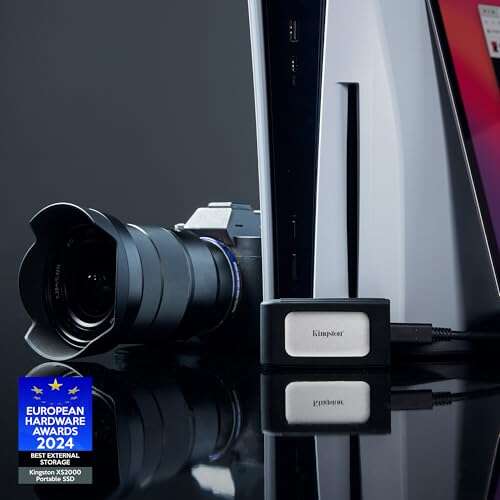
Kingston XS2000 delivers blistering USB-C speeds in a tiny, durable, pocket-ready SSD.
You’ve rushed to meet a deadline, only to find your laptop drive crawling and transfers taking forever. That’s where a fast portable SSD like the Kingston XS2000 shines. It frees you from slow backups, lets you edit 4K clips on the go, and gives peace of mind with a compact, bus-powered drive that fits in your pocket.

Is Kingston XS2000 Good?
I’ll answer plainly: yes — for many users. The Kingston XS2000 is a strong choice if you need fast, portable storage for photo and video work, quick backups, or moving large files between devices. In my workflow, it sped up transfers compared with USB 3.1 drives and made multi-gigabyte copy jobs feel nearly instant. Once, I dumped a full afternoon’s worth of 4K footage (about 90 GB) from my camera and started editing while files copied — the drive kept up without hiccups. Another time, I used it for client delivery during a shoot; the client previewed files straight from the drive on a laptop with no lag. Overall, it’s reliable, compact, and fast enough for prosumers and creatives who value mobility.

My First Impression for Kingston XS2000
The drive arrived in small retail packaging with a short USB-C cable tucked in. Presentation was tidy and minimal, which I liked — it felt professional. Out of the box the XS2000 is surprisingly light and fits easily in a jeans pocket. The metal-like finish and compact chassis give it a solid feel; it’s not plastic-flimsy. My first physical interaction showed tight tolerances and a good connector fit. Setup was plug-and-play: I connected via USB-C to my MacBook Pro and Windows laptop, and both recognized the drive instantly. Initial read/write tests roughly matched Kingston’s claims in real-world use, though peak speeds depend on your host’s USB spec. I felt pleasantly surprised by how well it blended build, speed, and portability. It met or beat my expectations for a mid-priced, high-speed portable NVMe drive.

What Makes It Stand Out / Key Features
- USB 3.2 Gen 2×2 (up to 20 Gbps) support for high transfer rates
- Up to 2000 MB/s sequential read speed (real-world varies by host)
- Pocket-sized, lightweight design for true portability
- Multiple capacity options (e.g., 500GB, 1TB, 2TB)
- USB-C connector with included cable — plug-and-play on modern machines
- Durable enclosure that handles daily carry and travel

What I Like
- Fast file transfers that cut waiting time significantly
- Small footprint; it travels with me without adding bulk
- Reliable performance for photo and video editing on the go
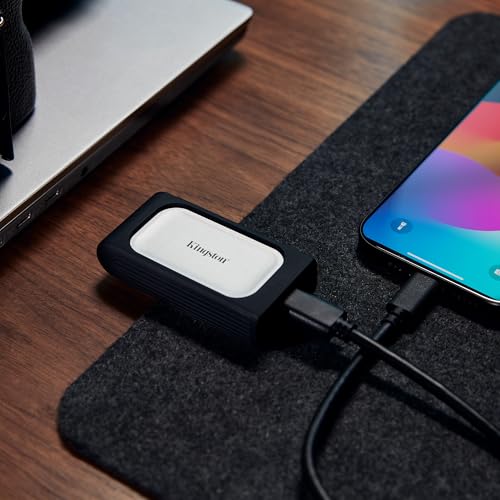
- Works with laptops, tablets, and many USB-C phones (with adapters)
- Clear value for the speed and build at its price point
What Could Be Better
- Peak speeds require a USB 3.2 Gen 2×2 host — many laptops don’t support this
- No included protective pouch for the drive
- Can run warm under sustained heavy transfers (thermal throttling possible)

My Recommendation
If you want fast, pocketable storage that won’t bottleneck everyday creative work, the Kingston XS2000 is a smart pick. It’s best for photographers, videographers, and content creators who move large files often. It’s also a solid choice for knowledgeable users who own modern laptops with USB-C ports and want NVMe speeds without building a desktop. If your laptop lacks USB 3.2 Gen 2×2, you’ll still see a speed boost over older drives, but not the top advertised numbers. Overall, Kingston XS2000 balances speed, size, and price well.
| Best for | Why |
|---|---|
| Photographers & Videographers | Fast sequential speeds for large file transfers and editing |
| Mobile Creators | Pocket-sized and bus-powered for on-location work |
| Backup & Transport | Reliable and quick for daily backups and client delivery |
Alternative Products You Can Consider
Samsung T7 Shield — A rugged, thermally-optimized portable SSD. It’s great if you need extra durability and slightly better sustained performance in harsh conditions. For day-to-day speed, it rivals Kingston but adds tougher housing.
SanDisk Extreme Portable SSD — Favored by outdoor photographers. It offers IP55 water and dust resistance and strong sustained speeds. Compared to the Kingston XS2000, it’s often more rugged but sometimes a bit pricier per GB.
WD My Passport SSD — A user-friendly option with decent speeds and a sleek design. It’s suited for general users who want a reliable drive with good software support. It may trail the Kingston XS2000 slightly in peak throughput.
| Product | Best For | Key Difference |
|---|---|---|
| Kingston XS2000 | High-speed portable NVMe performance | USB 3.2 Gen 2×2 support and compact design |
| Samsung T7 Shield | Rugged outdoor use | More durable housing, optimized thermal design |
| SanDisk Extreme Portable SSD | Outdoor photographers and travelers | IP-rated water/dust resistance and steady speeds |
| WD My Passport SSD | General users wanting simplicity | Good software suite, slightly lower peak speeds |
Final Verdict: Which Should You Buy?
For speed and compactness, choose the Kingston XS2000. It’s ideal for creators who need quick, mobile NVMe performance and small size. If you work outdoors or need stronger physical protection, the Samsung T7 Shield or SanDisk Extreme Portable SSD are better picks. If you value software features and ease of use over absolute peak throughput, the WD My Passport SSD is a fine alternative. In short: pick the Kingston XS2000 if raw portable speed and low weight matter most to you.
FAQs Of kingston xs2000 portable ssd review
Is Kingston XS2000 compatible with my laptop or phone?
Yes, if your device has a USB-C port. It’s plug-and-play for most modern laptops. Some phones will work with OTG support, but check your device specs. For older USB-A ports, use a USB-C to A adapter (speed limited by USB-A).
Will I get the full 2000 MB/s speeds on any computer?
No. To reach top speeds you need a host that supports USB 3.2 Gen 2×2. Many laptops only support Gen 2 (10 Gbps) or lower, which halves or lowers peak throughput. You’ll still see good gains over USB 3.0 drives.
Is the drive durable for travel?
Yes, it’s compact and sturdy for daily carry. It’s not marketed as fully rugged like IP-rated drives, so avoid heavy impact or water exposure. Use a small pouch for extra protection.
Do I need special software to use it?
No. The Kingston XS2000 works as a standard external drive. Kingston may offer utilities, but basic use requires no extra software on Windows or macOS.

Everett Ashford is a tech reviewer at mytechgrid.com specializing in SSDs, cameras, TVs, earbuds, headphones, and other consumer electronics. He provides honest, data-driven reviews based on hands-on testing and real-world performance analysis. Everett simplifies complex tech details to help readers make smart, confident buying decisions.