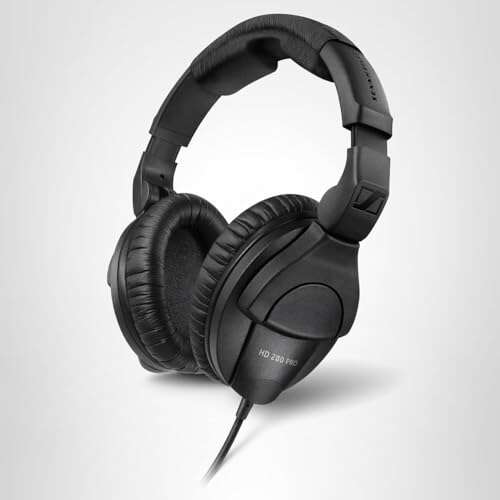
Clear, durable studio cans with tight isolation and honest sound — a pro staple.
You’re editing a podcast, tracking vocals in a noisy room, or just tired of bass-boosted consumer cans that lie to you. The Sennheiser HD 280 Pro solves that by giving you reliable, accurate sound and strong noise isolation in a simple, rugged package. It’s built for long sessions, stills-out background noise, and keeps your mixes honest without fuss.

Is Sennheiser HD 280 Pro Good?
The short verdict: yes — for serious monitoring and focused listening, the Sennheiser HD 280 Pro is a dependable choice. It’s not the flashiest headphone, but it delivers clear mids, tight bass, and an isolation level that keeps room noise out. If you record, mix, or need reliable closed-back cans for travel and field work, these are generally excellent. For casual listeners who want theatrical bass or wireless convenience, you might prefer alternatives.
I’ve used the Sennheiser HD 280 Pro for podcast editing, remote voiceovers, and long editing sessions. Once, on an airplane, these headphones let me edit a full episode while the person beside me played loud videos — and I barely noticed. Another time, during a late-night mix, they exposed a midrange issue that cheap cans had hidden. They’ve been consistent, low-maintenance workhorses in my kit.

My First Impression for Sennheiser HD 280 Pro
The box was plain and functional. The headphones arrived in a compact package with a coiled cable tucked neatly. Out of the box they felt robust. The headband and earcups are mostly plastic, but the hinges and padding feel solid. The clamping force is firm, which helps isolation. Putting them on felt secure, though the pads needed a short break-in for comfort. Setup was zero — plug the single-sided cable into your interface or phone and go. My first listen showed balanced mids and controlled lows. I felt that familiar mix of relief and focus — these are tools, not toys.

What Makes It Stand Out / Key Features
- Closed-back design for strong passive noise isolation
- Balanced sound with clear mids and controlled bass
- Foldable and single-sided cable for easy transport
- Replaceable ear pads and cable for long service life
- Durable build that holds up to daily studio use
- Comfortable padding suitable for multi-hour sessions

What I Like
- Accurate midrange that helps you hear voices and instruments clearly
- Excellent isolation lets you work in noisy places
- Sturdy build and replaceable parts extend lifespan
- Neutral tonal balance for mixing and monitoring tasks
- Affordable price point for professional-grade performance
- Coiled cable stays out of the way and reduces tangling
What Could Be Better
- Clamping pressure can feel tight during long sessions for some users
- Not wireless and lacks modern conveniences like app EQ
- Design is utilitarian — not for those wanting consumer-style flair
My Recommendation
If you need honest sound and reliable isolation, the Sennheiser HD 280 Pro is a smart buy. It’s best for podcasters, field recordists, home studio owners, and anyone who needs accurate, consistent monitoring. The build and replaceable parts make it a long-term tool. For the value, these headphones give great performance without high cost or hype.
| Best for | Why |
|---|---|
| Podcasting & Voice Work | Clear mids help you hear sibilance and tone precisely |
| Home Studio Monitoring | Neutral sound gives a true reference for mixes |
| Travel & Field Recording | Strong isolation and foldable design make them portable |
Alternative Products You Can Consider
Audio-Technica ATH-M50x — These are known for a slightly warmer, punchier sound and come with detachable cables. They’re great if you want a bit more present bass for tracking and casual listening. Compared to the Sennheiser HD 280 Pro, the M50x is often seen as more fun-sounding.
Beyerdynamic DT 770 Pro — These offer plush comfort and a wider soundstage. They’re ideal for long mixing sessions and critical listening. Versus the Sennheiser HD 280 Pro, the DT 770 Pro can feel more luxurious and airy, though they may leak more sound due to design differences.
Sony MDR-7506 — A long-time studio staple, these are compact and reliable with clear highs. They work well for broadcast and field work. Compared to the Sennheiser, the MDR-7506 has a slightly brighter treble and a lighter clamping force.
| Product | Best For | Key Difference |
|---|---|---|
| Sennheiser HD 280 Pro | Isolation & neutral monitoring | Durable, tight isolation and balanced mids |
| Audio-Technica ATH-M50x | Tracking & casual listening | Warmer bass and detachable cable |
| Beyerdynamic DT 770 Pro | Long sessions & mixing | More comfort and wider soundstage |
| Sony MDR-7506 | Broadcast & field work | Brighter treble and compact design |
Final Verdict: Which Should You Buy?
If you want rugged, no-nonsense headphones for accurate monitoring, go with the Sennheiser HD 280 Pro. They excel at isolation and give a truthful sound that helps you spot mix issues. Choose the Audio-Technica ATH-M50x if you prefer a fuller bass and removable cables. Pick the Beyerdynamic DT 770 Pro for superior comfort and a more spacious sound. For field use or tight budgets, the Sony MDR-7506 is a compact, reliable option. Overall, the Sennheiser HD 280 Pro is the best tool if accuracy and isolation are your main needs.
FAQs Of sennheiser hd 280 pro headphones review
Are the Sennheiser HD 280 Pro good for mixing?
Yes. The Sennheiser HD 280 Pro offers a neutral midrange and controlled bass, which helps you make balanced mix decisions. They are a solid budget choice for reference monitoring.
Do the HD 280 Pro isolate sound well?
They do. The closed-back design and firm clamp provide strong passive isolation. This helps in noisy environments and when you need to prevent bleed during recording.
Can I replace the ear pads or cable?
Yes. Both ear pads and the cable can be replaced. That extendability adds to their long-term value.
Are these headphones comfortable for long sessions?
Mostly yes. The padding is adequate, and many users find them fine for multi-hour use. Some people find the clamping force a bit tight at first, but it usually loosens with use.
Do they work with phones and portable devices?
Yes. They use a standard 3.5mm jack (often with a 1/4″ adapter). The sensitivity works well with phones, but very old or weak devices may require a small amp for higher volumes.

Everett Ashford is a tech reviewer at mytechgrid.com specializing in SSDs, cameras, TVs, earbuds, headphones, and other consumer electronics. He provides honest, data-driven reviews based on hands-on testing and real-world performance analysis. Everett simplifies complex tech details to help readers make smart, confident buying decisions.