Introduction
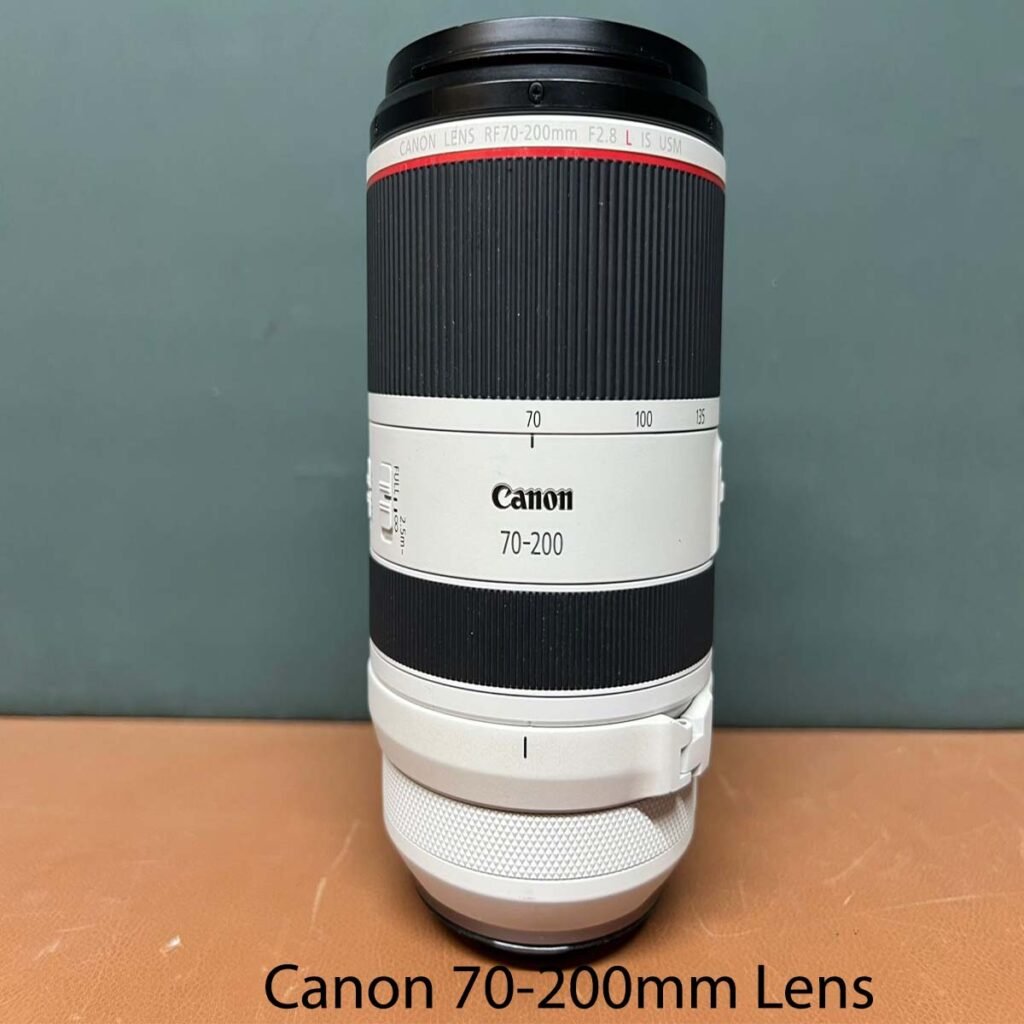
For photographers in the United States, a 70-200mm lens is a telephoto zoom lens with a focal-length range from 70mm to 200mm. The 70mm setting gives a moderately tight view, while 200mm brings distant subjects much closer in the frame.
This lens is widely used for weddings, high school and college sports, wildlife, portraits, events, and travel. The numbers describe focal length, not the physical length of the lens or a guaranteed distance range.
In simple terms, a 70-200mm lens lets you change how tightly you frame a subject without moving your feet. At 70mm, you can include more of the scene. At 200mm, you can isolate a face, player, or distant detail.


What the 70-200mm Numbers Mean
The numbers show the lens’s focal-length range in millimeters.
- 70mm is the short end of the zoom range.
- 200mm is the long end.
- The lens can use any focal length between those two points.
- The lens does not automatically focus from 70 feet to 200 feet.
- The lens is not necessarily 70mm or 200mm long.
Focal length affects the lens’s angle of view and how large a subject appears in the image. A longer focal length shows a narrower slice of the scene and makes the subject appear larger when the camera stays in the same place.
For example, a photographer covering a football game from the sideline may use 70mm to frame a nearby group of players. They can zoom toward 200mm to photograph an individual player farther across the field.
The zoom range is about framing, not optical “reach” measured in feet.

Is a 70-200mm Lens a Telephoto Lens?
Yes. A 70-200mm lens is generally classed as a telephoto zoom lens.


A telephoto lens has a narrow angle of view compared with a standard or wide-angle lens. This makes distant subjects look larger in the frame. It also makes it easier to separate a subject from a busy background.
The 70mm end is useful for medium-distance subjects. The 200mm end provides much tighter framing. That range is one reason the lens is common at sporting events, ceremonies, and stage performances where the photographer cannot walk close to the subject.
A 70-200mm lens can also create a compressed-looking perspective. This effect happens because photographers often stand farther away when using a longer focal length. The lens does not literally flatten space, but the camera position and narrow field of view can make distant objects appear closer together.

How a 70-200mm Lens Looks on Different Cameras
The same 70-200mm lens can show a different field of view on different camera formats.
On a full-frame camera, the lens provides its stated 70-200mm field of view. On a camera with a smaller APS-C sensor, the lens captures a narrower view. This is often described using a crop factor.
Approximate APS-C equivalents
| Camera format | Approximate field of view from a 70-200mm lens |
|---|---|
| Full frame | 70-200mm |
| Canon APS-C, about 1.6× crop | 112-320mm equivalent |
| Many other APS-C cameras, about 1.5× crop | 105-300mm equivalent |
| Micro Four Thirds, 2× crop | 140-400mm equivalent |
These are 35mm-equivalent field-of-view calculations, not changes to the lens’s real focal length.
For example, a 70-200mm lens on a Canon APS-C camera still has a physical focal length of 70-200mm. Its view is similar to what a 112-320mm lens would show on a full-frame camera.
This narrower view can help with sports and wildlife. However, it can make it harder to frame nearby subjects because the lens may not be wide enough.

What Can You Photograph With a 70-200mm Lens?
A 70-200mm lens works best when you need subject detail, working distance, or background separation.
Sports
The range is useful for American football, baseball, basketball, soccer, and track events. The 70mm end can cover nearby action, while 200mm can reach players on the other side of a field.
The best focal length depends on your location. A photographer near the court may use 70mm more often for basketball. A photographer in the stands may need the longer end.
Portraits
Many photographers use a 70-200mm lens for headshots, senior portraits, family portraits, and wedding portraits.
At 85mm, 105mm, or 135mm, the lens can provide a comfortable working distance. At 200mm, it can produce a tighter portrait from farther away.


The long focal lengths can also help create a soft-looking background when paired with a wide aperture. Background blur depends on focal length, aperture, subject distance, background distance, sensor format, and viewing conditions.
Weddings and events
A 70-200mm lens lets a photographer work from the back of a ceremony or reception without standing beside the subject. It can capture expressions, vows, speeches, and candid moments while keeping some distance.
The trade-off is size and weight. A fast 70-200mm f/2.8 lens may be much heavier than a smaller zoom or prime lens.
Wildlife
The 200mm end can help with larger wildlife and animals that are not far away. It is less suitable for very small or distant birds unless the image is cropped or the camera has a smaller sensor.
For wildlife, reach depends on the subject’s size, distance, movement, and how much of the final image you need to fill.
Travel and outdoor photography
A 70-200mm lens can capture details on buildings, distant landscapes, street scenes, and outdoor activities. It is useful when approaching the subject is difficult or not allowed.
It is less useful for tight indoor spaces, group photos, and broad landscapes because 70mm may not be wide enough.

What Does the “f/2.8” or “f/4” Mean?
The 70-200mm label does not describe the lens’s maximum aperture. The aperture appears in a separate part of the name, such as:
- 70-200mm f/2.8
- 70-200mm f/4
- 70-200mm f/2.8-5.6
The f-number describes the lens’s maximum aperture. A lower f-number means a wider maximum opening.
Common versions
| Lens type | Main benefit | Main trade-off |
|---|---|---|
| 70-200mm f/2.8 | More light, faster shutter speeds, stronger background blur | Larger, heavier, and often more costly |
| 70-200mm f/4 | Smaller and lighter body | Lets in less light than f/2.8 |
| 70-200mm variable aperture | Often more compact or affordable | Maximum aperture changes as you zoom |
A 70-200mm f/2.8 lens can be useful for indoor sports, weddings, and dim venues. The wider aperture may allow a faster shutter speed, but the camera’s ISO setting and lighting still affect the final result.
A 70-200mm f/4 lens may be easier to carry during travel or long events. It can also be a practical choice in daylight.

How Much Magnification Does a 70-200mm Lens Provide?
A 70-200mm lens does not have one universal magnification value. Its apparent magnification depends on the camera’s sensor, the subject distance, the final viewing size, and the comparison lens.
Compared with a 50mm lens from the same camera position, 200mm gives a much narrower field of view. A distant subject occupies more of the image, but the exact size change depends on the subject’s distance and the way the image is displayed.


A useful practical comparison is:
- 70mm: wider framing and easier subject tracking
- 100mm: tighter portraits and event details
- 135mm: strong portrait and stage coverage
- 200mm: distant subjects and close details
The lens can make a subject appear larger, but it cannot replace physical proximity in every situation. A small bird far away may still occupy only a small part of the frame at 200mm.
Is a 70-200mm Lens Good for Beginners?
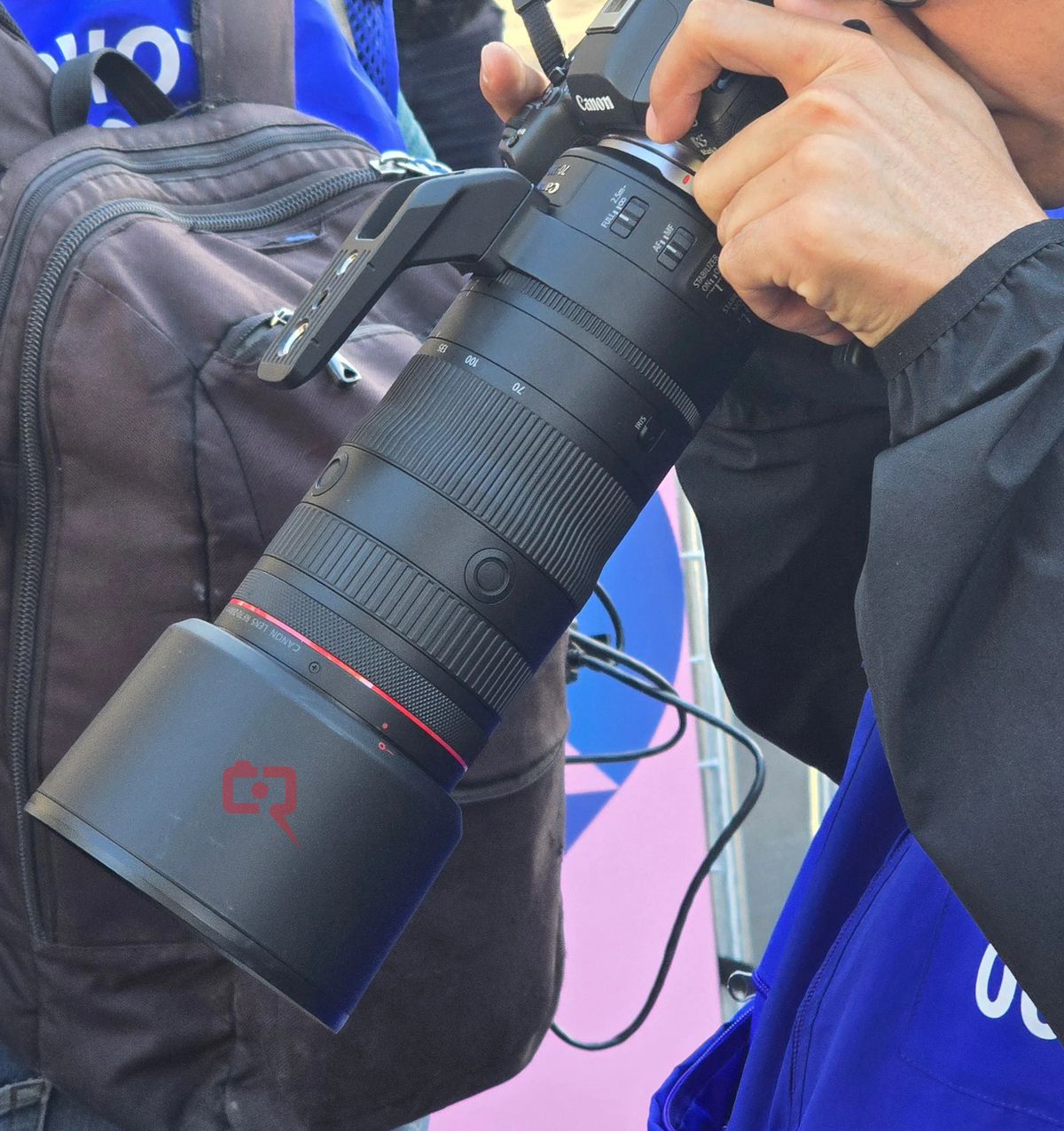
A 70-200mm lens can be useful for beginners, but it is not always the easiest first lens.
It is a strong fit if you photograph:
- Sports
- Portraits outdoors
- Wildlife near trails or parks
- Weddings and ceremonies
- Performances
- Events where you cannot move freely
It may be a poor first choice if you mainly photograph:
- Small rooms
- Large family groups
- Real estate interiors
- Broad landscapes
- Street scenes at close range
- Subjects directly beside the camera
The lens can also feel heavy. Before buying one, check its weight, tripod collar, filter size, minimum focus distance, and compatibility with your camera mount.
A lighter 70-200mm f/4 model may be easier to use for long periods. A 70-200mm f/2.8 model may be better when low light and fast shutter speeds matter more than portability.

70-200mm Lens Compared With Other Common Lenses
The best focal range depends on the subject and the space available.
| Lens range | Typical strength | Common limitation |
|---|---|---|
| 24-70mm | Events, travel, groups, general use | Less reach for distant subjects |
| 70-200mm | Sports, portraits, ceremonies, details | Not wide enough for many interiors |
| 100-400mm | Wildlife and field sports | Less useful at close range |
| 50mm prime | Everyday scenes and portraits | No zoom flexibility |
| 85mm prime | Portraits and low-light work | Fixed focal length |
| 24-105mm | Travel and general photography | Usually less reach than 200mm |
A 70-200mm lens often complements a 24-70mm lens. The first lens covers wide and normal views, while the second takes over when the subject is farther away.
A 70-200mm lens is not automatically better than a 100-400mm lens for wildlife. The 100-400mm lens offers more reach, while the 70-200mm lens is often easier to use for portraits, events, and nearby action.
Common Mistakes With a 70-200mm Lens
Assuming 200mm means a fixed shooting distance
The lens does not limit you to a 200-foot subject distance. You can photograph something a few feet away if the lens can focus that close, although the framing may be too tight.
Check the lens’s minimum focus distance before photographing close subjects.


Forgetting the crop factor
A 70mm view on an APS-C camera is narrower than a 70mm view on full frame. This can make it difficult to frame a nearby subject.
If you use an APS-C camera, plan for the camera’s crop factor when deciding whether 70mm is wide enough.
Using too slow a shutter speed
Long focal lengths magnify camera shake. A common starting point is to use a shutter speed near or faster than the reciprocal of the full-frame-equivalent focal length. For example, 200mm on a full-frame camera may require about 1/200 second or faster for hand-held shooting.
This is only a starting point. Moving subjects may need much faster shutter speeds, such as 1/500 second or more.
Image stabilization can reduce camera movement, but it does not freeze a moving person, athlete, or animal.
Expecting image stabilization to solve every problem
Some 70-200mm lenses include optical image stabilization. Others rely on in-body stabilization or have no stabilization.
Stabilization can help with hand movement when the subject is still. It cannot correct subject motion. Read the manual for the specific lens and camera before relying on stabilization in low light.
Ignoring lens size
A 70-200mm f/2.8 lens may be large enough to affect comfort, balance, and storage. A camera strap, monopod, or properly rated tripod may help during long sessions.
Never place a heavy camera and lens on a weak tripod or loose mounting plate. Check the load rating and tighten all connections before raising the camera.

How to Choose the Right 70-200mm Lens
Choose the lens by matching its features to your subjects and shooting conditions.
Select the aperture
Choose f/2.8 if you often work in dim venues, photograph fast action, or want more control over background blur.
Choose f/4 if lower weight and easier carrying matter more, especially for daylight travel, outdoor portraits, and hikes.
Check camera compatibility
Confirm the lens mount matches your camera. A lens made for one mount may not attach directly to another. Some adapters preserve autofocus and stabilization, while others reduce or remove electronic functions.
Use the camera and lens maker’s compatibility information for the exact model combination.
Check autofocus features
For sports and wildlife, autofocus speed and tracking support can matter. These features depend on both the lens and the camera body.
Do not judge autofocus from the 70-200mm label alone. Check the exact model’s manual or technical specifications.
Check stabilization
If you often shoot hand-held in low light, stabilization may be valuable. If you mostly use fast shutter speeds for sports, autofocus and aperture may matter more.
Consider size and weight
A lens that stays in your camera bag can be more useful than a heavier lens that remains at home. Weight is part of the practical specification, not a minor detail.
Check the minimum focus distance
A shorter minimum focus distance gives you more flexibility for details, close portraits, and small objects. It does not turn the lens into a macro lens unless the lens is specifically designed for macro work.

Frequently Asked Questions
Does a 70-200mm lens zoom?
Yes. A 70-200mm lens is a zoom lens. You can change its focal length from 70mm through the range to 200mm.
Can I use a 70-200mm lens for portraits?
Yes. The lens is well suited to portraits, especially outdoors or in rooms with enough space to step back. Many photographers use the middle and long parts of the range for headshots and candid portraits.
Is a 70-200mm lens good for wildlife?
It can work well for large animals or wildlife that is fairly close. For small or distant animals, a longer lens such as a 100-400mm or 150-600mm may provide more useful reach.
Can I use a 70-200mm lens indoors?
Yes, but the room must provide enough space. The 70mm end may still be too narrow for groups or small rooms. A fast aperture can help in low light, but it does not solve framing limits.
What does 70-200mm f/2.8 mean?
It means the lens has a 70-200mm focal-length range and a maximum aperture of f/2.8 across the zoom range. The f/2.8 specification is separate from the focal-length numbers.
Key Takeaways
- A 70-200mm lens is a telephoto zoom lens.
- The numbers mean the focal length can change from 70mm to 200mm.
- The lens does not focus only at distances between 70 and 200 feet.
- It is commonly used for sports, portraits, weddings, wildlife, and events.
- A 70-200mm lens gives a narrower view than a standard zoom.
- APS-C and Micro Four Thirds cameras show a narrower equivalent field of view.
- The aperture, such as f/2.8 or f/4, is a separate specification.
- Stabilization helps reduce camera shake but does not freeze moving subjects.
- Weight, minimum focus distance, autofocus, and camera compatibility all affect the best choice.
Conclusion
A 70-200mm lens means a zoom lens with a focal-length range from 70mm to 200mm. The 70mm setting gives a wider view, while 200mm provides tighter framing for distant subjects and details.
For U.S. photographers covering sports, portraits, weddings, ceremonies, and outdoor events, this range can be highly practical. Before choosing a model, compare the aperture, weight, stabilization, autofocus, minimum focus distance, and camera compatibility.

Everett Ashford is a tech reviewer at mytechgrid.com specializing in SSDs, cameras, TVs, earbuds, headphones, and other consumer electronics. He provides honest, data-driven reviews based on hands-on testing and real-world performance analysis. Everett simplifies complex tech details to help readers make smart, confident buying decisions.