Bone conduction headphones can be useful in some loud places in the United States, such as busy streets, airports, gyms, and public transit. They leave the ear canals open, so you can hear traffic, announcements, and people around you.
But they are not a good choice for very loud environments if you need clear sound or hearing protection. They do not block noise. In fact, loud background sound may make music, calls, and podcasts hard to hear. Turning up the volume can also expose your inner ear to harmful sound.
The short answer is:
Bone conduction headphones are good for awareness in moderately noisy places, but they are not hearing protection and are usually poor for very loud work sites, concerts, aircraft cabins, and heavy machinery areas.

How bone conduction headphones work
Bone conduction headphones send sound through vibrations in the bones near your cheek and jaw. These vibrations reach the cochlea, the inner-ear part that changes sound into signals for the brain.
Regular headphones send sound through the air. They use the ear canal, eardrum, and middle ear.
Bone conduction models sit outside the ear. This design has two key effects:
- Your ear canals stay open.
- Outside sound can still reach your ears.
- You may hear traffic and nearby speech more easily.
- Music may sound less full, especially in the bass range.
- Background noise can cover up the headphone audio.
- The sound still reaches the inner ear.
The last point matters most for safety. Bone conduction does not bypass the cochlea. Loud audio can still affect hearing because the inner ear still receives the sound signal.
Are bone conduction headphones good in loud environments?
They are useful in moderately noisy environments where awareness matters more than sound quality. They are less useful when the background noise is so loud that it covers the audio.
Consider the environment, not just the headphone type.
| Environment | Are bone conduction headphones a good fit? | Why |
|---|---|---|
| City sidewalk | Often yes | You can hear cars, bikes, and people |
| Walking or running path | Often yes | Open ears improve awareness |
| Gym with moderate music | Usually yes | They do not seal the ears |
| Airport terminal | Sometimes | Announcements may remain audible, but music can be hard to hear |
| Subway or train | Sometimes | Low-frequency rumble may mask the audio |
| Busy office | Usually yes | You can hear coworkers and alerts |
| Construction site | Usually no | They are not hearing protection |
| Factory floor | Usually no | Machinery may overpower the audio |
| Lawn mower use | No | The sound level may be hazardous |
| Concert or sporting event | Usually no | Loud sound can overpower the headphones |
| Aircraft cabin during flight | Often no | Engine noise can make the audio unclear |
This table gives a practical rule: bone conduction works best when you need to hear both the headphones and your surroundings. It works poorly when the surroundings are dangerously or continuously loud.

Why loud noise makes bone conduction audio hard to hear
The main problem is masking. Masking happens when one sound makes another sound difficult to hear.
For example, a subway train creates a strong background sound. A bone conduction headset adds audio, but it does not seal the ear canal. The train noise still reaches your ears. Your brain must separate the two sound signals.
You may respond by increasing the headphone volume. That can make the audio clearer, but it may increase the sound dose reaching your cochlea.
This creates a poor trade-off:
- Loud background noise covers the headphone audio.
- You raise the volume.
- The headphone sound becomes louder.
- Your ears receive more total sound.
- Listening for a long time may increase hearing risk.
Bone conduction headphones can also sound quieter than sealed earbuds in noisy places. That does not always mean the headset is safer. A user who keeps increasing the volume may erase the safety benefit of the open design.
Do bone conduction headphones protect your hearing?
No. Standard bone conduction headphones are not hearing protection.
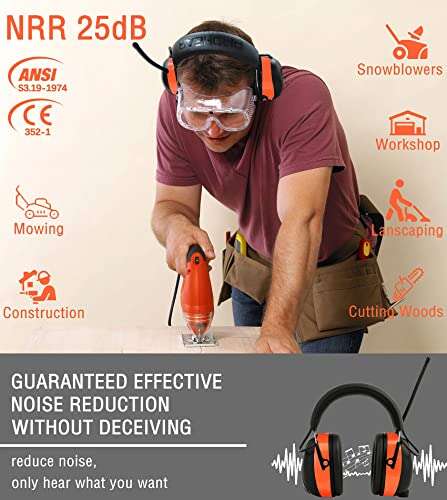
Hearing protection is designed and tested to reduce exposure to hazardous sound. Examples include earplugs and earmuffs with a published noise reduction rating, or NRR, in the United States.
Bone conduction headphones do not normally have an NRR. Their open-ear design allows outside sound to reach the ear. They may help you stay aware of your surroundings, but awareness is not the same as protection.
The Occupational Safety and Health Administration (OSHA) requires employers to use a hearing conservation program when workplace noise reaches an 8-hour time-weighted average of 85 decibels on the A scale, or dBA. OSHA also sets limits for higher noise levels and requires controls in covered workplaces.
The National Institute for Occupational Safety and Health (NIOSH) uses a more protective recommendation: 85 dBA for eight hours, with allowable exposure time cut in half for each 3 dB increase.
These limits concern noise exposure, not headphone branding. A bone conduction headset does not turn a loud workplace into a safe one.
Can you wear bone conduction headphones with earplugs?
Sometimes, but the setup needs care.
Earplugs can lower outside noise while bone conduction headphones send sound through the bones. This may make the headphone audio easier to hear. However, the complete setup is not automatically certified as hearing protection.
Use this approach only when:
- Your employer permits personal audio devices.
- The earplugs or earmuffs are approved for the task.
- You can still hear required alarms and instructions.
- The work area does not ban headphones.
- You do not treat the headset as a replacement for rated PPE.
For a job site, follow the employer’s hearing protection plan. If the work requires hearing protection, use the approved equipment first.

Bone conduction versus earbuds in noisy places
The better choice depends on your goal.
| Goal | Bone conduction headphones | Sealed earbuds |
|---|---|---|
| Hear traffic and people | Usually better | Often worse |
| Block outside noise | Poor | Better, especially with active noise cancellation |
| Hear music clearly in noise | Often poor | Usually better |
| Keep ears open | Yes | No |
| Provide certified hearing protection | Usually no | Usually no, unless separately rated |
| Reduce the urge to raise volume | Not always | Often better in a controlled fit |
| Stay aware of alarms | May help, but not guaranteed | May reduce awareness |
Sealed earbuds with active noise cancellation may make music easier to hear at a lower volume. However, noise cancellation is not the same as hearing protection. Consumer earbuds are not a substitute for certified workplace PPE.
Bone conduction is often the better choice for a runner on a U.S. road or trail. Earbuds may be better for a passenger who wants clear music on a plane. Neither choice should replace hearing protection near dangerous machinery.
What sound level is too loud?
A simple rule is useful: if you must shout to be heard by someone standing about 3 feet away, the area may be too loud for casual listening.
That rule is only a rough warning. A sound-level meter provides better information.
NIOSH recommends limiting exposure to 85 dBA over an eight-hour workday. Its exchange rate is 3 dB. Under that model, approximate exposure times are:
| Noise level | Approximate recommended exposure |
|---|---|
| 85 dBA | 8 hours |
| 88 dBA | 4 hours |
| 91 dBA | 2 hours |
| 94 dBA | 1 hour |
| 97 dBA | 30 minutes |
| 100 dBA | 15 minutes |
These figures describe total daily noise exposure. They are not a safe-volume setting for a particular headphone. Your surroundings, headphone output, fit, and listening time all affect the result.
The CDC and NIOSH Sound Level Meter app can help estimate environmental sound on supported devices. A phone app is not a substitute for a calibrated workplace measurement, but it can reveal when an area is clearly loud.
The World Health Organization’s safe listening guidance also recommends reducing listening time and volume. A practical habit is to keep the volume as low as needed and take quiet breaks.

How to use bone conduction headphones more safely
Use bone conduction headphones as an awareness tool, not as protective equipment.
1. Start with the lowest useful volume
Play your content at a low level. Raise it only until you can understand it. If you need a large volume increase to hear speech, the environment may be too loud for the headset.
2. Test speech before starting
Ask someone nearby to speak at a normal level. You should be able to hear the person without removing the headphones.
If you cannot hear normal speech, do not assume that a higher volume solves the problem. Move to a quieter place or stop the audio.
3. Keep the listening time short
A lower volume for a long time can still contribute to total exposure. Take breaks in a quiet place, especially during travel, exercise, or long commutes.
4. Leave one key sense available
Do not use headphones in a way that prevents you from hearing traffic, alarms, instructions, or approaching people. Open ears help, but they do not guarantee that you will detect every sound.
5. Use hearing protection at loud work
For construction, manufacturing, landscaping, shooting ranges, and similar tasks, use the hearing protection selected for that environment. Ask a supervisor or safety professional if you are unsure.
6. Watch for warning signs
Stop listening and move away from the noise if you notice:
- Ringing in the ears
- Muffled hearing
- Ear pain
- A blocked or full feeling
- Trouble understanding speech after leaving the area
- Dizziness or unusual discomfort
Temporary symptoms can signal excessive exposure. Persistent ringing, hearing loss, pain, or dizziness should be assessed by a health professional or hearing specialist.

Common mistakes to avoid
Mistake 1: Assuming open ears mean safe ears
Open-ear headphones can improve awareness. They do not prevent loud sound from reaching the inner ear.
Mistake 2: Turning the volume up to beat the noise
This is one of the biggest risks. If the audio is hard to hear, the safer fix is often to leave the noisy area, shorten the session, or use approved hearing protection.
Mistake 3: Treating noise cancellation as PPE
Noise cancellation may improve comfort and clarity. It does not automatically provide a workplace noise reduction rating.
Mistake 4: Wearing headphones on a dangerous job
Some workplaces prohibit personal headphones because they interfere with communication or alarms. Follow site rules even if a headset leaves your ears open.
Mistake 5: Using “awareness” as a guarantee
You may hear some outside sound while wearing bone conduction headphones. Wind, traffic, crowds, and machinery can still cover important signals.
Mistake 6: Ignoring fit and placement
Bone conduction headsets need contact with the proper area near the cheekbones. Poor placement can make the audio quieter and encourage unsafe volume increases. Follow the model’s instructions and keep the contact points clean.
Who should choose bone conduction headphones for noisy places?
Bone conduction headphones may suit you if:
- You walk, run, or cycle where outside awareness matters.
- You work in a quiet or moderately noisy office.
- You want to hear people without removing earbuds.
- You listen for short periods in public places.
- You accept lower bass and less sound isolation.
They may not suit you if:
- You need strong noise isolation.
- You work near loud tools or machinery.
- You want deep bass in a crowded place.
- You need certified hearing protection.
- You often raise the volume because the audio is hard to hear.
- You have a hearing condition and need a device selected by a hearing professional.
A hearing professional can help if you have hearing loss, tinnitus, ear pain, or trouble understanding speech. Bone conduction headphones are not the same as a bone-conduction hearing aid, and a consumer headset should not be used as a medical device.
Best choice by situation
Use this quick decision guide:
- Walking near U.S. traffic: Bone conduction can be a reasonable option, but keep the volume low and stay alert.
- Running on a shared trail: Bone conduction may help you hear other trail users.
- Working in an office: Bone conduction is often practical if you need to hear coworkers.
- Riding a bus or train: It may work, but the rumble can overpower the audio.
- Flying: Sealed headphones may provide clearer audio, but they are not automatically hearing protection.
- Using power tools: Use rated hearing protection. Do not rely on bone conduction headphones.
- Working around heavy equipment: Follow the site’s PPE rules and hearing conservation program.
- Attending a concert: Consider hearing protection designed for loud music. Bone conduction headphones will not make the venue safer.
Frequently asked questions
Do bone conduction headphones work on airplanes?
They work, but engine noise may overpower the audio. Because they do not seal the ear canal, they usually provide less isolation than closed-back headphones or earbuds. Follow crew instructions and do not use them as hearing protection.
Are bone conduction headphones safer than earbuds?
Not in every situation. They may reduce the need to block your ears when awareness is important. But they can still expose the inner ear to loud audio, and users may raise the volume in noisy places. Safety depends on volume, time, and background noise.
Can bone conduction headphones cause hearing loss?
Any headphone that delivers loud sound may contribute to hearing damage. Bone conduction headphones still stimulate the cochlea, so they are not exempt from safe listening limits.
Can I use bone conduction headphones at a construction site?
Usually, no. Construction sites may have hazardous noise, strict PPE rules, and critical alarms. Use the hearing protection required by the employer. A standard bone conduction headset is not a substitute for that protection.
Why can I hear my surroundings but not my music?
The outside noise may be masking the headphone audio. Wind, engines, crowds, and machinery can cover speech and music. Lowering the background noise, moving to a quieter place, or using suitable approved hearing protection may help more than raising the volume.
Key takeaways
- Bone conduction headphones are open-ear devices, not hearing protectors.
- They can work well in moderately noisy public places where awareness matters.
- They usually perform poorly in very loud environments.
- Loud background noise may tempt you to increase the volume.
- Use rated hearing protection around hazardous workplace noise.
- Keep volume and listening time as low as practical.
- Stop if you notice ringing, muffled hearing, pain, or dizziness.
Conclusion
Bone conduction headphones are good for hearing your surroundings, not for defeating loud noise. They can be a smart option for walking, running, commuting, and office use when the environment is busy but not hazardous.
For construction, factory work, power tools, concerts, and other high-noise settings, choose proper hearing protection instead. If the background sound forces you to turn up the headset, the environment is too loud for comfortable and responsible listening.
The best next step is simple: test the headset at a low volume in the place where you plan to use it. If you cannot hear the content clearly without turning it up, move somewhere quieter or use equipment designed for that setting.
Sources
- OSHA: Occupational Noise Exposure
- NIOSH: Noise and Hearing Loss Prevention
- CDC/NIOSH: Sound Level Meter App
- WHO: Making Listening Safe
- OSHA: Hearing Protection

Everett Ashford is a tech reviewer at mytechgrid.com specializing in SSDs, cameras, TVs, earbuds, headphones, and other consumer electronics. He provides honest, data-driven reviews based on hands-on testing and real-world performance analysis. Everett simplifies complex tech details to help readers make smart, confident buying decisions.