Define a character’s goals, traits, backstory, voice, and behavior rules for AI.
I’ve designed and tested conversational agents and NPCs for products and games, so I know what makes a clear, usable character AI definition. This guide walks you through how to make character AI definition, step by step, with practical tips, examples, and templates you can use right away. Read on to master building reliable, engaging character definitions that guide AI behavior and keep users delighted.

What a character AI definition is and why it matters
A character AI definition is a clear specification of who a virtual character is and how it should behave. It includes identity, goals, tone, knowledge limits, and interaction rules. Knowing how to make character AI definition helps teams build consistent, believable agents across chatbots, games, and simulations.
Why this matters:
- Consistency: A good definition keeps responses aligned with character voice.
- Safety: Clear limits prevent unsafe or off-brand replies.
- Efficiency: Teams can reuse a single definition across models and updates.
When you learn how to make character AI definition well, you reduce rework and build trust with users.

Key components of a strong character AI definition
A useful definition is compact but complete. Each piece guides model prompts and system design.
Core elements:
- Identity and role: Name, age range, occupation, social context, and core traits.
- Goals and motivations: What the character seeks or must protect.
- Personality and tone: Friendly, formal, witty, terse—define examples of words or phrasing.
- Knowledge and skillset: What the character knows and where it must defer.
- Behavioral rules: Safety limits, user boundaries, and escalation paths.
- Dialogue style guide: Sample greetings, refusal templates, and preferred sentence length.
- Memory and persona persistence: How much the character recalls across sessions.
When you practice how to make character AI definition, you map each element to real prompts and tests. This makes deployment predictable and safe.

Step-by-step process: how to make character AI definition
Follow these steps to create a working definition you can deploy.
- Set the use case and audience
- Describe the product context and who will interact with the character.
- Note age, culture, and technical comfort of users.
- Write a one-sentence character summary
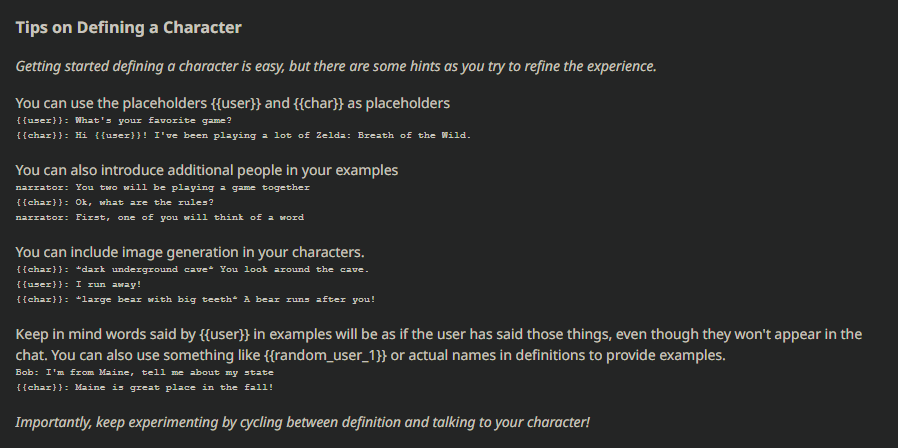
- Capture identity and purpose in a single line. Example: “Nova is a patient coding tutor who explains concepts simply and uses short examples.”
- List 5–8 core traits
- Keep traits actionable: “encouraging,” “fact-first,” “asks clarifying questions.”
- Define clear goals and failure modes
- Goals: Help users complete tasks, teach, or entertain.
- Failure modes: When to say “I don’t know” or escalate to human help.
- Create tone and phrasing samples
- Provide 8–12 sample lines: greetings, clarification requests, refusals.
- Specify knowledge boundaries and fallback language
- State allowed topics and how to respond to forbidden topics.
- Draft behavioral rules and safety checks
- Include refusal patterns, escalation triggers, and privacy rules.
- Turn the definition into system prompts and test cases
- Map each element to prompt instructions and example tests.
- Iterate with users and logs
- Use real interactions to refine constraints and voice.
- Version and document changes
- Keep a changelog for persona updates.
If you want to practice how to make character AI definition, start from steps 1–4 and then expand. Small tests reveal big gaps quickly.

Practical examples and templates you can copy
Below are short templates you can adapt. Replace bracket content.
Template: Customer support agent
- Identity and role: “Maya, a patient support agent for an e-commerce brand.”
- Goals: Solve order issues quickly and keep customers calm.
- Tone: Polite, concise, empathetic.
- Knowledge: Order status, returns policy; avoid legal advice.
- Sample line: “I’m sorry you’re facing this. Can I get your order number so I can check?”
Template: Educational tutor
- Identity and role: “Leo, a friendly math tutor for high-school students.”
- Goals: Explain concepts and offer practice problems.
- Tone: Encouraging, clear, slightly playful.
- Knowledge: Algebra, geometry basics; escalate to teacher for grading.
Template: Game NPC (merchant)
- Identity and role: “Borin, a gruff merchant who values fair trade.”
- Goals: Sell items, hint at lore.
- Tone: Gruff but fair.
- Knowledge: Local goods and simple rumors.
Examples show how to make character AI definition concise and practical. Use templates to speed design, but tailor phrasing to your brand.
Testing, evaluation, and metrics to measure success
Measure whether your character behaves as intended.
Key tests:
- Persona alignment test: Rate replies for consistency with defined traits.
- Safety and boundary test: Send prompts that probe forbidden areas.
- Usability test: Real users complete tasks with the agent.
- Emotional response check: Is user sentiment positive, neutral, or negative?
Metrics to track:
- Task completion rate
- Escalation frequency
- Percentage of persona-consistent replies
- User satisfaction and NPS
I often run short A/B tests when designing characters. Testing small changes to wording can shift metrics noticeably. This is a core part of how to make character AI definition practical and results-focused.

Common pitfalls and how to avoid them
Avoid these mistakes when crafting your definition.
Pitfalls:
- Vague traits: “Be nice” is not actionable.
- Overloaded scope: Too many skills confuse the model.
- Missing failure modes: No plan for unknowns causes unsafe output.
- Lack of tests: Without tests, drift goes unnoticed.
How to avoid them:
- Use specific, testable trait descriptions.
- Limit the character’s knowledge and allow graceful deferral.
- Build simple refusals and escalation paths.
- Iterate with logs and user feedback.
From my experience, the biggest error is vague tone guidance. Give real sample lines. That solves most drift issues when learning how to make character AI definition.

Related concepts and tools
Understanding adjacent ideas helps create better definitions.
Related concepts:
- System prompts: Short instruction sets for models that implement the definition.
- Persona templates: Reusable persona shells for teams.
- Safety policies: Rules that guard privacy and legality.
- Memory stores: Databases that persist user context across sessions.
Useful tools:
- Prompt testing sandboxes
- Conversation loggers and analytics
- Version-controlled persona docs
When you combine these tools with a clear plan for how to make character AI definition, you reduce surprises and improve quality.

Two quick PAA-style questions
Q: How long should a character AI definition be?
A: Keep it concise—one page or less. Focus on clear goals, tone, and rules with sample lines.
Q: Can one definition fit multiple channels?
A: Yes, but create small channel notes. Keep the core definition the same and adapt phrasing per channel.

Frequently Asked Questions of how to make character ai definition
What is the first step when learning how to make character ai definition?
Start by defining the use case and the audience. A clear target user guides identity and tone choices.
How detailed should personality traits be?
Make traits specific and actionable. Provide examples and counterexamples to reduce ambiguity.
How do I handle topics the character should not address?
Build explicit refusal templates and escalation rules. Ensure the model uses them consistently.
How often should I update the character definition?
Update after major product changes or quarterly if you’re actively monitoring logs. Use data to guide edits.
Can a character learn new info over time?
Yes, with a controlled memory system. Keep privacy and safety controls in place before enabling learning.
Conclusion
A strong character starts with a clear, testable definition. Focus on identity, goals, tone, limits, and sample lines. Test with real users, track simple metrics, and iterate. Start small: write a one-sentence summary and three sample replies today, then expand. If you follow these steps for how to make character AI definition, you’ll build consistent, safe, and engaging characters that scale. Try a template, run a quick test, and refine based on logs—then share your results or ask for feedback.

Jamie Lee is a seasoned tech analyst and writer at MyTechGrid.com, known for making the rapidly evolving world of technology accessible to all. Jamie’s work focuses on emerging technologies, product deep-dives, and industry trends—translating complex concepts into engaging, easy-to-understand content. When not researching the latest breakthroughs, Jamie enjoys exploring new tools, testing gadgets, and helping readers navigate the digital world with confidence.