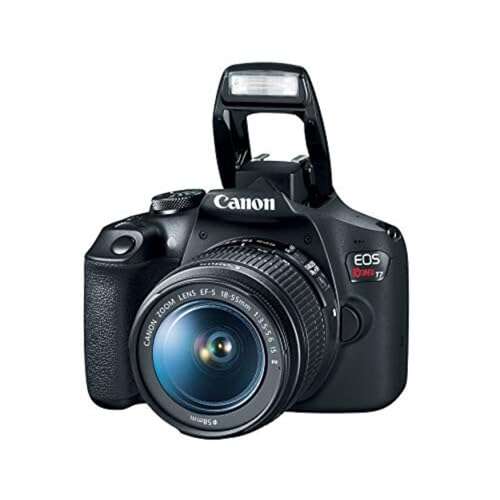
For photographers in the United States, the short answer is sometimes—but not by default. A DSLR can take sharp, rich photos with strong color and low noise. Yet a modern mirrorless camera or even a high-end phone may produce a better image in some situations.
The camera body is only one part of the result. The lens, light, focus, settings, subject, and editing all matter. A skilled photographer with an older DSLR can often take a better photo than a beginner with a new camera.
This guide explains when DSLR cameras have an advantage, when they do not, and how to choose the right camera for your needs.

What makes a photo “better”?
A better photo meets the goal of the person taking it. That may mean sharp detail, natural skin tones, low noise, soft background blur, fast focus, or a clean image in low light.
Photo quality is not one single number. It includes:
- Detail: How much fine texture the photo records.
- Dynamic range: How well the camera keeps detail in bright and dark areas.
- Noise: Speckles or grain that appear, often in dark scenes.
- Color: How accurately the image records tones.
- Focus accuracy: Whether the subject is sharp.
- Timing: Whether the camera captures the right moment.
- Depth of field: How much of the scene appears sharp.
- Image processing: How the camera or phone changes the final file.
A larger sensor can help with noise and background blur. A better autofocus system can help with moving subjects. A better lens can improve sharpness and control light.
But no camera can fix poor light, missed focus, or bad timing.

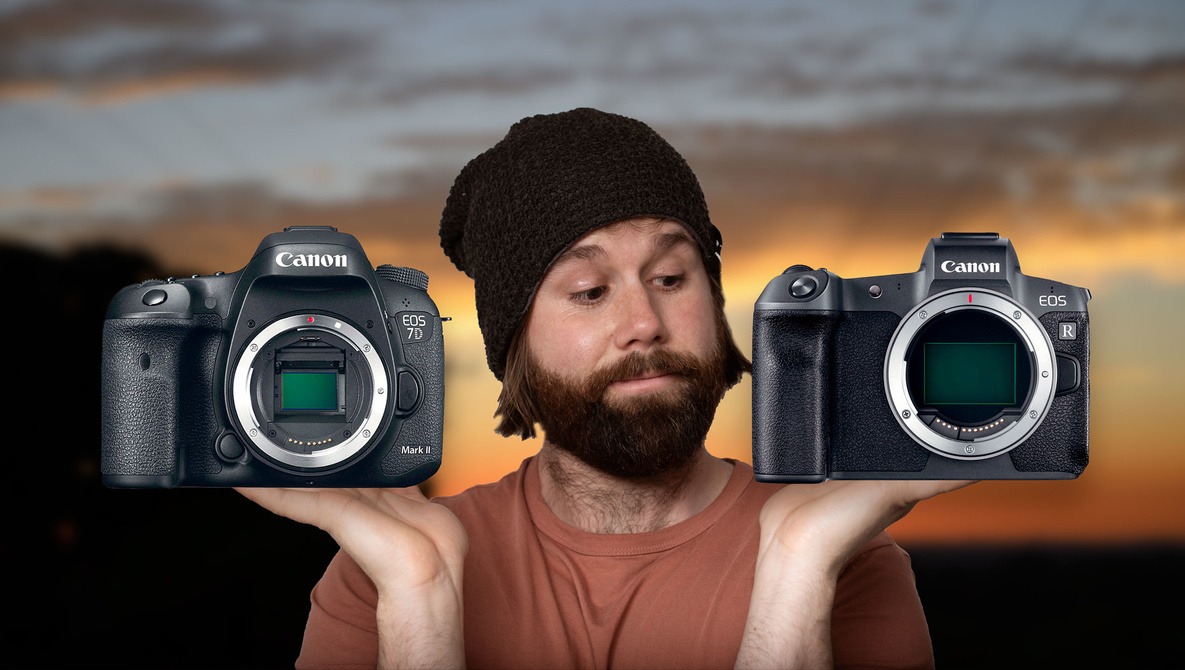
DSLR vs. mirrorless: What is the difference?
A DSLR uses a mirror and an optical viewfinder. Light enters through the lens, reflects off the mirror, and reaches your eye. When you take a photo, the mirror moves so light can reach the image sensor.
A mirrorless camera has no mirror box. Light goes straight to the image sensor. The camera shows the scene on an electronic viewfinder or rear screen.
Both types can use large sensors and interchangeable lenses. Both can create professional-quality photos.
| Feature | DSLR | Mirrorless |
|---|---|---|
| Viewfinder | Optical | Electronic |
| Internal mirror | Yes | No |
| Battery life | Often longer | Often shorter, model dependent |
| Body size | Usually larger | Often smaller |
| Live-view autofocus | Can be limited on older models | Usually strong |
| Video tools | Vary widely | Often more advanced |
| Lens system | Mature on major brands | Growing and often newer |
| Silent shooting | Less common | More common |
The design does not decide image quality by itself. The sensor, lens, software, and photographer matter more.
When do DSLR cameras take better pictures?
DSLR cameras can take better pictures when they offer a sensor, lens, or control system that suits the scene better than the alternative.
In bright outdoor light
Many DSLRs produce excellent images in daylight. Their large sensors can capture fine detail, and their interchangeable lenses allow wide choices for landscapes, portraits, sports, and wildlife.
In bright light, the difference between a DSLR and a similar mirrorless camera may be hard to see. A good lens and careful exposure often matter more than the camera type.
For long battery life
DSLRs often use less power because the optical viewfinder does not need a screen. This can help during:
- Weddings
- Travel
- Long hikes
- Outdoor events
- Wildlife sessions
- Remote photo shoots
Battery performance depends on the camera model, temperature, lens, image review settings, and use of the rear screen. Do not assume every DSLR will last longer than every mirrorless camera.
For optical viewing in changing light
An optical viewfinder shows the scene directly through the lens. It does not add electronic brightness or processing to the view.
This can feel natural in bright sunlight. It also avoids the slight delay or display noise that some electronic viewfinders may show in difficult conditions.
The trade-off is that an optical viewfinder cannot preview the exact exposure, white balance, or picture style before you take the shot.
For affordable used camera systems
The U.S. used-camera market has many older DSLR bodies and lenses. Canon and Nikon DSLR systems, in particular, have broad lens and accessory options.
A used DSLR may offer strong image quality at a lower cost than a newer system. Check the camera’s shutter count, sensor condition, battery health, lens fungus, autofocus accuracy, and return policy before buying.
A low body price can be misleading if you also need several costly lenses.
When are mirrorless cameras better?
Mirrorless cameras often have an advantage when autofocus, video, size, or live preview matters.
For moving subjects
Many current mirrorless cameras use autofocus directly on the imaging sensor. They may track faces, eyes, animals, cars, and other moving subjects across much of the frame.
This can help with:
- Children at play
- Sports
- Birds in flight
- Pets
- Dance
- Events
Some newer DSLRs also focus well, especially through their optical viewfinders. However, older DSLR live-view systems may focus more slowly or offer less subject tracking.
The camera still needs the right shutter speed. Fast autofocus cannot prevent motion blur caused by a shutter speed that is too slow.
For video
Mirrorless cameras are often better suited to video because the sensor and electronic display work continuously during recording.
They may offer stronger support for:
- 4K recording
- Face and eye tracking
- Electronic stabilization
- Log video profiles
- High-quality microphones
- Screen-based shooting
Some DSLRs record excellent video. The model’s exact features matter more than the camera label.
For exposure previews
An electronic viewfinder can show a preview of brightness, white balance, and exposure. This helps when you want to see the likely result before pressing the shutter.
That can make manual exposure easier for new photographers. It can also help in dark scenes or with unusual lighting.
The preview is not always exact. It depends on the camera’s settings and display.
For smaller kits
Mirrorless bodies can be smaller because they do not need a mirror and optical viewfinder system. Some lenses are also smaller.
However, large sensors still need large lenses for long focal lengths or wide apertures. A small body does not always mean a small camera bag.

Is a DSLR better than a phone camera?
A DSLR usually offers more control and stronger technical potential than a phone. A phone may still produce the better final image in quick, automatic use.
A DSLR has important advantages:
- Larger sensors
- Interchangeable lenses
- Better control over shutter speed and aperture
- Stronger optical zoom options
- More natural background blur
- Better control of flash and accessories
- Higher-quality RAW files on many models
A phone has different strengths:
- Fast automatic processing
- HDR blending
- Night modes
- Panorama stitching
- Face detection
- Easy sharing
- Small size
- Multiple built-in cameras
Phones combine several frames and use software to improve shadows, highlights, sharpness, and color. This is called computational photography.
For a quick family photo in daylight, a phone may look brighter and more pleasing. For a portrait with controlled background blur, a sports image, or a photo that needs heavy editing, a DSLR may provide more useful raw material.
The best choice depends on whether you value speed and convenience or control and flexibility.
Which matters more: the camera body or the lens?
The lens often has a larger effect on the look of a photo than the camera body.
A lens controls:
- Focal length
- Maximum aperture
- Perspective
- Background blur
- Sharpness
- Distortion
- Autofocus behavior
A fast lens with a wide aperture, such as f/1.8, can let in more light and create a softer background. A telephoto lens can make distant subjects appear larger. A wide lens can capture more of a room or landscape.
The camera body still matters. It affects autofocus, sensor noise, dynamic range, burst speed, stabilization, and handling.
If you already own a DSLR, buying a better lens may improve your photos more than replacing the body with another DSLR of similar age.
Example
Suppose you own an older APS-C DSLR with a basic kit lens. Moving to a bright 50mm f/1.8 lens may give you:
- More background blur
- Better indoor performance
- A faster shutter speed in low light
- Stronger subject separation
- A different portrait look
Those changes may be easier to see than a small upgrade in sensor resolution.
Does a DSLR take better low-light photos?
A DSLR can take excellent low-light photos, but the result depends on sensor size, lens aperture, shutter speed, ISO, and stabilization.
The most useful low-light choices are:
- Use a lens with a wide maximum aperture.
- Keep the shutter speed fast enough for the subject.
- Use image stabilization when the subject is still.
- Lower the ISO when a tripod is safe.
- Add light when possible.
- Shoot RAW if you plan to edit the image.
Image stabilization can reduce blur from camera movement. It cannot stop a moving person from becoming blurred.
A full-frame DSLR may show less noise than an APS-C DSLR at the same exposure and similar technology level. But camera generations differ, so sensor size alone does not prove that one model will perform better.
Do DSLRs have better image quality than mirrorless cameras?
Not automatically. A DSLR and mirrorless camera with similar sensor size and technology can produce very similar image quality.
The main differences often appear in operation:
- Mirrorless cameras may focus better on eyes and subjects across the frame.
- DSLRs may provide longer battery life and a clear optical view.
- Mirrorless cameras often offer better video tools.
- DSLRs may cost less on the used market.
- New mirrorless lens designs may provide advanced optical performance.
- DSLR systems may offer a wider supply of affordable used lenses.
A full-frame DSLR may outperform a small-sensor mirrorless camera in some low-light or depth-of-field situations. A modern APS-C mirrorless camera may outperform an older full-frame DSLR in autofocus or video.
Compare exact models, not only camera categories.
What should beginners buy?
Beginners should choose the camera they can afford, understand, and carry. A camera that stays at home cannot take pictures.
A used DSLR may be a good choice if you want:
- A low entry price
- An optical viewfinder
- Long battery life
- Manual controls
- A large used lens market
- Photography rather than advanced video
A mirrorless camera may be a better fit if you want:
- Eye-detection autofocus
- Strong video features
- A live exposure preview
- A lighter body
- Newer wireless features
- A system with a longer future product cycle
A phone may be enough if you mainly take casual photos, share them online, and do not need long lenses or extensive editing.
Before buying, try to answer these questions:
- What subjects will you photograph?
- Will you shoot indoors or outdoors?
- Do you need video?
- Do you need a long lens?
- Will you edit RAW files?
- Can you carry an extra lens?
- Is the camera system still supported?
- Can you find batteries and repairs in the United States?
Common mistakes that reduce photo quality
Many weak photos result from technique, not camera limits.
Using too slow a shutter speed
A slow shutter can cause blur from hand movement or subject movement. Raise the shutter speed when the subject moves.
Choosing the wrong autofocus mode
Single-shot autofocus can work well for still subjects. Continuous autofocus is often better for moving subjects.
Ignoring the lens
A poor or unsuitable lens can limit sharpness, light intake, framing, and background blur.
Overusing high ISO
High ISO helps in dark scenes, but it can increase noise. Add light or use a wider aperture when practical.
Relying on automatic exposure
Automatic exposure is useful, but it may struggle with snow, bright backlighting, dark clothing, or strong contrast. Learn how exposure compensation works.
Buying too many megapixels
More megapixels can help with cropping and large prints. They do not automatically create a better photo. Focus, lens quality, light, and technique still matter.
Forgetting to check used gear
For a used DSLR, test:
- Every major button and dial
- Autofocus with more than one lens
- The memory card slot
- The flash or hot shoe
- The battery and charger
- The sensor for marks
- The lens for haze, fungus, or scratches
- The shutter and mirror for unusual noise
DSLR camera decision table
Use this table as a starting point, not as a substitute for comparing exact models.
| Your main need | Usually the better fit | Why |
|---|---|---|
| Low-cost still photography | Used DSLR | Strong value and many used lenses |
| Long battery life | DSLR | Optical viewfinder uses little power |
| Sports and wildlife tracking | Modern mirrorless or advanced DSLR | Strong subject autofocus |
| Video | Mirrorless in many cases | Better live-view and video design |
| Casual travel photos | Phone or small mirrorless | Fast and easy to carry |
| Portrait background blur | DSLR or mirrorless with a bright lens | Large sensor and wide aperture |
| Bright outdoor shooting | Any suitable system | Light and lens matter more |
| Learning exposure | DSLR or mirrorless | Both provide manual control |
| Very large prints | Camera with a suitable large sensor | Resolution, lens, and technique matter |
Frequently asked questions
Do professional photographers still use DSLRs?
Yes. Some professionals continue to use DSLRs because they already own trusted bodies and lenses, prefer optical viewfinders, or value battery life. Others have moved to mirrorless systems for autofocus, video, size, or newer lenses.
Are DSLR photos sharper than phone photos?
They can be, especially with a good lens, careful focus, and suitable settings. A phone may look sharper in a quick comparison because its software adds sharpening and combines several frames.
Is a 10-year-old DSLR still good?
It can be. A 10-year-old DSLR may still produce excellent images in good light. Check its autofocus, sensor condition, battery support, lens mount, memory card format, and video limits before buying.
Should I buy a DSLR or mirrorless camera in the United States?
Choose a DSLR if low cost, optical viewing, battery life, and still photography are your main goals. Choose mirrorless if you want strong live-view autofocus, modern video tools, or a newer lens system.
Can a DSLR take professional photos?
Yes. Professional results depend on the camera’s capability, the lens, lighting, technique, editing, and the photographer’s goal. A DSLR does not need to be new to produce publication-quality images.
Sources and evidence used
The core technical points in this guide align with documented camera-system information from major manufacturers and industry standards. For model-specific research, check the current manuals and specifications rather than relying only on product category claims.
Useful sources include:
- Canon Camera Museum: DSLR and camera technology
- Nikon Learn and product support
- Sony Alpha camera support and technology information
- CIPA camera shipment statistics
- Adobe guide to RAW files and photography workflow
Manufacturer pages document features and specifications. They do not, by themselves, prove that one camera will create better real-world photos for every photographer.
Final answer: Do DSLR cameras take better pictures?
DSLR cameras can take better pictures, but they do not always do so.
A DSLR may be the better tool when you want strong still-image control, long battery life, an optical viewfinder, affordable used gear, and interchangeable lenses. A modern mirrorless camera may be better for autofocus, video, live exposure previews, and compact systems. A phone may be best for fast, convenient everyday photos.
If you already own a DSLR, learn exposure, use a suitable lens, improve the light, and practice focus before replacing it. If you are buying your first camera, compare the complete system—not just the body.

Everett Ashford is a tech reviewer at mytechgrid.com specializing in SSDs, cameras, TVs, earbuds, headphones, and other consumer electronics. He provides honest, data-driven reviews based on hands-on testing and real-world performance analysis. Everett simplifies complex tech details to help readers make smart, confident buying decisions.