No. Not all Shokz headphones use bone conduction. Shokz sells two main types of open-ear headphones in the United States:
- Bone-conduction headphones, such as the OpenRun, OpenMove, OpenComm, and OpenSwim Pro.
- Air-conduction or air-transmission headphones, such as the OpenFit, OpenFit Air, and OpenFit 2.
The key difference is simple: bone-conduction models send sound through vibrations in the bones near your ear, while air-conduction models use small speakers that send sound through the air without sealing your ear canal.
Shokz also makes hybrid products. The OpenRun Pro 2, for example, combines bone conduction with an air-conduction speaker system. So, the Shokz name alone does not tell you which sound technology a model uses.
This guide focuses on models sold in the United States and explains how to identify the technology before you buy.
Which Shokz headphones use bone conduction?
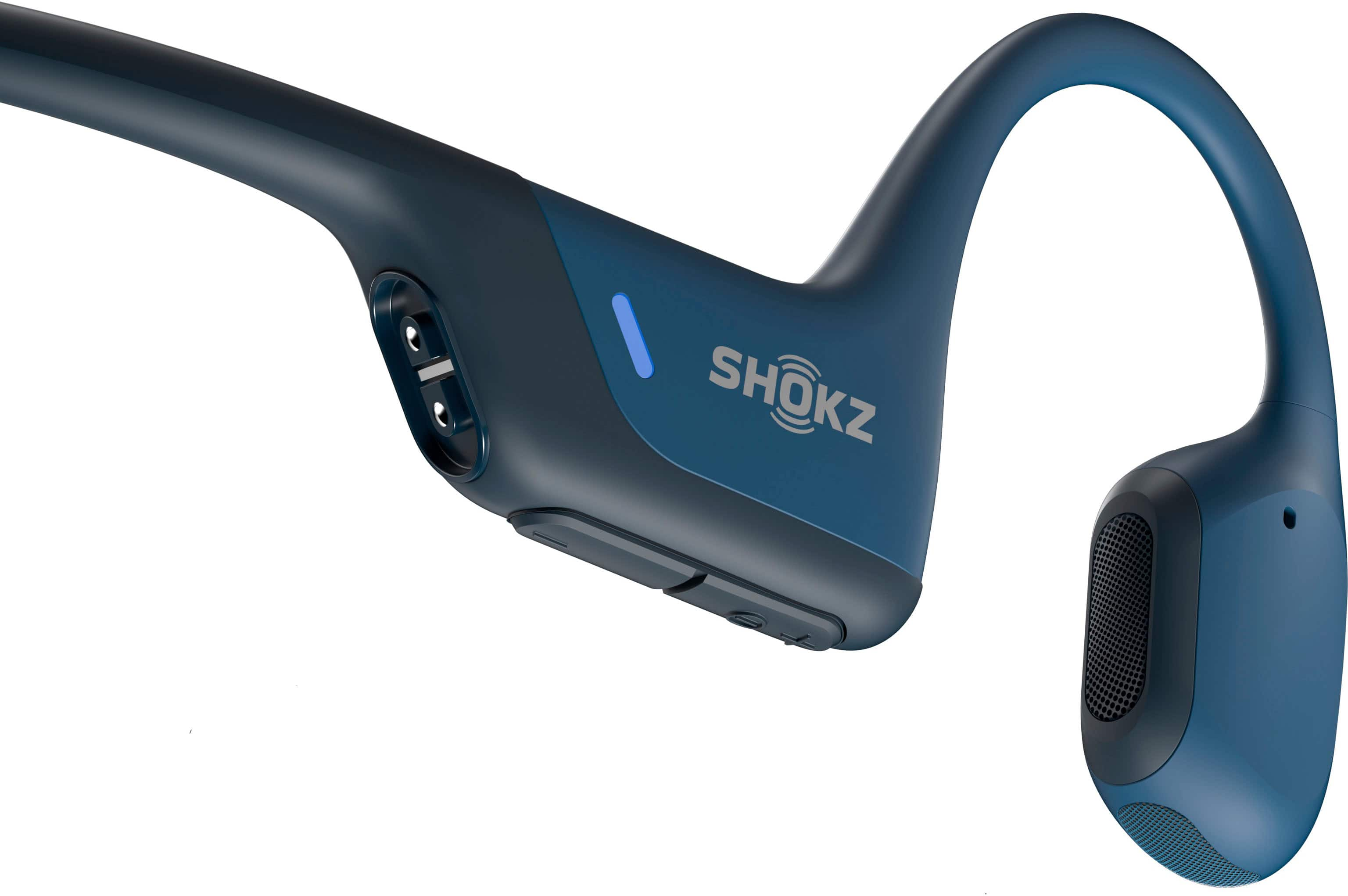
Shokz models with names such as OpenRun, OpenMove, OpenComm, and OpenSwim generally use bone-conduction technology. These headphones sit outside the ear and rest near the cheekbones instead of placing a speaker inside the ear canal.
Here is a practical guide to the main Shokz product groups:
| Shokz model or family | Main sound method | Ear-canal design | Common use |
|---|---|---|---|
| OpenRun | Bone conduction | Open | Running, walking, daily use |
| OpenRun Mini | Bone conduction | Open | Smaller head sizes |
| OpenRun Pro | Bone conduction | Open | Exercise and daily listening |
| OpenRun Pro 2 | Hybrid bone and air conduction | Open | Music and exercise |
| OpenMove | Bone conduction | Open | Entry-level daily use |
| OpenComm | Bone conduction with a microphone | Open | Calls and work |
| OpenSwim | Bone conduction | Open | Swimming with stored audio |
| OpenSwim Pro | Bone conduction | Open | Swimming and Bluetooth use |
| OpenFit | Air conduction | Open | Music, calls, and daily listening |
| OpenFit Air | Air conduction | Open | Lightweight daily use |
| OpenFit 2 | Air conduction | Open | Music, calls, and daily use |
This table describes the product families, not every regional variation or special edition. Shokz may change features, names, or availability over time. Always check the model page on the official Shokz U.S. website before buying.
The main bone-conduction Shokz models
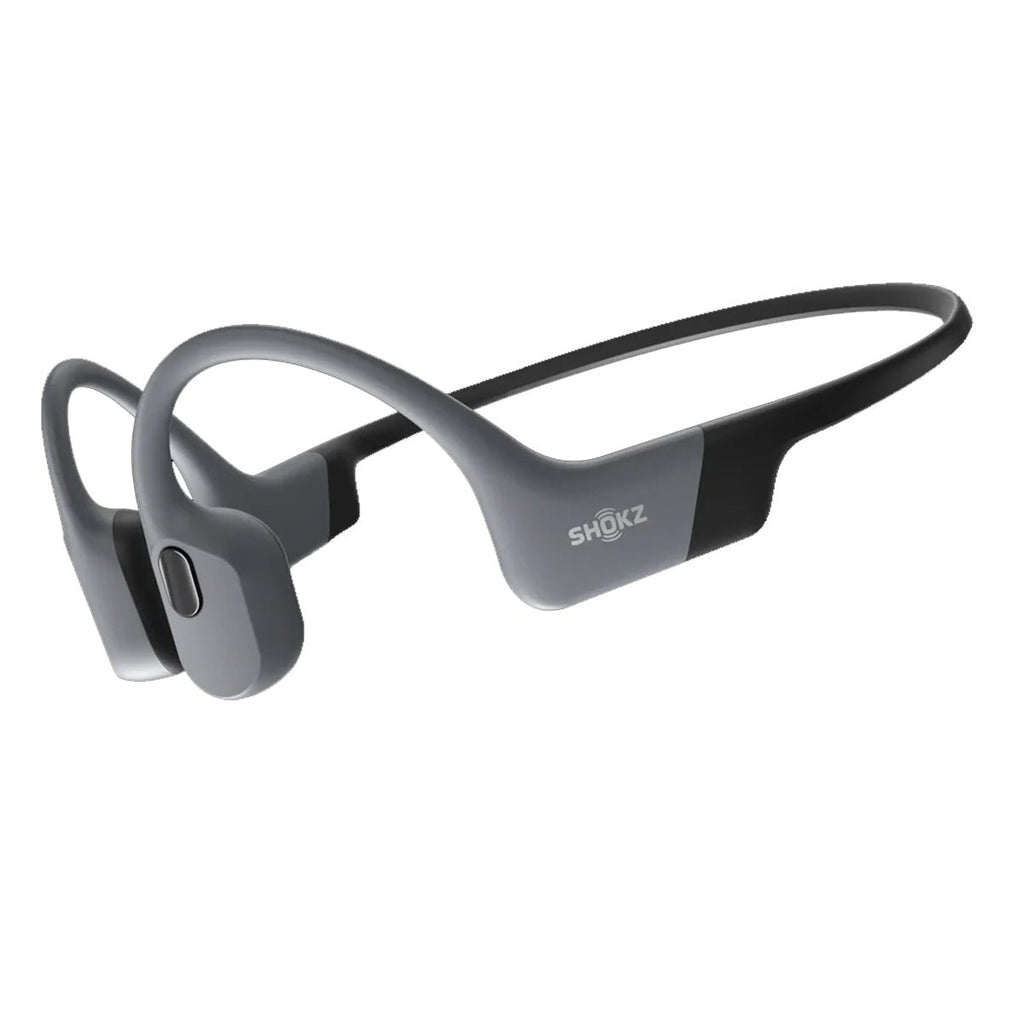
OpenRun and OpenRun Pro are designed for people who want to hear music while keeping their ears open. They are popular for running, cycling, walking, and gym use.
OpenMove is a simpler bone-conduction option. It is often positioned as an affordable model for general use, although exact pricing and included accessories can change.
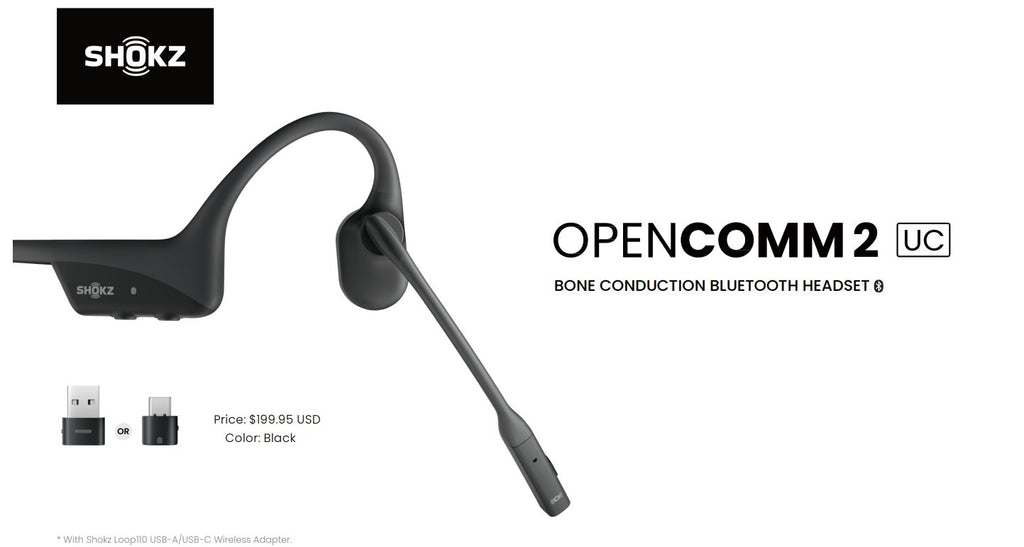
OpenComm adds features aimed at voice calls and workplace communication. It is still an open-ear bone-conduction headset, but its microphone and call controls are central to its design.
OpenSwim and OpenSwim Pro are made for swimming. The standard OpenSwim relies on internal music storage because Bluetooth signals do not travel well through water. OpenSwim Pro adds Bluetooth for use outside the pool and stored audio for swimming.
The hybrid exception: OpenRun Pro 2
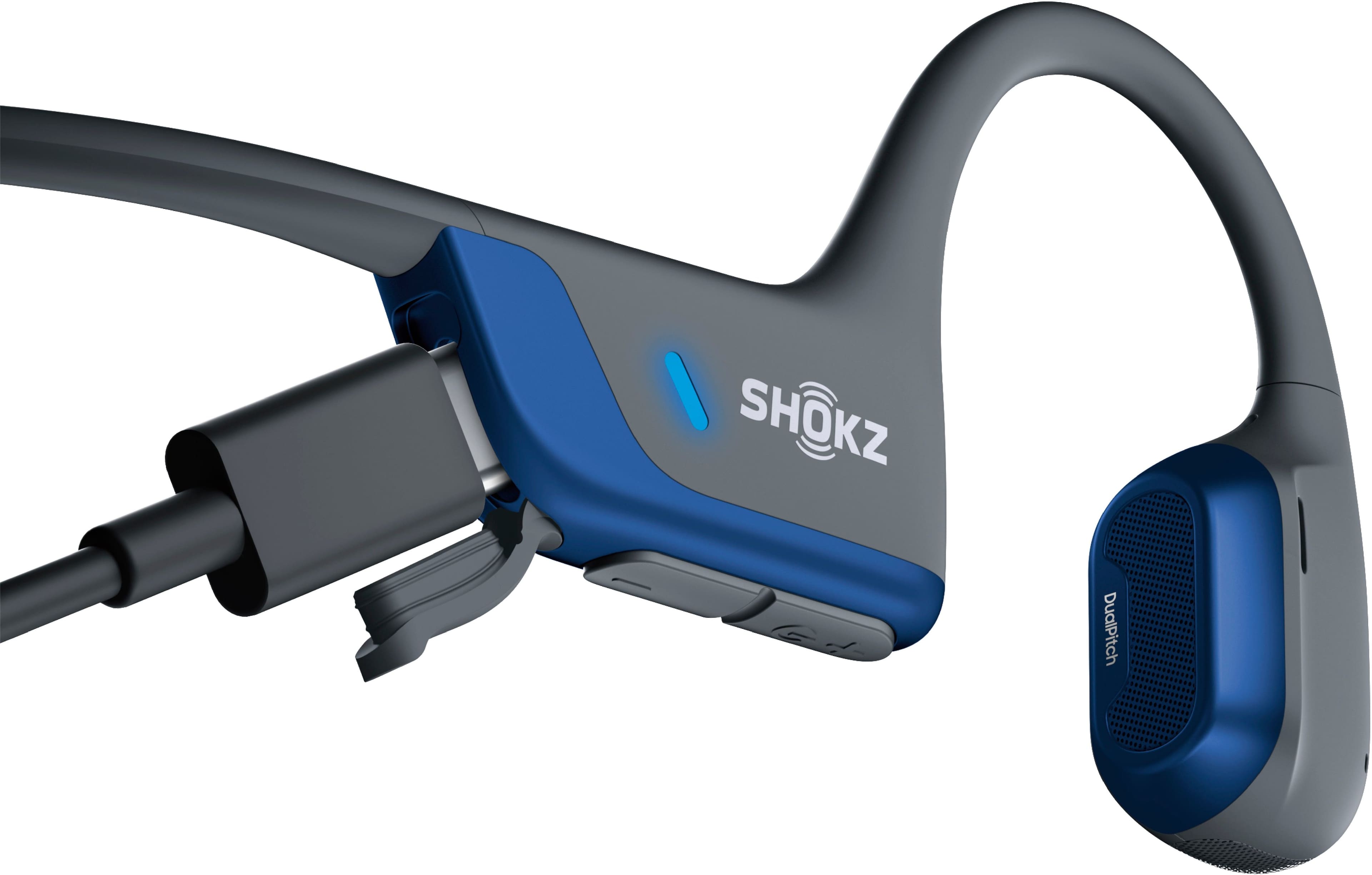
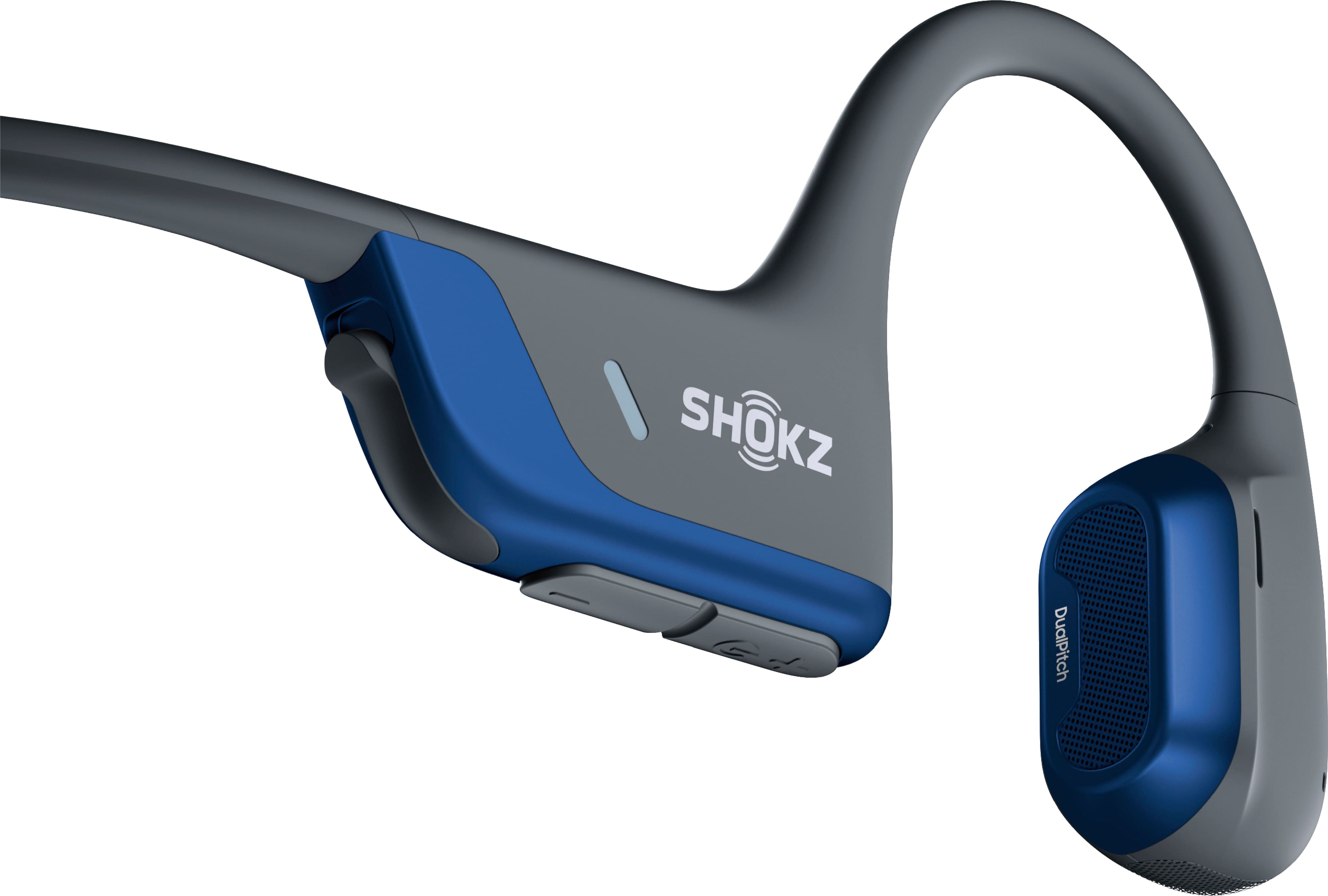
The OpenRun Pro 2 is not a traditional bone-conduction-only headset. It uses Shokz’s DualPitch approach, with bone-conduction transducers and separate air-conduction speakers.
That design aims to improve the sound range that reaches the listener while keeping the ears open. It is best described as a hybrid open-ear headphone, not simply as a standard bone-conduction model.
Which Shokz headphones do not use bone conduction?
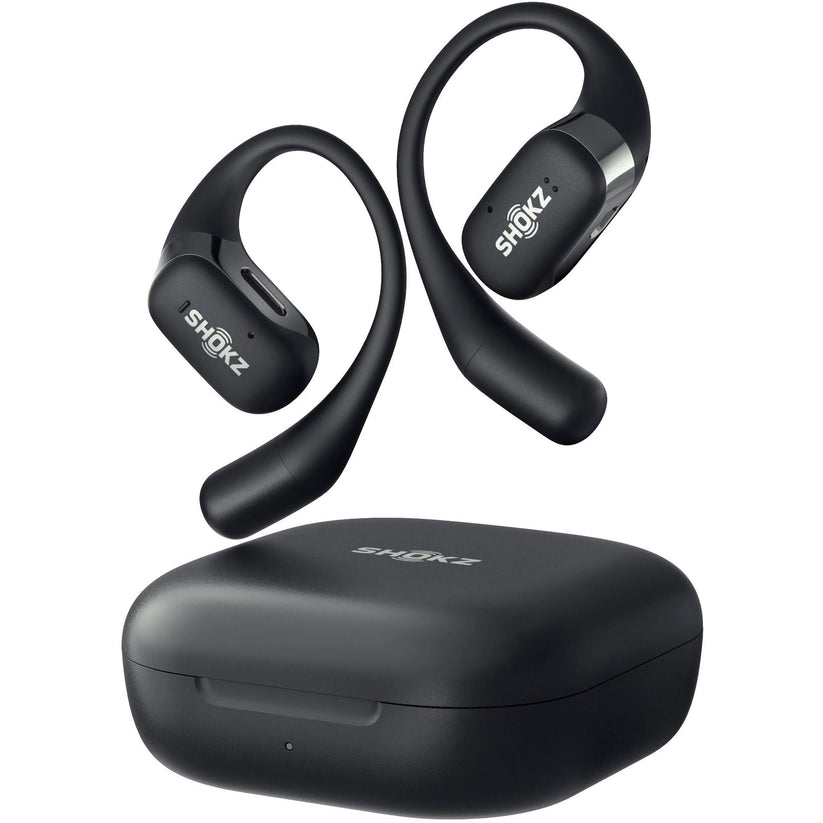
The OpenFit family does not use traditional bone conduction. OpenFit, OpenFit Air, and OpenFit 2 use small air-conduction speakers positioned near the ears.
These models do not sit on the cheekbones in the same way as OpenRun headphones. Instead, they use an ear-hook or earbud-like shape to hold the speaker near the ear without fully blocking the ear canal.
The difference matters because the sound experience is not the same:
- Bone-conduction headphones vibrate the area around the ear.
- Air-conduction headphones send sound through the air from a speaker.
- Both designs leave the ear canal open.
- Air-conduction models may sound more like regular earbuds.
- Bone-conduction models may feel more comfortable for people who dislike in-ear tips.
Shokz sometimes describes OpenFit products with terms such as open-ear or air conduction. “Open-ear” describes the listening style, not the technical method. An open-ear headphone can use bone conduction, air conduction, or a hybrid system.
That is why “open-ear Shokz headphones” and “bone-conduction Shokz headphones” are not interchangeable terms.
How does bone conduction work in Shokz headphones?
Bone conduction works by sending vibrations through the bones near the outer ear. The vibrations reach the inner ear, where the body processes them as sound.
A bone-conduction headset does not need to push sound directly into the ear canal. Its transducers sit against the sides of the head, usually near the cheekbones in front of the ears.
The basic path looks like this:
- The headset receives an audio signal.
- A transducer changes that signal into vibration.
- The vibration travels through nearby bone.
- The inner ear detects the vibration.
- The brain interprets it as sound.
This is different from a standard earbud. An earbud moves air in the ear canal. A bone-conduction headset mainly uses vibration instead.
What bone conduction changes in daily use
Bone-conduction headphones can help you stay aware of nearby sounds. You may still hear traffic, people, alarms, and other sounds around you because your ear canals are not covered.
They can also help people who dislike earbuds or cannot wear in-ear tips comfortably. However, they may not deliver the same bass strength or musical detail as well-sealed earbuds or over-ear headphones.
At high volume, some users feel a mild buzzing or vibration on the cheekbones. This is a normal part of the design, but it may feel unusual at first.
Bone conduction does not mean the headphones are silent to people nearby. Sound leakage can occur, especially at high volume or in a quiet room.
Bone conduction is not the same as hearing through a medical device
Commercial bone-conduction headphones are consumer audio products. They are not a replacement for hearing aids, bone-anchored hearing systems, or medical treatment.
People with hearing loss should not assume that bone-conduction headphones will work for them. The result depends on the type and severity of hearing loss. An audiologist can explain whether this kind of device is suitable.
How does air conduction work in Shokz OpenFit headphones?
Air-conduction headphones use a small speaker to move air near the ear. The speaker does not need to sit inside the ear canal, but the sound still travels through the air in the normal way.
The OpenFit design places the speaker close to the ear while leaving the canal open. This can create a more familiar listening experience than bone conduction.
Compared with traditional bone-conduction models, OpenFit headphones may provide:
- Stronger bass for music.
- A sound profile that feels closer to regular earbuds.
- Less physical vibration on the cheekbones.
- A fit that does not press transducers against the face.
They still allow environmental sound to enter because they do not fully seal the ear. That can be helpful outdoors, but it also means music may be harder to hear in loud places.
Open-ear does not mean noise cancellation
An open-ear headphone cannot provide the same passive isolation as a sealed earbud or over-ear headset. Even if a model uses microphones or software to change the sound, it does not physically block the ear canal.
This creates a trade-off:
- More awareness of surroundings
- Less isolation from traffic, voices, and machinery
- Usually more sound leakage than sealed headphones
- Potentially lower perceived volume in noisy places
Do not raise the volume to overcome loud road noise, construction, or industrial equipment. Open-ear headphones are not hearing protection.
Bone conduction vs. air conduction: which Shokz type is better?
Neither technology is best for every listener. The better choice depends on comfort, sound preference, activity, and how much awareness you need.
| Factor | Bone conduction | Air conduction |
|---|---|---|
| Ear canal | Remains open | Remains open |
| Sound path | Vibration through nearby bone | Speaker sends sound through air |
| Music character | Often lighter bass | Often closer to regular earbuds |
| Cheek contact | Required | Usually not required |
| Earbud-free fit | Yes | Yes |
| Awareness of surroundings | High | High |
| Sound leakage | Possible | Possible |
| Best fit for | Runners, swimmers, people who dislike earbuds | Music listeners wanting fuller sound without sealed earbuds |
Choose bone conduction when:
- You want the ear canal completely free.
- You run or walk outdoors and want environmental awareness.
- You dislike in-ear pressure.
- You need a swimming model with stored audio.
- You want a headset that sits against the cheekbones.
Choose air conduction when:
- Music quality is your main concern.
- You want stronger bass than many classic bone-conduction models provide.
- You prefer an ear-hook shape over cheek contact.
- You want an open-ear design that feels closer to a standard earbud.
- You do not need a swimming headset.
Choose a hybrid model when:
- You want open-ear awareness with a fuller sound system.
- You are considering the OpenRun Pro 2.
- You accept that a hybrid model may feel and sound different from both a classic bone-conduction headset and a sealed earbud.
The practical rule is simple: buy by technology and fit, not by the Shokz brand name alone.
Are Shokz headphones safer for outdoor use?
Shokz headphones can make it easier to hear your surroundings than sealed earbuds, but they do not make outdoor listening automatically safe.
Open-ear headphones may help you notice nearby sounds. That can be useful when walking, jogging, or cycling in the United States. Still, music can reduce attention, and environmental sound may be masked by traffic, wind, crowds, or high playback volume.
Use these precautions:
- Keep the volume low enough to hear important sounds.
- Stay alert at intersections and driveways.
- Do not use headphones as a substitute for looking around.
- Avoid relying on them near trains, heavy traffic, or construction zones.
- Never use headphones as hearing protection.
- Follow local laws and rules for cycling, driving, and workplace audio devices.
The U.S. Centers for Disease Control and Prevention and the World Health Organization both warn that loud sound can damage hearing. The risk depends on both volume and exposure time. If you notice ringing, muffled hearing, pain, or discomfort, stop listening and allow your ears to rest. Persistent symptoms warrant advice from a qualified hearing professional.
Can you hear other people while wearing Shokz?
Often, yes. The open design allows outside sound to reach your ears. However, hearing another person clearly depends on the model, volume, background noise, wind, and how well the headset fits.
Bone-conduction and air-conduction models can both leak sound. In a quiet office, someone nearby may hear your music, especially at a high volume.

How can you tell whether a Shokz model uses bone conduction?
The fastest method is to check the technical description on the model’s U.S. product page or manual. Look for terms such as:
- Bone conduction technology
- Bone-conduction transducers
- Air conduction
- Air conduction speaker
- DualPitch
- Hybrid technology
You can also inspect the physical design.
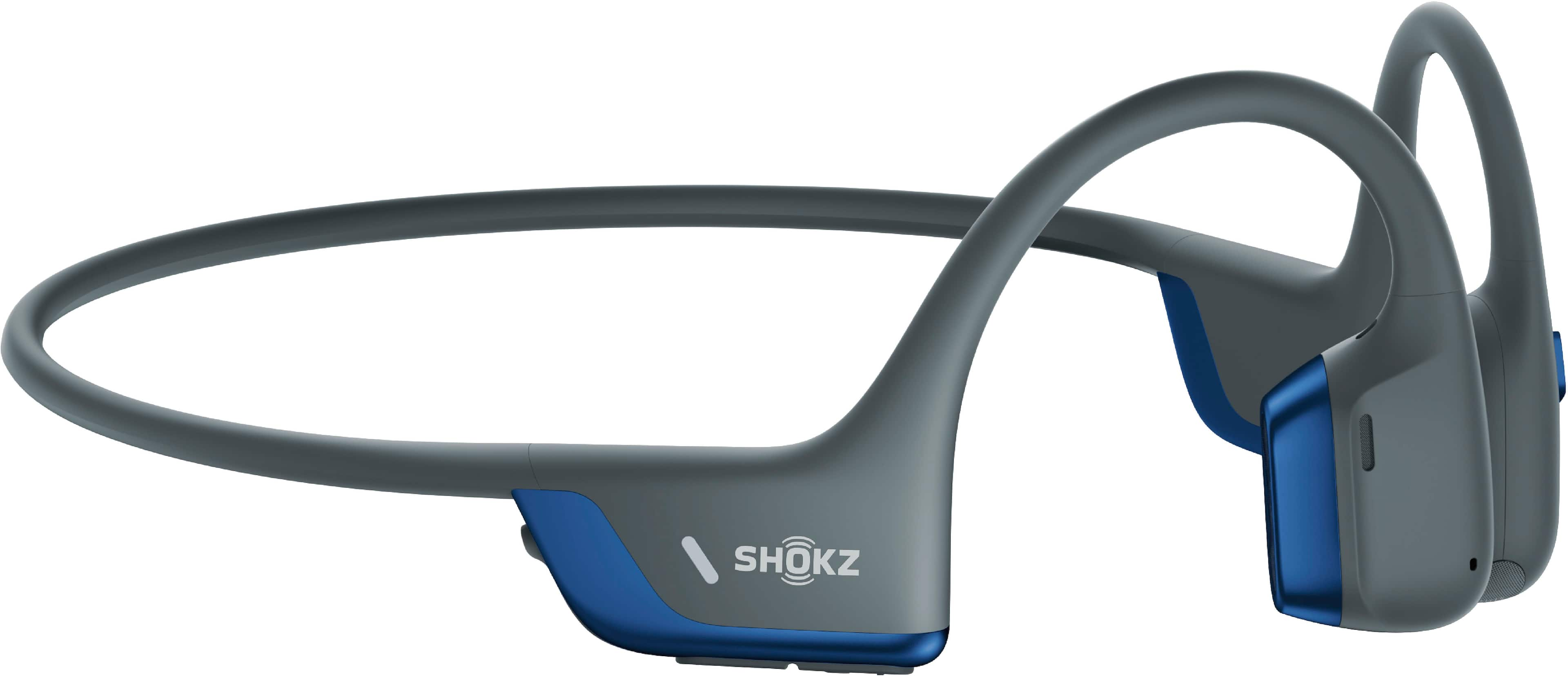
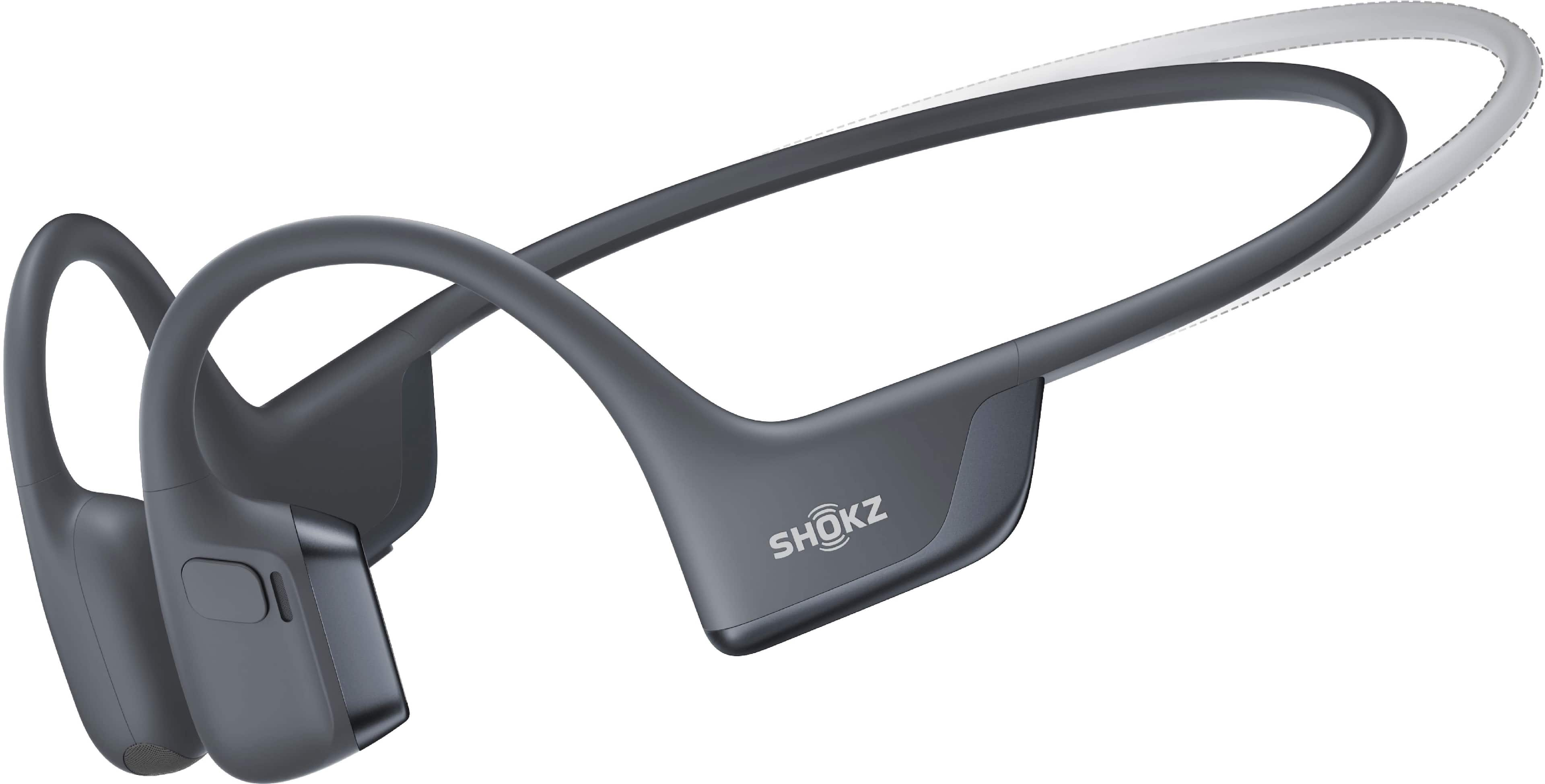
Signs of a bone-conduction model
A Shokz headset is likely a classic bone-conduction model if it:
- Has two flat transducers that rest in front of the ears.
- Uses a band that goes behind the head.
- Does not have an ear-hook speaker.
- Is marketed for open-ear listening through vibration.
- Lists bone-conduction transducers in its specifications.
Signs of an air-conduction model
A Shokz headset is likely an air-conduction model if it:
- Has separate left and right ear pieces.
- Uses ear hooks or a small earbud-style body.
- Places a speaker near, but not inside, the ear opening.
- Belongs to the OpenFit family.
- Lists air-conduction speakers in its product details.
Signs of a hybrid model
A model may be hybrid if the product description names both:
- Bone-conduction transducers, and
- Air-conduction speakers.
The OpenRun Pro 2 is the clearest example in the Shokz lineup. Do not classify it as a basic bone-conduction headset without checking its full specifications.
Common mistakes when shopping for Shokz headphones
The most common mistake is assuming that every Shokz product uses the same technology. Shokz began with bone-conduction products, but its product range now includes air-conduction and hybrid designs.
Other mistakes include:
Confusing “open-ear” with “bone conduction”
“Open-ear” describes the fact that the ear canal is not sealed. It does not identify the sound method.
Assuming open-ear means private listening
Both sound methods can leak audio. Use a lower volume in offices, libraries, and shared spaces.
Expecting noise cancellation
An open-ear design cannot block sound like a sealed earbud. Some products may include microphones or sound-processing features, but that is not the same as full passive isolation.
Choosing a swimming model for Bluetooth use underwater
Bluetooth is not reliable underwater. A swimming headset generally needs internal storage for audio playback in the pool. Check whether the exact model supports stored music and whether its water rating fits your activity.
Treating bone conduction as a hearing solution
Consumer headphones are not medical devices. If you have hearing loss, ear pain, or persistent ringing, seek advice from an audiologist or other qualified health professional.
Frequently asked questions
Are Shokz OpenRun headphones bone conduction?
Yes. The standard OpenRun and OpenRun Pro use bone-conduction technology. The OpenRun Pro 2 is different because it combines bone conduction with air-conduction speakers.
Are Shokz OpenFit headphones bone conduction?
No. OpenFit models use air-conduction speakers. They are open-ear headphones, but they do not use the traditional cheekbone vibration system found in OpenRun and OpenMove models.
Do all Shokz headphones leave your ears open?
Most of the consumer Shokz models discussed here use an open-ear design. They do not fully seal the ear canal. Check the exact model if you need a particular fit, water rating, microphone setup, or control system.
Which Shokz headphones are best for swimming?
The OpenSwim and OpenSwim Pro are the Shokz models designed for swimming. Bluetooth has major limits underwater, so swimming models use stored audio for pool use. Confirm the current U.S. specifications before purchase.
Do bone-conduction headphones sound as good as earbuds?
They can sound clear and useful for speech, podcasts, exercise, and everyday listening. Traditional bone-conduction models may not produce the same bass or detail as sealed earbuds. Air-conduction and hybrid Shokz models may appeal more to listeners who prioritize music quality.
Can people nearby hear Shokz headphones?
Yes, some sound leakage is possible. Leakage tends to increase in quiet places and at higher volume. Lowering the volume helps, but no open-ear model guarantees private listening.
Bottom line
Not all Shokz headphones are bone conduction.
- OpenRun, OpenMove, OpenComm, and OpenSwim are primarily bone-conduction families.
- OpenFit, OpenFit Air, and OpenFit 2 use air conduction.
- OpenRun Pro 2 uses a hybrid system that combines bone conduction and air-conduction speakers.
If you want the classic Shokz cheekbone design, choose a documented bone-conduction model. If you want a fuller earbud-like sound without sealing the ear canal, compare the OpenFit family. For the most accurate answer, check the exact model’s U.S. specification page before you buy.

Everett Ashford is a tech reviewer at mytechgrid.com specializing in SSDs, cameras, TVs, earbuds, headphones, and other consumer electronics. He provides honest, data-driven reviews based on hands-on testing and real-world performance analysis. Everett simplifies complex tech details to help readers make smart, confident buying decisions.