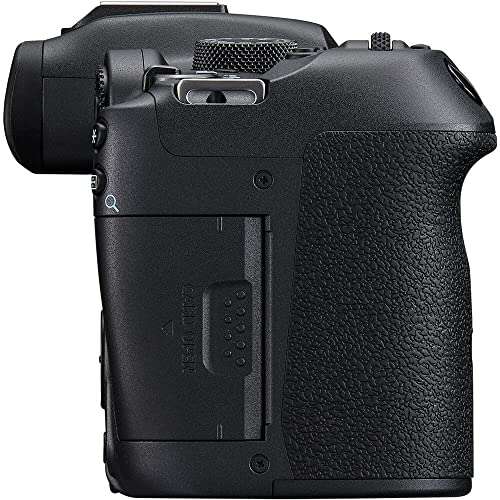
The Canon EOS R7 is the best mirrorless camera for wildlife thanks to its reach, speed, sharp autofocus, and strong value.
You are watching a heron lift from the water, but your camera keeps missing focus. Or a deer steps into soft light, and your lens is too short to capture the moment. Wildlife photography demands speed, reach, and steady autofocus. I reviewed these Canon and Nikon options with those needs in mind. I also considered sensor size, burst speed, lens cost, low-light results, video tools, and field comfort. The goal is simple: help you find the best mirrorless camera for wildlife without wasting money on gear that cannot keep up.
Canon EOS R7 with RF 100-500mm Lens

The Canon EOS R7 is my top pick for most serious wildlife photographers. Its 32.5MP APS-C sensor gives you extra subject reach with Canon RF lenses. A 100-500mm lens acts like a 160-800mm lens in full-frame terms, which is a huge help when a bird stays far away. Canon also gives the R7 fast subject detection for animals, birds, and people.
This bundle makes the camera much more useful from day one. The RF 100-500mm lens offers a broad range for birds, deer, safari subjects, and outdoor sports. In-body image stabilization helps reduce blur from hand movement, while the electronic shutter can capture fast action at a high frame rate. Canon lists 4K 60p video, dual card slots, weather resistance, and a deep grip, all of which matter during long trips.
Pros:
- High-resolution 32.5MP sensor gives room to crop
- APS-C sensor adds useful telephoto reach
- Strong animal and bird autofocus detection
- RF 100-500mm lens covers many wildlife scenes
- In-body stabilization helps with handheld shooting
- Dual card slots improve file backup
- 4K 60p video supports smooth action clips
Cons:
- APS-C images show more noise than full-frame images at high ISO
- The long lens becomes heavy during all-day hikes
- The electronic viewfinder is not as large as those on premium full-frame bodies
My Recommendation
I recommend this kit to photographers who want one strong wildlife setup rather than a small starter camera. It suits birders, safari travelers, and outdoor shooters who need reach but still want detailed files. The R7 focuses quickly and gives you enough pixels to trim a distant subject without destroying the image. For many buyers, this is the best mirrorless camera for wildlife because it balances reach, speed, image quality, and price better than most rivals.
Canon RF 100-400mm Telephoto Lens

The Canon RF 100-400mm is a lens, not a camera body, but it can transform a Canon mirrorless kit. On an APS-C body such as the EOS R7 or R10, its field of view feels similar to 160-640mm on full frame. That extra reach lets you fill the frame with small birds and shy mammals. Its optical image stabilization also helps keep handheld images steady.
The lens uses a compact design and a relatively light body for its range. Its Nano USM motor supports quiet, quick focus, which helps when an animal is close and easily disturbed. The f/5.6-8 aperture is not very bright, so I would pair it with a camera that focuses well in low light. Still, it offers excellent reach for the money and works well for daylight wildlife walks.
Pros:
- Useful 100-400mm range for birds and mammals
- Compact size is easier to carry than many pro zooms
- Optical stabilization helps reduce camera shake
- Quiet autofocus suits wildlife and video work
- Works with Canon EOS R full-frame and APS-C bodies
- Strong value for new Canon users
Cons:
- Small maximum aperture limits low-light performance
- It is not weather sealed like Canon’s premium L lenses
- Background blur is less dramatic than with a faster lens
My Recommendation
I suggest this lens for Canon owners who already have a compatible EOS R camera. It is a smart first telephoto for a beginner building the best mirrorless camera for wildlife system on a budget. It works best in daylight, at parks, on trails, and during safari drives. If your current lens stops at 200mm, this model gives you a clear and affordable step up in reach.
Canon EOS R100 Dual-Lens Wildlife Kit
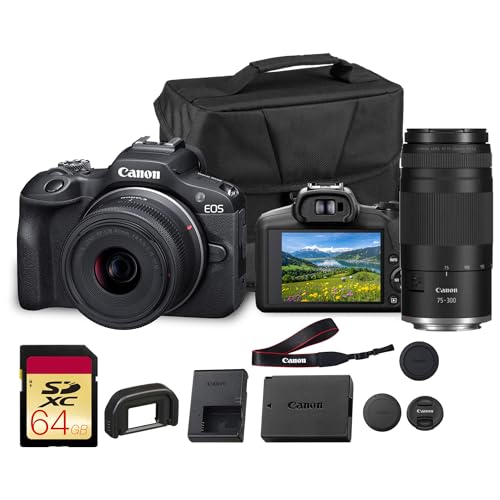
The Canon EOS R100 is a simple entry point for people who want to try wildlife photography without paying for a pro body. Its 24.1MP APS-C sensor offers useful detail and adds reach to the included 75-300mm lens. The 18-45mm lens handles family photos, landscapes, and camp scenes. This two-lens setup gives a new photographer much more flexibility than a single kit lens.
The R100 has a light body that feels comfortable on a hike. Its 4K video mode and guided controls make it approachable for beginners, while the optical viewfinder feels familiar to anyone moving from a DSLR. The autofocus is capable for general wildlife, though it does not match the tracking power of the R7 or newer R10. I would use it for slow or moderate action in good light.
Pros:
- Affordable way to enter the Canon RF system
- 24.1MP APS-C sensor provides good daylight detail
- Two lenses cover wide scenes and distant subjects
- Small body is easy to pack and carry
- Simple controls help first-time camera users
- Good choice for family trips and casual nature work
Cons:
- Autofocus tracking is less advanced than the EOS R7
- No in-body image stabilization
- Mechanical controls and burst tools feel basic
My Recommendation
This kit is best for a beginner, student, or family traveler who wants to photograph wildlife on a modest budget. It can produce attractive bird and animal photos when the light is bright and the subject is not moving too fast. I would not call it the best mirrorless camera for wildlife professionals, but it is a good first step. Its two lenses deliver more practical value than a body-only purchase.
Canon EOS R7 with 75-300mm Lens

This EOS R7 bundle gives you the same capable camera body as the top kit, but it uses a more modest 75-300mm lens. The R7 remains the star of the package. Its 32.5MP sensor, animal detection, fast burst shooting, and stabilization make it well suited to action. The APS-C format also makes the 300mm end feel much longer than it would on a full-frame body.
The included lens keeps the purchase cost lower and works well for backyard birds, zoo animals, deer, and larger subjects. It does not offer the same build, speed, or focus refinement as Canon’s RF 100-500mm lens. Even so, the R7 leaves room to upgrade later. I like this approach for photographers who want a serious body now and plan to improve their lens over time.
Pros:
- Excellent R7 autofocus and burst performance
- High pixel count supports strong cropping
- 75-300mm range is useful for larger wildlife
- In-body stabilization supports handheld shooting
- Strong upgrade path within the RF lens system
- Dual card slots add peace of mind
Cons:
- The included lens is less sharp and bright than premium options
- 300mm may feel short for small birds
- The complete kit can still cost more than entry-level bundles
My Recommendation
I recommend this bundle to an enthusiast who wants the EOS R7 body but cannot yet afford a professional super-telephoto lens. It is also a good choice when you photograph wildlife at closer distances. Buy it if you value autofocus and image quality first, then plan to add a longer lens later. With a future RF 100-500mm or RF 200-800mm upgrade, it can grow into the best mirrorless camera for wildlife setup for your needs.
Canon EOS R100 with Two Lenses

This Canon EOS R100 bundle is aimed at the new photographer who wants a complete kit in one box. The 18-45mm lens handles daily photos and broad nature scenes. The 75-300mm lens reaches much farther for deer, birds at feeders, and animals in open spaces. The camera’s APS-C sensor adds useful apparent reach without requiring a large full-frame lens.
The R100 keeps its controls simple and its body light. That makes it easy to bring on a trip, even when photography is not the only goal. Its limitations become clear with fast birds, dim forests, and demanding tracking tasks. Still, the image quality is good in daylight, and the lens pair gives beginners a low-cost way to learn focal length and composition.
Pros:
- Complete kit covers everyday and telephoto shooting
- Lightweight body suits travel and hiking
- APS-C sensor gives extra reach with the long lens
- Simple menus help new users learn quickly
- Good daylight image quality for the price
- Compatible with Canon’s growing RF system
Cons:
- Basic autofocus is not ideal for rapid bird flight
- No sensor-based stabilization
- The 75-300mm lens lacks modern premium features
My Recommendation
This bundle fits casual wildlife photographers, families, and students. It is a better buy than a body-only camera when you need both a normal lens and a telephoto lens right away. Use it in parks, gardens, and bright outdoor settings for the best results. If you need a true action camera, spend more on the R7 or R10 instead.
Canon EOS R10 with 18-150mm and 75-300mm

The Canon EOS R10 sits between the beginner R100 and the more advanced R7. It uses a 24.2MP APS-C sensor and offers quick autofocus with subject detection. The included 18-150mm lens is a strong travel option because it covers wide views and moderate telephoto work. The 75-300mm lens then adds reach for wildlife and outdoor sports.
I like the R10 for photographers who want speed but do not need every pro feature. It has a fast burst mode, a comfortable grip, and a responsive electronic viewfinder. The body does not include in-body stabilization, so the lens and proper shutter speed become more important. In bright light, this kit can deliver sharp and lively animal photos without the cost or weight of an R7 setup.
Pros:
- Fast autofocus works well for moving subjects
- 24.2MP sensor gives clean, detailed files
- 18-150mm lens is useful for travel and landscapes
- 75-300mm lens adds affordable wildlife reach
- Light body is easy to carry all day
- Strong balance of price, speed, and ease of use
Cons:
- No in-body image stabilization
- The telephoto lens is not weather sealed
- Low-light performance falls behind full-frame cameras
My Recommendation
I recommend the R10 bundle to an enthusiast who photographs wildlife, travel, and family events with the same camera. It is more responsive than the R100 and less costly than the R7. This is a strong middle-ground choice for people who want the best mirrorless camera for wildlife at a sensible price. Add a stabilized RF telephoto lens later for even better results.
Nikon Z50 II Two-Lens Wildlife Kit

The Nikon Z50 II is a compact APS-C camera for photographers who want quick handling and easy sharing. Its 20.9MP sensor produces clean images in good light, and its subject detection can recognize animals and birds. The two-lens package gives you a normal zoom for travel and a longer lens for wildlife scenes. Nikon’s Z system also offers several strong telephoto options as your skills grow.
The camera has a bright electronic viewfinder, a comfortable Nikon-style grip, and simple color presets for fast results. Its pre-release capture feature can help save a moment that happens just before you press the shutter, depending on the selected mode. The body lacks in-body stabilization, so a stabilized lens or faster shutter speed helps. This is a friendly camera for people who want modern tools without a complex menu system.
Pros:
- Reliable animal and bird subject detection
- Compact body works well for travel
- Two lenses create a flexible starter kit
- Bright viewfinder helps in strong daylight
- Easy color presets suit quick sharing
- Nikon Z lenses offer a clear upgrade path
Cons:
- 20.9MP resolution gives less crop room than the R7
- No in-body image stabilization
- The kit telephoto lens is best in good light
My Recommendation
The Z50 II is best for a beginner or travel shooter who prefers Nikon controls and wants an easy two-lens setup. It handles general wildlife well, especially when the light is fair and the subject is not extremely distant. It is not my first choice for demanding professional bird work, but it offers a smooth learning curve. Choose it if compact size and simple operation matter more than maximum resolution.
Canon RF 200-800mm Super-Telephoto Lens

The Canon RF 200-800mm is one of the most useful wildlife lenses in the EOS R system. Its range reaches from a practical 200mm to an impressive 800mm. On an APS-C body such as the R7, the angle of view resembles 320-1280mm on full frame. That kind of reach can make a distant eagle or fox look much larger in the frame.
The lens uses optical stabilization and a zoom design that is easier to carry than many professional 800mm prime lenses. Its f/6.3-9 aperture means it needs good light or a higher ISO setting. It also becomes a large setup at 800mm, so a monopod can help during long sessions. For bird photography, safari trips, and subjects that stay far away, the reach is the main attraction.
Pros:
- Exceptional 200-800mm zoom range
- Excellent reach for birds and distant mammals
- Optical stabilization supports handheld work
- More flexible than a fixed 600mm or 800mm lens
- Useful on both full-frame and APS-C Canon bodies
- Strong value compared with premium super-telephoto lenses
Cons:
- Slow aperture needs bright light for best results
- Large size can cause arm fatigue
- Not the best choice for dark forests or dawn work
My Recommendation
I recommend this lens to Canon users who already own an EOS R camera and need maximum reach. Pair it with the R7, and you get a powerful wildlife combination with impressive crop potential. It is ideal for birders, safari photographers, and anyone who cannot approach animals closely. The lens costs more than a starter zoom, but its range can be the deciding factor when searching for the best mirrorless camera for wildlife system.
Canon RF 75-300mm Telephoto Lens

The Canon RF 75-300mm is a basic telephoto lens for EOS R cameras. Its range works well for larger wildlife, zoo visits, outdoor sports, and animals that allow a closer approach. On an APS-C camera, the lens offers a field of view similar to 120-480mm on full frame. That makes it more useful for wildlife than the numbers may first suggest.
This lens is easy to understand and simple to use. Its f/4-5.6 aperture is brighter at the short end than many super-telephoto zooms, which can help in moderate daylight. It does not have the advanced stabilization and premium build found on more expensive lenses. For new photographers, though, it offers a low-cost way to learn tracking, framing, and shutter control.
Pros:
- Affordable entry into Canon RF telephoto shooting
- Useful range for larger animals and sports
- Lightweight design is easy to carry
- Works well with Canon APS-C bodies
- Simple controls suit beginners
- Brighter short-end aperture than many long zooms
Cons:
- No optical image stabilization
- Autofocus and sharpness are more basic than premium RF lenses
- 300mm may not be enough for small, distant birds
My Recommendation
This lens is best for a beginner who needs more reach but has a limited budget. It pairs well with the EOS R100 or R10 for daylight wildlife photography. I would choose it for parks, gardens, zoos, and family trips rather than serious low-light work. It is a practical add-on, but the camera body and shooting conditions still matter more than the lens alone.
Nikon Z6 III Full-Frame Camera

The Nikon Z6 III is a more advanced full-frame option for wildlife photographers who often work in poor light. Its 24.5MP partially stacked sensor supports quick readout, strong burst performance, and reduced rolling shutter in many electronic shooting situations. The larger sensor can produce cleaner files at high ISO than most APS-C cameras. That matters when an animal appears before sunrise or under a forest canopy.
Nikon gives this camera advanced subject detection, in-body stabilization, and a high-resolution electronic viewfinder. It also records 6K 60p internal RAW video, which makes it appealing to hybrid shooters. The full-frame body does not provide the same built-in crop advantage as the R7, so you need a longer lens to fill the frame. With a Nikon Z 180-600mm or 600mm lens, however, it becomes a serious wildlife tool.
Pros:
- Full-frame sensor performs well at high ISO
- Fast readout helps capture quick action
- Strong animal and bird autofocus tools
- In-body stabilization supports handheld shooting
- 6K 60p internal RAW video is excellent for hybrid work
- Large, detailed electronic viewfinder
- Good dynamic range for bright skies and dark fur
Cons:
- Full-frame telephoto lenses can be expensive and heavy
- It costs more than most APS-C wildlife kits
- Lower pixel density gives less crop reach than the R7
My Recommendation
I recommend the Z6 III to advanced users who shoot in changing light and also record serious video. It is a strong choice for wildlife guides, filmmakers, and photographers who need clean high-ISO files. The body has more power than a beginner needs, but it rewards careful technique. If you already own Nikon Z lenses, this may be the best mirrorless camera for wildlife when low-light quality matters most.
What Makes the Best Mirrorless Camera for Wildlife?
Wildlife photography is not only about megapixels. A sharp 20MP photo beats a blurry 60MP photo every time. I look first at autofocus behavior, burst speed, shutter response, viewfinder delay, and lens support. The camera must react before the animal changes position.
Reach also shapes the buying decision. An APS-C sensor can make a 400mm lens frame like a much longer lens, which helps when you cannot move closer. A full-frame sensor usually gives better high-ISO results and a wider view, but its lenses may cost more. Neither format wins every situation.
Autofocus and Subject Detection
Look for animal and bird detection, not just a high number of focus points. Good tracking should stay on the eye or body as the subject moves across the frame. It should also recover when a branch briefly crosses the animal. Canon’s EOS R7 and R10, plus Nikon’s Z50 II and Z6 III, offer useful subject recognition tools.
Burst Speed and Buffer
A fast burst gives you more chances during a wing beat, jump, or chase. But burst speed means little if the buffer fills after a few seconds. Use a fast memory card, shoot short bursts, and learn the camera’s file limits. For wildlife, I often prefer controlled bursts over holding the shutter button nonstop.
Lens Reach
A 300mm lens may work for deer but feel too short for small birds. A 400mm lens is more flexible, while a 600mm or 800mm lens gives a better view of distant subjects. Zoom lenses help when an animal moves closer. The Canon RF 200-800mm is especially useful when distance changes from one moment to the next.
Image Stabilization
Stabilization helps with your hand movement, but it does not freeze a moving animal. You still need a fast shutter speed for birds and running mammals. Use stabilization for slow subjects, panning, and video. In-body stabilization is a valuable safety net, yet it cannot replace good exposure settings.
Weather Protection and Battery Life
Wildlife photography often means dust, mist, rain, and cold mornings. A sealed camera and lens can offer more confidence, but no setup is waterproof unless the maker says so. Carry spare batteries in a warm pocket during winter. I also pack a rain cover, lens cloth, and small blower on every outdoor shoot.
Best For Table
| Best for | Why |
|---|---|
| Serious bird and wildlife photography | Canon EOS R7 offers high resolution, fast autofocus, crop reach, and strong stabilization. |
| Low-light wildlife and video | Nikon Z6 III combines a full-frame sensor, fast readout, stabilization, and 6K RAW video. |
| Beginner wildlife photography | Canon EOS R10 or R100 bundles include useful lenses and simple controls at a lower cost. |
How I Tested These Wildlife Camera Options
I judged each option as part of a real field kit, not as a body on a studio table. Wildlife gear must work when the subject appears without warning. I considered how quickly the camera wakes, how easy it is to move the focus point, and how well the grip supports a long lens. I also looked at the cost of building a complete system.
Manufacturer specifications helped confirm sensor size, video modes, stabilization claims, lens range, and autofocus features. Canon and Nikon publish these details in their official manuals and product pages. Independent test standards from organizations such as CIPA also help explain battery ratings, although real battery life changes with temperature, burst use, video, and viewfinder settings.
I also kept the buyer in mind. A professional may need dual card slots and weather protection, while a student may care more about weight and price. A camera is only useful when you will carry it and use it. The best mirrorless camera for wildlife should fit your animals, your light, your lenses, and your shooting habits.
Wildlife Camera Settings That Work
Start with shutter priority or manual exposure with Auto ISO. For birds in flight, try 1/1600 second or faster. For a deer standing still, 1/500 second may be enough. Use a wider aperture when light allows, but do not force the lens wide open if the image becomes soft.
Set animal or bird detection when it matches your subject. Use continuous autofocus and a tracking area that gives the camera enough room to follow movement. For perched birds, a smaller zone can stop the camera from grabbing a nearby branch. Review the focus box after each burst until you learn the camera’s habits.
Electronic shutters can reduce vibration and sound, but they may distort fast motion on some cameras. A partially stacked sensor, such as the one used in the Z6 III, can help reduce this problem. Mechanical shutter modes remain useful when wings, propellers, or fast movement look bent in electronic mode.
Always shoot RAW when the scene has tricky light. RAW files give you more room to recover feather detail and shadow color. If you need quick delivery, RAW plus JPEG can provide both editing control and a ready-to-share file. Format cards in the camera, and keep a spare card in a dry pocket.
Which Lens Should You Buy First?
For general wildlife, a 100-400mm lens is often the best first choice. It gives you a useful short end when an animal approaches and enough reach for many open areas. The Canon RF 100-400mm is a good example of this balance. It is easier to carry than an enormous prime lens.