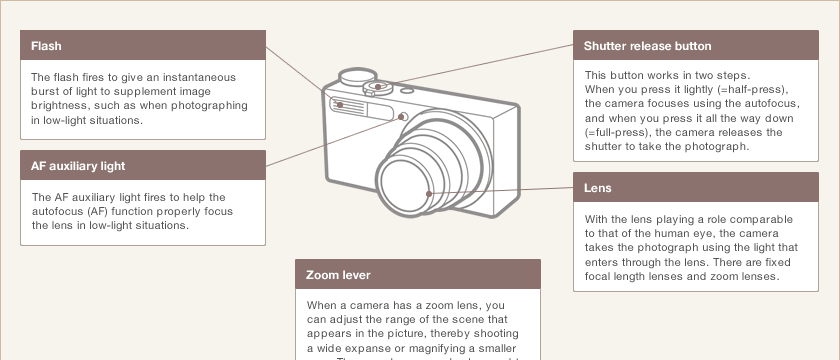
A digital camera can take thousands to millions of photos, depending on its shutter life, battery, storage, and sensor design.
The real answer to “how many photos can a digital camera take” depends on the camera type and how you use it. A compact camera, mirrorless camera, and professional DSLR have different limits, but most photographers run out of storage or battery long before the camera itself wears out.
What Determines How Many Photos a Digital Camera Can Take?
A digital camera does not have a fixed photo limit like a roll of film. You can keep taking pictures as long as the camera has power, storage space, and working parts.
The main factors are:
• Shutter life: Mechanical shutters have a rated number of releases.
• Storage capacity: Memory cards limit how many photos you can save at one time.
• Battery life: A battery may last for a few hundred shots per charge.
• Camera condition: Heat, dust, moisture, and heavy use can affect performance.
• File type: RAW photos use much more space than JPEG photos.
• Camera design: An electronic shutter may reduce mechanical wear.
When people ask how many photos can a digital camera take, they often mean one of two things. They may be asking how many photos fit on a memory card, or how long the camera will keep working. These are very different questions.
A memory card may fill in one afternoon. The camera body may last for ten years or more.

How Many Photos Can a Digital Camera Take in Its Lifetime?
Most modern digital cameras can take tens of thousands to hundreds of thousands of photos during their useful life. Professional models may be rated for 300,000, 400,000, or more shutter releases.
Entry-level cameras often have a lower shutter rating. Many are designed for around 50,000 to 150,000 mechanical shutter actuations. Mid-range models may reach 100,000 to 250,000 shots. High-end professional cameras can often reach 300,000 to 500,000 shots under normal conditions.
These numbers are estimates, not guarantees. A shutter rated for 200,000 photos is not certain to fail at 200,001. Some shutters fail earlier, while others continue working far beyond their rated life.
Typical lifetime by camera type
| Camera type | Common mechanical shutter rating |
|---|---|
| Basic compact camera | 50,000 to 100,000 shots |
| Entry-level DSLR or mirrorless camera | 50,000 to 150,000 shots |
| Mid-range camera | 100,000 to 250,000 shots |
| Professional DSLR or mirrorless camera | 300,000 to 500,000 shots |
A shutter rating is similar to a mileage estimate for a car. It helps you understand expected durability, but it does not predict the exact failure date.
Many photographers never reach the shutter limit. A person who takes 5,000 pictures each year could use a 100,000-shot camera for about 20 years. A wedding photographer may reach that number much sooner.

How Many Photos Can a Camera Take on One Memory Card?
The number of photos a camera can store depends on the card size, image quality, and file format. A 128 GB card can hold far more JPEG files than RAW files.
Typical file sizes include:
• Small JPEG: 2 to 5 MB
• Large, high-quality JPEG: 5 to 15 MB
• Compressed RAW: 15 to 40 MB
• Uncompressed RAW: 40 to 100 MB or more
A 64 GB memory card may hold around 4,000 to 12,000 JPEG photos. The same card may hold only 600 to 3,000 RAW images, depending on the camera and file size.
Here is a simple estimate:
-
Convert the card capacity into megabytes.
-
Divide that number by the average photo size.
-
Leave some space for formatting and other files.
For example, a 128 GB card has roughly 128,000 MB of usable space before formatting and system overhead. If each RAW image is 40 MB, the card may hold about 3,000 photos.
Camera menus usually show the exact remaining photo count. Check this number before an important event. It is more useful than relying on a general memory card chart.

How Many Photos Can a Digital Camera Take Per Battery Charge?
Most digital cameras take between 250 and 1,000 photos on one battery charge. The actual number changes with camera size, screen use, autofocus, flash, wireless features, and temperature.
A DSLR often takes more photos per charge because its optical viewfinder uses little power. A mirrorless camera may use more energy because its electronic viewfinder and rear screen stay active.
Battery life can drop when you:
• Use the LCD screen often
• Use continuous autofocus
• Transfer images through Wi-Fi or Bluetooth
• Review every photo for a long time
• Shoot in cold weather
• Use the built-in flash
For travel, carry at least one spare battery. For weddings, sports, or long outdoor trips, two or three spare batteries may be safer.
Turn off wireless tools when you do not need them. Lowering screen brightness and using the camera’s sleep mode can also help. Keep spare batteries warm in cold weather, but never heat them with an open flame or unsafe device.
A practical rule is to plan for fewer shots than the official rating. If a battery is rated for 700 photos, plan around 500 to 600 when shooting heavily.

Does Taking Photos Wear Out a Digital Camera?
Taking photos can wear out some camera parts, but not every photo causes the same level of wear. The mechanical shutter is usually the part linked most closely to the camera’s shot count.
A mechanical shutter opens and closes during exposure. Over time, its curtains and moving parts may wear down. This is why manufacturers publish shutter durability ratings.
Other parts can also age:
• The shutter button may become less responsive.
• The image stabilization system may wear over many years.
• The battery may lose capacity after repeated charging.
• The memory card slot may loosen with rough use.
• Buttons and dials may collect dust or fail.
• The sensor may gather dust, although cleaning can usually solve this.
Electronic shutters create an image without moving the mechanical shutter in the same way. They can reduce mechanical wear, but they may cause rolling shutter distortion with fast movement or flickering lights.
Many cameras also offer an electronic front-curtain shutter. This reduces the movement of the first shutter curtain while keeping some of the benefits of a mechanical shutter.
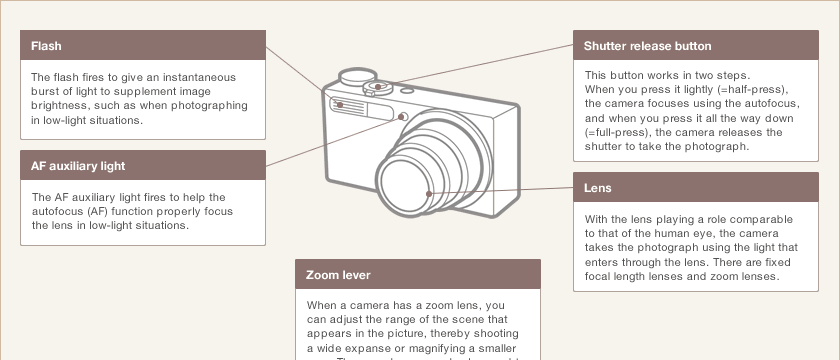
Mechanical Shutter Life vs. Electronic Shutter Life
The shutter count usually tracks mechanical shutter activity. It may not fully represent the number of images taken with an electronic shutter.