Introduction
For people searching in the United States, Google AI Mode is changing how search results may answer questions. Instead of showing only a list of blue links, Google can create a longer answer, break a question into related searches, and point users to several web pages.
SEO will not disappear. But the goal will shift from ranking for one exact query to being a trusted source that Google can understand, select, and cite across a complex answer. Clear information, strong evidence, useful pages, and a good user experience will matter more than repeating keywords.
This guide explains what Google AI Mode means for SEO, what may change, what will likely stay the same, and how US businesses can prepare without chasing short-term tricks.
What Is Google AI Mode?
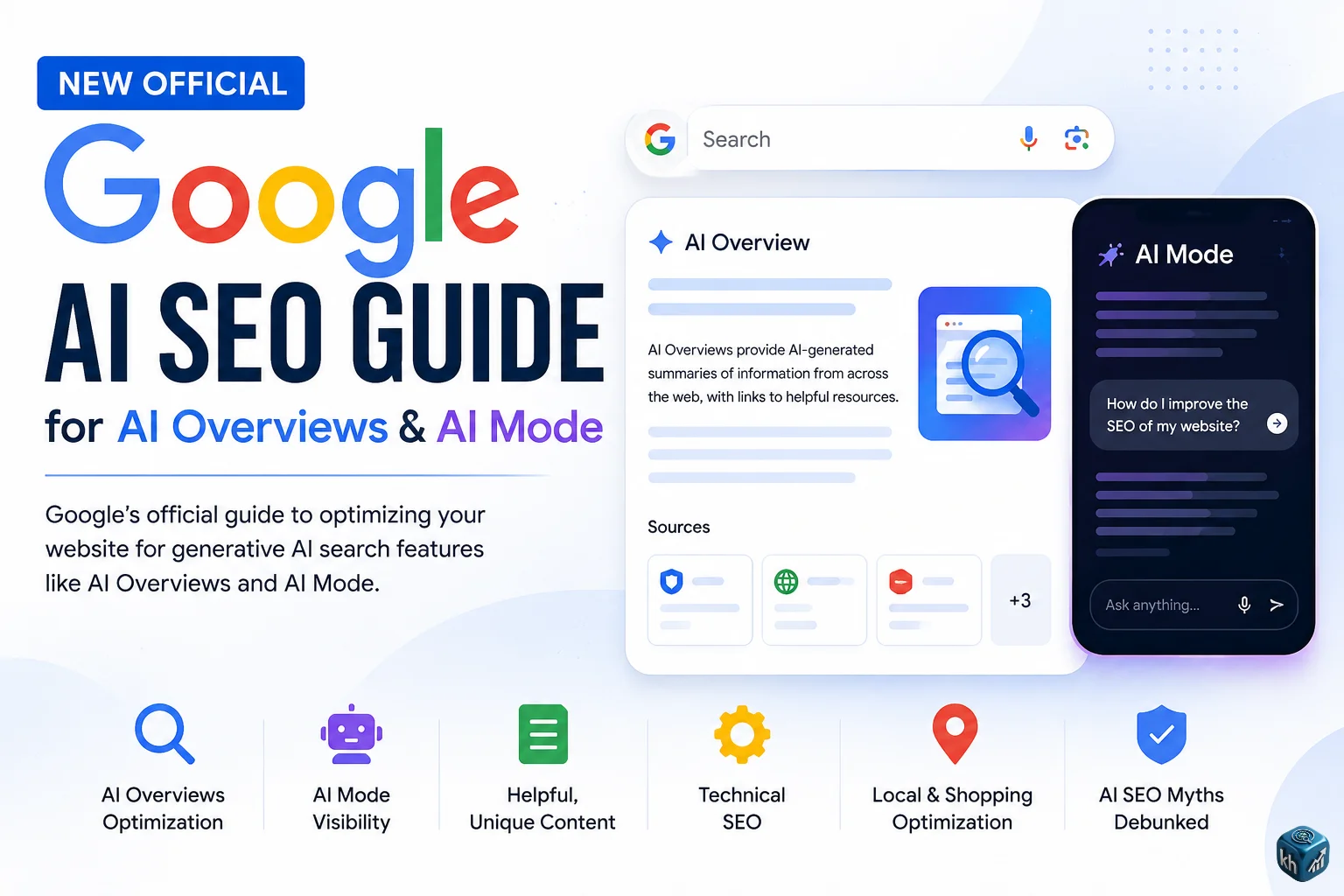
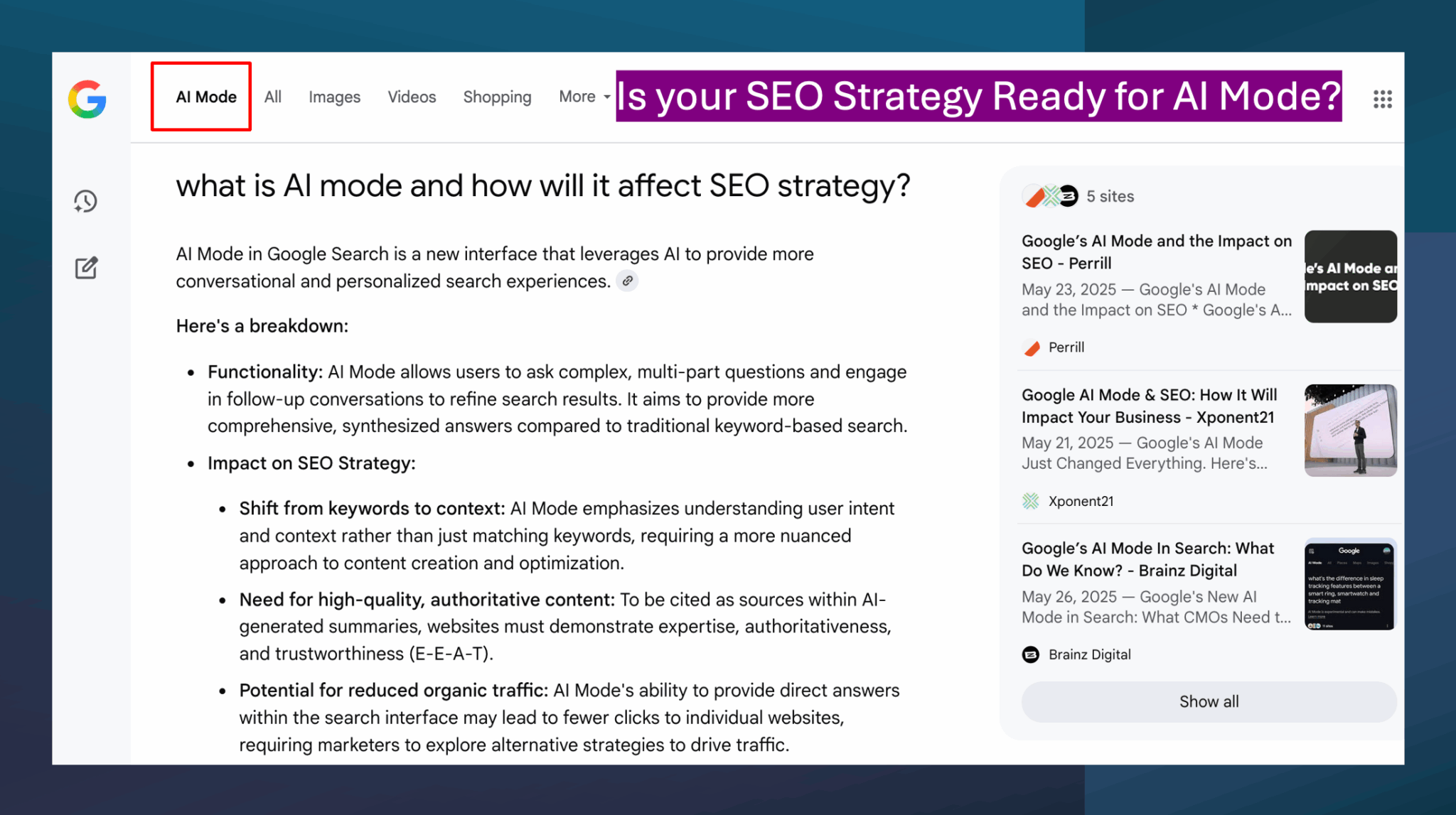
Google AI Mode is a Search experience that uses generative AI to answer complex questions. It is designed for follow-up questions, comparisons, planning tasks, and searches that may require information from more than one source.
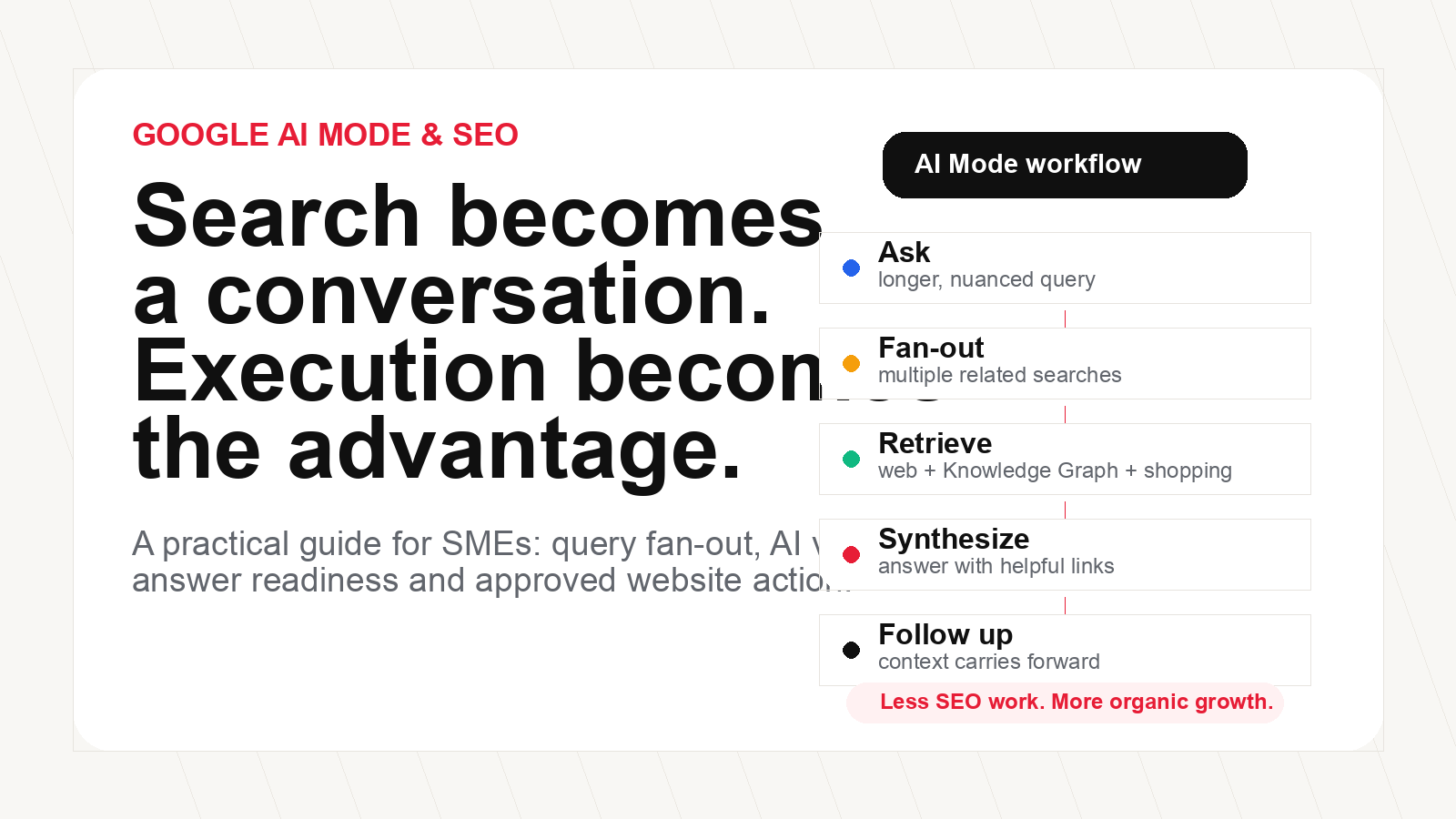
Google introduced AI Mode in the United States as an experimental Search Labs feature before expanding access more broadly. Google says AI Mode uses a technique called query fan-out. This means it can break one user question into several related searches and use the results to build a response.
For example, a person might ask:
“What are the best native plants for a shaded yard in Pennsylvania, and how should I care for them?”
AI Mode may explore several related topics:
- Native plants for shade
- Pennsylvania growing conditions
- Soil and watering needs
- Plant toxicity or deer resistance
- Seasonal care
- Local nursery or extension guidance
The answer may then include links to multiple pages instead of one result for one keyword.
Google’s public documentation describes AI features as part of Search, not as a separate search engine with a completely separate web index. Core SEO signals still matter because AI Mode depends on web content, Search systems, and website accessibility.
How Will Google AI Mode Change SEO?
Google AI Mode will make SEO more focused on being useful across a topic, not just matching a single phrase.
A page may appear in an AI answer when it offers a clear fact, a useful comparison, a strong explanation, or evidence that supports one part of the response. This creates more opportunities for pages that solve a real problem, but it also makes visibility less predictable.
The main changes will likely include the following:
| Traditional SEO focus | SEO in Google AI Mode |
|---|---|
| Rank for one query | Support several related subtopics |
| Optimize for one page-one result | Earn visibility as a cited source |
| Target exact keywords | Cover the meaning and context of a question |
| Win one click | Build trust before and after the click |
| Publish many short pages | Create fewer, stronger pages where possible |
| Track rankings alone | Track citations, impressions, clicks, and conversions |
This does not mean every page must become long. A focused page can still perform well if it gives the best answer to a specific need.
The key difference is that AI Mode may select a page for one part of a larger answer. A page about soil drainage, for example, may be cited even if it does not rank first for the user’s full question.
AI Mode may create more varied search journeys
A user may ask one question, receive an answer, ask a follow-up, and then visit a business site. The first search may be informational. The next may involve price, location, product fit, or a purchase decision.
This means SEO teams may need to connect content across the full customer path:
- Problem and learning
- Options and comparisons
- Local or product-specific research
- Purchase or contact
- Setup, use, and support
A page that helps only at the first step may not be enough. A strong site should also make the next step easy.

What Will Still Matter in SEO?
Google AI Mode does not remove the basic need for a crawlable, useful, trustworthy website. Many established SEO practices remain important because AI systems still need reliable content to find, understand, and reference.
1. Technical access
Google must be able to access a page before it can use the page as a source.
Check that:
- Important pages are not blocked by
robots.txt. - Pages do not contain an accidental
noindextag. - Canonical tags point to the correct URLs.
- Internal links connect related pages.
- The site works on mobile devices.
- Server errors are rare and quickly fixed.
- Key content is available in the rendered page.
- Page titles and headings describe the actual content.
Google’s Search Essentials remain a useful starting point. They cover technical requirements, spam policies, and basic best practices.
Technical SEO does not guarantee an AI citation. It removes barriers that may stop Google from understanding or using your content.
2. Helpful page content
AI systems need content that answers a question with enough detail and context.
A strong page usually does these things:
- States the answer early.
- Defines important terms.
- Explains limits and exceptions.
- Uses clear headings.
- Supports claims with reliable evidence.
- Gives examples that match the reader’s situation.
- Separates facts from opinions.
- Shows when information was last reviewed.
- Makes the next action clear.
The best structure depends on the topic. A medical page, a software guide, and a local service page should not use the same template.
3. Trust and first-hand value
Google’s guidance on helpful content asks whether a page provides original value and demonstrates knowledge of the topic. In practice, that may include:
- Original testing
- First-hand photographs
- Real measurements
- Detailed case examples
- Clear methods
- Expert review where appropriate
- Proper author information
- Links to primary sources
Do not add fake experience. “We tested” should describe a real test with a stated method. If the content is based on research, say so.
For product reviews, Google’s review guidance recommends explaining how the product was evaluated and showing evidence for important claims. A generic summary of a product feed is less useful than a specific comparison with known limits.
4. Page performance and user experience
Google has said that good page experience can support search success, but it is not a substitute for relevant content. A fast page with weak information will not become valuable because it loads quickly.
Focus on practical experience:
- Readable text
- Stable layouts
- Clear menus
- Accessible controls
- Safe browsing
- Few disruptive pop-ups
- Fast access to the main answer
Core Web Vitals can help teams measure loading, interaction, and visual stability. Treat them as part of a wider quality review, not as a promise of higher rankings.

How Does Content Need to Change for AI Mode?
Content should become easier to extract, verify, and use.
That does not mean writing for a machine instead of a person. It means giving each important idea a clear home in the text.
Put the direct answer near the top
Start with the main finding. Then explain the reason, method, and limits.
For example:
“For most small US businesses, Google AI Mode will make topical authority and source trust more important, but standard technical SEO and useful content will still support visibility.”
The reader should not need to scan five paragraphs to discover the answer.
Use clear question-and-answer blocks
Question headings can help when they match real reader needs:
- Does Google AI Mode replace normal search results?
- Can a small business appear in an AI answer?
- How should I measure AI search traffic?
- Will AI Mode reduce clicks?
Do not turn every heading into a question. Use descriptive headings when they make the page easier to scan.
Support separate claims with separate evidence
A page may say that a product is fast, affordable, durable, and safe. Those are different claims. Each needs suitable support.
Use:
- Official documentation for product functions
- Government or institutional sources for rules
- Original studies for research findings
- Company records for company-specific facts
- First-hand testing for observed performance
A long list of unsupported claims may be less useful than a shorter page with clear proof.
Build topic coverage without creating duplicate pages
AI Mode may connect related searches. Your site should connect related pages too.
For a US home insulation company, a useful content group might include:
- How home insulation works
- Attic insulation options
- Insulation for older homes
- Regional climate considerations
- Cost factors
- Air sealing
- Questions to ask an installer
- Maintenance and safety
These pages should have distinct purposes. Do not create near-identical pages for every city, state, or keyword unless the service, law, climate, or customer need truly changes.
Add information that is hard to copy
Useful original value may include:
- A decision table
- A cost formula
- A product compatibility chart
- A documented workflow
- A local regulation summary
- A before-and-after case study
- A troubleshooting sequence
- A list of conditions that change the recommendation
This is more valuable than adding extra paragraphs that repeat the same idea.
Will Google AI Mode Reduce Website Clicks?
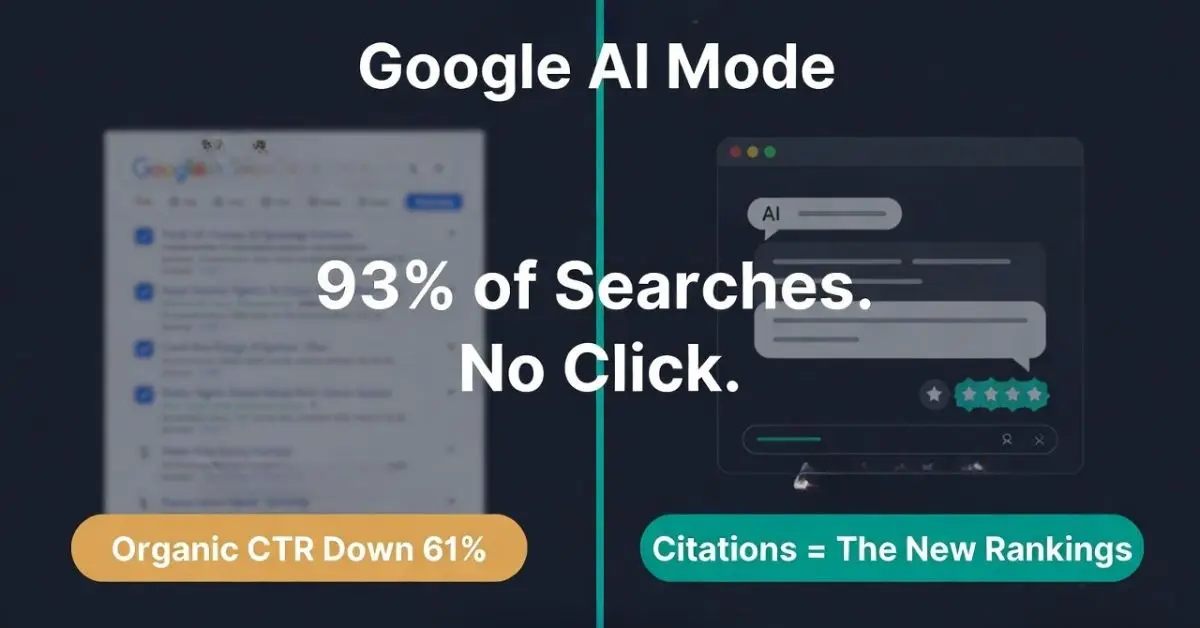
It may reduce clicks for some simple searches, but the effect will vary by query, topic, source link placement, and user intent.
A person who asks for a quick definition may not need to visit a page. A person comparing contractors, software plans, insurance options, or medical information may still need a trusted source before making a decision.
Google has reported that AI features can create new search behavior and may send traffic to a wider range of websites. However, publishers should not assume that every AI answer will increase traffic. Results can differ by device, location, query, user history, and product version.
The safest planning assumption is this:
Some informational clicks may become harder to earn, while high-intent visits may become more valuable.
A business should prepare for both outcomes.
Improve the value of the visit
If a user clicks from an AI answer, the landing page should provide more than the visible summary.
Useful additions include:
- An exact explanation of the cited point
- Original data or examples
- A calculator or comparison tool
- Product or service details
- Local availability
- Clear pricing factors
- Expert contact options
- Related answers
- A simple next step
A page that only repeats the AI answer gives users little reason to stay.
Measure more than clicks
Search Console and analytics can still help, but standard rank reports may not show the full picture.
Track:
- Impressions
- Click-through rate
- Organic sessions
- Qualified leads
- Revenue
- Conversion rate
- Branded search growth
- Assisted conversions
- Engagement by landing page
- Queries that lead to contact or purchase
Google has not provided a universal public report that shows every AI citation or every AI-assisted conversion. Treat third-party AI visibility tools as estimates unless their method is clear.
Do not claim that a page was cited simply because traffic increased. Test the result with documented searches, dates, locations, devices, and query wording.

Can Small Businesses Compete in Google AI Mode?
Yes, but small businesses should compete through specific expertise rather than broad claims.
A local company may not beat a major publisher for a broad term such as “best roofing materials.” It may still become useful for narrower questions such as:
- Which roofing materials suit homes in coastal North Carolina?
- What should a homeowner ask before replacing a roof?
- How does hail damage affect a roof inspection?
- What permits may apply in a specific US county?
Local knowledge can help when it is real, current, and clearly explained.
Small businesses should show:
- The service area
- The types of customers served
- Relevant licenses or credentials where applicable
- The limits of the service
- Local conditions that affect the work
- Real project details, with permission
- Clear contact and scheduling information
- Consistent business information across trusted profiles
Do not create thin location pages that only replace one city name with another. Explain what changes by location and support those claims with reliable local sources.
A good local page feels like advice from someone who understands the area. A weak one feels like a template with a ZIP code added.
A Practical SEO Plan for Google AI Mode
Use this process to prepare without guessing how Google’s private systems work.
Step 1: List the questions your audience asks
Review:
- Search Console queries
- Site search terms
- Customer emails
- Sales calls
- Support tickets
- Reviews
- Comments
- Related searches
- Questions from sales staff
Separate broad questions from decision questions. A person asking “What is payroll software?” needs different content from someone asking “Which payroll software works for a US company with 12 employees?”
Step 2: Map each question to one useful page
Avoid publishing several pages that answer the same question in nearly the same way.
Assign each page a clear role:
| Page role | Main purpose |
|---|---|
| Guide | Explain a topic |
| Comparison | Help choose between options |
| Service page | Explain what the business offers |
| Product page | Support a purchase |
| Case study | Show a real result or process |
| Support page | Help an existing customer |
This keeps the site easier to understand for both users and search systems.
Step 3: Improve the evidence
For each important claim, ask:
- Who says this?
- What is the source?
- Is the source current?
- Does it apply to the United States?
- Does it apply to the reader’s situation?
- What exception could change the answer?
Update claims that depend on laws, prices, software versions, product availability, or local rules.
Step 4: Add original usefulness
Choose one or two strong additions:
- A table
- A worked example
- A calculator
- A checklist
- A process diagram
- A decision tree
- A troubleshooting flow
- Original test results
- A clear explanation of trade-offs
Do not add tools that do not help the task.
Step 5: Check the page as a source
Read the page as if you need to quote one sentence from it. Can you find a clear, complete statement?
Check that:
- Each section answers its heading.
- The subject is clear.
- Dates and units are included.
- Conditions are stated.
- Claims do not conflict.
- Links support the claim they follow.
- The page does not hide key details in images or scripts.
Step 6: Review technical SEO
Use Google Search Console and a crawl tool to check:
- Indexing
- Canonicals
- Internal links
- Duplicate pages
- Structured data errors
- Mobile rendering
- Status codes
- Page speed
- Orphan pages
Structured data can help Google understand page content, but it does not guarantee an AI citation or a rich result. Mark up only content that is visible and accurate.
Step 7: Measure business results
Compare performance before and after major changes. Use a long enough period to account for normal search changes.
Review:
- Which pages gain qualified traffic
- Which pages earn leads
- Which queries show impressions but few clicks
- Which pages attract low-value visits
- Which topics lead to repeat visits
- Which content supports sales conversations
The goal is not to appear in an AI answer at any cost. The goal is to become a useful source and produce a meaningful result for the business.

SEO Mistakes to Avoid in Google AI Mode
Do not write for AI summaries alone
A page that is easy to quote should still be useful to people. Avoid stiff writing, copied definitions, and blocks of generic facts.
Do not flood the site with low-value pages
More URLs do not guarantee more visibility. Large volumes of similar, lightly edited content can make a site harder to manage and may conflict with Google’s spam policies.
Do not hide key content from users
Avoid placing important answers only in structured data, metadata, hidden text, or scripts that users cannot access.
Do not chase every AI answer
AI Mode results can vary. A page may appear for one wording and not another. Location, device, language, and time may affect the result.
Use repeated observations with a documented method. Do not treat one search as proof of a stable ranking or citation.
Do not use unsupported AI-generated content
AI tools can help with outlines, summaries, or editing. They do not replace fact checking, first-hand knowledge, or editorial judgment.
Review every generated claim. Remove invented sources, fake quotes, false experience, and vague statements.
Do not ignore ordinary SEO
A site still needs crawlable pages, useful titles, strong internal links, relevant content, and a good user experience. Google AI Mode is not a reason to abandon these basics.

Key Takeaways
- Google AI Mode may answer complex questions through several related searches.
- SEO will likely focus more on source quality, context, and topic coverage.
- A page can be useful for one part of an AI answer without ranking first for the full query.
- Technical SEO, helpful content, trust, and good page experience still matter.
- Informational clicks may decline for some searches, while high-intent visits may become more valuable.
- Small businesses can compete with specific expertise, local knowledge, and original evidence.
- Measure leads, sales, and qualified visits instead of relying on rankings alone.
- Avoid thin pages, keyword stuffing, fake expertise, and unsupported AI-written claims.
Frequently Asked Questions
Does Google AI Mode replace traditional Google Search?
No. AI Mode is an additional Search experience. Google continues to provide traditional results, and users may move between AI answers, web links, images, videos, maps, and other Search features.
Will SEO still matter if Google writes the answer?
Yes. Google needs web sources to discover facts, compare information, and support parts of an answer. SEO may become less about one blue-link position and more about being understandable, trustworthy, and useful within a larger search journey.
Can a website block its content from Google AI Mode?
Website owners can use standard Google crawling controls, such as robots.txt, noindex, and other controls documented by Google. These controls can affect Search visibility more broadly, not only AI features. Review the effect before applying them to important pages.
Should every website create an FAQ page?
No. Add questions when they reflect real user needs and require useful answers. Do not create an FAQ page only to repeat content from other pages or to add keywords.
How often should content be updated for AI Mode?
Update content when its facts change or when you learn something important about the reader’s needs. Prices, laws, product features, software instructions, and local rules may need more frequent review than stable educational content.
Are AI citations a new ranking factor?
Google has not published a simple public ranking factor called “AI citation score.” Treat citations as an outcome of many systems, including relevance, content quality, accessibility, authority, and query context. No public method guarantees inclusion.
Conclusion
Google AI Mode will make search more conversational and more complex, but it will not make sound SEO obsolete. The strongest approach is to publish clear pages that answer real US audience questions, support important claims, explain trade-offs, and help readers take the next step.
Start with the content your customers already need. Improve its evidence and structure. Fix technical barriers. Add original value. Then measure whether the work brings qualified visitors and business results.
That approach can support traditional Google Search, AI answers, and future search formats without relying on a promise that no one can guarantee.

Everett Ashford is a tech reviewer at mytechgrid.com specializing in SSDs, cameras, TVs, earbuds, headphones, and other consumer electronics. He provides honest, data-driven reviews based on hands-on testing and real-world performance analysis. Everett simplifies complex tech details to help readers make smart, confident buying decisions.