In the United States, responsible AI can help mitigate algorithmic bias—the risk that an AI system produces unfair results for people based on race, sex, age, disability, location, or other traits. It can also help reduce privacy loss, unsafe outputs, misinformation, and unclear decision-making.
The key point is simple: responsible AI does not make a system risk-free. It gives people a clear way to find, reduce, monitor, and respond to harm.
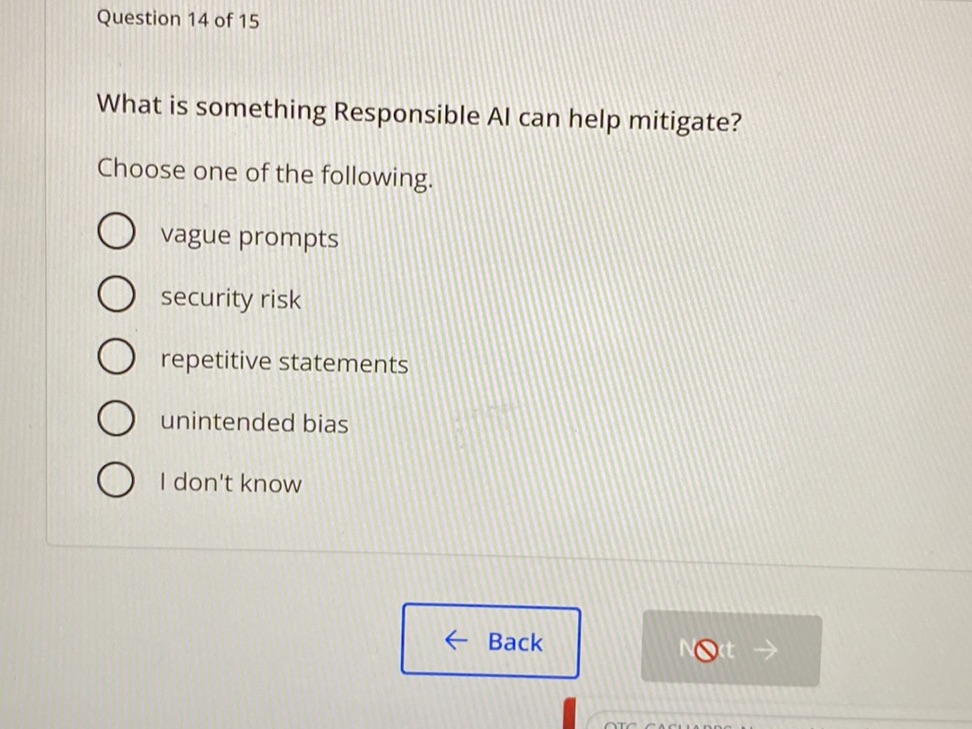
Quick answer: Responsible AI can help mitigate algorithmic bias
Responsible AI means designing, testing, using, and managing AI in ways that support fairness, safety, privacy, security, transparency, and accountability.


Algorithmic bias happens when an AI system treats some groups worse than others. For example, a hiring tool may rank qualified applicants lower because its training data reflects past hiring bias. A loan model may produce less favorable results for people from certain areas because location acts as a proxy for race or income.
Responsible AI practices can help by:
- Checking training data for gaps and errors.
- Testing results across relevant groups.
- Reviewing the features used by the model.
- Adding human review for high-impact decisions.
- Giving people a way to question or appeal a result.
- Monitoring the system after launch.
- Recording who owns each decision and risk.
The NIST AI Risk Management Framework describes a voluntary process for managing AI risks. Its core functions are Govern, Map, Measure, and Manage.
What risks can responsible AI help mitigate?
Bias is the clearest answer, but it is not the only one. A strong responsible AI program addresses several types of risk.
| AI risk | What it can look like | Responsible AI response |
|---|---|---|
| Bias and discrimination | Unequal results for protected or vulnerable groups | Data checks, outcome tests, impact reviews, and human oversight |
| Privacy loss | Personal data is collected, exposed, or reused without a clear need | Data minimization, access controls, consent review, and retention limits |
| Unsafe outputs | Incorrect medical, legal, financial, or public safety advice | Testing, warnings, expert review, and limits on use |
| Misinformation | False text, images, audio, or video appear credible | Source checks, fact review, provenance tools, and clear labels |
| Lack of transparency | People cannot understand why a system reached a result | Plain-language notices, records, explanations, and appeal paths |
| Security threats | Prompts, data, or models are manipulated | Security testing, monitoring, access controls, and incident plans |
| Accountability gaps | No person or team takes responsibility for harm | Named owners, audit trails, policies, and escalation rules |
These controls reduce risk. They do not prove that an AI system is fair or safe in every case.
For example, a model may pass a fairness test in a lab but fail when users change their behavior. A generative AI tool may give fewer biased answers after testing but still produce harmful content in a new context. Ongoing review matters because AI risks can change over time.


How does responsible AI help reduce bias?
Responsible AI reduces bias through a series of checks across the AI life cycle. The work starts before model training and continues after deployment.
1. Define the decision and the people affected
First, identify what the AI system will do and who may be affected.
A system that suggests music has a lower potential impact than one used to screen job applicants, approve loans, set insurance prices, or support health decisions. The higher the impact, the stronger the review should be.
Ask:
- What decision will the system support?
- Will a person rely on the output?
- Can the output affect a person’s rights, income, safety, or access to services?
- Which groups may face greater risk?
- What happens if the system is wrong?
This step prevents a common mistake: treating every AI tool as if it carries the same level of risk.
2. Review the data
AI learns patterns from data. If the data is incomplete, skewed, outdated, or poorly labeled, the model may repeat those problems.
A data review should check:
- Whether important groups are underrepresented.
- Whether labels reflect human bias.
- Whether records contain missing or incorrect values.
- Whether the data still matches the current population.
- Whether sensitive data is used lawfully and fairly.
- Whether a feature acts as a proxy for a protected trait.
Removing race or sex from a data set does not always remove bias. Other fields, such as ZIP code, school, job history, or language, may correlate with those traits.
3. Test outcomes by group
Overall accuracy can hide unequal results. A model may perform well for the largest group while making more errors for smaller groups.
Testing may compare:
- False positives.
- False negatives.
- Approval or rejection rates.
- Ranking positions.
- Error rates.
- Quality of generated answers.
- Access to human review.
The right measure depends on the task. There is no single fairness test that works for every AI system. A lending model, a face-matching tool, and a chatbot may need different tests.
The U.S. Equal Employment Opportunity Commission warns that software, including AI tools, can create unlawful disparate impact in employment even when the tool does not use a protected trait directly.
4. Add human oversight
Human review can catch errors that automated checks miss. It also gives people a way to challenge a result.
Human oversight works best when the reviewer has:
- Enough time to assess the case.
- Access to useful facts and system limits.
- Authority to reject or override the output.
- Training on bias and automation error.
- A process for recording and escalating concerns.
A human who only clicks “approve” is not meaningful oversight. This is sometimes called rubber-stamping. The person must be able to question the result.


5. Monitor the system after launch
A model can change in practice even if its code does not change. The population may shift, new fraud patterns may appear, or users may find ways to exploit the system.
Post-launch monitoring should track:
- Error rates over time.
- Results across relevant groups.
- Complaints and appeals.
- Data drift.
- Security incidents.
- Unexpected uses.
- Model updates and vendor changes.
Responsible AI treats deployment as the start of monitoring, not the end of testing.

A practical U.S. example: AI in hiring
Consider a U.S. employer that uses AI to rank job applications. The system may save time, but it can also repeat patterns from past hiring decisions.
A responsible process could look like this:
- Set a clear purpose. Use the tool to organize applications, not to make an unreviewable final decision.
- Review the training data. Check whether past hires reflect narrow preferences or unequal access to opportunity.
- Test candidate outcomes. Compare results across groups when legally and ethically appropriate.
- Check accessibility. Make sure applicants with disabilities are not screened out because of an unnecessary test or format.
- Tell applicants when required. Provide appropriate notice about automated tools and available accommodations.
- Use trained human review. Let recruiters investigate unusual or disputed results.
- Keep records. Document the model version, test results, decisions, complaints, and corrective action.
- Stop or change the tool if needed. A convenient tool is not worth continuing if it creates serious harm.
This example does not mean every hiring AI system is unlawful or harmful. It shows why the use case, data, design, and controls must be reviewed together.
The EEOC’s guidance on AI and employment selection tools also highlights disability-related risks. A tool may disadvantage a qualified applicant if it measures a disability rather than the ability needed for the job.
Responsible AI controls by stage
The following table connects common controls to the point where they help most.
| AI life-cycle stage | Useful control | Main risk it can reduce |
|---|---|---|
| Planning | Impact assessment and purpose limits | Unnecessary or high-risk use |
| Data collection | Data quality, consent, and privacy review | Privacy loss and biased inputs |
| Model development | Fairness testing and security testing | Unequal or vulnerable behavior |
| Pre-release review | Independent validation and red-team testing | Hidden failures and unsafe outputs |
| Deployment | User notices, human review, and access controls | Overreliance and misuse |
| Ongoing use | Monitoring, audits, and incident response | Model drift and repeated harm |
| Retirement | Data deletion and access removal | Continued exposure and forgotten systems |
No control works alone. For example, an explanation does not fix a biased model. A privacy notice does not make unnecessary data collection acceptable. Human oversight does not help if reviewers lack time or power.
The best control depends on the risk, the people affected, the available evidence, and the consequences of error.
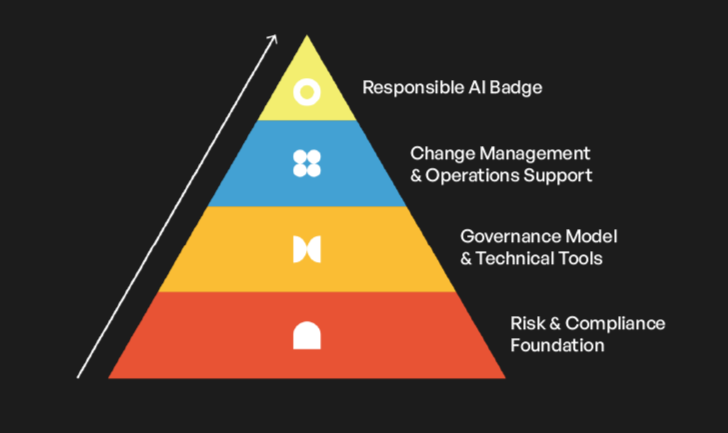
What responsible AI cannot guarantee
Responsible AI can mitigate risk, but it cannot guarantee perfect fairness, accuracy, privacy, or safety.
It cannot remove all human bias
People choose the goal, data, labels, features, thresholds, and success measures. Those choices can introduce bias before the model runs.
It cannot make poor data reliable
A complex model cannot correct records that are missing, wrong, or based on unfair past decisions. Better modeling may hide the problem rather than solve it.


It cannot replace legal review
AI governance and legal compliance overlap, but they are not the same. U.S. rules may apply to employment, housing, credit, health care, education, privacy, accessibility, and consumer protection.
The Federal Trade Commission has stated that businesses should not make deceptive or unfair claims about AI and should consider whether automated systems cause harmful discrimination. The exact legal question depends on the facts and the applicable law.
It cannot provide certainty from a single fairness score
Fairness measures may conflict. Improving one measure can worsen another. A result that looks fair on average may still harm a small group or a person with unusual circumstances.
It cannot solve a bad use case
Some decisions should not be automated, even if a model is accurate. If the harm from an error is severe and there is no meaningful way to appeal, the safer choice may be not to use AI for that decision.

How to evaluate whether an AI system is responsibly managed
Use this short review before adopting or expanding an AI tool.
Purpose and impact
- Is the intended use clear?
- Is AI needed for this task?
- Could the result affect a person’s rights, money, health, safety, or opportunity?
- Have affected users and communities been consulted?
Data and privacy
- What data does the system use?
- Is each data field needed?
- How long is data kept?
- Who can access it?
- Could indirect features create unfair results?
Performance and fairness
- What does “success” mean?
- Which groups were tested?
- What kinds of errors occur?
- Are test conditions similar to real use?
- Will performance be reviewed after launch?
Transparency and user control
- Will people know when AI is involved?
- Can they get a useful explanation?
- Can they reach a human?
- Can they correct wrong information or appeal a decision?
Accountability and security
- Who owns the system?
- Who approves changes?
- Are model versions and decisions recorded?
- Is there an incident response plan?
- Can the organization pause or disable the system?
A vendor’s claim that a model is “ethical,” “safe,” or “unbiased” is not enough evidence. Ask for the test method, scope, date, known limits, and conditions behind the claim.
Common mistakes to avoid
Mistake 1: Removing sensitive traits and assuming bias is gone
A model can infer sensitive information from other fields. Test outcomes, not only the input list.
Mistake 2: Measuring only average accuracy
Average performance can hide large differences between groups. Review error patterns and the real cost of each error.
Mistake 3: Using a human as a rubber stamp
Human review must involve judgment, training, time, and authority. Otherwise, it may only make an automated decision look accountable.
Mistake 4: Testing only before launch
Real-world data and user behavior change. Set a review schedule and define what will trigger an investigation or pause.
Mistake 5: Treating transparency as a technical report
A long model document may not help an affected person. Give users plain information about the system’s role, limits, and appeal options.
Mistake 6: Ignoring accessibility
A tool may work well for many users but still exclude people with disabilities. Test the full user experience, not just model accuracy.
Mistake 7: Collecting more data “just in case”
Extra data increases privacy and security exposure. Collect what the task needs, set retention limits, and protect access.
Key takeaways
- The clearest answer is algorithmic bias and discrimination.
- Responsible AI can also help mitigate privacy loss, unsafe outputs, misinformation, security threats, and accountability gaps.
- The strongest approach checks the full life cycle: purpose, data, model, users, deployment, and monitoring.
- Human oversight must be real. A person needs the power and information to question the system.
- No fairness test or AI label proves that a system is safe in every setting.
- For high-impact uses in the United States, involve legal, privacy, security, accessibility, and subject-matter reviewers.
FAQs
Can responsible AI eliminate bias?
No. It can reduce, detect, and manage bias, but it cannot guarantee that every result will be fair. Bias may come from data, design choices, social conditions, or the way people use the system.


What is the biggest risk responsible AI addresses?
The answer depends on the use case. For hiring, lending, housing, and similar decisions, unfair treatment and discrimination may be central risks. For generative AI, false information, privacy leaks, unsafe content, and misuse may be more pressing.
Is explainable AI the same as responsible AI?
No. Explainable AI focuses on making a system’s output easier to understand. Responsible AI is broader. It also covers fairness, privacy, safety, security, accountability, accessibility, and governance.
Does using a human reviewer make an AI system responsible?
Not by itself. The reviewer must understand the system, have enough information and time, and be able to change or reject the result. The organization also needs records, monitoring, and a process for handling complaints.
What should a small U.S. business do first?
Start with an inventory of AI tools and their uses. Rank them by possible impact. For higher-risk tools, document the purpose, data, vendor claims, test results, human review process, privacy controls, and steps for reporting harm.
Conclusion
Responsible AI can help mitigate algorithmic bias by combining better data review, group-based testing, human oversight, transparency, and ongoing monitoring. It can also reduce other risks, including privacy harm, unsafe advice, misinformation, and security failures.
The next practical step is to identify one AI system, describe the decision it supports, list who may be affected, and test where it can fail. That simple review creates a stronger base for safer and more accountable AI use.

Everett Ashford is a tech reviewer at mytechgrid.com specializing in SSDs, cameras, TVs, earbuds, headphones, and other consumer electronics. He provides honest, data-driven reviews based on hands-on testing and real-world performance analysis. Everett simplifies complex tech details to help readers make smart, confident buying decisions.