Yes, manufacturers still make camcorders in the United States. The market is smaller than it was in the 1990s and 2000s, but brands such as Sony, Canon, Panasonic, and JVC still sell dedicated camcorders.
Modern camcorders now serve a more focused group of users. They remain popular for weddings, school events, church services, sports, documentaries, family videos, and professional work. A phone may be easier to carry, but a camcorder often gives you longer recording times, better zoom, steadier footage, and simpler handling.

What Is a Camcorder?
A camcorder is a camera designed mainly to record video. It usually combines the lens, image sensor, microphone, recording system, screen, and battery into one handheld body.
Most current camcorders record to an SD card. Many use MP4 files, while professional models may also support formats such as XAVC, MXF, or other broadcast formats.
A camcorder is not the same as every video camera. The term usually describes a compact, all-in-one camera with:
- A built-in zoom lens
- A hand strap or shoulder-friendly body
- A flip-out screen
- A viewfinder on some models
- Long recording support
- Built-in microphones
- A removable battery
- Memory card recording
Some camcorders are small enough for family use. Others are large professional cameras with SDI, XLR audio, built-in neutral-density filters, and advanced video controls.
Which Companies Still Make Camcorders?
Several well-known camera makers still produce camcorders for the U.S. market. Their product lines differ by price, size, and intended use.
| Brand | Typical camcorder types | Best suited to |
|---|---|---|
| Sony | Consumer Handycam and professional video cameras | Family events, travel, weddings, news, production |
| Canon | VIXIA, XA, and XF camcorders | Home video, events, education, business video |
| Panasonic | HC and professional camcorder lines | Zoom-heavy shooting, live events, documentary work |
| JVC | Professional and specialty camcorders | Live production, education, sports, and broadcast work |
Product names and stock can change. Some models may be available through camera dealers rather than large electronics stores.
Sony camcorders
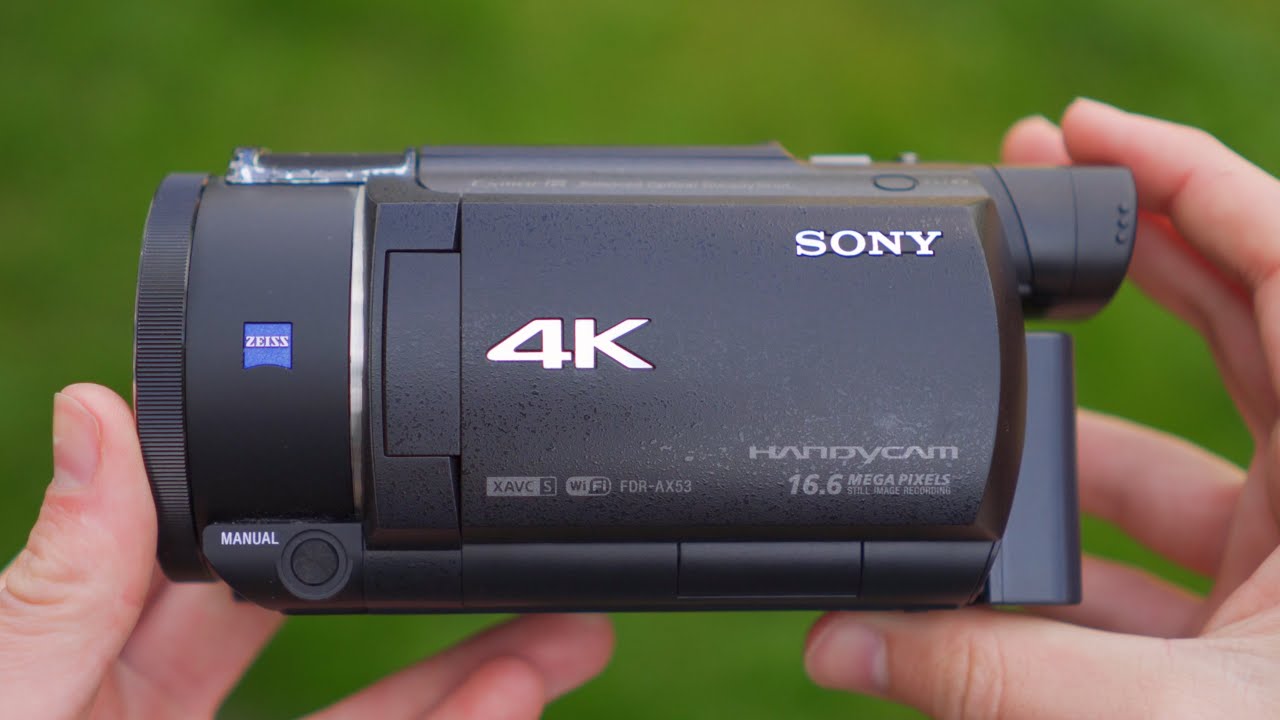
Sony still sells consumer and professional camcorders. Its Handycam range includes models aimed at family video and travel. Sony also makes professional cameras such as the PXW-Z200 and PXW-Z190.
Consumer Sony camcorders often focus on:
- Optical or balanced optical zoom
- Optical image stabilization
- 4K recording on selected models
- Automatic shooting modes
- Compact bodies
- Simple file transfer
Professional Sony models add features such as XLR audio inputs, SDI output, manual lens rings, timecode, and broadcast-style recording options.
Canon camcorders
Canon continues to offer the VIXIA line for home and enthusiast users. The XA and XF ranges target professional and serious video users.
Canon camcorders are commonly used for:
- Weddings
- School performances
- Church services
- Interviews
- Live events
- Small business video
- Local news and documentary work
Models in the XA and XF families may include XLR audio, built-in ND filters, dual memory card slots, and long optical zoom lenses.
Panasonic camcorders
Panasonic continues to make consumer and professional camcorders. Its HC-series models are known for long zoom ranges and compact designs. Its professional models target event production, live streaming, education, and broadcast work.
Panasonic camcorders may appeal to users who want:
- Long-range optical zoom
- 4K recording
- Manual exposure controls
- A traditional handheld design
- Professional audio connections
- Live video features
JVC camcorders
JVC still makes professional video cameras and specialty camcorders. Its products are often used in schools, houses of worship, sports, local production, and live events.
JVC has also offered models with features aimed at streaming and connected production. Availability varies more than it did in the past, so check the manufacturer or an authorized U.S. dealer before buying.
Why Are Camcorders Still Made?
Camcorders remain useful because they solve problems that phones and many interchangeable-lens cameras do not solve as easily.
Long recording times
A camcorder is built for extended recording. A phone may stop because of heat, storage limits, battery drain, or incoming calls. A camcorder can often record for much longer with a large memory card and spare batteries.
Always check the manual for recording limits. Some cameras divide long clips into separate files, even when recording continues without a major interruption.
Strong optical zoom
Optical zoom uses the lens to enlarge the subject. Digital zoom enlarges the image after capture and can reduce detail.
A camcorder may let you frame a child on a stage, a speaker at a podium, or a player on a field without changing lenses. That is one of its biggest advantages.
A long zoom does not remove every problem. At full telephoto, even small hand movements can make the image shake. A tripod or monopod can help.
Better handling for video
Camcorders are shaped for moving images. Their hand straps, side grips, flip-out screens, and physical zoom controls make them comfortable during long events.
A phone can record excellent video, but holding it for two hours can be tiring. A camcorder puts key controls within reach and keeps the screen away from your face.
Built-in stabilization
Many camcorders include optical or electronic image stabilization. This can make handheld footage smoother, especially when you use moderate zoom.
Stabilization is not magic. It cannot fully correct fast movement, strong vibration, or poor support at extreme zoom. It also may work differently in each recording mode.
Built-in audio options
Basic camcorders use built-in stereo microphones. Professional models may include:
- 3.5 mm microphone input
- Headphone output
- XLR audio inputs
- Manual audio controls
- Phantom power
- Handle-mounted microphones
Good audio can matter more than a small increase in image sharpness. For interviews and events, a camera with a microphone input may be more useful than a camera with a higher pixel count.

Are Camcorders Better Than Phones?
Neither device is always better. The right choice depends on what you record and how you work.
| Need | Camcorder advantage | Phone advantage |
|---|---|---|
| Long events | Large battery options and event-focused design | Easy to start and share |
| Zoom from a distance | Physical optical zoom | Multi-camera phone systems |
| Low light | Larger professional sensors on some models | Strong computational processing |
| Audio | Headphone and microphone ports on many models | Simple wireless accessories |
| Portability | Dedicated device with hand strap | Usually already in your pocket |
| Editing and sharing | Standard video files and card transfer | Fast apps and cloud sharing |
| Stability | Camcorder grip and optical stabilization | Small size for casual clips |
| Cost | May require a separate purchase | No new camera if you own the phone |
A phone may produce a better-looking clip in bright light or difficult automatic scenes. Modern phones use computational photography to combine several frames and adjust color, exposure, and noise.
A camcorder often wins when you need to record a full event, zoom across a room, connect a microphone, or keep your phone free for other tasks.
Are Camcorders Better Than Mirrorless Cameras?
Mirrorless cameras can offer better image quality, especially with larger sensors and interchangeable lenses. They also provide strong control over depth of field, color, and lens choice.
Camcorders are often easier for long-form video. They usually provide:
- A built-in power zoom lens
- Continuous autofocus designed for video
- A longer recording workflow
- Better grip for handheld operation
- Built-in audio tools
- Less need to change lenses
A mirrorless camera may be the better choice for short films, portraits, commercials, and work that needs a blurred background. A camcorder may be better for a school play, sports game, conference, or wedding ceremony where you must keep recording and adjust the zoom quickly.
What Types of Camcorders Can You Buy?
The term “camcorder” covers several different classes of camera.
Consumer camcorders
Consumer camcorders are designed for ease of use. They often include automatic exposure, face detection, image stabilization, and a long built-in zoom.
They fit users who want to record:
- Family gatherings
- Vacations
- Children’s activities
- School events
- Outdoor trips
- Personal archives
Some consumer models record in 4K. Others record in Full HD, which can still be suitable for online video and home viewing.
Prosumer camcorders
Prosumer models sit between consumer and professional cameras. They may include better manual controls, improved optics, a viewfinder, larger batteries, and microphone connections.
This class can work well for independent videographers, educators, event shooters, and small businesses.
Professional camcorders
Professional camcorders are built for production work. Depending on the model, they may offer:
- XLR audio inputs
- SDI output
- Timecode
- Dual card slots
- Built-in ND filters
- Manual focus and zoom rings
- High-bitrate recording
- Multiple battery options
- Wired or wireless live transmission
These cameras cost more and may require more setup. They make sense when reliability, audio control, and workflow matter more than the smallest size.
Cinema-style cameras
Cinema cameras are sometimes grouped with camcorders, but they are not the same. A cinema camera may require separate lenses, a cage, an external monitor, a recorder, and a larger battery system.
Choose a cinema camera for controlled production. Choose a camcorder when you want a ready-to-record system with fewer parts.

What Should You Look For When Buying a Camcorder?
Start with the way you will use the camera. Specifications matter, but the best model is the one that fits your recording conditions.
1. Choose the right resolution
4K gives you more detail than Full HD. It can also let you crop a shot while keeping a useful image.
However, 4K uses more storage and may require a faster computer for editing. Full HD remains practical for long events, online publishing, and older televisions.
2. Check the optical zoom
Look for optical zoom rather than relying on digital zoom. A 20x or 25x zoom can be useful indoors or on a field. A longer zoom may help at sports events, but it increases the need for a tripod.
Do not judge the camera by zoom alone. A very long zoom can perform poorly in dim light if the lens has a narrow maximum aperture.
3. Consider the sensor size
A larger sensor can collect more light and may create a softer background. A smaller sensor can make it easier to keep a distant subject in focus and may support a longer compact zoom.
For a stage event, a camcorder with a smaller sensor and long zoom may be practical. For interviews and controlled lighting, a larger-sensor camera may create a more cinematic image.
4. Confirm audio connections
If you plan to use an external microphone, check the exact ports. A headphone jack lets you monitor sound while recording.
Professional XLR inputs are useful for balanced microphones and longer cable runs. A camera without headphone monitoring can make it harder to discover audio problems before the event ends.
5. Check battery and power options
Look for the expected recording time with the included battery. Then check whether larger batteries are available.
For a long event, you may also want:
- Two or more batteries
- A wall power adapter
- A compatible AC coupler
- A memory card with enough capacity
- A camera bag
- A tripod
Never assume that a battery from one product line fits another. Verify the battery model in the camera manual.
6. Review the recording format
Confirm that your computer and editing program support the camera’s files. MP4 is often simple to use. Professional formats may preserve more information but can require more storage and processing power.
7. Check the screen and viewfinder
A viewfinder can help when sunlight makes the screen hard to see. A flip-out screen is useful for low-angle shots, self-recording, and event work.
If you record outdoors, test whether the screen is bright enough for your conditions. A screen that looks clear indoors may be difficult to use in direct sun.
How Much Does a New Camcorder Cost?
Camcorder prices vary widely in the U.S. market.
- Basic consumer models may cost a few hundred dollars.
- Better 4K consumer models often cost several hundred dollars to around $1,000.
- Prosumer models may cost about $1,000 to $3,000.
- Professional models can cost several thousand dollars or more.
These are broad price bands, not fixed current prices. Retail stock, sales, discontinued models, and professional configurations can change the final cost.
Remember to include accessories. A useful budget may need to cover memory cards, batteries, a microphone, a tripod, and a carrying case.
Do Camcorders Still Record to Tapes?
Most new camcorders do not use tape. Modern models usually record to SD, SDHC, or SDXC memory cards.
Older MiniDV, Hi8, Digital8, and DVD camcorders can still be found on the used market. They may be useful for playing or transferring old recordings, but they are not the normal choice for new video production.
If you buy an older camcorder, check:
- Battery health
- Charger availability
- Tape mechanism condition
- Memory card support
- Video output type
- Compatibility with your computer
- Availability of replacement parts
Used tape camcorders can be valuable for transferring family footage. They can also be difficult to maintain.
Are Camcorders Going Away?
Camcorders are unlikely to return to their former mass-market popularity, but that does not mean the category has disappeared.
The market has split into several groups:
- Phones for casual video
- Action cameras for small, rugged cameras
- Mirrorless cameras for creative production
- Camcorders for long events and zoom-heavy work
- Professional video cameras for broadcast and live production
That change makes camcorders more specialized. Manufacturers do not need to sell them to every household for them to remain useful.
The main risk is not that every camcorder will vanish at once. The more practical concern is that consumer choices may become narrower, while professional models remain available through specialist dealers.
Common Camcorder Buying Mistakes
Buying based only on 4K
4K does not guarantee better video. Lens quality, lighting, focus, stabilization, and audio all affect the final result.
Ignoring audio
A sharp image with distant or distorted sound is still difficult to watch. Check for microphone input and headphone monitoring if sound matters.
Using digital zoom
Digital zoom can make distant subjects look soft. Use optical zoom, then crop only when the recording resolution allows it.
Forgetting storage
A long event can fill a small memory card. Check the camera’s bitrate and recording time, then carry a spare card from a reputable brand.
Buying a camera without checking the workflow
A camera may record in a format that your computer handles poorly. Confirm file compatibility before the event.
Assuming stabilization replaces a tripod
Stabilization helps, but a tripod remains valuable for speeches, ceremonies, sports, and long shots at high zoom.
Key Takeaways
- Yes, camcorders are still made and sold in the United States.
- Sony, Canon, Panasonic, and JVC continue to serve consumer, prosumer, and professional users.
- Camcorders are strongest for long recordings, optical zoom, event coverage, and dedicated audio controls.
- Phones are often better for quick clips, automatic processing, and instant sharing.
- Mirrorless cameras may be better for cinematic work and interchangeable lenses.
- Check the zoom, sensor, audio ports, battery system, recording format, and memory card requirements before buying.
- Product availability changes, so confirm the exact model and support status with the manufacturer or an authorized U.S. retailer.
Frequently Asked Questions
Are Sony Handycam camcorders still available?
Yes. Sony continues to offer Handycam models and professional video cameras, although the consumer selection is smaller than in earlier years. Availability can differ between Sony’s website, major retailers, and camera dealers.
Does Canon still make VIXIA camcorders?
Yes. Canon continues to offer VIXIA models for consumer and enthusiast video, along with the professional XA and XF lines. Check Canon’s U.S. product pages for current models and recording specifications.
Are Panasonic camcorders still made?
Yes. Panasonic continues to make consumer and professional camcorders. Its products include compact models with long zoom ranges and professional cameras for events, streaming, and production.
Is it worth buying a camcorder in 2025?
A camcorder can still be worth buying if you record long events, need a strong optical zoom, want a dedicated camera, or require microphone and headphone connections. A phone may be the better option for short clips and quick sharing.
What is the best camcorder for family videos?
A compact consumer camcorder with optical stabilization, a useful zoom range, simple automatic modes, and affordable batteries is usually the best fit. Choose 4K if you plan to crop footage or view it on a large screen; choose Full HD if storage and easy editing matter more.
Can a camcorder take photos?
Many camcorders can capture still images, but photography is usually a secondary function. A phone or interchangeable-lens camera will often provide better photo controls and image quality.
Final Answer: Camcorders Are Still Here
Camcorders are still made in the USA market, but they now serve a more specific purpose. They are not the default camera for everyone. They are practical tools for people who need long recording times, strong optical zoom, steady handling, and reliable video controls.
If you mostly record short clips, your phone may be enough. If you cover a two-hour event from the back of a room, a dedicated camcorder can still be the more useful choice.
Before buying, compare the exact lens, audio ports, battery options, recording format, and support status—not just the brand name or 4K label.
Sources for product and format verification
- Sony Professional Video Cameras
- Sony Handycam product information
- Canon VIXIA camcorders
- Canon professional video cameras
- Panasonic professional video cameras
- JVC Professional Video

Everett Ashford is a tech reviewer at mytechgrid.com specializing in SSDs, cameras, TVs, earbuds, headphones, and other consumer electronics. He provides honest, data-driven reviews based on hands-on testing and real-world performance analysis. Everett simplifies complex tech details to help readers make smart, confident buying decisions.