Canon camera numbers show a camera’s product family, market level, and sometimes its generation. But Canon does not use one number system for every camera.
For example, a higher number does not always mean a better camera. The EOS R5 is not simply “better” than the **EOS R7” in every situation. The R5 targets high-resolution full-frame work, while the R7 uses a smaller APS-C sensor and may suit wildlife shooters who value extra reach.
For shoppers in the United States, the safest way to read a Canon camera name is to check three things:
- The camera family, such as EOS R, EOS DSLR, Rebel, or PowerShot
- The model number, which suggests its position within that family
- The suffix, such as Mark II, C, or HS, which adds detail about the version or design
Canon’s model names are more like a family tree than a simple ranking system.

Canon Camera Names Have Three Main Parts
A Canon model name usually includes a brand line, a model number, and a version label.
Take Canon EOS R6 Mark II:
- EOS identifies Canon’s interchangeable-lens camera system.
- R identifies Canon’s current full-frame and APS-C mirrorless family.
- 6 places the camera in the R-series lineup.
- Mark II means it is a later version of an earlier R6.
Now compare Canon EOS Rebel T8i:
- EOS identifies the interchangeable-lens system.
- Rebel is the consumer name used mainly in the United States.
- T8i identifies the model level and generation.
The number is useful, but it is not a complete specification. Sensor size, autofocus, burst speed, video features, controls, weather protection, and lens compatibility can differ greatly between cameras with similar numbers.
What does EOS mean?
EOS stands for Canon’s electronic optical system. In practical terms, EOS cameras use interchangeable lenses and communicate electronically with those lenses.
Canon has used EOS for both:
- DSLR cameras, such as the EOS 90D and EOS 5D Mark IV
- Mirrorless cameras, such as the EOS R50 and EOS R5 Mark II
EOS does not tell you whether a camera is a DSLR or mirrorless. The letters after EOS usually provide that clue.
What do R, M, and Rebel mean?
- EOS R cameras are Canon’s mirrorless system cameras.
- EOS M cameras were Canon’s smaller APS-C mirrorless models.
- EOS Rebel cameras are entry-level DSLR models sold under the Rebel name in the United States.
- EOS cameras without Rebel branding usually use Canon’s model number directly, such as EOS 90D or EOS 6D Mark II.
Canon has focused its newer interchangeable-lens development on the EOS R system. Used EOS M and Rebel cameras can still be useful, but buyers should check lens availability and long-term system support before purchasing.
How Canon EOS R Numbers Work
The EOS R system includes both full-frame and APS-C mirrorless cameras. The number often hints at the camera’s intended market position, but sensor size matters just as much as the number.
| Model family | Typical position | Sensor format | Common use |
|---|---|---|---|
| EOS R1 | professional flagship | Full frame | Sports, news, demanding professional work |
| EOS R3 | High-end professional | Full frame | Fast action and professional shooting |
| EOS R5 | High-resolution enthusiast/pro | Full frame | Landscapes, portraits, commercial work, high-resolution video |
| EOS R6 | General-purpose enthusiast/pro | Full frame | Events, weddings, portraits, action |
| EOS R8 | Smaller full-frame model | Full frame | Travel, portraits, hybrid photo and video |
| EOS R7 | Advanced APS-C | APS-C | Wildlife, sports, reach-focused shooting |
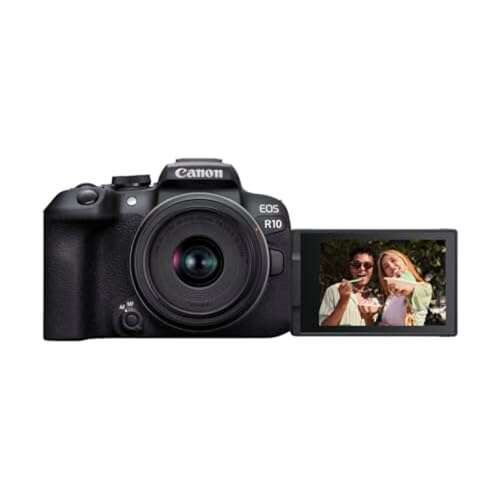
| EOS R10 | Mid-level APS-C | APS-C | Families, travel, learning photography |
| EOS R50 | Entry-level APS-C | APS-C | First interchangeable-lens camera, casual video |
This table shows the broad pattern, not a strict quality ladder. Canon changes its lineup over time, and newer cameras may not fit neatly beside older ones.
What does the number mean in the EOS R line?
In general:
- R1 and R3 sit near the professional end.
- R5 emphasizes resolution and advanced features.
- R6 balances speed, image quality, and low-light performance.
- R7 and R10 use APS-C sensors.
- R8 is a compact full-frame option.
- R50 is aimed at new users and casual creators.
The most important dividing line is often full frame versus APS-C, not R5 versus R7 or R10 versus R50.
A full-frame sensor is the same general size as a 35mm film frame. An APS-C sensor is smaller. On Canon APS-C cameras, a lens gives a narrower field of view than it would on a full-frame camera. This can help wildlife photography, but it can make wide-angle shooting more difficult.
Why can the EOS R7 be a better choice than the EOS R6?
The R7 has an APS-C sensor, while the R6 has a full-frame sensor. The R6 generally offers stronger low-light performance and a wider view with the same lens.
The R7 may be more useful when you want extra apparent reach for birds or distant subjects. Its smaller sensor does not magnify the image by itself, but it captures a narrower portion of the lens’s image circle. This makes the subject occupy more of the frame.
The trade-off is simple:
- Choose full frame for low light, wide views, and shallow depth of field.
- Choose APS-C for a smaller body, lower system cost, and useful reach for wildlife or sports.

How Canon DSLR Numbers Work
Canon DSLR numbers follow several overlapping systems. They are easier to understand when divided into professional, enthusiast, and entry-level groups.
| Canon DSLR line | Examples | General position |
|---|---|---|
| 1D series | EOS-1D X Mark III | Professional sports and news |
| 5D series | EOS 5D Mark IV | Advanced full-frame DSLR |
| 6D series | EOS 6D Mark II | Entry-level full-frame DSLR |
| 7D series | EOS 7D Mark II | Fast APS-C action DSLR |
| Two-digit series | EOS 90D, EOS 80D | Advanced APS-C DSLR |
| Three-digit series | EOS 850D, EOS 800D | Midrange APS-C DSLR |
| Four-digit series | EOS 4000D, EOS 250D | Entry-level DSLR |
The number usually indicates the camera’s position within a series. It does not always indicate its age or overall image quality.
What do the 5D, 6D, and 7D numbers mean?
Canon’s older full-frame and APS-C DSLR families used distinct series:
- 5D models were advanced full-frame cameras.
- 6D models were more affordable full-frame cameras.
- 7D models were high-speed APS-C cameras aimed at action and wildlife users.
A 7D Mark II could be faster and more suitable for sports than a 6D Mark II, even though the 6D has a full-frame sensor. The “better” camera depends on the subject and working conditions.
What do numbers such as 90D and 850D mean?
Two-digit Canon DSLR models, such as the EOS 90D, generally sit above three-digit and four-digit models in features and controls.
They often offer some combination of:
- More direct controls
- Faster continuous shooting
- Better autofocus options
- Stronger battery life
- More advanced video controls
- More durable construction
Three-digit cameras, such as the EOS 850D, usually target beginners and enthusiasts. They can produce excellent images, but they often provide fewer controls and less advanced performance.
Four-digit cameras usually sit near the entry level. They can be a good low-cost way to learn photography, especially when purchased with a basic lens. However, a newer mirrorless model may offer better autofocus and a more modern user experience.
How Canon Rebel Numbers Work in the United States
Canon uses the Rebel name for many entry-level DSLR cameras in the United States. The same or similar cameras may use different names in other markets.
Examples include:
- Rebel T7
- Rebel T8i
- Rebel SL3
- Rebel T6
- Rebel T7i
The Rebel name is not itself a number. The letter and number combination identifies the model family and generation.
What do T7, T7i, and T8i mean?
The number generally helps identify the generation and position of the camera, but the letter matters too.
- T7 is a basic entry-level Rebel.
- T7i is a more advanced model in the Rebel range.
- T8i is a later model with newer features than the T7i.
- SL models are smaller and lighter than many standard Rebel cameras.
Do not assume that a T8i is automatically better for every buyer than an older camera from another series. A used 80D, for example, may offer more direct controls and a stronger body than a newer entry-level Rebel.
Why does Canon use different names in different countries?
Canon adapts product names for different markets. A camera sold as a Rebel in the United States may use a different designation elsewhere, such as an EOS xxxD model.
This can create confusion when buying used cameras, importing equipment, or reading international reviews. Always compare:
- The exact model number
- The sensor format
- The lens mount
- The language and menu options
- Warranty coverage
- Included accessories
- Regional compatibility
The name alone may not show whether two cameras are identical.

What Does “Mark II” or “Mark III” Mean?
“Mark II” means a second version. “Mark III” means a third version. Canon also uses shorter labels such as II, III, or IV.
For example:
- EOS R6 Mark II is a later version of the EOS R6.
- EOS 5D Mark IV is a later version of the EOS 5D Mark III.
- EOS-1D X Mark III follows the EOS-1D X Mark II.
A newer Mark version often improves several areas, such as:
- Autofocus
- Image processor speed
- Burst performance
- Video features
- Battery efficiency
- Wireless functions
- Screen or viewfinder performance
But “Mark II” does not guarantee a major improvement in every area. Canon may keep the same sensor size or resolution while improving autofocus and processing.
When comparing two versions, check the features that affect your work. A photographer who mainly shoots landscapes may care less about burst speed than a sports photographer.
What Do Canon Suffixes Such as C, HS, and IS Mean?
Canon uses suffixes to describe special versions or features. Their meaning depends on the product family.
C
A C often indicates a cinema-focused or video-focused version. The EOS R5 C, for example, is based on the R5 platform but adds features aimed at video production.
A C model may change:
- Cooling
- Recording formats
- Video controls
- Power requirements
- Body design
- Still-photo behavior
Do not assume that a C version is the best choice for still photography. It may favor video workflow over battery life, simplicity, or portability.
HS
On many Canon PowerShot cameras, HS refers to Canon’s High Sensitivity system. These models often combine a small camera body with a sensor and processor designed to improve results in dim scenes compared with older compact-camera designs.
HS does not mean the camera performs like a full-frame camera in low light. Sensor size still has a major effect.
IS
IS means image stabilization. On a lens, it usually means optical image stabilization. On a camera, it may refer to in-body image stabilization or a related stabilization system.
Stabilization can reduce blur caused by camera movement during still photography. It does not freeze a moving person or moving car. For moving subjects, shutter speed and autofocus remain important.
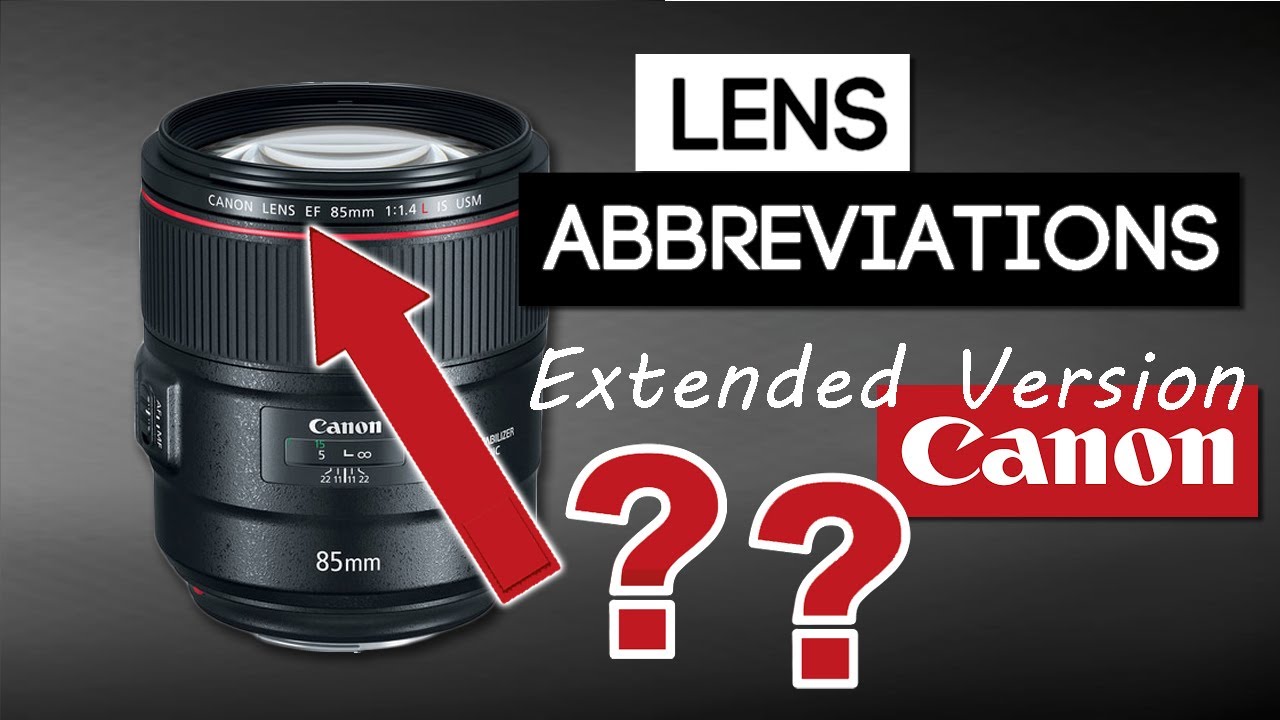
STM and USM on lenses
Canon lens names often include:
- STM: a stepping motor design that can provide smooth, quiet focusing, useful for video and general photography.
- USM: an ultrasonic motor design, often used for fast and quiet autofocus.
- L: Canon’s professional lens series.
- RF, RF-S, EF, and EF-S: lens mount families.
These are lens labels, not camera body numbers. They matter because the lens mount determines whether a lens can attach directly to a camera.
How Canon PowerShot Numbers Work
PowerShot is Canon’s compact-camera family. Its model names do not follow the same ranking system as EOS cameras.
Common PowerShot groups include:
- G series, such as G7 X and G5 X
- SX series, such as SX740 HS
- E series, such as ELPH models
G series
PowerShot G cameras generally target enthusiasts who want a small camera with more control than a basic point-and-shoot.
A higher number is not a universal ranking. The G7 X and G5 X families can differ in design, viewfinder features, lens range, and handling.
SX series
PowerShot SX cameras often emphasize long zoom ranges. A model such as the SX740 HS is designed for people who want a compact body and a very flexible built-in zoom.
Long zoom cameras involve a trade-off. They are convenient for travel and distant subjects, but small-sensor cameras usually have less control over background blur and low-light noise than larger-sensor cameras.
ELPH series
ELPH models are small, simple compact cameras. The model number can help separate versions, but it should not be used as a direct comparison with EOS or PowerShot G models.
Does a Higher Canon Number Mean a Better Camera?
No. A higher number only has meaning inside a specific Canon family.
For example:
- An EOS R7 is not a direct upgrade from an EOS R6.
- An EOS 90D is not automatically better than an EOS 6D Mark II.
- A PowerShot G7 X number cannot be compared directly with an EOS R50 number.
- A Rebel T8i is not simply an “8” version of an EOS 80D.
Use the number to find the camera’s place in its family. Then compare the features that affect your photography.
A better comparison method
Ask these questions:
-
What sensor size does it use?
Full frame, APS-C, or a small compact-camera sensor? -
What lens mount does it use?
RF, RF-S, EF, EF-S, or no interchangeable mount? -
What subjects will you shoot?
People, wildlife, sports, landscapes, travel, or video? -
Do you need a viewfinder?
Some compact cameras rely mainly on the rear screen. -
How much control do you want?
Entry-level cameras simplify operation. Advanced models provide more direct settings. -
Are you buying new or used?
A used higher-tier model may compete with a newer entry-level model. -
What is the total system cost?
The lens, batteries, memory cards, and support can cost as much as the camera body.
Canon Camera Number Comparison Examples
These examples show why model numbers need context.
EOS R50 versus EOS R7
The R50 is a smaller, simpler APS-C mirrorless camera. It suits beginners, travel, family photos, and casual video.
The R7 is a more advanced APS-C model. It offers more controls and is better suited to demanding wildlife and action work.
The R7 is not merely an R50 with a bigger number. It is a different class of camera.
EOS R6 Mark II versus EOS R5
The R5 emphasizes high resolution and advanced video features. The R6 Mark II emphasizes speed, autofocus, low-light use, and a more moderate file size.
A landscape or commercial photographer may value the R5’s resolution. An event photographer may prefer the R6 Mark II’s balance of speed, file size, and low-light capability.
EOS 90D versus EOS 6D Mark II
The 90D uses an APS-C sensor. The 6D Mark II uses a full-frame sensor.
The 90D may suit wildlife and sports users who want a crop-sensor field of view and fast operation. The 6D Mark II may suit portraits, travel, and low-light work where full-frame characteristics matter more.
Neither model wins in every category.
Common Mistakes When Reading Canon Model Numbers
Mistake 1: Comparing numbers across product families
An R50, 90D, Rebel T8i, and PowerShot G7 X belong to different lines. Their numbers are not interchangeable.
Mistake 2: Assuming newer means better in every way
A newer camera may have better autofocus but fewer physical controls. It may also use a different lens mount or battery.
Mistake 3: Ignoring the lens system
The camera body is only part of the system. Check whether your existing lenses work directly or need an adapter.
Canon’s main mounts include:
- RF for full-frame EOS R cameras
- RF-S for APS-C EOS R cameras
- EF for Canon DSLR lenses
- EF-S for Canon APS-C DSLR lenses
- EF-M for EOS M cameras
A lens may attach physically with an adapter but still have practical limits. Check Canon’s compatibility information before buying.
Mistake 4: Treating stabilization as a cure for all blur
Image stabilization helps with hand movement. It does not stop subject movement. A fast shutter speed may still be needed for children, pets, sports, or wildlife.
Mistake 5: Buying based only on megapixels
Resolution matters, but autofocus, lens quality, sensor size, dynamic range, handling, and video limits can matter more for your actual work.

How to Identify an Unknown Canon Camera
If you have a Canon camera but do not know what the number means, follow this order:
-
Look on the front or top of the camera body.
The model name is often printed near the lens mount or on the top plate. -
Open the camera menu.
The model name may appear in firmware or camera information screens. -
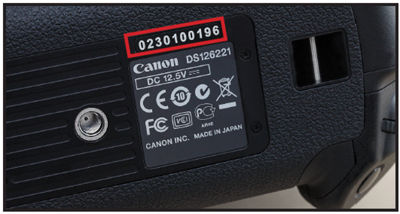
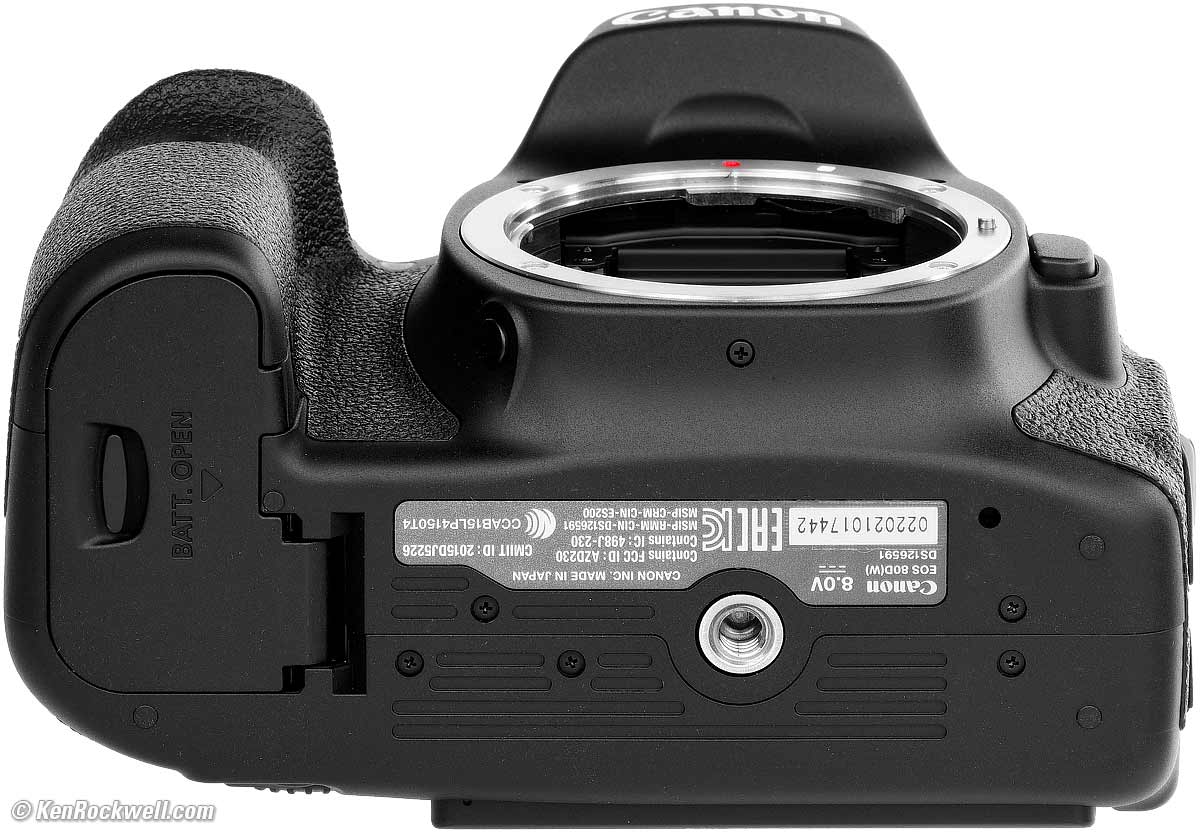
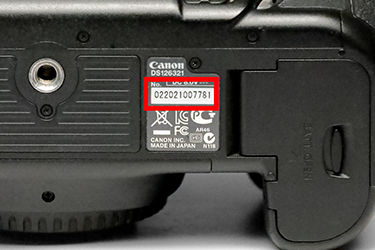
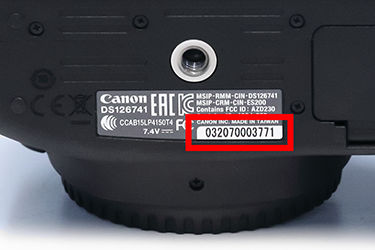
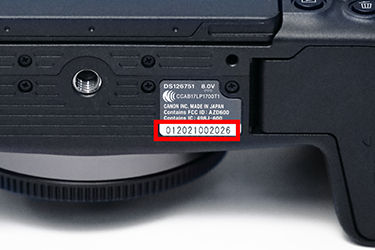
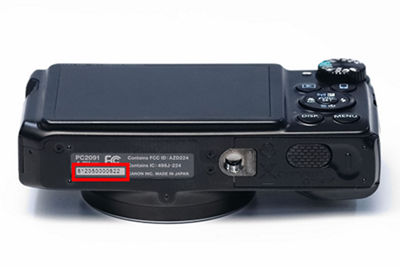
Check the battery compartment or bottom plate.
A model code may appear there. -
Read the original manual or box.
The manual usually gives the exact model and regional name. -
Search Canon’s U.S. support site using the exact name.
Use the official product page or manual rather than relying on a reseller listing. -
Check the lens mount before buying accessories.
The camera name alone does not tell you whether an RF, EF, EF-S, or EF-M lens will fit.
The exact model matters when you buy batteries, chargers, cables, remotes, cages, or replacement parts.
Frequently Asked Questions
Is Canon R5 better than R7?
Neither is universally better. The R5 is a full-frame camera aimed at high resolution and advanced work. The R7 is an APS-C camera that may offer practical advantages for wildlife, sports, size, and system cost.
Is Canon 90D better than Rebel T8i?
The EOS 90D is generally the more advanced DSLR. It offers stronger controls and performance. The Rebel T8i is smaller and simpler, so it may be a better fit for a beginner who wants a lighter camera.
What does the “i” mean on a Canon Rebel?
On Rebel models such as the T7i and T8i, the “i” is part of Canon’s model name. It does not act as a universal technical rating across all Canon cameras.
Can Canon camera numbers tell me the release year?
Only loosely. Model numbers can show the generation within a family, but they do not provide a reliable release year across the entire Canon lineup. Check Canon’s official product page or manual for the model’s date and specifications.
Can I use any Canon lens on any Canon camera?
No. Lens compatibility depends on the mount and sensor format. EF and EF-S lenses may work on some EOS R cameras with a Canon mount adapter, while RF lenses are designed for EOS R cameras. Check the exact camera and lens combination before purchasing.
The Bottom Line
Canon camera numbers work as family labels and rough market-position clues, not as one universal score.
Start with the camera family:
- EOS R means mirrorless.
- EOS DSLR numbers identify older interchangeable-lens families.
- Rebel identifies many U.S. entry-level DSLRs.
- PowerShot identifies compact cameras.
Then check the number, suffix, sensor size, lens mount, and intended use. If you are comparing two cameras, compare the features that affect your subjects rather than choosing the model with the largest number.
For a practical next step, write down the exact Canon model names you are considering and compare their sensor format, lens mount, autofocus, stabilization, video limits, and used-market condition.

Everett Ashford is a tech reviewer at mytechgrid.com specializing in SSDs, cameras, TVs, earbuds, headphones, and other consumer electronics. He provides honest, data-driven reviews based on hands-on testing and real-world performance analysis. Everett simplifies complex tech details to help readers make smart, confident buying decisions.