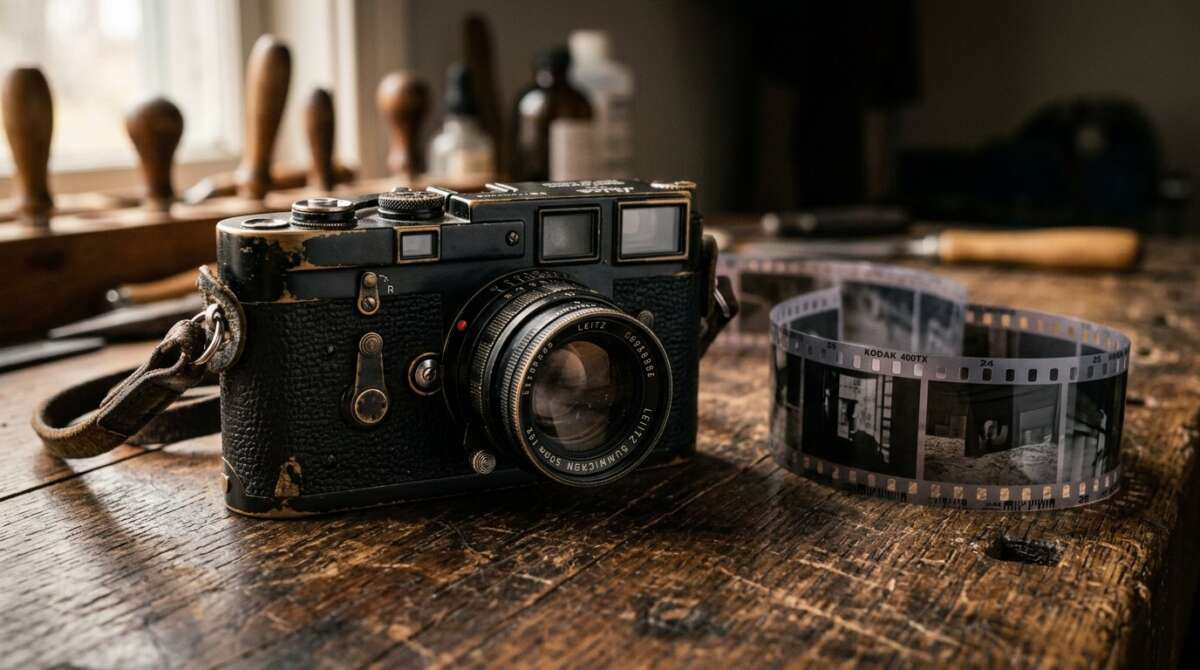
Film cameras do not have megapixels because they record images on chemical film, not digital pixels.
The question “do film cameras have megapixels?” sounds simple, but the answer needs some care. Film captures light through silver-halide crystals, while a digital camera uses a sensor made of pixels. However, film can be scanned and converted into a digital file, which makes megapixel comparisons useful in some cases. This guide explains film resolution, scan quality, format size, and how film compares with modern digital cameras.
Do film cameras have megapixels?
No, film cameras do not have megapixels. Megapixels measure the number of tiny picture elements, or pixels, created by a digital camera sensor or scanner.
A film camera exposes a piece of photographic film. The film contains light-sensitive chemicals. When light hits the film, it creates a hidden image that later appears during development. The image is made from silver crystals or dye clouds, not from a fixed grid of square pixels.
This difference is important:
• A digital camera creates a digital image at the moment of capture.
• A film camera creates an analog image on physical film.
• A scanner turns that analog image into pixels later.
So, when someone asks, “do film cameras have megapixels?” the most accurate answer is no. Film itself has no megapixel count. Only a digital scan of that film has megapixels.
How film records an image
Film uses a light-sensitive emulsion. This emulsion contains microscopic crystals that react when exposed to light. During development, those exposed areas become part of the visible photograph.
You can think of digital pixels as a tiled floor. Each tile stores a small piece of color and brightness data. Film is more like fine sand spread across a surface. The grains vary in shape, size, and response to light.
This gives film several traits that differ from digital photography:
• Film does not have a perfectly fixed resolution.
• Grain size affects detail and texture.
• Film speed affects grain and image quality.
• Development chemicals affect sharpness, contrast, and color.
• The lens still controls how much detail reaches the film.
Film also has an important limit. Although people often call film “infinite resolution,” that is not technically correct. Film can record very fine detail, but its resolving power is limited by grain structure, lens quality, focus accuracy, motion, exposure, and scanning.
That is why the answer to “do film cameras have megapixels?” cannot be replaced with one exact number. Film resolution depends on the complete photographic process.
How many megapixels is film equivalent to?
There is no single film-to-megapixel conversion. Still, rough estimates can help photographers compare film with digital cameras.
A well-exposed, sharply focused 35mm negative may produce around 10 to 20 megapixels of useful detail in many real-world scans. Fine-grain film, an excellent lens, a steady camera, and a high-quality scan may reveal more. A low-quality scan, soft lens, poor focus, or heavy grain may reveal much less.
These estimates are only practical comparisons. They do not mean that a roll of film contains a fixed number of pixels.
Typical rough ranges may look like this:
• 35mm consumer film: about 6 to 15 useful megapixels in many scans.
• 35mm professional fine-grain film: about 15 to 25 or more useful megapixels under favorable conditions.
• Medium-format film: often about 20 to 60 useful megapixels, depending on the format and scan.
• Large-format film: potentially much higher detail, especially with a high-quality scan and a sharp lens.
These figures can vary widely. Some tests measure visible detail, while others measure scan dimensions. A large file does not always contain more real detail. For example, scanning a soft 35mm negative at 80 megapixels creates a large file, but it does not magically add 80 megapixels of genuine information.
This is another reason the phrase “do film cameras have megapixels?” can be misleading. A scan may have 24 megapixels, but the original film may not contain enough sharp detail to support all of them.
What affects the resolution of film?
Film resolution depends on more than the film brand. Every step, from capture to scanning, can affect the final result.
Film format
Film format has a major effect. A larger piece of film records a larger image. Medium-format film, such as 120 film, has a larger frame than 35mm film. Large-format film is larger still.
A larger negative can hold more detail because the image does not need to be enlarged as much for a given print size. This is similar to writing on a large sheet of paper instead of a small sticky note.
Film speed
Film speed is measured with ISO numbers. Low-ISO film, such as ISO 50 or ISO 100, usually has smaller grain and can record finer detail. High-ISO film, such as ISO 800 or ISO 3200, usually has more visible grain.
High-speed film is not bad. It is useful in low light and can create a pleasing texture. However, it may provide less fine detail than slower film under the same conditions.
Lens quality
The lens can limit detail before the film has a chance to record it. A sharp lens with accurate focus can make a clear negative look impressive. A poor lens, dirty glass, or incorrect focus can make even the finest film look soft.
In practical film photography, lens quality often matters more than chasing a theoretical megapixel equivalent.
Focus and camera movement
A camera shake or missed focus can erase fine detail. No scanner can fully repair motion blur. A tripod, fast shutter speed, and careful focusing can make a larger improvement than using a higher scan setting.
Exposure and development
Underexposure can increase visible grain, especially when the image is brightened during scanning. Overdevelopment can also affect grain and contrast.
Color film, black-and-white film, slide film, and instant film all respond differently. Development time, temperature, and chemical control matter greatly.
Scanning quality
The scanner is the final link in the chain. Its optical resolution, focus, dynamic range, dust removal, and software all affect the result.
A cheap flatbed scanner may be fine for web images. A dedicated film scanner or professional drum scan can extract more detail from a good negative. However, more scanning resolution does not always equal more image detail.

Film scan resolution and megapixels
When you scan film, the scanner samples the negative at a chosen resolution. This setting is usually measured in dots per inch, or dpi.
For example, a 35mm frame is about 1.5 by 1 inch. At 3,000 dpi, the scan may be roughly 4,500 by 3,000 pixels. That equals about 13.5 megapixels.
At 6,000 dpi, the file may be around 9,000 by 6,000 pixels, or about 54 megapixels. Yet the film may not contain 54 megapixels of real, sharp information.
Here is a simple example:
-
A 35mm frame measures close to 36 by 24 millimeters.
-
A 4,000 dpi scan may create an image near 5,700 by 3,800 pixels.
-
That file contains about 22 megapixels.
-
Grain, lens sharpness, focus, and film type decide how much of that detail is meaningful.
For web use, a moderate scan is often enough. For small prints, 2,000 to 3,000 dpi may work well. For large prints or careful editing, a higher-quality scan can be useful.
The best scan setting depends on your purpose:
• Social media: a modest scan is usually enough.
• 8-by-10-inch prints: a good 2,000 to 4,000 dpi scan may be suitable.
• Large gallery prints: use the best original negative and a high-quality professional scan.
• Archiving: save a high-quality TIFF file, then create smaller JPEG copies for sharing.
This shows why “do film cameras have megapixels?” is different from asking how many megapixels a film scan has. The scan has megapixels; the film does not.

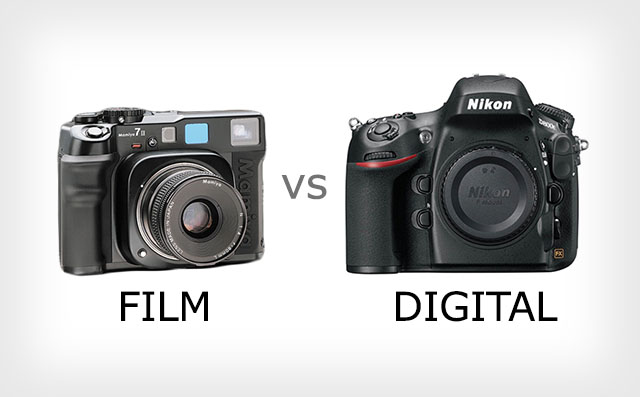
Film versus digital camera resolution
Digital cameras make resolution easy to label. A 24-megapixel camera creates an image with roughly 24 million pixels. A 45-megapixel camera creates a larger file with more sampled image data.
Film is less direct. Its detail depends on film stock, format, exposure, lens, development, and scan. This makes a simple film-versus-digital ranking difficult.
Digital cameras often provide these advantages:
• Consistent image quality from frame to frame.
• Easy high-resolution previews.
• Strong low-light performance in modern models.
• Simple cropping and editing.
• No film purchase or processing cost.
Film can offer different strengths:
• Natural grain and texture.
• Distinct color and contrast from different film stocks.
• A slower, more deliberate shooting process.
• A physical original negative.
• Wide highlight behavior in some situations.
In my own film tests and scanning work, the biggest mistake is judging film only by scan dimensions. A 35mm negative scanned at a huge size may look less detailed than a carefully captured 20-megapixel digital file. Yet the film may have more pleasing grain, color, or highlight roll-off.
The reverse can also happen. A carefully exposed fine-grain negative from a sharp lens can produce a very detailed print. The useful lesson is simple: image quality is more than megapixels.

Why photographers still choose film
Film remains popular because it offers an experience, not just a resolution number. Many photographers enjoy the wait, the limited frame count, and the need to make decisions before pressing the shutter.
A 36-exposure roll encourages care. You may think more about light, timing, and composition. That slower process can help beginners learn because each frame has a clear purpose.
Film also creates a particular visual character. Grain, halation, color shifts, and contrast can become part of the image. These traits are not always flaws. They can give a photograph a sense of age, mood, or place.
There are also practical reasons to use film:
• Film can be stored as a physical original.
• Negatives can be rescanned as technology improves.
• Different film stocks create different looks.
• Large formats can produce highly detailed negatives.
• Film cameras can be affordable on the used market.
Still, film has limits. It costs more per shot, requires development, and needs careful storage. Film can also be damaged by heat, moisture, scratches, and poor handling.

How to get the most detail from a film camera
If your goal is maximum film resolution, focus on the full workflow rather than one specification.
-
Choose a fine-grain film with an ISO suited to the light.
-
Use a sharp lens and keep it clean.
-
Focus carefully, especially at wide apertures.
-
Use a tripod when the shutter speed is slow.
-
Expose the negative accurately.
-
Avoid pushing film unless the situation requires it.
-
Use reliable development and processing.
-
Scan the negative with a quality film scanner.
-
Remove dust carefully without scratching the film.
-
Keep the original negative in a cool, dry, archival sleeve.
One lesson I have learned from scanning negatives is that dust control matters more than many people expect. A single speck can become a large mark after enlargement. Cleaning the film and scanner before a session saves time and protects the negative.
Another common mistake is choosing the highest scanner setting automatically. If the scanner cannot resolve the film grain, the extra pixels mainly create larger files and longer processing times. Scan for the final use, then increase the setting when the negative truly supports it.

Is film sharper than digital?
Film is not always sharper than digital, and digital is not always sharper than film. Sharpness depends on the camera, lens, subject, technique, and output size.
Modern digital cameras usually offer more predictable fine detail. Their sensors have a known pixel count, and their files can be reviewed immediately. High-resolution digital cameras also make cropping easier.
Fine-grain film can produce excellent detail, especially in medium and large formats. However, film grain, scanning limits, and slight focus errors can reduce visible sharpness.
The fairest comparison uses the same subject, similar lenses, careful focus, and equal final print sizes. Viewing both images at 100% on a monitor can be misleading. A print viewed from a normal distance often tells you more about practical image quality.
What does “film has unlimited resolution” mean?
People sometimes say film has unlimited resolution because it does not use pixels. This statement is useful as a metaphor, but it is not scientifically exact.
Film has continuous image information rather than a fixed pixel grid. However, its detail is limited by grain, emulsion design, lens performance, focus, motion, exposure, development, and scanning.
A piece of film cannot reveal detail smaller than its photographic system can record. In other words, film avoids a fixed megapixel count, but it does not avoid physical limits.
This is why careful comparisons use terms such as resolving power, line pairs per millimeter, grain, and acutance. These measurements describe how well a film system separates fine detail. They are more precise than assigning one permanent megapixel number to every roll of film.
Frequently Asked Questions About Do Film Cameras Have Megapixels
Do film cameras have megapixels?
No. Film cameras expose chemical film, so the original image does not contain digital pixels or megapixels. Megapixels apply after the film is scanned into a digital file.
How many megapixels is a 35mm film photo?
A 35mm photo may produce roughly 10 to 25 useful megapixels in a good scan, but the result varies widely. Film type, lens sharpness, focus, exposure, development, and scanner quality all affect the final detail.
Is 35mm film better than a 24-megapixel digital camera?
Not automatically. A 24-megapixel digital camera often gives more predictable detail, while high-quality 35mm film can offer distinctive grain, color, and highlight behavior.
Does scanning film add megapixels?
Scanning creates megapixels in the digital copy, but it does not add real detail that the negative never recorded. A higher scan setting can create a larger file without increasing meaningful sharpness.
Does medium-format film have more resolution than 35mm film?
Medium-format film often captures more detail because its frame is larger. The final result still depends on the film stock, lens, focus, development, and scan.
Can film be printed very large?
Yes. Well-exposed medium-format and large-format negatives can support large, detailed prints. A good 35mm negative can also produce attractive enlargements, though grain and softness may become more visible.
Conclusion
Film cameras do not have megapixels because film records images with light-sensitive chemicals rather than digital pixels. A scan can have a megapixel count, but that number describes the digital copy, not the original film.
The practical resolution of film depends on format, grain, lens quality, focus, exposure, development, and scanning. Instead of asking only, “do film cameras have megapixels?” consider the complete process and the final use of the image.
Choose film when you value its texture, process, and physical negative. Choose digital when you need speed, easy review, and predictable resolution. Try both if you can, compare equal-size prints, and share your results or questions with other photographers.

Everett Ashford is a tech reviewer at mytechgrid.com specializing in SSDs, cameras, TVs, earbuds, headphones, and other consumer electronics. He provides honest, data-driven reviews based on hands-on testing and real-world performance analysis. Everett simplifies complex tech details to help readers make smart, confident buying decisions.