Introduction
The best Canon camera for you depends on what you shoot, how much you can spend, and whether you need a small travel camera or a system you can grow into. For most people in the United States, a Canon EOS R mirrorless camera is the best starting point because Canon offers models for beginners, enthusiasts, professionals, and video creators.
Start by choosing the camera type, then match the sensor size, lens mount, autofocus features, video tools, and total kit cost to your needs. Do not choose by megapixel count alone. A camera that fits your hands, budget, and shooting style will serve you better than a camera with the longest feature list.
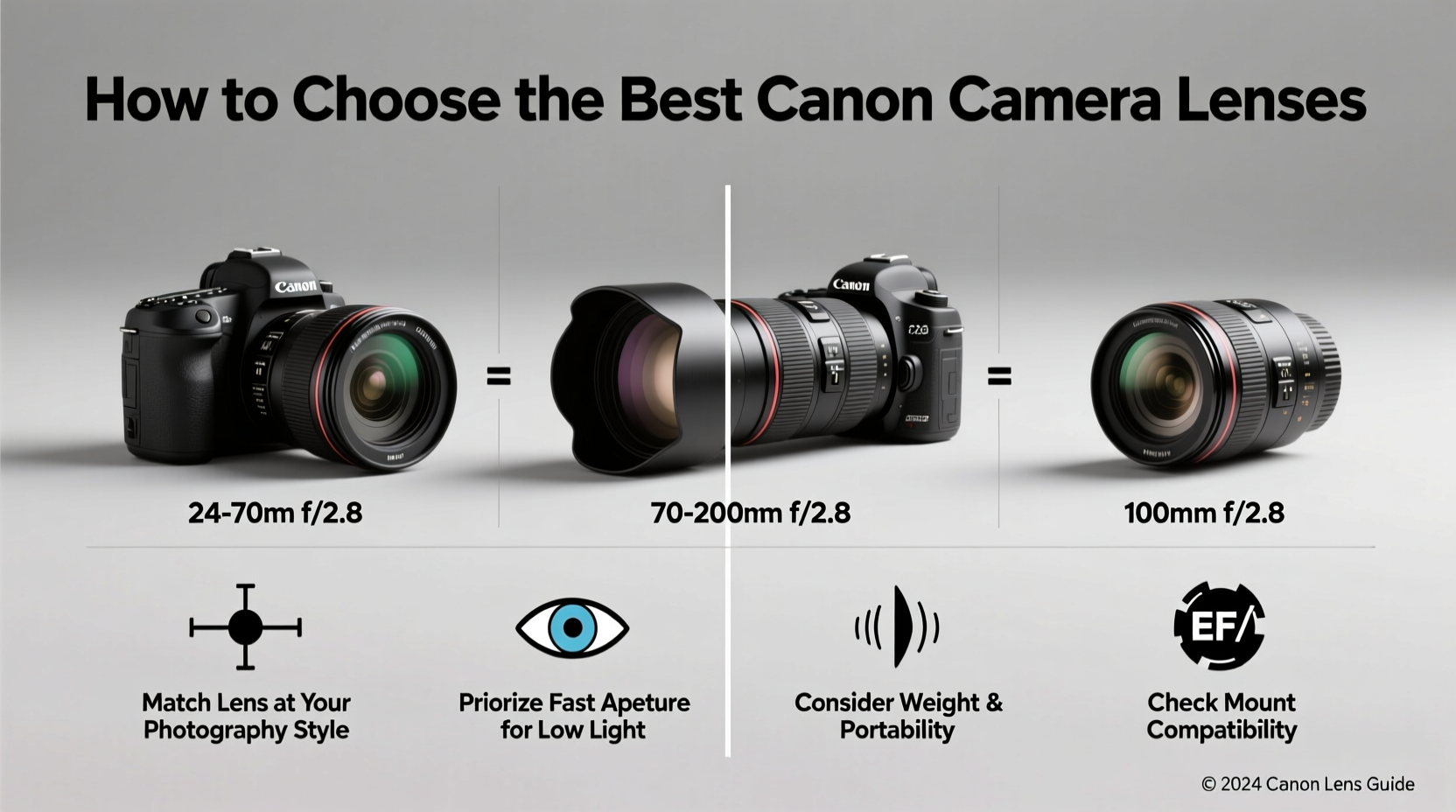
Quick Answer: Which Canon Camera Should You Choose?
Choose a Canon EOS R mirrorless camera if you want current lens support, strong autofocus, and a system you can expand over time.
Use this simple guide:
- Canon EOS R50: Best for beginners, travel, family photos, and casual video.
- Canon EOS R10: Best for beginners who want faster action shooting and more controls.
- Canon EOS R7: Best for wildlife, birds, sports, and photographers who want an APS-C camera with a long reach.
- Canon EOS R8: Best for enthusiasts who want a compact full-frame camera.
- Canon EOS R6 Mark II: Best for serious hybrid photo and video work, especially action and low light.
- Canon EOS R5 Mark II: Best for demanding photographers who need high resolution and advanced video features.
- Canon EOS R1: Best for professionals who need a high-speed full-frame camera for sports, news, and events.
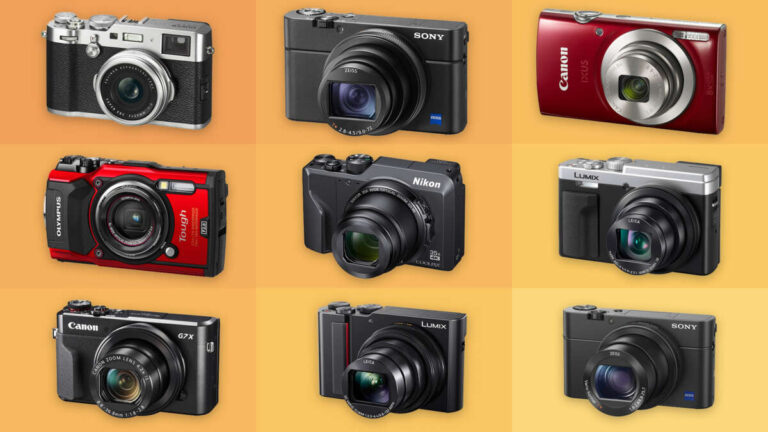
- Canon PowerShot models: Best when you want a compact camera with a built-in lens.
- Used Canon EOS DSLRs: Worth considering when price matters most and you are comfortable with older technology.
These are broad fits, not universal rankings. The right choice changes with your subject, lenses, budget, and tolerance for size and weight.
Start With the Camera Type
Canon sells cameras in several groups. Choosing the right group first removes much of the confusion.
Canon EOS R mirrorless cameras
EOS R cameras use a mirrorless design. They show the image through an electronic viewfinder or rear screen instead of using a mirror and optical viewfinder.
Mirrorless cameras are now Canon’s main interchangeable-lens system. They are a strong choice if you want:
- Real-time exposure previews
- Modern subject detection autofocus
- Electronic viewfinders
- Strong video features
- A wide range of RF and RF-S lenses
- A body that is often smaller than a similar DSLR
The EOS R system includes full-frame and APS-C cameras. Full-frame models use a larger sensor. APS-C models use a smaller sensor and often cost less.
Canon EOS DSLRs
Canon EOS DSLRs use a mirror and an optical viewfinder. The Canon EF lens system has a large used-market selection, and many older Canon DSLRs remain capable cameras for still photography.
A used DSLR may make sense if:
- You already own Canon EF or EF-S lenses
- You want the lowest possible system cost
- You mainly take still photos
- You prefer an optical viewfinder
- You do not need the newest autofocus or video features
The trade-off is that Canon’s newer development is focused on the EOS R system. Buying a DSLR can save money now, but it may give you fewer upgrade options later.
Canon PowerShot compact cameras
PowerShot cameras have a built-in lens. You cannot change the lens, but you also avoid the cost and weight of a separate lens kit.
A compact camera may fit you if you want:
- A camera that is easy to carry
- A simple setup for travel
- A built-in zoom
- Better handling than a phone in some situations
- No need to buy or change lenses
Check the exact model before buying. PowerShot cameras vary widely in sensor size, zoom range, controls, and availability in the United States.
Canon EOS R versus EOS DSLR: the simple choice
Choose EOS R mirrorless if you want a current Canon system and plan to buy more lenses.
Choose a used DSLR if you want a low-cost still-photo kit and understand the limits of an older system.
Choose PowerShot if convenience matters more than lens choice.

Choose the Sensor Size
Sensor size affects image quality, camera size, lens behavior, and price. It does not decide image quality by itself, but it changes what the camera can do.
Full-frame cameras
A full-frame sensor is about the same size as a 35mm film frame. Canon full-frame EOS R cameras include models such as the EOS R8, R6 Mark II, R5 Mark II, and R1.
Full-frame cameras can be useful when you need:
- Better control of noise at higher ISO settings
- A wider view with the same lens
- Strong background blur
- High resolution
- More room for cropping, depending on the model
Full-frame bodies and lenses are often larger and more expensive. A full-frame camera may also expose weaknesses in a low-cost lens, so budget for suitable glass.
APS-C cameras
Canon APS-C cameras use a smaller sensor. Examples in the EOS R system include the EOS R50, R10, and R7.
APS-C cameras often offer:
- Lower body cost
- Smaller and lighter equipment
- More affordable lenses
- A narrower field of view with the same lens
- A useful reach advantage for wildlife and sports
Canon’s APS-C format has a crop factor of about 1.6 times. A 300mm lens gives a field of view similar to about 480mm on a full-frame camera. This does not increase the lens’s true focal length or optical detail. It changes how much of the scene fills the frame.
Which sensor size is right for you?
| Your main need | Sensor size to consider | Why |
|---|---|---|
| Family photos and travel | APS-C | Lower cost and lighter gear |
| Birds and wildlife | APS-C or full frame | APS-C gives more frame-filling reach; full frame offers more low-light options |
| Portraits | Full frame or APS-C | Both work; lens choice matters more than the body alone |
| Weddings and events | Full frame | Useful for low light and wide lens choices |
| Landscape photography | APS-C or full frame | Detail, dynamic range, lens quality, and tripod use all matter |
| Sports | APS-C or full frame | Speed and autofocus matter more than sensor size alone |
| Vlogging | APS-C or full frame | Screen design, lens width, audio, and heat limits matter |
| Small travel kit | APS-C | It can reduce size and cost |
Do not assume full frame is always better. A smaller camera that you carry every day can produce better results than a larger camera left at home.

Match the Camera to What You Shoot
Your subject should guide your choice more than a product ranking.
For family photos and everyday use
Look for:
- Simple controls
- Reliable face and eye detection
- A built-in flash or an affordable flash option
- A flexible standard zoom
- Good battery life
- A comfortable grip
The EOS R50 is a sensible starting point for many first-time buyers. The EOS R10 gives you more direct controls and faster action features if you want to learn photography in more depth.
A kit lens is often enough at first. Learn how to use it before buying several more lenses.
For travel photography
A travel camera should be small enough to carry for hours. It should also have a lens that covers wide views and moderate telephoto views.
An APS-C EOS R body with a compact zoom can be a good balance. A full-frame body with a small prime lens can also work, but a full-frame system may become heavy once you add several lenses.
Before buying, check:
- Total kit weight
- USB charging support
- Battery cost and availability
- Weather resistance
- The camera’s size with the lens attached
- Local service and warranty terms in the United States
For portraits
Portraits depend heavily on the lens, light, distance, and background. The camera body matters, but it is not the only factor.
A useful portrait setup may include:
- An 50mm or 85mm equivalent field of view
- A lens with a wide maximum aperture
- Eye detection autofocus
- A comfortable grip
- A flash or reflector for indoor work
On an APS-C Canon camera, a 50mm lens gives a narrower view than it does on full frame. Think about the field of view you want, not only the number printed on the lens.
For wildlife and birds
Wildlife photography places high demands on autofocus, speed, reach, and handling.
Prioritize:
- Animal and bird subject detection
- Fast continuous shooting
- A deep buffer
- A long telephoto lens
- Good battery life
- A stable grip
- Weather protection
- Fast access to shutter speed and autofocus controls
The EOS R7 can appeal to wildlife photographers who want APS-C reach and high-speed shooting. A full-frame camera may be a better fit when you often shoot at dawn, dusk, or in dark forests.
The lens may cost more than the camera body. A less expensive body with a suitable telephoto lens can be more useful than an expensive body with a lens that is too short.
For sports and action
Action photography requires more than a high frame rate. The camera must focus, track, write files, and respond to your controls.
Look for:
- Reliable subject tracking
- Fast readout
- A responsive electronic viewfinder
- Good burst performance
- A shutter system that fits your subject
- Dual card slots for important assignments
- Strong battery life
For professional sports work, workflow features also matter. These may include file transfer, network support, voice notes, and rugged construction.
For landscapes
Landscape photography often rewards careful technique more than extreme camera speed.
Prioritize:
- Good dynamic range
- High resolution if you print or crop heavily
- A clear viewfinder or screen
- Manual controls
- A wide-angle lens
- Tripod compatibility
- Weather protection when appropriate
A basic tripod, remote control method, and quality wide-angle lens may improve your results more than moving to a much more expensive body.
For video and vlogging
Video buyers should inspect the full recording system, not just the resolution label.
Check:
- 4K frame rates
- Crop factors in each video mode
- Recording time limits
- Heat management
- Autofocus behavior
- Microphone input
- Headphone monitoring
- Screen movement
- Stabilization
- File formats and editing needs
A camera that records 4K may still crop the image, limit autofocus, or stop after a set time in certain modes. Read the Canon USA manual or specifications for the exact model before purchase.
For handheld video, lens stabilization and in-body image stabilization can help. Neither replaces good technique, a tripod, or a gimbal in every situation.

Choose the Lens System Before You Choose the Body
The lens often affects your photos more than a camera upgrade. Pick the system first, then choose the body that fits your budget.
Canon RF and RF-S lenses
Canon RF lenses are made for EOS R cameras. RF-S lenses are designed for Canon APS-C EOS R bodies.
RF-S lenses can be used on Canon full-frame EOS R cameras, but the camera may use a cropped area of the sensor. That reduces the active image area and may reduce the final resolution.
RF full-frame lenses can generally be used on Canon APS-C EOS R bodies. The camera uses the center portion of the lens’s image circle.
This gives EOS R users room to start with APS-C and later move to full frame. However, the cost and size of full-frame lenses may reduce the benefit of a small APS-C body.
Canon EF and EF-S lenses
EF and EF-S lenses were made for Canon’s DSLR system. With the correct Canon adapter, many can be used on EOS R cameras.
Compatibility is not the same as identical performance. Autofocus, stabilization, control behavior, and physical fit can vary by lens and adapter. Check Canon’s compatibility information for the exact lens and camera combination.
Avoid assuming that every old lens will work perfectly. A used lens may also have worn autofocus parts, fungus, haze, or electronic faults.
Build a complete budget
Use this calculation before you buy:
Total camera cost = body + lens + battery + memory card + bag + support + tax
For example, a hypothetical starter kit might include:
- Camera body: $800
- Standard zoom lens: $250
- Extra battery: $60
- Memory card: $30
- Bag: $50
The equipment total would be $1,190 before sales tax. The prices are only an example; check current Canon USA and retailer prices before making a purchase.
Also plan for future costs:
- Extra lenses
- Flash equipment
- Spare batteries
- Larger memory cards
- A tripod
- Sensor cleaning
- Repairs or extended service
- Computer storage and backup

Compare the Features That Matter Most
A long specification sheet can hide the features that affect daily use.
Autofocus
Modern Canon cameras can detect faces, eyes, animals, and vehicles. The exact subjects and performance vary by model and shooting mode.
Ask:
- Does it detect my main subject?
- Does tracking work in the video mode I use?
- Can I select the subject type?
- Does the camera focus well in low light?
- Can I control focus when the system chooses the wrong subject?
Autofocus is helpful, but it is not magic. Low light, low contrast, blocked faces, fast movement, and cluttered backgrounds can still cause missed focus.
Image stabilization
In-body image stabilization moves the sensor to reduce camera shake. Lens stabilization moves optical elements inside the lens. Some Canon cameras and lenses can work together.
Stabilization helps with camera movement during still photos and video. It does not freeze a moving person, animal, or car. For moving subjects, shutter speed remains important.
Viewfinder and screen
An electronic viewfinder lets you preview exposure, white balance, and picture settings. This can help in bright outdoor light and when you shoot manually.
A fully articulating screen helps with:
- Self-recording
- Low-angle photos
- High-angle photos
- Vertical video
- Monitoring the camera from the side
A fixed or tilting screen may feel faster for some still photographers. Try the controls in person if possible.
Burst speed and buffer
Burst speed tells you how quickly the camera can take photos. The buffer describes how many images it can hold while writing to the card.
A high frame rate is useful only if:
- Autofocus keeps tracking
- The shutter speed is fast enough
- The buffer is large enough
- Your memory card can handle the data
- The camera does not impose major limits in that mode
Check whether the quoted speed applies to the electronic shutter, mechanical shutter, a special format, or a reduced autofocus setting.
Card slots
One card slot may be fine for family photos and learning. Two card slots can provide an automatic backup or separate photo and video files.
If you photograph weddings, paid events, or irreplaceable moments, dual-card recording may be worth the added cost. It does not replace regular backups.
Battery life
Battery ratings are estimates made under test conditions. Your results will change with:
- Viewfinder use
- Screen brightness
- Autofocus tracking
- Video recording
- Wireless connections
- Temperature
- Frequent image review
If you travel or record long sessions, include at least one spare battery in the budget.

Decide How Much to Spend
A good Canon camera budget has three levels.
Entry-level budget
Spend enough for a current body, a useful lens, one battery, and a reliable memory card.
At this level, an APS-C EOS R camera is often the most practical choice. It can provide strong autofocus and image quality without forcing you into a large lens budget.
Enthusiast budget
You may gain:
- Better controls
- Faster shooting
- More durable construction
- Better viewfinders
- Improved low-light performance
- More advanced video tools
- More lens options
This is where the EOS R10, R7, R8, or similar models may fit, depending on the subject and sensor size you prefer.
Professional budget
Professional buyers should consider the full workflow:
- Backup recording
- Reliability
- Service support
- Weather resistance
- Battery supply
- Transfer speed
- Lens availability
- Repair turnaround
- File size and storage
A professional camera must reduce risk and support the job. A higher price alone does not guarantee that it is the right tool.
New versus used
A used Canon camera can offer strong value, but inspect it carefully.
Check:
- Shutter count when available
- Sensor condition
- Lens mount
- Card slots
- Battery compartment
- Ports and covers
- Viewfinder
- Rear screen
- Autofocus
- Dials and buttons
- Included charger
- Return policy
- Seller reputation
Buy from a seller with a clear return window. Avoid a deal that gives you no way to test the camera.
Use This Five-Step Buying Method
Follow this order to avoid buying features you will not use.
Step 1: Write down your main subject
Choose one primary use:
- Family
- Travel
- Portraits
- Wildlife
- Sports
- Landscape
- Video
- Professional events
If you choose five main uses, your priorities may conflict. Start with the activity you do most often.
Step 2: Set a complete kit budget
Do not spend the whole budget on the body. Reserve money for the lens, battery, card, bag, and support.
A camera body without a suitable lens cannot solve your photography problem.
Step 3: Pick full frame or APS-C
Choose APS-C when size, price, and reach matter most.
Choose full frame when low-light work, wide views, shallow depth of field, or professional workflow matter more.
Step 4: Shortlist two or three bodies
Compare only models that fit your subject and budget. Look at the user manual and Canon USA specifications, not just retailer summaries.
Pay special attention to limits in:
- Autofocus
- Video
- Burst shooting
- Card recording
- Battery use
- Lens compatibility
Step 5: Choose the first lens
For many users, a standard zoom is the best first lens. Add a prime lens later if you want more background blur, low-light ability, or a smaller kit.
Buy the lens for the photos you want to make, not because it completes a collection.
Success means you can explain why your chosen camera fits your subject, budget, and daily use. If you cannot explain the choice, return to Step 1.

Common Mistakes to Avoid
Buying the most expensive body first
A costly body with a weak or unsuitable lens can produce a less useful kit. Put enough money into the lens and basic support.
Choosing by megapixels alone
More megapixels can help with large prints and cropping. They can also create larger files and demand more storage. Resolution is only one part of image quality.
Ignoring size and weight
A heavy kit can change how often you use it. Hold the camera with the lens attached before buying if possible.
Assuming full frame guarantees better photos
Full frame can help in some conditions, but light, lens quality, focus, shutter speed, and technique also matter.
Buying too many lenses at once
Start with one lens. Learn its field of view. Then buy the lens that solves a clear problem.
Treating autofocus claims as guarantees
Subject detection can fail when the subject is hidden, distant, poorly lit, or surrounded by distractions. Keep learning basic focus-area and shutter-speed control.
Forgetting regional details
For a purchase in the United States, check:
- Canon USA warranty terms
- Authorized dealer status
- Power and charging details
- Return rules
- Local stock
- Firmware support
- Service options
Prices and availability change, so confirm them on the day you buy.

Frequently Asked Questions
Is Canon mirrorless better than Canon DSLR?
Neither is best for every user. Canon mirrorless cameras offer newer autofocus and lens development. Canon DSLRs can cost less and may be a good fit for existing EF lens owners or still photographers on a tight budget.
Should I buy a Canon EOS R50 or EOS R10?
Choose the EOS R50 for a smaller and simpler beginner kit. Choose the EOS R10 if you want more direct controls, stronger action features, and room to grow as a photographer.
Is APS-C or full frame better for beginners?
APS-C is often easier on a beginner’s budget and can keep the kit small. Full frame may suit you if you already know you need better low-light performance, wide-angle options, or a specific full-frame lens system.
Do Canon EF lenses work on EOS R cameras?
Many EF and EF-S lenses can be used with the correct Canon adapter. Check the exact lens, camera, and adapter combination before buying. Performance can vary between lenses.
How many megapixels do I need?
Most people do not need an extreme pixel count. A current APS-C or full-frame Canon camera can produce enough resolution for family photos, online sharing, and many prints. Choose higher resolution when you often crop, print large, or need detailed commercial files.
Conclusion
To choose a Canon camera, begin with your subject and total budget. Then decide between PowerShot, EOS R mirrorless, or a used EOS DSLR. For most new buyers in the United States, an APS-C EOS R camera offers a sensible balance of price, size, autofocus, and lens choice.
Choose full frame when its low-light, wide-angle, depth-of-field, or professional benefits solve a real need. Spend as much time choosing the lens as the body, and confirm current specifications, compatibility, warranty, and price through Canon USA before you order.
The best next step is simple: write down what you photograph most, set your complete kit budget, and compare two Canon bodies with the lenses you can realistically afford.

Everett Ashford is a tech reviewer at mytechgrid.com specializing in SSDs, cameras, TVs, earbuds, headphones, and other consumer electronics. He provides honest, data-driven reviews based on hands-on testing and real-world performance analysis. Everett simplifies complex tech details to help readers make smart, confident buying decisions.