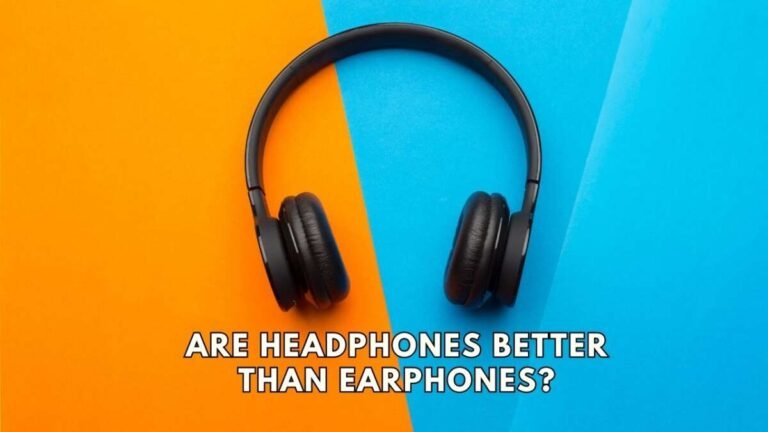
Yes, having both earbuds and headphones can make sense if you use them for different tasks. Earbuds are small, light, and useful for calls, workouts, commuting, and short listening sessions. Headphones often provide better comfort, longer battery life, stronger noise control, and a more relaxed fit for work or travel.
You do not need both, though. If one pair meets your needs, buying a second pair may add cost without much benefit. The best choice depends on how you listen, where you use audio, how long you wear it, and whether comfort or portability matters most.
For readers in the United States, this guide also covers hearing safety, work and travel use, device support, maintenance, and when a second pair is worth the money.
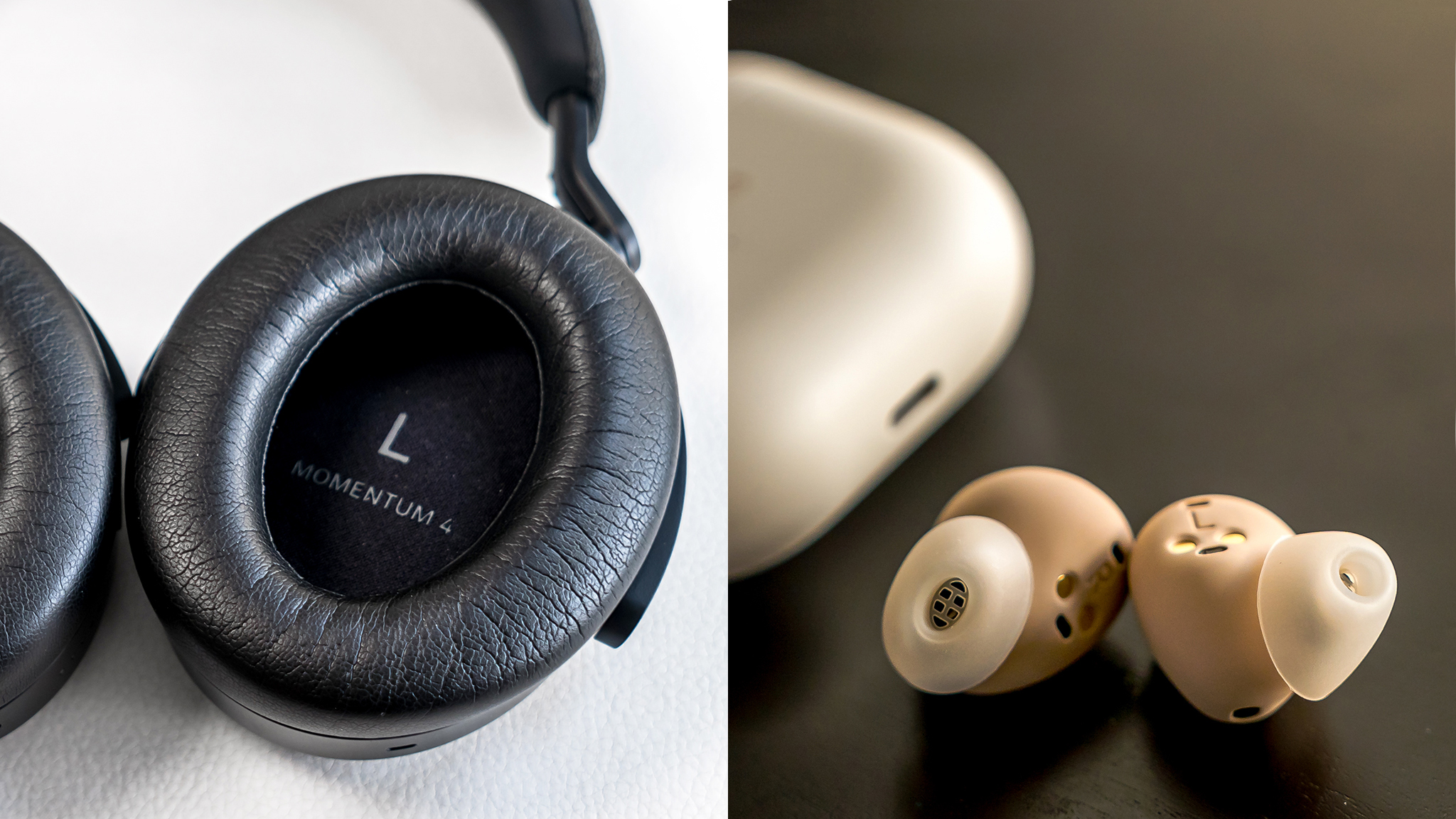
Earbuds vs. headphones: What is the difference?
Earbuds sit in or near the ear canal. Headphones use ear cups that rest on or around the ears. Both can sound good, but their size and fit change how they work in daily life.
| Feature | Earbuds | Headphones |
|---|---|---|
| Portability | Very easy to carry | Takes more bag space |
| Comfort | May bother some ear canals | May feel better for long use |
| Exercise | Usually better for movement | Can feel warm or slip |
| Battery | Often shorter per charge | Often longer per charge |
| Noise control | Good with a proper seal | Often stronger, especially with over-ear cups |
| Calls | Convenient for quick calls | Often better for longer calls |
| Heat | Low | More heat around the ears |
| Glasses and hair | Usually no issue | May press against glasses or hair |
| Ear fatigue | Can happen with a tight fit | Can happen from clamp force or heat |
“Headphones” is a broad term. It includes:
- Over-ear headphones, which surround the ears.
- On-ear headphones, which rest on the ears.
- Wired headphones, which connect through a cable.
- Wireless headphones, which use Bluetooth or another wireless link.
“Earbuds” can also mean different things. Some seal the ear canal with silicone tips. Others sit more loosely and allow more outside sound in. That difference affects comfort, bass, noise isolation, and awareness of nearby traffic.
Why owning both can be useful
Owning both gives you more flexibility. You can choose the type that fits the activity instead of forcing one device to do everything.
Earbuds work well for short, active, and portable use
Earbuds are often the better choice when you need a small audio device. They fit in a pocket and can be ready within seconds.
They are useful for:
- Walking or exercising
- Taking short calls
- Listening during a commute
- Using audio at a library or coffee shop
- Traveling with limited luggage
- Switching between a phone and another device
- Wearing one earbud when you need to hear your surroundings
A well-fitted pair may also stay in place during light activity. However, fit varies widely. An earbud that stays secure for one person may loosen or cause pressure for another.
Headphones work well for long and focused use
headphones can be more comfortable for people who do not like objects inside the ear canal. Over-ear models can also create a stable seal around the ear.
They may be better for:
- Long work sessions
- Studying
- Air travel
- Video editing or music production
- Gaming
- Watching movies
- Listening at home
- Using active noise cancellation in steady noise
Headphones are not automatically safer or better for hearing. A listener can turn up either type too loud. The main risk comes from sound level, listening time, and how often you take breaks.

When you probably do not need both
You may not need two types if your current pair already handles your main use cases.
One pair may be enough when:
- You listen for less than a few hours at a time.
- You do not exercise with audio.
- You work mostly in a quiet room.
- You have no trouble with the fit.
- You rarely travel.
- You do not need a backup.
- Your current pair supports your phone, computer, or game system.
For example, a person who listens to podcasts at home and takes occasional calls may need only one comfortable pair of headphones. Buying earbuds may offer little practical value.
Cost also matters. A second pair may require a charging case, replacement tips, a carrying pouch, a Bluetooth adapter, or a separate app. Add those costs before deciding.
When having both is a smart choice
A second pair is more useful when your routines have clear differences.
Consider owning both if:
- You exercise but also work at a desk. Earbuds may suit movement, while headphones may feel better during long work blocks.
- You travel often. Compact earbuds can serve as a backup, while over-ear headphones may provide more comfort during a long flight.
- You use different devices. One pair may work best with your phone, while another may connect more easily to a computer, television, or game console.
- You need a backup. A second pair helps when the first is charging, lost, wet, or being repaired.
- Your ears become sore. Alternating between earbuds and headphones changes the pressure points.
- You need different sound awareness. Open or loose earbuds may let in more outside sound, while sealed headphones may help you focus.
- You share a workspace. Headphones may help you focus without inserting anything into your ears.
The strongest reason to own both is not sound quality alone. It is having the right tool for different settings.

Which should you buy first?
Buy the type that solves your biggest daily problem.
Choose earbuds first if portability matters most
Earbuds are usually the better first purchase if you:
- Carry a phone everywhere
- Take frequent short calls
- Exercise or walk often
- Want a small case
- Use audio outside the home
- Prefer not to wear a headband
- Need to hear some surrounding sound
Check the fit before judging sound quality. A poor seal can make bass seem weak and may tempt you to raise the volume.
Choose headphones first if comfort and focus matter most
Headphones are often the better first purchase if you:
- Listen for several hours
- Work from home
- Study in shared spaces
- Fly or take long train trips
- Want less pressure inside the ear canal
- Prefer physical buttons or a larger control surface
- Use a computer, console, or television
Over-ear headphones may be more comfortable, but they can feel hot. On-ear headphones may be cooler and lighter, but the ear pressure can bother some people.
Choose wired headphones or earbuds when reliability matters
Wireless products need charging and may have connection limits. Wired models can be useful for:
- Airplane entertainment systems
- Audio interfaces
- Older laptops or game systems
- Low-latency monitoring
- Situations where charging is difficult
A wired model may require a USB-C or 3.5-millimeter adapter. Check the ports on your devices before buying.
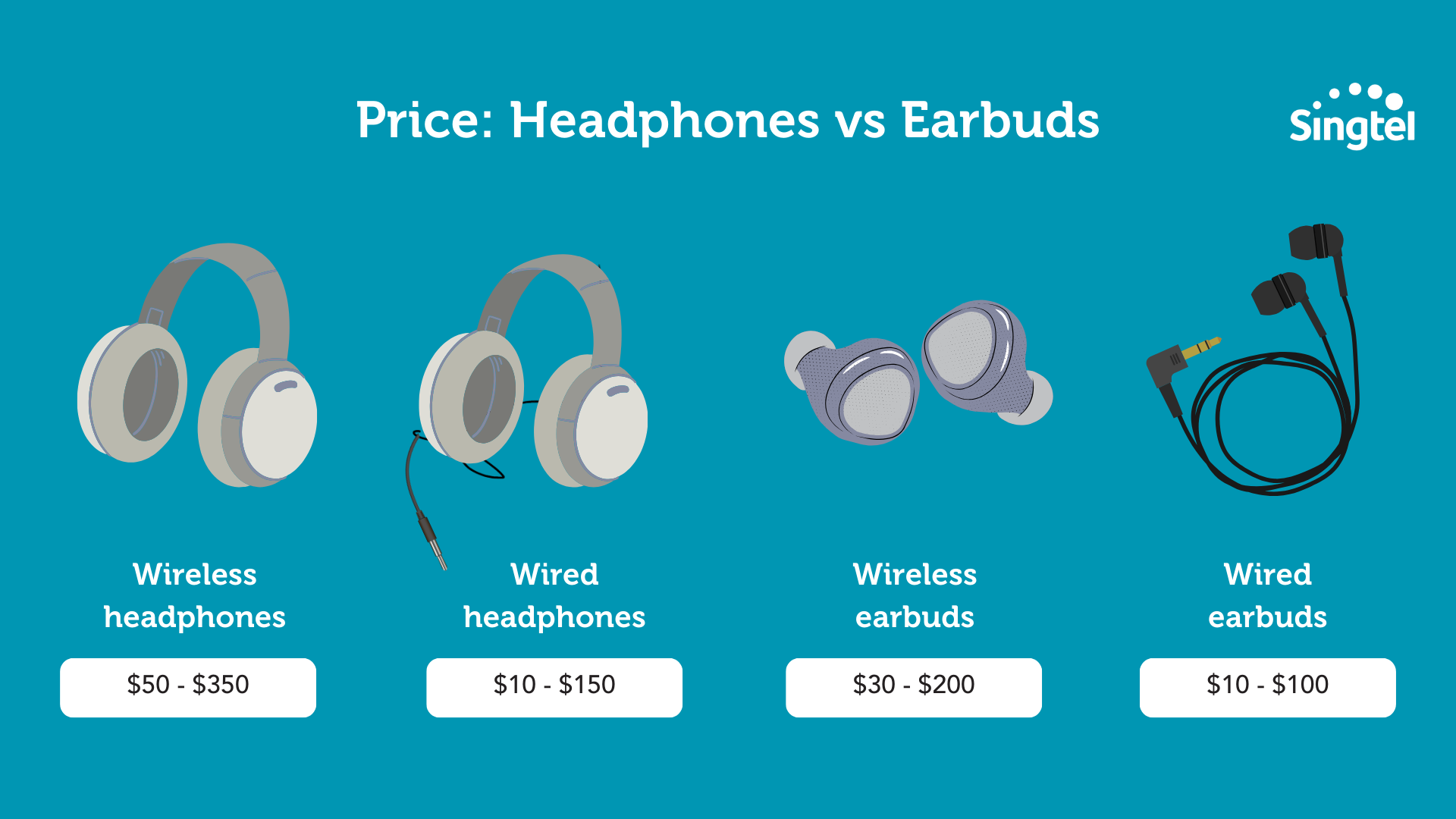
How to choose a second pair
Choose the second pair to cover a weakness in the first one. Do not buy a near-duplicate unless you need a backup.
Use this simple matching method:
| Your main problem | A useful second type |
|---|---|
| Earbuds hurt after long use | Over-ear headphones |
| Headphones are bulky outdoors | Small wireless earbuds |
| You need to hear announcements | Open-fit or less-sealing earbuds |
| Outside noise ruins your focus | Well-fitting, noise-canceling headphones |
| Battery anxiety | A wired backup |
| Earbuds fall out during exercise | Sport-focused earbuds with stabilizing fins or hooks |
| Headphones feel hot | Lightweight earbuds or on-ear headphones |
| One device lacks Bluetooth | Wired headphones or a compatible transmitter |
Check compatibility before purchase
Most Bluetooth earbuds and headphones work with common U.S. smartphones, tablets, and computers. Still, features may vary by device and operating system.
Check:
- Bluetooth version and supported profiles
- Multipoint support for two devices
- Compatibility with iPhone, Android, Windows, or macOS
- USB-C or 3.5-millimeter connections
- Microphone support on computers
- Console compatibility
- App requirements
- Firmware update support
- Return and warranty terms
A feature listed by a manufacturer may depend on a specific app, phone, or software version. Read the support page for your exact model rather than assuming every function works everywhere.
Hearing safety matters more than the form factor
Both earbuds and headphones can expose you to harmful sound levels. The device type does not determine safety by itself.
The National Institute on Deafness and Other Communication Disorders explains that repeated exposure to loud sound can damage the sensitive cells and structures involved in hearing. The risk rises with louder sound and longer exposure. The Centers for Disease Control and Prevention also describes noise-induced hearing loss as preventable in many cases.
The World Health Organization’s safe-listening guidance gives a useful reference point: adults can generally listen at up to 80 A-weighted decibels for as much as 40 hours per week, while lower levels allow more listening time. These are population-level guidelines, not a guarantee for every person or device. Phone volume settings do not always equal a measured sound level at the ear.
Practical steps include:
- Keep the volume as low as you can while still hearing clearly.
- Take quiet breaks during long sessions.
- Use noise cancellation in loud places so you do not need to fight outside noise with volume.
- Avoid blocking important sounds near roads, parking lots, or work areas.
- Clean earbuds and replace worn tips.
- Stop using a device if it causes pain, ringing, muffled hearing, or dizziness.
- Ask a health professional about ongoing symptoms or sudden hearing changes.
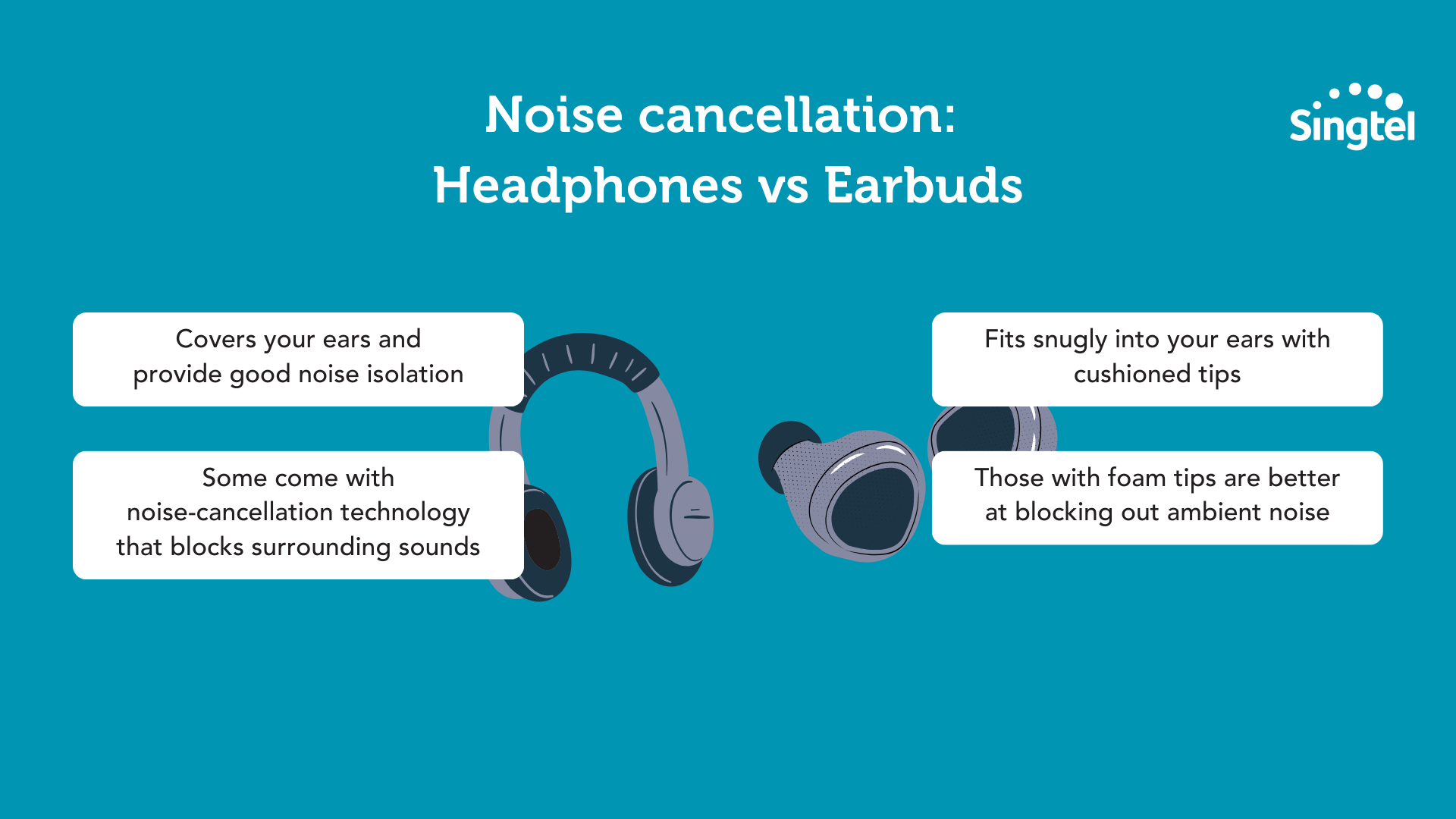
Noise cancellation does not “protect” hearing if you respond by playing music loudly. Its benefit is that it may reduce the need for high volume in steady background noise.

Are headphones safer than earbuds?
Not necessarily. Headphones may feel safer because they sit outside the ear canal, but loud headphones can still damage hearing. Earbuds can also be used safely at moderate levels.
The better question is: how loud is the sound, how long do you listen, and can you take breaks?
A sealed earbud may block outside noise and help you listen at a lower level. A loose earbud may let in more sound, but you may raise the volume in a noisy place. An over-ear headphone may isolate well, but it can also produce high sound levels close to the ears.
Watch for warning signs:
- Ringing after listening
- A blocked or muffled feeling
- Trouble understanding speech
- Needing more volume than before
- Ear pain or skin irritation
- Headaches linked to tight clamping or loud sound
If symptoms continue after you stop listening, contact a qualified health professional. Sudden hearing loss needs prompt medical attention.
Earbuds and headphones for work, school, and calls
For work or school, comfort and microphone performance often matter more than maximum bass.
Headphones may help when you need to focus for long periods. Earbuds may be easier for quick calls or when you move between rooms. If you work in an office, consider whether you still need to hear coworkers, alarms, or announcements.
For calls, check the microphone in the place where you will use it. A microphone can sound clear indoors but pick up wind outdoors. Bluetooth performance can also change near crowded wireless environments.
If you use a work computer, confirm that the audio output and microphone input are selected correctly. If a wireless pair fails, try these basic checks:
- Confirm that the battery has charge.
- Check the computer’s selected input and output.
- Disconnect the pair from another nearby device.
- Turn Bluetooth off and on.
- Remove and reconnect the device.
- Update the manufacturer’s app or firmware if required.
- Use a cable or backup pair for an urgent call.
Do not use noise cancellation as a reason to ignore workplace safety rules. Follow your employer’s rules for alarms, machinery, driving, and hearing protection.

Earbuds and headphones for travel
For U.S. flights, a compact pair of earbuds is easy to pack. Over-ear headphones may be more comfortable on long trips and may reduce steady engine noise. A wired backup can help with seat-back entertainment systems or a dead battery.
Before travel, prepare:
- A charged case or battery
- A USB charging cable
- A wired option if needed
- A small carrying case
- Replacement ear tips
- Downloaded audio for poor connections
- The correct adapter for the plane or device
Do not rely on wireless audio during safety instructions. Remove or pause your audio when staff need your attention.
Noise-canceling headphones can reduce steady low-frequency noise. They do not remove all sounds, and they should not replace awareness in terminals, roads, or other public spaces.
Common mistakes to avoid
Buying two pairs with the same weaknesses
If your first pair hurts your ears, a second pair with the same shape may cause the same problem. Change the fit, style, or wearing position.
Choosing by battery life alone
A long battery rating may not match real use. Noise cancellation, call time, volume, temperature, and age can affect battery life.
Treating water resistance as waterproofing
Sweat resistance does not always mean a device can be submerged or washed. Follow the exact protection rating and care instructions.
Wearing earbuds while sleeping
Earbuds can cause pressure, irritation, and hygiene problems during sleep. They may also make it harder to hear alarms or emergencies. If you need audio for sleep, consider a speaker or a product designed for that purpose, and keep the volume low.
Sharing earbuds without cleaning them
Earbuds can collect wax, sweat, and skin oils. Clean them according to the manufacturer’s instructions. Do not push debris into the speaker mesh or use liquid where it can enter the device.
Using consumer audio as hearing protection
Ordinary earbuds and headphones are not a substitute for certified hearing protection in loud work areas, concerts, shooting ranges, or other high-noise settings. Use hearing protection made for that environment and follow applicable workplace guidance.
A simple decision rule
Ask yourself four questions:
- Where do I listen most?
- How long do I listen at one time?
- Do I need to move or hear my surroundings?
- What problem does my current pair fail to solve?
Use this rule:
- If you need small and active, start with earbuds.
- If you need long and focused, start with headphones.
- If you need both use cases and can afford the extra cost, own both.
- If your current pair works well, keep it and wait.
- If hearing safety is the concern, reduce volume and listening time rather than simply changing product types.
Key takeaways
- You do not need both, but two types can be useful for different routines.
- Earbuds are best for portability, movement, and short calls.
- Headphones are often better for long sessions, travel, and focused work.
- Neither type is automatically safer for hearing.
- Choose a second pair that solves a clear problem.
- Check device compatibility, charging needs, fit, and return terms.
- Use certified hearing protection in high-noise settings.
FAQs
Is it better to have earbuds or headphones?
Neither is best for everyone. Choose earbuds for portability and active use. Choose headphones for long listening, work, travel, and a fit that does not sit inside the ear canal.
Can I use earbuds and headphones in the same day?
Yes. Switching between them is generally fine if both fit well and you keep the volume moderate. Give your ears quiet breaks, especially after long listening.
Should I buy headphones if my earbuds sound good?
Buy headphones only if they solve a real need, such as greater comfort, better focus, longer battery life, or improved travel performance. Sound quality alone may not justify the extra cost.
Are noise-canceling headphones worth having with earbuds?
They can be useful if you travel, work in steady background noise, or listen for long periods. Their main benefit is reducing outside noise, not allowing unlimited volume.
Can earbuds cause hearing loss?
Earbuds do not cause hearing loss simply because they are earbuds. Hearing risk depends mainly on sound level, listening time, and repeated exposure. Loud audio from any personal listening device can be harmful.
Conclusion
Having both earbuds and headphones is worthwhile when each pair has a clear job. Use earbuds for portability, exercise, and quick calls. Use headphones for long work sessions, travel, and focused listening.
If you are unsure, buy one comfortable pair first. Use it for a week in your normal routine. Then choose a second pair only if you can name the problem it will solve. Most readers will get more value from a good fit, moderate volume, and regular quiet breaks than from owning several similar devices.

Everett Ashford is a tech reviewer at mytechgrid.com specializing in SSDs, cameras, TVs, earbuds, headphones, and other consumer electronics. He provides honest, data-driven reviews based on hands-on testing and real-world performance analysis. Everett simplifies complex tech details to help readers make smart, confident buying decisions.