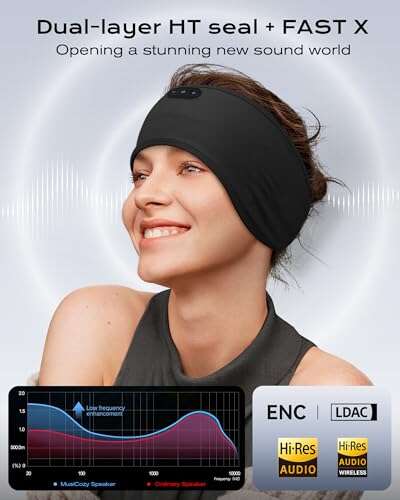
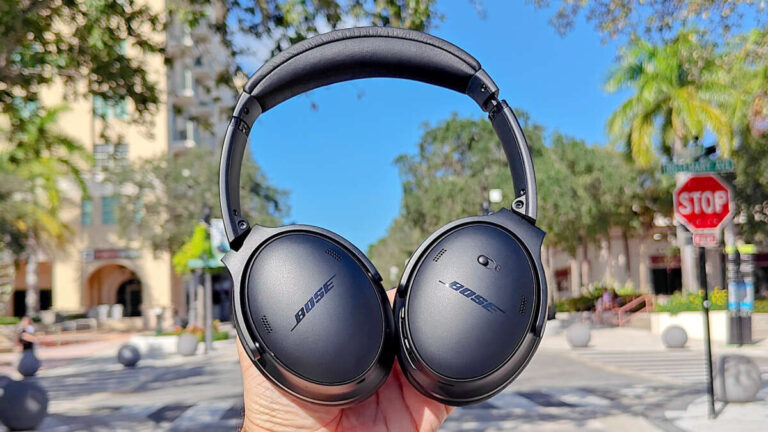
Bone conduction headphones are not automatically better for your ears. They may be a better fit if you need to keep your ear canals open, want to hear traffic while walking in the United States, or cannot use regular in-ear headphones comfortably. But they still send sound to the inner ear, so loud volume can still damage hearing.
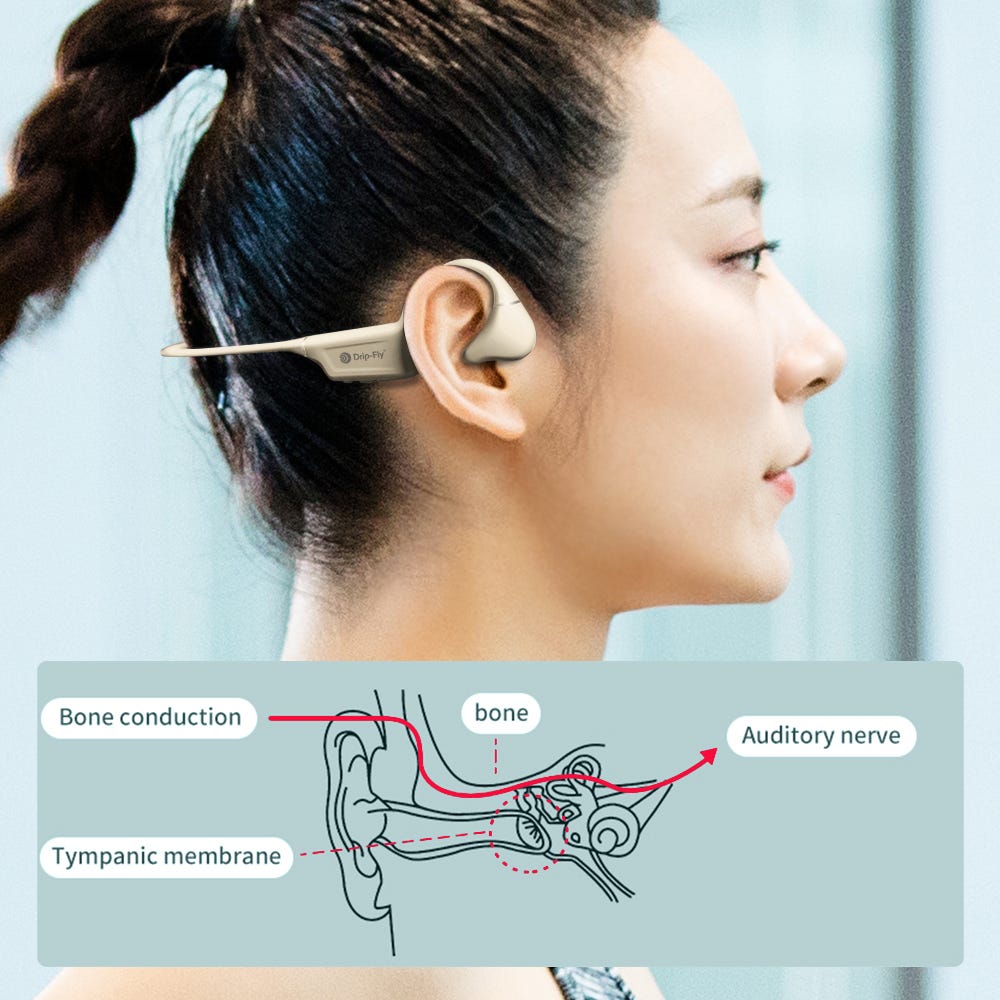
The key difference is where the sound travels. Regular headphones send sound through the ear canal and middle ear. Bone conduction headphones send vibrations through the bones of the skull to the cochlea, the hearing organ in the inner ear.
That design can solve some problems. It does not remove the main risk of hearing loss: too much sound for too long.

How bone conduction headphones work
Bone conduction headphones rest on the skin near the cheekbones or in front of the ears. Small transducers create vibrations. These vibrations travel through the skull to the cochlea.
The cochlea then changes the vibration into nerve signals. The brain reads those signals as sound.
With regular headphones, sound follows this route:
- The speaker creates air vibrations.
- The vibrations travel through the ear canal.
- The eardrum moves.
- The middle-ear bones amplify the movement.
- The cochlea changes it into nerve signals.
With bone conduction headphones, the ear canal and eardrum play a smaller role. The vibration reaches the cochlea through the skull.
This does not mean bone conduction headphones bypass the entire hearing system. The cochlea and auditory nerve still need to work. A person with certain types of inner-ear or nerve-related hearing loss may not gain much benefit.
Bone conduction headphones are also different from implanted bone-anchored hearing systems. A bone-anchored hearing device is a medical device fitted for some people with hearing loss. Consumer bone conduction headphones are usually designed for music, calls, exercise, or general listening.

Are bone conduction headphones safer than regular headphones?
They can be safer in some situations, but they do not provide a free pass to listen loudly.
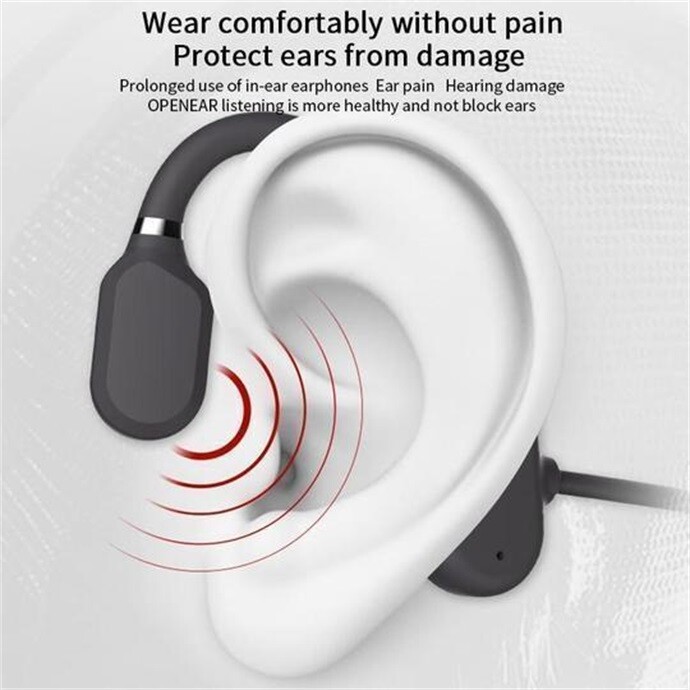
The main safety advantage is that they leave the ear canals open. This can reduce some problems linked to ear-canal pressure, trapped moisture, and objects placed inside the ear.
However, the inner ear still receives sound energy. If the volume is too high, the delicate hair cells in the cochlea may be harmed. These cells do not grow back in humans.
The National Institute on Deafness and Other Communication Disorders warns that loud noise can cause noise-induced hearing loss. The risk depends on both loudness and listening time. A very loud sound can cause harm quickly. A lower sound level can still cause harm after long exposure.
Bone conduction does not change this basic rule.
What bone conduction may help with
Bone conduction headphones may be a better choice if you:
- Dislike earbuds inside your ear canals.
- Have ear-canal sensitivity.
- Need to keep your ears open outdoors.
- Want to hear nearby speech, alarms, or traffic.
- Sweat heavily during exercise.
- Experience discomfort from ear tips.
- Have trouble keeping earbuds in place.
They may also reduce the urge to raise the volume in a noisy setting when sealed earbuds block too much outside sound. But this depends on the model, fit, noise level, and your listening habits.
What bone conduction does not prevent
Bone conduction headphones do not prevent:
- Noise-induced hearing loss.
- Ringing in the ears after loud listening.
- Temporary muffled hearing.
- Inner-ear damage from high volume.
- Hearing fatigue from long listening sessions.
- Sound exposure from a loud environment.
They also do not protect your ears from concerts, power tools, sirens, or loud traffic. In those settings, hearing protection may be more suitable than headphones.
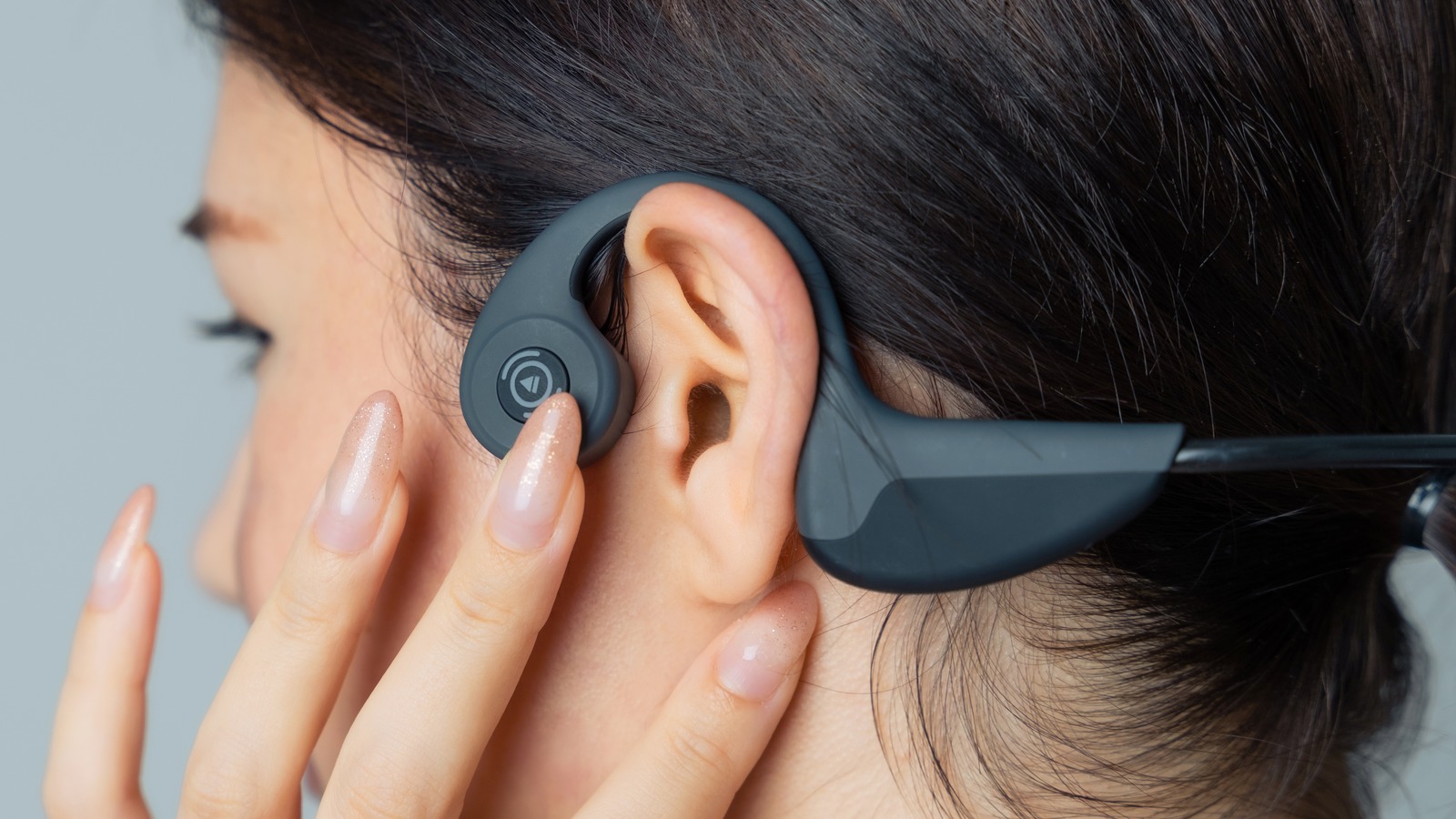
Bone conduction headphones versus earbuds for ear health
The better option depends on the problem you are trying to solve.
| Concern | Bone conduction headphones | In-ear earbuds |
|---|---|---|
| Ear canal pressure | Usually low | Can be high, especially with a tight seal |
| Ear canal airflow | Open | Limited while worn |
| Sweat and moisture | May be easier to manage | Can trap moisture in the canal |
| Outside sound | Easy to hear | Often reduced by the seal |
| Loud-volume risk | Still present | Still present |
| Bass response | Often weaker | Often stronger |
| Outdoor awareness | Usually better | Depends on transparency mode and fit |
| Sound leakage | Common | Usually lower |
| Fit during exercise | Stable for some users | May loosen or fall out |
| Medical hearing support | Not usually a hearing aid | Not usually a hearing aid |
A sealed earbud can make music sound fuller. It may also block outside sound. That can be useful in a quiet place, but some people raise the volume when they cannot hear clearly over traffic, gym noise, or airplane noise.
Bone conduction headphones often sound less powerful in the bass range. Some users compensate by turning up the volume. That can cancel out any safety benefit.
The safest choice is usually the one that lets you hear clearly at a moderate volume and take regular breaks.
Benefits of bone conduction headphones for some listeners
They leave the ear canal open
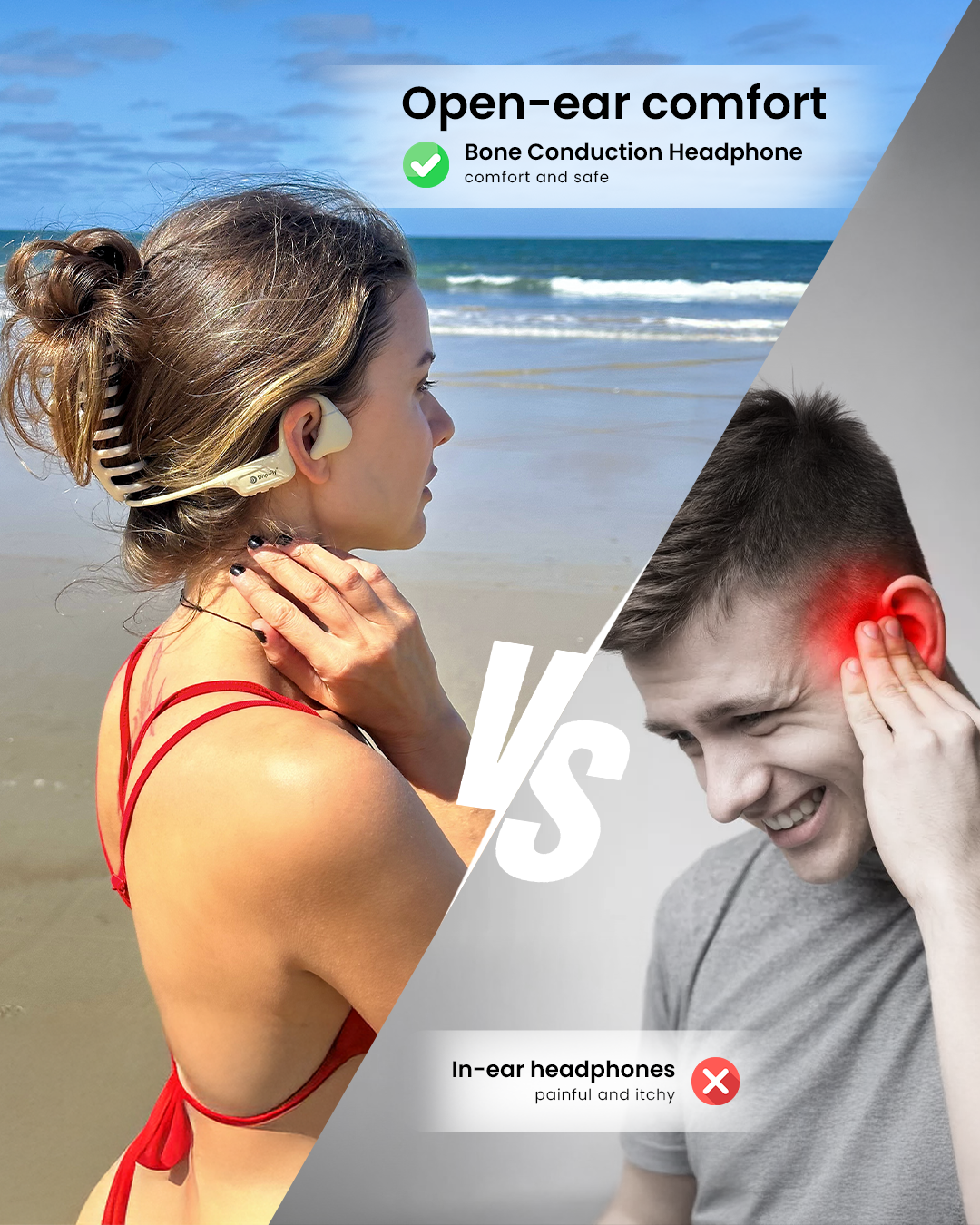
An open ear canal can feel more comfortable for people who dislike ear tips. It may also help people who get irritation from repeated earbud use.
Open designs can be useful for walkers, cyclists, and runners who need awareness of their surroundings. Still, hearing outside sound is not the same as being fully alert. Music can distract you even when your ears are open.
They may reduce moisture problems
Earbuds can hold sweat and moisture near the ear canal. That environment may be uncomfortable for some people and can contribute to irritation.
Bone conduction headphones do not sit inside the canal. They may be a better option for people who often develop discomfort from in-ear devices.
Clean the contact points after exercise. Follow the maker’s cleaning instructions. Do not share headphones without cleaning them first.
They can work around some outer- or middle-ear problems
Some people with outer- or middle-ear conditions may hear sound more clearly through bone conduction. This is because the device does not rely on the ear canal and eardrum in the same way.
That does not make consumer headphones a treatment. If you have recurring drainage, pain, hearing loss, or a blocked ear, see a health professional. An audiologist can test the type and degree of hearing loss and explain whether a medical bone-conduction device is appropriate.
They can improve outdoor awareness
Open-ear listening may help you notice a car horn, a person speaking, or an approaching vehicle. This is a practical benefit, not proof that the headphones are safer at every volume.
Keep the volume low enough to hear important sounds. At busy intersections, on trails, or near vehicles, pause playback when needed.

Drawbacks and limits to consider
Bone conduction headphones have trade-offs. They are not the best choice for every listener.
Sound quality may be different
Many bone conduction models have less deep bass than sealed earbuds or over-ear headphones. Music may sound thinner, especially in a noisy place.
They may also produce more sound leakage. People nearby could hear parts of your audio, particularly at high volume.
They may feel uncomfortable
The transducers press against the skin near the cheekbones. Some users may notice pressure, tingling, or skin irritation after long sessions.
A poor fit can also reduce sound quality. Moving the device slightly may change the sound. If the device causes pain or numbness, remove it.
They do not block loud noise
Open-ear designs let in outside sound. This is useful for awareness, but it can make listening difficult in a loud gym, subway, airport, or street.
Turning up the volume to overcome background noise can increase hearing risk. For loud environments, certified hearing protection is the safer tool. Music headphones should not replace earplugs or earmuffs when noise levels are hazardous.
Water resistance varies
Some models resist sweat. Others are designed for swimming. These are not the same claim.
Check the exact water-resistance rating and the manufacturer’s instructions. Do not assume that a water-resistant model is safe for salt water, deep water, or long submersion.
How to use bone conduction headphones safely
Use these steps whether you choose bone conduction headphones, earbuds, or over-ear headphones.
1. Start with a low volume
Begin at a low setting and increase it only as needed. If you must raise the volume near the maximum to hear your content, move to a quieter place or use a different type of headphone.
A useful warning sign is when someone standing nearby can clearly hear your audio. This is not a precise hearing-safety test, but it suggests that the level may be higher than needed.
2. Take listening breaks
Give your ears quiet time. Short breaks are especially useful during long work, travel, gaming, or exercise sessions.
A break also helps you notice early signs of overexposure, such as ringing or muffled hearing.
3. Do not use them to cover hazardous noise
Do not rely on music headphones near:
- Construction equipment.
- Lawn and garden machinery.
- Firearms.
- Industrial tools.
- Emergency vehicle sirens.
- Loud concerts.
- Aircraft or airport equipment.
Use properly fitted hearing protection for these situations. If you need communication and protection at work, ask your employer about an approved hearing-protection system.
4. Keep the device clean
Wipe the contact surfaces as directed by the manufacturer. Let them dry before storage.
Do not put dirty headphones on irritated skin. Stop use if you develop a rash, sores, swelling, or ongoing pain.
5. Pay attention to warning signs
Stop listening and rest your ears if you notice:
- Ringing.
- Muffled sound.
- A feeling of fullness.
- Ear pain.
- Reduced hearing.
- Sound that suddenly seems too sharp.
If symptoms last more than a short time, recur, or affect one ear, arrange a hearing evaluation. Sudden hearing loss needs urgent medical attention.

Who should avoid making a decision based only on headphones?
People with hearing loss, ear drainage, repeated ear infections, ear surgery, or persistent ear pain should not use headphone design as a substitute for medical advice.
A hearing test can show whether the problem involves:
- The outer ear.
- The middle ear.
- The cochlea.
- The auditory nerve.
- More than one part of the hearing system.
Bone conduction may help some people with conductive hearing loss. It may help less when the main problem involves the cochlea or auditory nerve.
Consumer headphones also may not provide the volume control, fitting, feedback management, or clinical support required for hearing assistance. In the United States, over-the-counter hearing aids are regulated differently from ordinary headphones. A product that uses bone conduction is not automatically an FDA-authorized hearing aid.
See an audiologist or physician if you need help hearing speech, often ask people to repeat themselves, or notice a steady decline in hearing.
A simple decision guide
Choose bone conduction headphones when:
- You want open ears during walks or workouts.
- Earbuds cause pressure or irritation.
- You prefer to hear nearby sounds.
- You can listen at a moderate volume.
- You accept weaker bass and some sound leakage.
Choose earbuds or over-ear headphones when:
- You need strong noise isolation.
- You listen in a quiet setting and want fuller bass.
- You can wear them comfortably.
- You can keep the volume low.
- You do not need constant awareness of your surroundings.
Choose hearing protection when:
- The environment is loud.
- You work around machinery.
- You attend a loud concert.
- You use power tools.
- You shoot firearms.
Ask a hearing professional before choosing a device for hearing loss, ear disease, or long-term hearing difficulty.

Common mistakes that can increase hearing risk
Mistake 1: Assuming open ears mean safe ears
Open ears may improve awareness. They do not protect the cochlea from loud sound.
Mistake 2: Turning up the volume in noisy places
If your audio is hard to hear, reduce the background noise or change the device. Do not keep raising the volume.
Mistake 3: Wearing headphones for many hours without breaks
Long exposure can matter even when the sound does not feel painfully loud.
Mistake 4: Treating ringing as normal
Ringing after listening is a warning sign. Repeated episodes deserve attention.
Mistake 5: Confusing bone conduction headphones with medical devices
Consumer headphones and bone-anchored hearing systems serve different purposes. Their designs, testing, and clinical uses are not the same.

Frequently asked questions
Are bone conduction headphones better for people with hearing loss?
Sometimes, but it depends on the type of hearing loss. They may help some people with conductive hearing loss because they reduce reliance on the ear canal and middle ear. They may not solve hearing loss caused by the cochlea or auditory nerve. A hearing test is the right first step.
Can bone conduction headphones cause hearing loss?
Yes. Any headphone that sends loud sound to the cochlea can contribute to noise-induced hearing loss. Lower volume, shorter sessions, and quiet breaks reduce risk.
Are bone conduction headphones safer for tinnitus?
There is no general guarantee that they will improve or prevent tinnitus. Loud listening can worsen ringing in some people. Stop using them if they trigger or increase symptoms, and seek medical advice for persistent tinnitus.
Can children use bone conduction headphones?
Children can still suffer hearing damage from loud sound. Use parental volume limits when available, keep sessions short, and supervise use. If a child struggles to hear, do not assume headphones are the solution; arrange a hearing evaluation.
Are bone conduction headphones good for running?
They can be useful because they leave the ear canals open. Runners should still keep the volume low, remain alert, and pause audio near roads or crowded paths. Open-ear design does not remove the risk of distraction.

Evidence and sources
The main health guidance behind this article comes from U.S. public health and regulatory sources:
- National Institute on Deafness and Other Communication Disorders: Noise-Induced Hearing Loss
- Centers for Disease Control and Prevention: Preventing Noise-Induced Hearing Loss
- U.S. Food and Drug Administration: Hearing Aids
- National Institute on Deafness and Other Communication Disorders: How Do We Hear?
These sources support the distinction between sound exposure, hearing damage, hearing evaluation, and regulated hearing devices. They do not establish that one consumer headphone style is universally safer than another.
Final answer
Bone conduction headphones may be better for ear comfort, ear-canal access, and outdoor awareness. They are not automatically better for hearing health.
The deciding factor is still sound exposure. Keep the volume moderate, take breaks, avoid noisy settings, and stop if you notice ringing or muffled hearing. If you have hearing loss, pain, drainage, or ongoing ear symptoms, consult an audiologist or physician before choosing a device.

Everett Ashford is a tech reviewer at mytechgrid.com specializing in SSDs, cameras, TVs, earbuds, headphones, and other consumer electronics. He provides honest, data-driven reviews based on hands-on testing and real-world performance analysis. Everett simplifies complex tech details to help readers make smart, confident buying decisions.