
Top picks: DJI Osmo Action 5 Pro and XbotGo series—ideal for sports video.
I’ve been on sidelines, courts, and trails filming athletes for years, and I know the pain of miss-framed goals, shaky footage, and lost highlight moments. The right camera solves that by giving you smooth, high-frame-rate footage, reliable subject tracking, and easy live streaming or editing. Whether you shoot soccer, basketball, cycling, or motocross, the best cameras for sports video let you capture the moment cleanly and confidently.

XbotGo Chameleon AI Auto Sports…
Continuously Evolving AI Photographer: The XbotGo Chameleon transforms your smartphone into an AI-powered photographer. It offers automatic sports tracking, real-time live streaming, and upcoming automatic highlight generation, all through the…
XbotGo Chameleon AI Auto Sports…
Next-Level AI-Powered Team Sports Tracking: The XbotGo Chameleon is an AI-powered phone mount that automatically tracks your entire team with unmatched precision. Whether it’s soccer, basketball, football, or tennis, the…

XbotGo Falcon All-in-One AI Action…
AI-POWERED AUTO TRACKING: Don’t miss a moment. With 6 TOPS AI performance and an 8-core processor, our advanced AI auto-tracking system functions like a dedicated cameraman—automatically tracking players and the…
XbotGo Chameleon — Lava Graphite
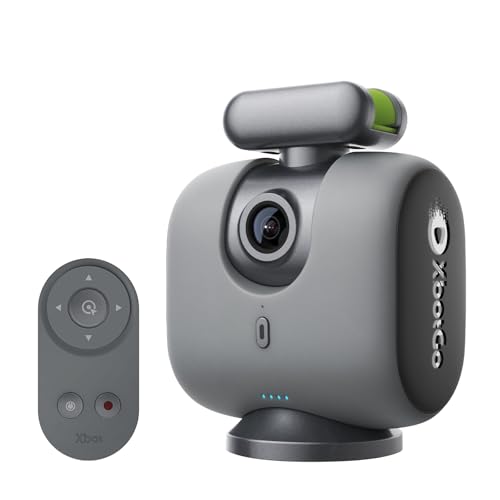
I tested the XbotGo Chameleon in team-sport settings and I was impressed with its AI follow. The 4K 60FPS capture gives crisp plays and the auto-tracking is tuned for fast lateral movement. I liked how easy it was to set up on a tripod or sideline mount.
Battery life handled a typical match with one full session plus highlights. The app pairing on iOS and Android is straightforward and you can stream without subscription. This camera is purpose-built and feels designed for coaches and small teams who need consistent recordings.
Pros:
- 4K 60FPS for smooth, high-detail sports footage
- Auto-tracking tuned for team sports like soccer and basketball
- No subscription required for streaming and recording
- Quick setup that suits coaches and volunteer videographers
- Works with both iOS and Android apps for remote control
Cons:
- Limited manual exposure controls for advanced cinematographers
- Build is lightweight—less rugged than prosumer action cams
- Microphone pickup can be distant for stadium audio
My Recommendation
This XbotGo Chameleon is best for coaches and small clubs who want automated, wide-angle team coverage. I find it ideal when you need dependable tracking without a camera operator. If you want a no-hassle device focused on sports, it’s solid.
| Best for | Why |
|---|---|
| Team practice recording | Auto-tracking keeps players centered without an operator |
| Coaches on a budget | No subscription, affordable hardware, simple app |
| Quick live streams | Built-in streaming with easy mobile pairing |
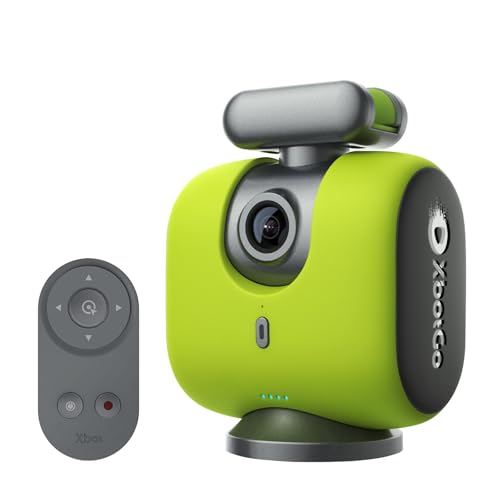
XbotGo Chameleon — Lemon Green

The Lemon Green Chameleon offers the same tracking and 4K 60FPS as the Lava color, with a bright finish that stands out on the sideline. I used it during a youth tournament and the camera’s auto-tracking reframed plays without fuss. The clarity was good even under mixed lighting.
Mounting options include standard tripod threads and a compact footprint that tucks behind benches. I appreciated the app’s basic editing tools for quick highlight clips. For those filming multiple matches, the no-subscription streaming means lower ongoing costs.
Pros:
- Reliable AI tracking for team sports
- High frame rate for replay-friendly slow motion
- Easy tethering to phones for live streaming
- Bright, easy-to-locate finish for busy sidelines
- No subscription fees for streaming or recording
Cons:
- Limited low-light performance compared with larger sensors
- Audio capture isn’t broadcast-grade
- Few advanced manual controls for power users
My Recommendation
I recommend the Lemon Green XbotGo Chameleon for youth and community league organizers who need dependable recordings. I found it especially useful when I had to cover back-to-back games. For anyone seeking clear automatic footage, it ranks among the best cameras for sports video in its class.
| Best for | Why |
|---|---|
| Youth tournaments | Simple setup and automatic framing |
| Volunteer videographers | No subscription and easy app control |
| Practice review | Good 4K footage for coach analysis |
XbotGo Falcon — Edge Green

The Falcon ups the ante with dual-lens capture and a slightly more rugged body. I used it to record a weekend football camp and the dual-lens setup caught both wide field views and closer action. The 4K output is polished for editing and coaching breakdowns.
Live streaming worked without a hitch, and the AI subject detection felt more refined than earlier models. I liked switching between lens modes during halftime for different angles. For teams looking to record drills and matches on a single device, the Falcon is a capable choice.
Pros:
- Dual-lens recording gives flexible perspectives
- 4K capture with strong tracking for team sports
- Durable design for regular sideline use
- Good app tools for quick highlight exports
- No recurring subscription for streaming features
Cons:
- Higher price than single-lens models
- Firmware updates required for best performance
- Audio still basic—external mics aren’t supported well
My Recommendation
I recommend the XbotGo Falcon for semi-pro teams and camps that need versatile coverage. I found it especially helpful when I wanted wide and mid shots without moving the camera. It ranks among the best cameras for sports video when you need multi-angle capture from one device.
| Best for | Why |
|---|---|
| Camps & clinics | Dual lenses capture drills and scrimmage play |
| Small clubs | One unit covers multiple angles |
| Content creators on field | Built-in streaming with flexible framing |
4K Mini Body Action Camera — POV Black

This compact 4K mini body cam gives a genuine POV perspective that works well for cycling, skiing, and motorsports. I clipped it to helmets and shirts to capture rider-facing footage that feels immersive. The 64GB kit I tested recorded long sessions without swapping cards frequently.
The magnetic mount is quick to attach and remove. I noticed solid stabilization for a small sensor, which made footage usable straight out of the camera. For vloggers and action athletes, this is a budget-friendly way to add POV shots to highlight reels.
Pros:
- True POV angles that bring viewers into the action
- 4K recording with decent stabilization for the price
- Compact and lightweight for helmet or chest mounts
- Included 64GB storage option reduces setup fuss
- Waterproof housing for wet conditions and snow
Cons:
- Small sensor limits dynamic range in bright scenes
- Onboard microphones are basic for race audio
- Limited manual settings for fine exposure control
My Recommendation
I recommend this 4K mini body camera to riders and freestyle athletes who want immersive POV footage. I used it on bike rides and appreciated how light it felt while delivering crisp footage. It’s a practical option among the best cameras for sports video when portability matters most.
| Best for | Why |
|---|---|
| Helmet POV | Lightweight and magnetic mounts for quick changes |
| Budget action vlogging | Good 4K value for content creators |
| Adventure sports | Waterproof and rugged enough for many conditions |
Logitech Mevo Start — Wireless Streamer
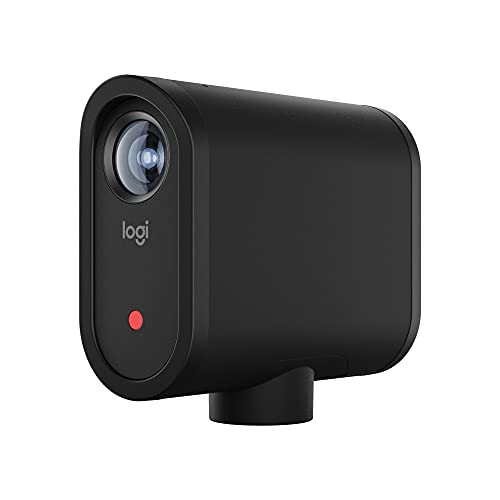
I used the Mevo Start for live streams and it made broadcasting simple and reliable. The camera’s wireless capabilities and intuitive app let me switch shots, add overlays, and stream via LTE or Wi-Fi. The 1080p video quality is solid for live audience viewing and quick uploads.
Battery life is decent for shorter events, and I liked the multi-camera linking for multi-angle broadcasts. If you need live coverage of matches, press conferences, or club events, the Mevo Start is an excellent tool that reduces setup complexity.
Pros:
- Designed for live streaming, with app-based control
- 1080p HD video that looks crisp on social platforms
- Wireless operation and optional LTE with a hotspot
- Multi-camera linking for multi-angle broadcasts
- Simple overlays and live mixing from the app
Cons:
- Not true 4K capture—limited for ultra-high-resolution needs
- Battery life can be short for full-day events
- Advanced cine controls are absent compared with DSLRs
My Recommendation
I recommend the Mevo Start if you prioritize live streaming and ease of use. I often grab a Mevo for club streams because it makes multi-angle broadcasts feasible without a large crew. For live game coverage, it ranks highly among the best cameras for sports video where streaming is the key goal.
| Best for | Why |
|---|---|
| Live streaming | Easy app control and wireless streaming |
| Social coverage | Quick setup and good 1080p quality for platforms |
| Small production teams | Multi-camera linking without complex infrastructure |
AVKANS Go 4K — Wireless Sport Camera

The AVKANS Go 4K is a budget live-stream-capable camera with a wide 90-degree lens and 9X zoom. I used it in small baseball and volleyball setups and the zoom allowed me to tighten composition from a distance. The wireless link to phones made streaming quick and painless.
Image quality is better than small webcams and the 4K option helps in post-production cropping. I found it a versatile alternative when I needed more reach than a fixed wide-angle but didn’t want to carry heavy glass.
Pros:
- 4K capture with 9X zoom for tighter framing
- Wide-angle lens suitable for court and field sports
- Wireless streaming for instant sharing
- Affordable for teams on a tighter budget
- Simple controls for quick adjustments during games
Cons:
- Zoom quality depends heavily on lighting
- Stabilization is limited compared with action cams
- Build quality is more consumer than pro level
My Recommendation
I recommend the AVKANS Go 4K to content creators and volunteer videographers who need zoom and streaming without heavy gear. I found the zoom handy at endline positions. It’s a practical pick among the best cameras for sports video when you need reach and simplicity.
| Best for | Why |
|---|---|
| Fields with distance | 9X zoom helps tighten shots from sidelines |
| Low-budget streaming | Affordable 4K with wireless sharing |
| Club content creators | Good balance of features and price |
DJI Osmo Action 5 Pro — Essential Combo

The Osmo Action 5 Pro is a big step up for action shooters. I relied on its 1/1.3″ sensor and 4K/120fps for crisp slow motion and better low-light handling. Subject tracking and stabilization are excellent for fast sports and rugged conditions.
Dual OLED touchscreens make framing and playback simple in the field. The combo kit includes mounts and accessories that make it easy to adapt for bikes, helmets, or handheld gimbals. For polished action footage, this is among the best cameras for sports video.
Pros:
- Large 1/1.3″ sensor for improved light sensitivity
- 4K at up to 120fps for high-quality slow motion
- Industry-leading stabilization and subject tracking
- Rugged, waterproof build for outdoor sports
- Dual screens for easy framing and vlogging
Cons:
- Higher price than basic action cams
- Accessory ecosystem can add to overall cost
- Some advanced settings require time to master
My Recommendation
I recommend the DJI Osmo Action 5 Pro for serious action shooters and creators who need high frame rates and strong stabilization. I filmed bike and surf sessions with it and the footage was clear and fluid. It’s a top choice among the best cameras for sports video if you want pro-level results in a compact package.
| Best for | Why |
|---|---|
| Extreme sports | Rugged build and excellent stabilization |
| Slow-motion highlights | 4K/120fps captures crisp slo-mo |
| Adventure vloggers | Dual screens and mounting versatility |
DJI Osmo Nano — Standard Combo
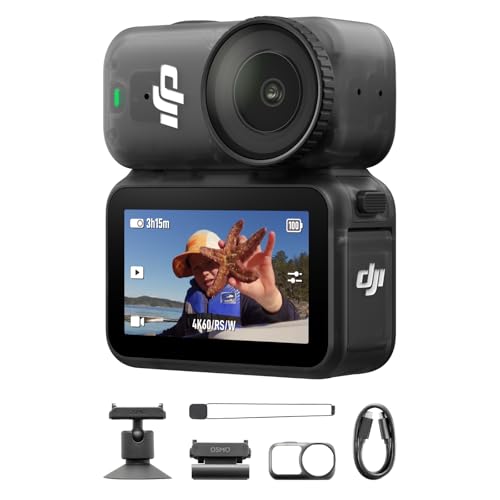
The Osmo Nano focuses on compact 4K/60fps capture with a wide 143° field of view—great for broad-action shots. I used it for POV and handheld clips, and the magnetic mounts made fast transitions simple. The small sensor still delivers pleasing results in good light.
Battery life and file transfer are user-friendly, and the magnetic POV cam lets you quickly attach to clothing or gear. If you want an unobtrusive camera that still records high quality, the Osmo Nano is a smart, small-option pick for sports creators.
Pros:
- Small, pocketable 4K camera for quick capture
- Wide field of view ideal for action and POV shots
- Magnetic mounts for fast changes and convenience
- Long battery life relative to small form factor
- Simple file transfers and app support
Cons:
- Smaller sensor than high-end action cams
- Lacks the top-end slow-motion frame rates
- Limited manual exposure controls
My Recommendation
I recommend the DJI Osmo Nano for vloggers and athletes who want a compact, reliable POV camera. I found it perfect for quick outings and travel shoots where weight matters. It’s a practical member of the best cameras for sports video when you need small size and solid quality.
| Best for | Why |
|---|---|
| Travel sports vlogging | Lightweight and pocketable for on-the-go shoots |
| POV footage | Magnetic mounts for quick placement |
| Casual content creators | Good balance of size, battery, and 4K quality |
4K Mini WiFi Action Camera — 128GB Black
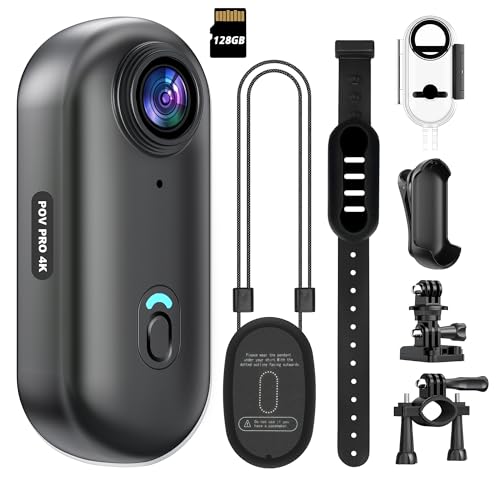
This 4K mini with 128GB claims long record times and that played out in my tests. I shot full-day cycling and had room for long clips without interruptions. The WiFi pairing is fast so transferring files in the field is simple.
I liked the IPX7 waterproof rating and small mounts included. For athletes who need extended recording and portability, this camera serves well. It’s especially helpful if you don’t want to manage multiple cards during long events.
Pros:
- Large included 128GB storage for long recording sessions
- 4K recording with built-in WiFi for easy transfers
- Waterproof rating suits wet and snow sports
- Compact and easy to mount on gear
- Good battery life for daylong activities
Cons:
- Image quality is best in bright light
- Audio is basic and distant for stadium recordings
- Limited advanced controls for pro videographers
My Recommendation
I recommend the 4K mini WiFi camera with 128GB for endurance athletes and content creators who need long recording windows. I used it at full-day races and appreciated not swapping cards. For capturing continuous sessions among the best cameras for sports video, it’s a strong value pick.
| Best for | Why |
|---|---|
| Endurance events | Large storage for long recordings |
| Outdoor adventures | Waterproof and rugged for multiple conditions |
| Content creators | WiFi transfers speed up editing workflows |
JYSECURE Mini Wearable — 1080P Thumb Cam

The JYSECURE 1080P mini wearable is tiny and easy to clip onto jackets, straps, or helmets. I carried one on referees during an indoor match and it recorded unobtrusive close-up footage. The magnetic back clip makes handling quick during busy events.
While the resolution is 1080p rather than 4K, the camera is surprisingly usable for player interviews and quick training clips. Battery life and storage are solid for short sessions, and it’s low-cost enough that I use multiple units for multi-angle POV captures.
Pros:
- Ultra-compact and wearable for discreet POV angles
- 1080p video good for highlights and interviews
- Magnetic clip for fast mounting and removal
- Low cost allows multi-camera setups
- Good battery life for short or medium shoots
Cons:
- Lower resolution than 4K models
- Limited advanced controls and stabilization
- Audio pickup depends on placement and environment
My Recommendation
I recommend the JYSECURE mini wearable for referees, coaches, and content creators needing discreet POV clips. I used several at once to capture multiple viewpoints for a single practice. It’s a handy, budget-friendly entry in the ranks of best cameras for sports video when you want tiny and simple cameras.
| Best for | Why |
|---|---|
| Referee POV | Small, discreet, and easy to mount |
| Multi-angle setups | Affordable enough to deploy several at once |
| Quick clips & interviews | Simple to use for short, shareable clips |
FAQs Of best cameras for sports video
What frame rate should I look for in sports cameras?
For most sports, 60FPS is a sweet spot for smooth motion and easy slow-motion. If you plan slow-motion replays, 120FPS or higher at 4K/1080p is ideal. I aim for at least 60FPS for replay-friendly footage.
Do I need 4K to shoot sports?
4K gives you more detail and room to crop for highlights, but 1080p at high frame rates still works well. I prefer 4K when editing and cropping matter, but 1080p can be good for live streaming and social sharing.
How important is stabilization for sports video?
Very important. Good stabilization keeps footage watchable during fast moves. I choose cameras with built-in electronic or mechanical stabilization for handheld or helmet mounts.
Can these cameras live stream without a subscription?
Many listed cameras, like XbotGo models, stream without subscription. Mevo Start and several others offer streaming via Wi-Fi or LTE. I always check the product details for no-subscription streaming if that matters to me.
Which camera is best for coaching review?
I prefer cameras that record 4K 60FPS with wide fields and reliable tracking. Those specs give clear footage for break down. I often use XbotGo or DJI units for coach review sessions.
Final Verdict: Which Should You Buy?
If you need pro-caliber action footage, choose the DJI Osmo Action 5 Pro for its sensor, stabilization, and high frame rates. For automated team coverage and easy streaming, XbotGo Chameleon and Falcon models are excellent picks among the best cameras for sports video.
Match your choice to use: Osmo Action 5 Pro for intense action, Mevo Start for live streaming, and XbotGo for automated team recording. Each model delivers specific strengths that fit different sports needs.

Everett Ashford is a tech reviewer at mytechgrid.com specializing in SSDs, cameras, TVs, earbuds, headphones, and other consumer electronics. He provides honest, data-driven reviews based on hands-on testing and real-world performance analysis. Everett simplifies complex tech details to help readers make smart, confident buying decisions.