Yes, you can get a free DSLR camera in the United States, but most legitimate options require time, an application, creative work, or a local connection. The safest paths are school and nonprofit programs, camera lending programs, verified contests, community groups, and equipment grants.
Be careful with offers that ask for a payment, gift card, cryptocurrency, bank login, or “shipping fee” before sending a camera. The Federal Trade Commission (FTC) says real prize offers do not require you to pay money to receive your prize.

What “free DSLR camera” really means
A free DSLR camera may mean that you receive the camera to keep, borrow it for a set time, or earn it through a program. These options are not the same.
A DSLR, or digital single-lens reflex camera, uses a mirror and an optical viewfinder. A mirrorless camera does not use the same mirror system. Both types can produce high-quality photos, so do not reject a legitimate free offer only because it provides a mirrorless model.
Before you apply, ask these questions:
- Do you keep the camera?
- Is there a deposit or return date?
- Does the camera include a lens?
- Are batteries and a charger included?
- Will you pay taxes on a prize?
- Must you complete volunteer work, classes, or a project?
- Does the program limit who may apply?
A “free camera” that requires a refundable deposit is usually a loan, not a gift. That can still be useful, but the terms should be clear.
7 legitimate ways to get a free DSLR camera
The best method depends on your age, location, skills, and access to schools or community groups. Start with programs that have a clear organization, public contact details, and written rules.
1. Apply for a camera grant or equipment program
Arts groups, youth programs, community media organizations, and local foundations sometimes provide equipment to help people complete a project. These programs may support:
- Documentary photography
- Community news
- Environmental projects
- Youth arts
- Film and media work
- Local history projects
- School or college assignments
- Photography for nonprofit campaigns
Search for programs through your state arts agency, county arts council, public library, community foundation, or nonprofit network.
Useful search terms include:
photography equipment grant [your state]youth media equipment program [your city]camera grant for students USAcommunity arts equipment grantfree camera program near me
A strong application explains what you plan to create, who will benefit, how long the project will take, and why you need a camera instead of a phone.
Do not claim that a grant will provide a DSLR unless the rules say so. Some programs provide a loan, a small budget, or access to shared equipment rather than a camera to keep.
2. Check high schools, colleges, and trade programs
Schools often have cameras for students in photography, journalism, film, marketing, theater, or communications programs. You may be able to borrow one from:
- A school media department
- A college equipment desk
- A photography club
- A journalism program
- A film department
- A student newspaper
- A campus library
Ask about the checkout policy, late fees, damage rules, and required training. Some schools lend equipment only to enrolled students. Others allow access through a club or community partnership.
If you are a student, contact the department office rather than asking only a teacher. Equipment policies often sit with a media lab, library, or technology center.
3. Use a public library or library-of-things program
Some public libraries lend cameras and other creative tools through a Library of Things collection. Availability varies by branch and state. A library may offer a DSLR, mirrorless camera, tripod, microphone, lighting kit, or memory card.
Search the library website for:
camera lendingmedia equipment checkoutLibrary of Thingscreative equipmentphotography kit
You may need a library card, proof of local address, and an agreement to return the equipment on time. Check whether the library covers damage or whether you are responsible for repair costs.
This is one of the best choices if you need a camera for a short project but do not need to own one.
4. Enter verified photography contests and giveaways
Camera brands, photography publications, schools, retailers, and nonprofit groups sometimes run contests. Some award cameras, lenses, gift cards, or photography courses.
Before entering, verify:
- The organizer has a real website and contact address.
- The rules list the start and end dates.
- The prize description is specific.
- The selection method is explained.
- No purchase is required unless the rules clearly allow it.
- The organizer does not demand payment to claim the prize.
- The privacy policy explains how your data will be used.
Use the organizer’s official website rather than a random social media post. Scammers often copy logos and names from real companies.
The FTC advises consumers to avoid anyone who says you must pay taxes, fees, or shipping costs before receiving a prize. You should also avoid sending gift card numbers or cryptocurrency to “verify” your entry.
5. Ask local nonprofits and community media groups
Small organizations may have unused cameras donated by former volunteers, newspapers, studios, or businesses. These groups may lend or give equipment to people who help with a project.
Try contacting:
- Community newspapers
- Public-access television stations
- Youth centers
- Boys & Girls Clubs
- Neighborhood nonprofits
- Homeless outreach groups
- Local historical societies
- Environmental organizations
- Community theaters
- Volunteer media teams
Do not send the same generic message to every organization. Explain the project and the help you can provide. For example, you might photograph a community event, document a local history project, or create images for a nonprofit newsletter.
A written agreement is wise if you receive equipment. It should state whether the camera is a gift, loan, or shared asset.
6. Look for donated or surplus equipment
Businesses, colleges, newspapers, and government agencies sometimes replace older camera equipment. They may donate or sell it at a low price through:
- School surplus auctions
- Nonprofit donation programs
- Community reuse groups
- Local photography clubs
- Freecycle-style networks
- Neighborhood groups
- Estate cleanouts
Free items are often claimed quickly. Set alerts for local groups and use clear search terms such as “camera,” “DSLR,” “Canon,” “Nikon,” “camera lens,” and “photo equipment.”
Meet in a public place when practical. Test the camera before accepting it, and never pay in advance to an unknown person who refuses a normal inspection.
7. Trade time or skills for access to a camera
A camera may be available through an internship, volunteer role, or part-time media job. A nonprofit may let volunteers use its equipment while working on approved assignments.
Examples include:
- Event photography
- Sports photography
- Church or community media
- Theater documentation
- School journalism
- Local news projects
- Social media support for a nonprofit
This is not a free personal camera. It is free access in exchange for work. Confirm who owns the images, who owns the camera, and whether you may use the photos in a portfolio.
How to find a real free camera offer
Use a simple verification process before sharing personal information or accepting equipment.
Step 1: Identify the organization
Look for a real organization name, physical address, official domain, and working contact method. Search the name with words such as:
scamcomplaintreviewofficial rulesattorney general
A professional-looking website is not proof that an offer is safe. Scammers can copy real logos and web designs.
Step 2: Read the full terms
A legitimate program should explain:
- Who can apply
- The application deadline
- How recipients are selected
- What equipment is offered
- Whether the camera is new or used
- Whether you must return it
- Any required work or training
- How your information will be handled
Avoid vague promises such as “everyone wins” or “claim now before your account expires.”
Step 3: Check for payment demands
Stop if the offer requests:
- A processing charge
- A customs payment
- A shipping fee
- A refundable deposit sent by gift card
- Cryptocurrency
- A wire transfer
- Your online banking password
- A remote-access app
A real contest may have taxes associated with a prize, but you should not send money to an unknown person to unlock it. Confirm any tax question with a qualified tax professional or the IRS.
Step 4: Verify the contact details independently
Do not use only the phone number or link in the message. Visit the organization’s official website by typing the address yourself. Use the contact details listed there.
This matters because a scammer may control the email address, phone number, and payment link shown in the offer.
Step 5: Protect your identity
Do not provide your Social Security number, bank information, driver’s license, or full date of birth during an early application unless the organization has a clear legal reason and a secure process.
You may need to provide tax information if you win a valuable prize. That request should come after you verify the organizer and read the rules.
What to include in a camera grant application
A short, clear application is often stronger than a long story. Explain the project in practical terms.
Include:
- Your project: State what you will photograph or produce.
- Your purpose: Explain who will use or benefit from the work.
- Your plan: Give a basic schedule and location.
- Your experience: Mention classes, volunteer work, or past projects.
- Your equipment need: Explain why your current phone or camera is not enough.
- Your result: Describe what you will deliver, such as a photo series, exhibit, website, or report.
- Your budget: List needed items such as a lens, card, battery, or storage.
Example application wording
I want to document three local food pantries over a six-week period. The project will create a photo story for a community newsletter and a free public exhibit. I have used a phone camera and completed an introductory photography class, but I do not own a camera with interchangeable lenses. I will provide 30 edited images and written captions to each participating pantry.
Keep the wording truthful. Do not promise professional results if you have not used a camera before. A realistic plan can make your application more credible.

How to get a free DSLR camera as a student
Students have more options because schools and education programs often lend equipment for class work.
Start with these contacts:
- Photography instructor
- Journalism adviser
- Media lab
- School librarian
- Film department
- Student activities office
- College equipment room
- Financial aid or student support office
Ask whether the school has:
- A checkout program
- A camera club
- A need-based equipment fund
- A student media position
- A loaner kit
- A project grant
- An alumni donation program
If you are under 18, ask whether a parent or guardian must sign the agreement. Check who pays if the camera is lost or damaged.
You can also ask a teacher to recommend you for a local arts grant. A staff recommendation may help show that your project is real and supervised.
How to receive a free used DSLR camera
A used DSLR can be a good way to start, but inspect it before you accept it. A free camera is not useful if it needs costly repairs.
Check these parts:
| Part | What to check |
|---|---|
| Body | Cracks, corrosion, loose doors, and missing covers |
| Lens mount | It should hold the lens firmly |
| Sensor | Look for obvious marks or dust in test photos |
| Shutter | Take several test photos at different speeds |
| Autofocus | Confirm that the lens focuses |
| Flash | Test the built-in flash if present |
| Battery | Check for swelling or overheating |
| Charger | Confirm that the charger matches the battery |
| Memory card slot | Make sure the camera saves photos |
| LCD and viewfinder | Look for major damage or black areas |
A few dust spots may be cleanable. A swollen battery, liquid damage, or a camera that will not save images is a stronger reason to decline.
Ask for the camera’s exact model number. Then check the manufacturer’s manual for battery type, memory card type, lens compatibility, and reset instructions.
Do not assume that every lens fits every camera. DSLR lens mounts differ by brand and model family. Some older lenses may also lack autofocus or electronic control on newer bodies.
What may cost money even when the camera is free
A free camera may still need basic accessories. Plan for the total cost of use.
Common extra costs include:
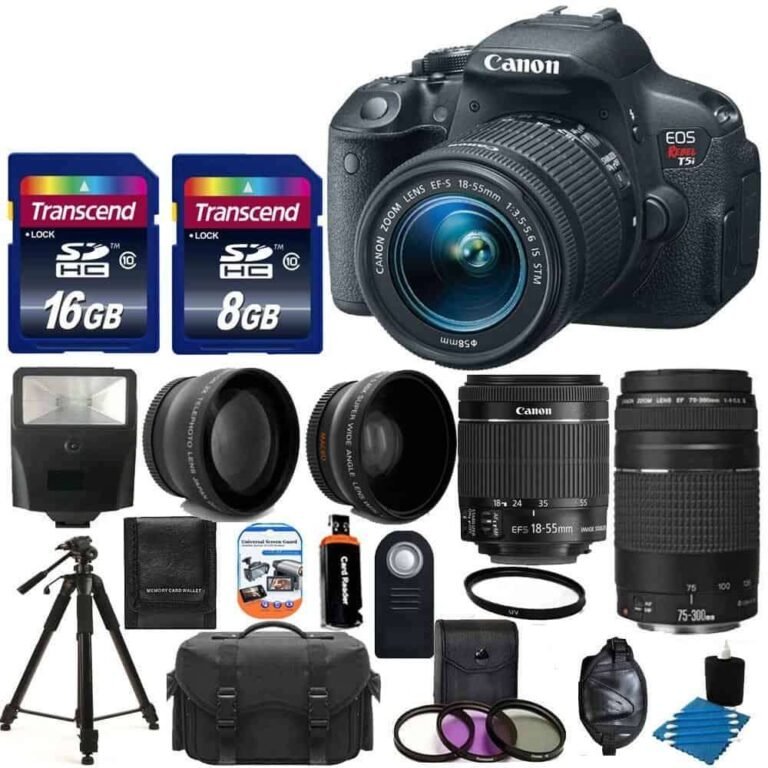
- Lens
- Battery
- Battery charger
- Memory card
- Camera strap
- Carrying case
- USB cable
- Sensor cleaning
- Repairs
- Computer storage
- Photo editing software
A hypothetical example shows the issue. Suppose someone gives you a camera body but no lens, battery, or charger. The body costs nothing, but you may still need to spend money before taking a photo.
For that reason, a free camera kit with a working lens and charger can be more useful than a newer body alone.
Free camera access versus free camera ownership
Borrowing is often the best answer when you need equipment for one event or short project. Ownership makes more sense when you want to practice often and accept repair and accessory costs.
| Option | Ownership | Best for | Main limitation |
|---|---|---|---|
| Library loan | No | Short projects | Return deadline |
| School checkout | Usually no | Students | Eligibility rules |
| Nonprofit loan | Usually no | Community projects | Limited availability |
| Grant award | Sometimes | Planned creative work | Application process |
| Contest prize | Yes | Anyone who meets rules | Low odds |
| Donated camera | Usually yes | Long-term practice | Condition may vary |
| Volunteer access | No | People trading time | Limited personal use |
Choose the option that matches your need. Do not chase ownership if a free loan solves the problem.

Common mistakes that reduce your chances
Many applicants lose opportunities because they make the process harder than it needs to be.
Applying without a clear project
“ I want to learn photography” may be honest, but it is not a complete plan. Explain what you will make, when you will make it, and how the work will help others.
Ignoring local programs
Large national contests attract many entries. A small local arts group may have fewer applicants and a stronger interest in community projects.
Failing to read loan terms
A camera loan may include a return date, insurance requirement, training session, or damage fee. Read the agreement before you sign it.
Accepting a camera without testing it
Check the body, battery, lens, charger, and memory card slot. If you cannot test the camera, treat its condition as unknown.
Paying a scammer
Never pay a stranger to claim a supposed free prize. Gift cards, wire transfers, cryptocurrency, and urgent payment demands are major warning signs.
Expecting a DSLR when another camera would work
A free mirrorless camera, compact camera, or older DSLR may meet your needs. Judge the camera by its condition and included parts, not only by the label.
What to do if you cannot find one for free
If free ownership does not work, use the lowest-risk alternative first:
- Borrow from a library, school, friend, or camera club.
- Join a nonprofit or community media project.
- Rent a camera for one important event.
- Buy a tested used kit from a seller with a clear return policy.
- Save for a complete body, lens, battery, charger, and card.
Avoid buying a damaged “free” camera that needs more money than a tested used kit. The least expensive option is the one that gets you shooting without surprise repairs.

Key takeaways
- The safest free DSLR options in the USA are schools, libraries, nonprofits, grants, verified contests, and donated equipment.
- A camera loan is free access, not free ownership.
- A legitimate prize should not require gift cards, cryptocurrency, wire transfers, or advance fees.
- Check the camera body, lens, battery, charger, and memory card slot before accepting used equipment.
- A clear project plan can improve your chances with grants and nonprofit programs.
- Include accessories and repair costs when judging the value of a free camera.
Frequently asked questions
Can I really get a DSLR camera for free?
Yes, but free ownership is uncommon. The most realistic routes are a local donation, equipment grant, verified contest, or nonprofit program. Libraries and schools are more likely to offer free loans than permanent gifts.
Are free camera giveaways on social media real?
Some are real, but many are scams or data-collection schemes. Verify the giveaway on the organizer’s official website, read the rules, and never pay to claim a prize.
Do I have to pay taxes on a free camera?
Possibly. Prizes and awards can count as taxable income under U.S. tax rules, depending on the facts and the value of the item. Keep records and ask a tax professional how the rules apply to your situation. Do not pay a person who contacts you through social media without verifying the prize first.
Is an old DSLR still worth using?
Often, yes. An older DSLR can teach exposure, focus, lens choice, and composition. Its limits may include weaker video, slower autofocus, lower performance in dark scenes, or limited phone connectivity. A working kit with a lens is usually more useful than a newer body without accessories.
What should I do if a free camera offer asks for my Social Security number?
Stop and verify the organization independently. Do not share sensitive information during an early application unless the organization is legitimate, the request has a clear purpose, and the submission method is secure. Report suspected fraud to the FTC at ReportFraud.ftc.gov.
Final answer: the best next step
Start locally. Search your public library, school, state arts agency, community foundation, and nonprofit media groups for camera loans or equipment grants. At the same time, monitor verified contests and local donation groups.
Prepare a short project description, gather proof of your eligibility, and keep your personal information private until you confirm the organization. If an offer demands money before giving you a “free” DSLR camera, walk away.

Everett Ashford is a tech reviewer at mytechgrid.com specializing in SSDs, cameras, TVs, earbuds, headphones, and other consumer electronics. He provides honest, data-driven reviews based on hands-on testing and real-world performance analysis. Everett simplifies complex tech details to help readers make smart, confident buying decisions.