Hidden cameras can look like everyday objects — tiny lenses hidden in clocks, plugs, or smoke detectors.
As a security pro with years of hands-on work, I know exactly what do hidden cameras look like and why they fool so many people. This guide breaks down real appearances, sizes, lenses, and hiding spots. Read on to learn how to spot common disguises, test for lenses, and protect your privacy with easy steps you can use today.
How hidden cameras are designed and common appearances
Hidden cameras come in many forms. Some are tiny and made to tuck into small gaps. Others are built into objects that belong in plain sight.
Common disguises include:
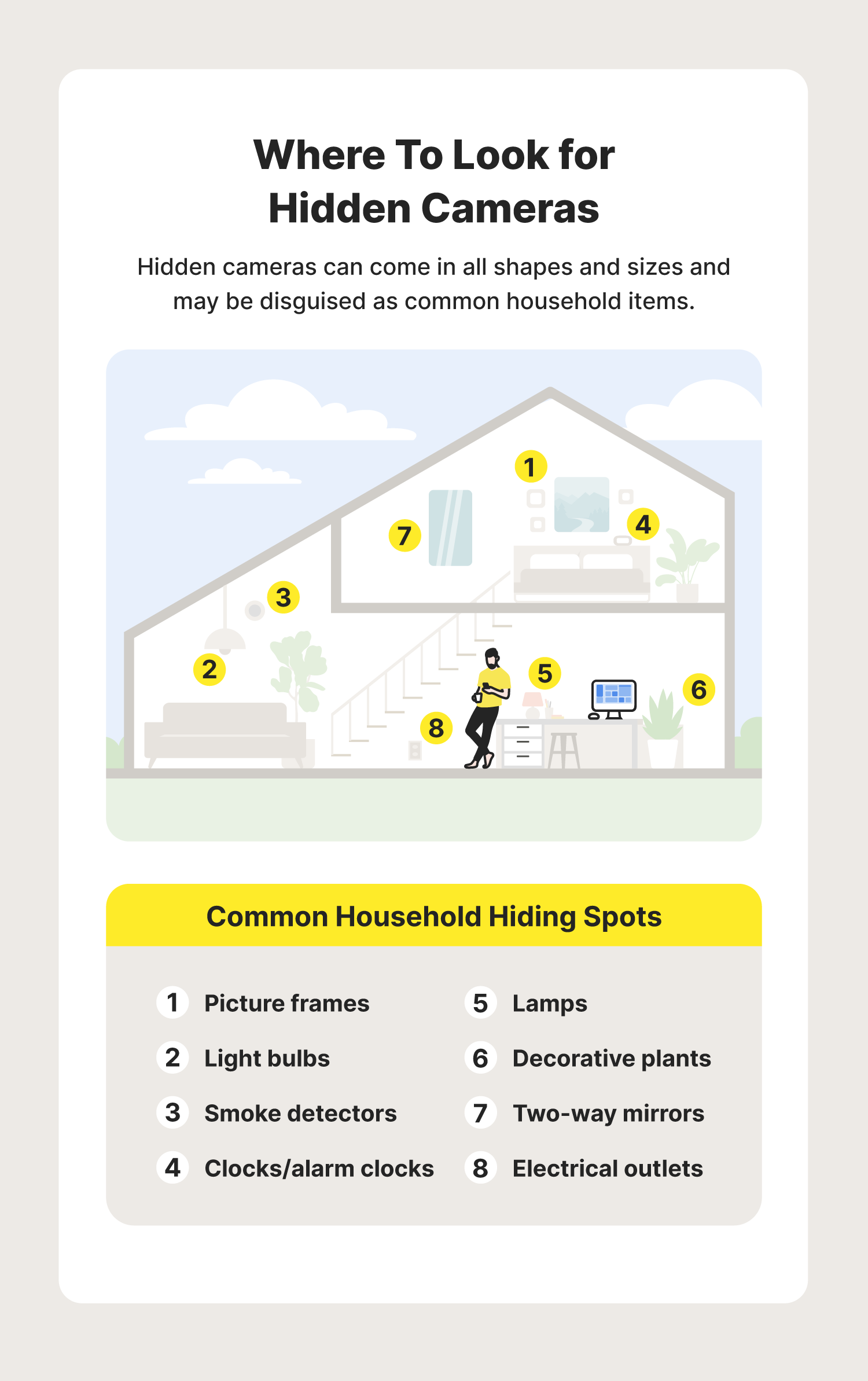
- Smoke detectors, clock radios, and wall clocks with tiny pinhole lenses.
- USB chargers and wall plugs that sit on outlets.
- Picture frames, stuffed toys, and air fresheners.
- Pens, eyeglasses, and button-style cameras on clothing.
- Motion sensors, LED night lights, and decorative objects.
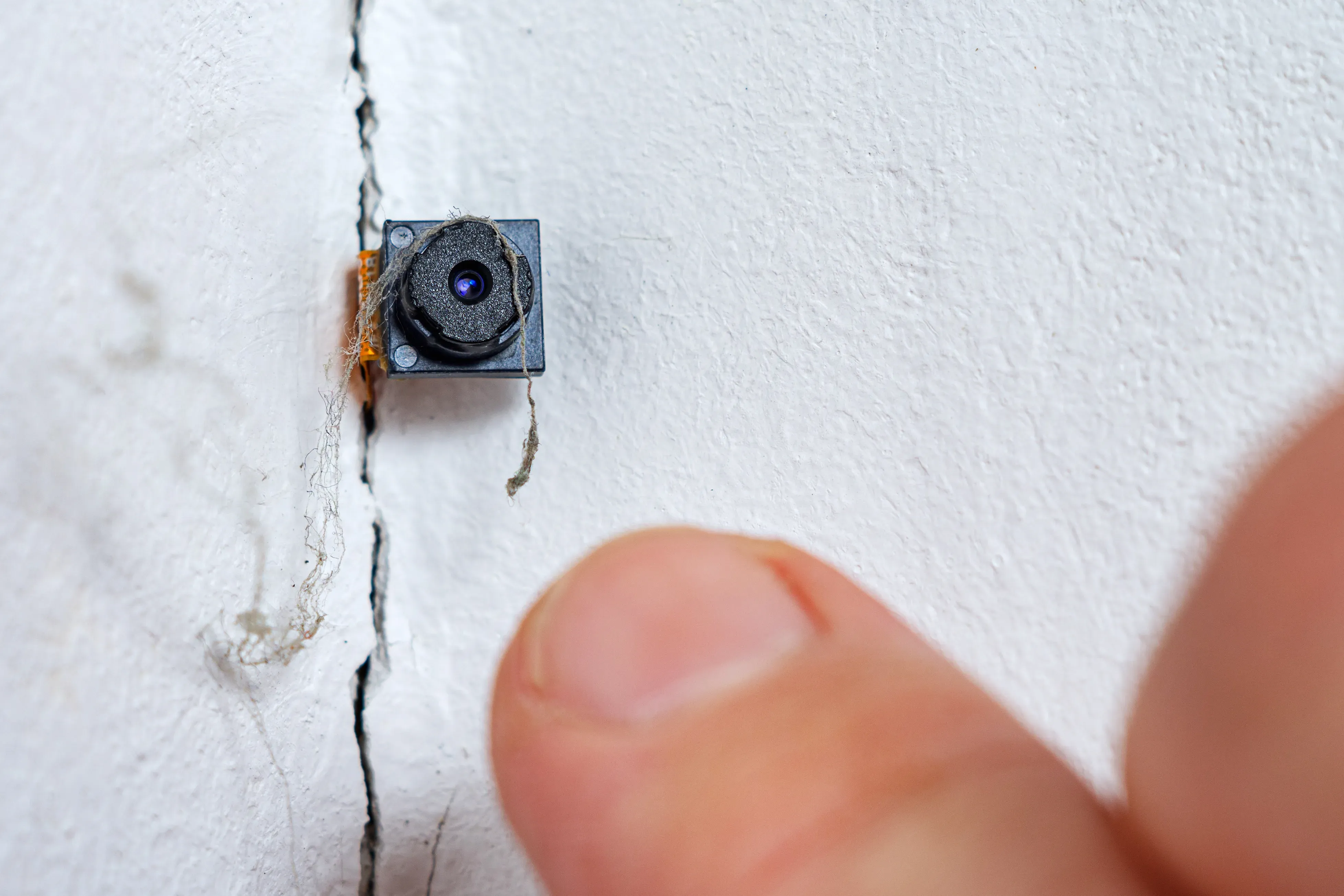
Lenses can be pinhole size or slightly larger. Some hidden cameras use a small glass bead lens. Many have a small ring or hole in a faceplate that hides the lens. When people ask what do hidden cameras look like, they often picture a tiny dot or hole in a normal object. That image is usually accurate.
Size, lens types, and visible clues
Hidden cameras range from the size of a flea to the size of a matchbox. The lens is the key feature. Here are the main lens types and what to watch for.
Lens types:
- Pinhole lenses — tiny holes, often less than 1 mm, common in clocks and smoke alarms.
- Miniature glass lenses — small round lenses that can sit behind a dark cover.
- Wide-angle lenses — look the same but capture more area.
- IR lenses — paired with invisible infrared LEDs for night vision.
Visual clues:
- Small, round holes where none should be.
- Unusual wires or fresh tape inside an object.
- A tiny glass surface that reflects light.
- Camera-looking grids or vents placed oddly.
When you think about what do hidden cameras look like, focus on small, out-of-place holes and unexpected reflective spots. These are often the giveaway.

Typical hiding spots and real-world examples
People hide cameras where they assume no one will look. I have inspected many places and seen common patterns.
Typical spots:
- Bedrooms and bathrooms — inside clocks, alarm clocks, and vents.
- Vacation rentals — in lamps, mirrors, and smoke detectors.
- Offices — inside air purifiers, wall clocks, and plants.
- Retail or break rooms — in fake plant pots or behind signage.
Personal note: Once, I inspected an Airbnb after a guest felt uneasy. The camera was inside a decorative lamp. The lens was a tiny dot behind the lamp's trim. It took me two minutes to find it by looking for a small, shiny spot.
Knowing what do hidden cameras look like in context helps. They mimic items people trust. That is why careful inspection matters.
How to spot hidden cameras: step-by-step checks and tools
You can find most hidden cameras with simple checks. Follow this short checklist.
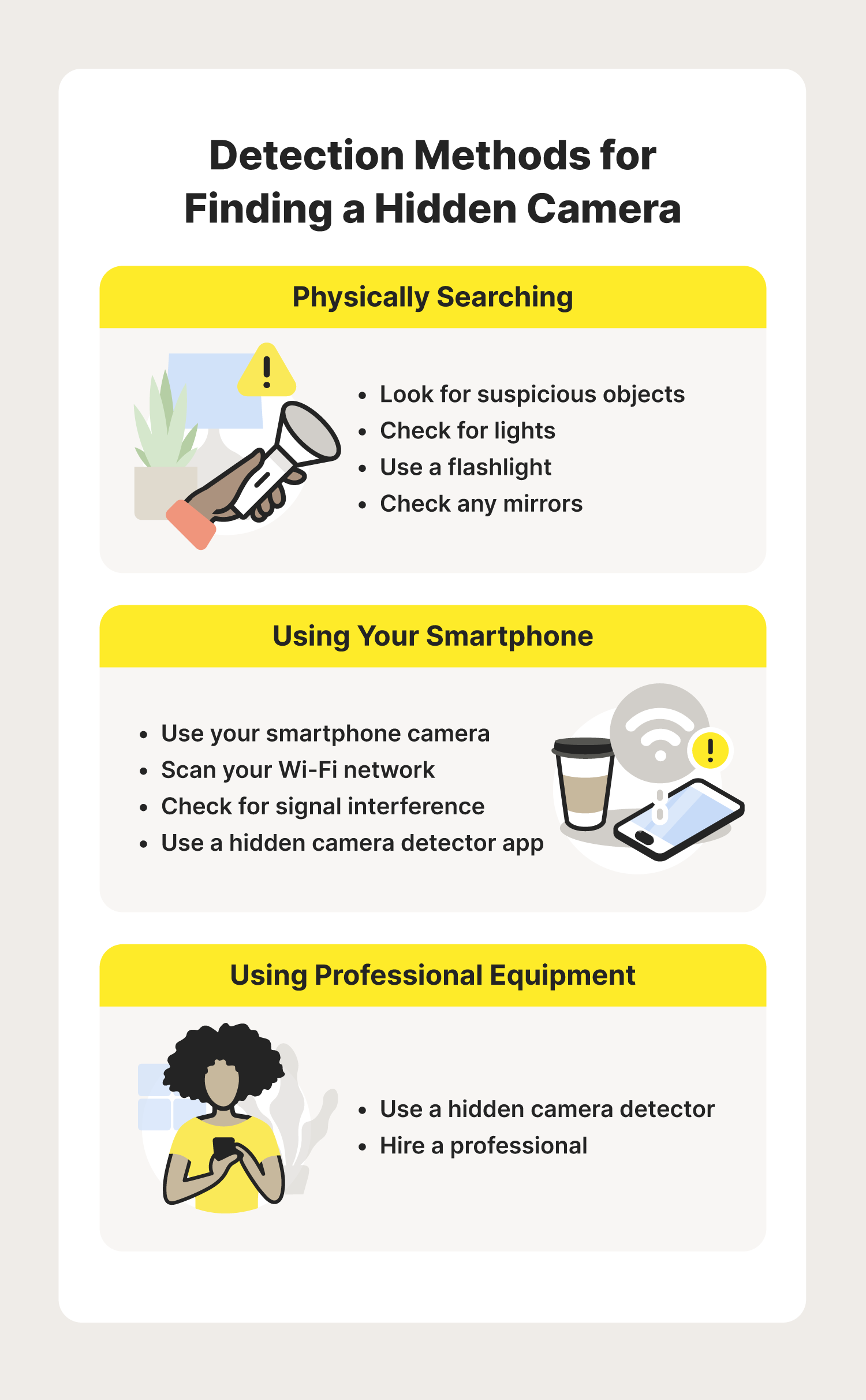
Quick physical checks:
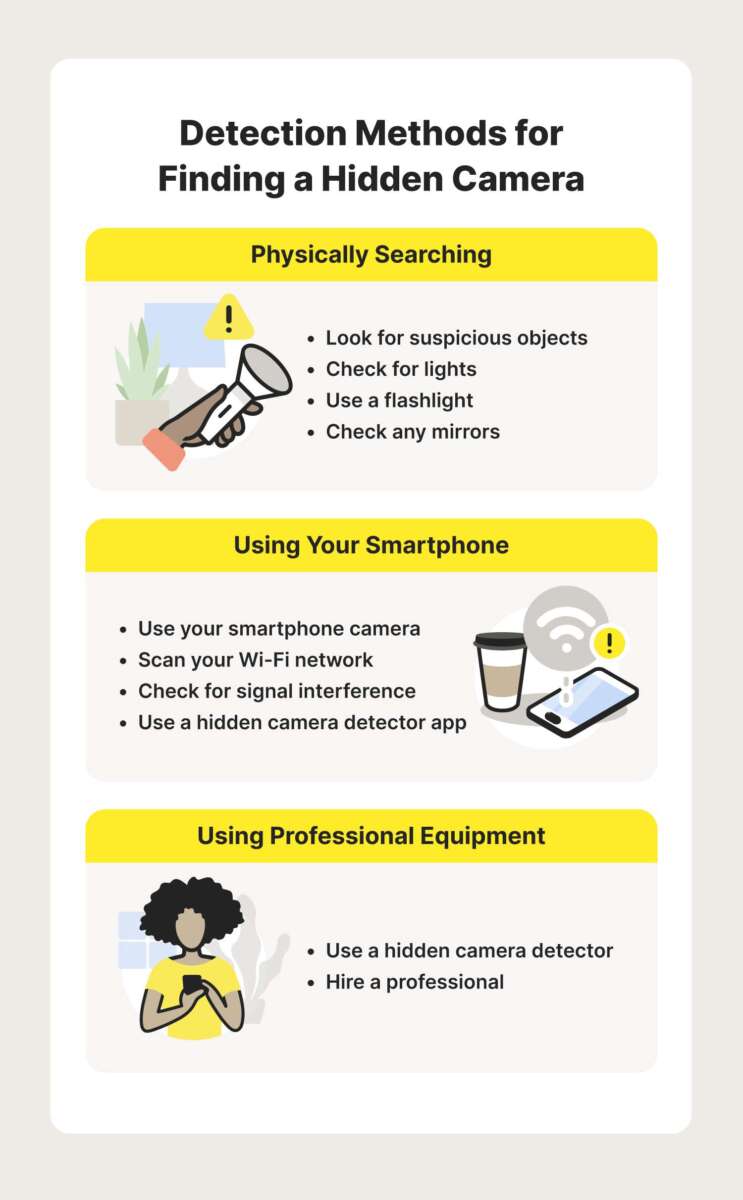
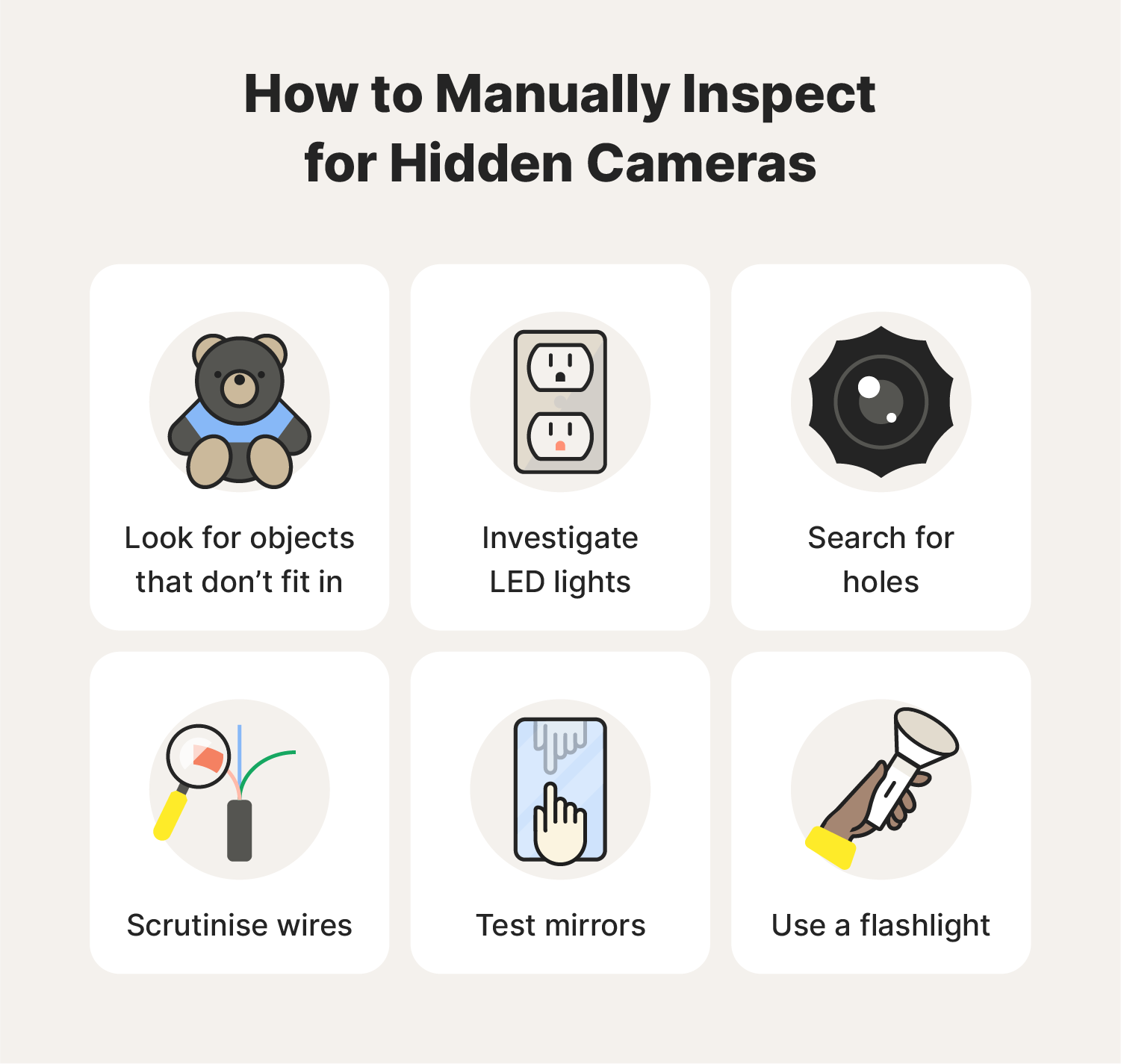
- Scan for unusual holes or reflective spots on objects.
- Look behind smoke detectors, clocks, and decor.
- Move items and look for loose or fresh fasteners.
Use simple tools:
- Phone camera — many hidden cameras use IR; point your phone camera at the device in low light. If you see bright dots that your eye cannot, it could be IR LEDs.
- Flashlight — a strong light can reveal tiny lens reflections. Sweep slowly.
- RF detector — scans for wireless camera signals. It can flag active transmitters.
- Network scanner apps — list devices on your Wi-Fi. Unknown cameras may show up by IP or MAC vendor.
- Thermal camera — can spot warm electronics in a wall or hidden area.
Practical tips:
- Check battery compartments of odd devices.
- Unplug suspicious electronics and inspect behind them.
- Use a helper to move and re-check objects while you watch.
If you wonder what do hidden cameras look like when powered, remember: active cameras may emit heat or radio signals. Those are useful clues.
Legal and ethical considerations
Laws about hidden cameras vary by place. Many areas ban recording where people expect privacy. Know the rules before you act.
Key points:
- It is usually illegal to record someone in a bathroom or bedroom without consent.
- In public spaces, rules can be looser but still require notice in some cases.
- Employers often need clear policies to place cameras at work.
If you find a camera, call local authorities or a lawyer for guidance. Removing or damaging devices can complicate legal action. Be mindful of the law when testing or reporting.
How to protect your privacy
Protecting your privacy is straightforward. You can use low-cost steps to reduce risk.
Simple protections:
- Do a quick sweep when you enter a rental or new room.
- Cover suspicious lenses with tape or a sticky note while you investigate.
- Use mesh or privacy covers for webcams on laptops.
- Secure your Wi-Fi with a strong password and hide the SSID if needed.
Advanced steps:
- Use a dedicated RF detector and wireless scanner for regular checks.
- Install a visible security camera where allowed to deter secret devices.
- Carry a small inspection mirror to see behind objects without moving them.
I advise keeping a checklist on your phone for quick room sweeps. It saves time and helps you spot what do hidden cameras look like before they harm your privacy.
Frequently Asked Questions of what do hidden cameras look like
What do hidden cameras look like in smoke detectors?
Hidden cameras in smoke detectors usually have a tiny pinhole lens near the edge. They often sit behind the detector’s grille and are hard to spot without close inspection.
Can you find hidden cameras with a smartphone?
Yes. Use your phone camera in low light to spot IR LEDs and scan the room for glints. Network scanner apps can also reveal camera devices on Wi-Fi.
Do hidden cameras have lights you can see?
Many hidden cameras use invisible infrared lights for night vision, so you may not see them with your naked eye. A phone camera or IR detector can reveal these lights.
Are hidden camera detectors reliable?
Basic RF and lens detectors are helpful but not foolproof. Combining visual inspection with electronic tools gives the best results.
Should I call police if I find a hidden camera?
If you find a camera in a private space like a bedroom or bathroom, contact local authorities right away. They can advise on preserving evidence and next steps.
Conclusion
Hidden cameras often look like common items. They hide as tiny lenses in clocks, plugs, and detectors. Now you know what do hidden cameras look like and how to spot them. Use simple checks, a phone, and basic tools to protect your privacy. Take action: do a quick room sweep, secure your network, and report anything suspicious. If this guide helped, leave a comment or subscribe for more practical security tips.

Everett Ashford is a tech reviewer at mytechgrid.com specializing in SSDs, cameras, TVs, earbuds, headphones, and other consumer electronics. He provides honest, data-driven reviews based on hands-on testing and real-world performance analysis. Everett simplifies complex tech details to help readers make smart, confident buying decisions.