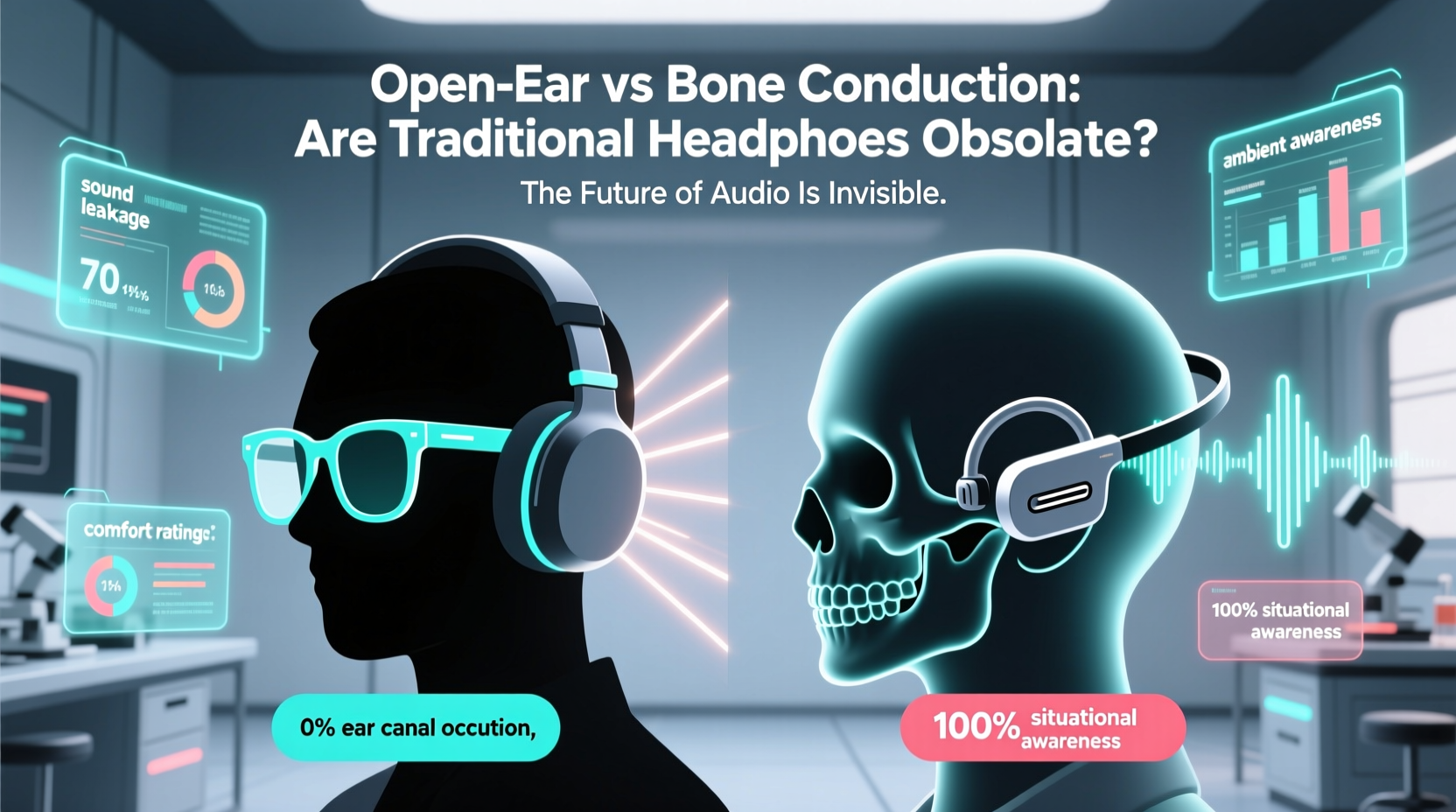
If you want headphones for walking, running, commuting, or working in a U.S. office, both open-ear and bone-conduction models let you hear your surroundings. The main difference is how they send sound to your inner ear.
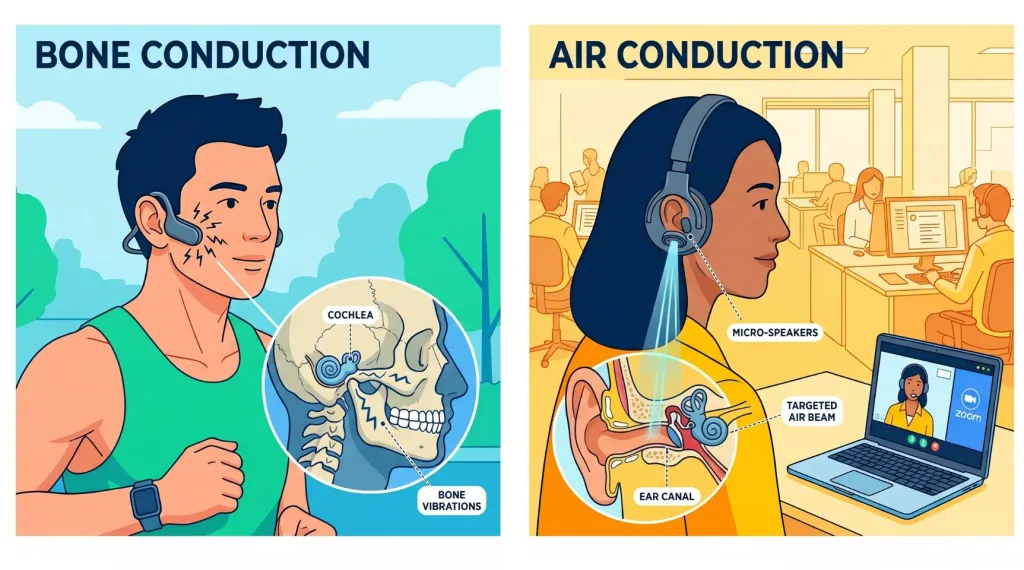
Open-ear headphones use small speakers that sit near your ears and send sound through the air. Bone-conduction headphones use vibrations that travel through your cheekbones and skull to stimulate the inner ear.
Open-ear models often provide fuller sound and stronger bass. Bone-conduction headphones usually leave the ear canal completely open and may suit people who need maximum awareness of nearby traffic, coworkers, or outdoor sounds. Neither type is automatically safer for hearing. Volume and listening time still matter.

Open-Ear Headphones vs. Bone-Conduction Headphones: The Quick Answer
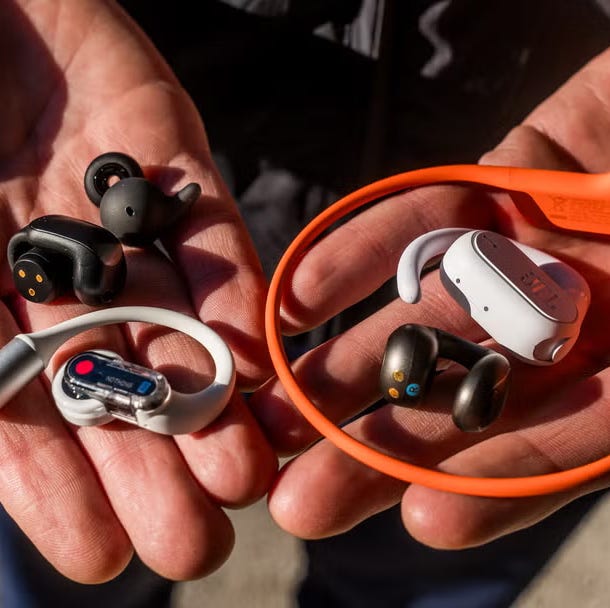
Open-ear headphones place a speaker near, but not inside, the ear. The speaker sends sound into the air, much like a small speaker beside your head.
Bone-conduction headphones rest against the bones near your temples or cheekbones. They create small vibrations that travel through bone to the cochlea, the part of the inner ear that turns sound into nerve signals.
| Feature | Open-ear headphones | Bone-conduction headphones |
|---|---|---|
| Sound path | Through the air and ear canal | Through vibrations in the skull |
| Ear canal | Open | Open |
| Sound quality | Usually fuller and stronger | Often lighter, with less bass |
| Awareness of surroundings | High | Very high |
| Sound leakage | Moderate to high | Moderate to high |
| Fit | Often rests near the ear | Rests on the cheekbones or behind the head |
| Best use | Music, calls, work, and casual outdoor use | Running, cycling awareness, and situations where ears must stay open |
| Main drawback | Nearby people may hear some sound | Bass and detail may feel limited |
The best choice depends on your priority. Choose open-ear headphones if you want a more natural music experience. Choose bone-conduction headphones if keeping your ear openings free matters more than rich sound.

How Open-Ear Headphones Work
Open-ear headphones use air conduction. Their speaker sits outside the ear canal and points toward the ear rather than sealing inside it.
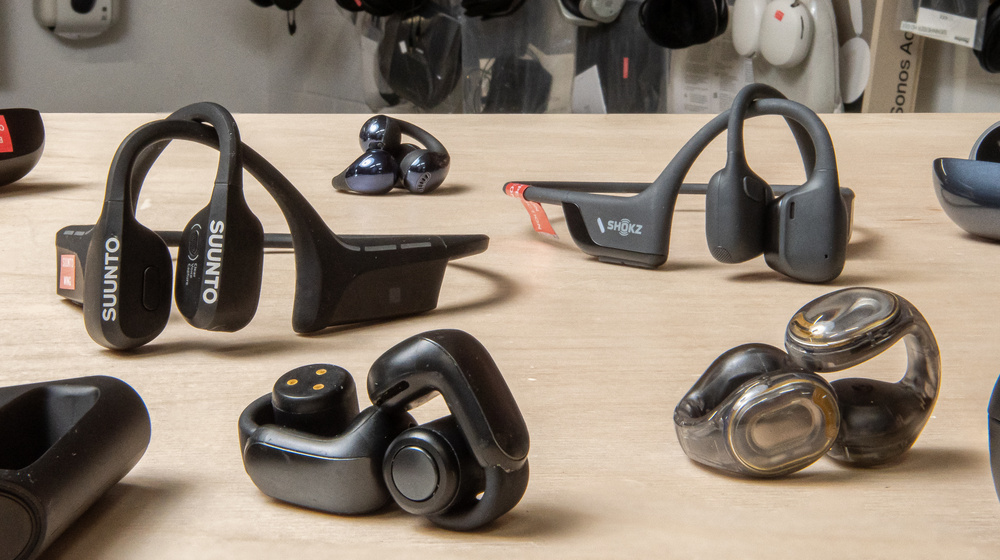
Some models use a small boom or arm that rests in front of the ear. Others use directional speakers that aim sound toward the ear canal. The design allows outside sounds to enter naturally while you listen.
Benefits of open-ear headphones
Open-ear headphones can offer several practical benefits:
- Better music quality: They usually produce more bass and detail than bone-conduction models.
- Less pressure inside the ear: Nothing needs to sit in the ear canal.
- Natural awareness: You can hear voices, traffic, alarms, and other nearby sounds.
- Good call performance: Many models include microphones for phone calls and video meetings.
- Flexible use: They can work well at home, at work, on walks, and during light exercise.
Open-ear designs are not all the same. A model with a speaker close to the ear may sound more powerful but may also leak more sound. A highly directional model may reduce leakage, but sound quality can change when the speaker shifts out of position.
Limits of open-ear headphones
Open-ear headphones may struggle in loud places. A subway train, busy street, airport, or gym can cover the music. Some users then raise the volume, which can increase hearing risk.
Fit also affects performance. If the speaker moves away from the ear, music may sound thin or quiet. Glasses, hats, masks, and long hair can affect comfort or placement.
Open-ear does not mean silent to people nearby. Someone sitting next to you may hear part of a podcast or song, especially at a high volume.

How Bone-Conduction Headphones Work
Bone-conduction headphones use a different sound path. Their transducers press against the bones near the ears, often the cheekbones in front of the ear.
The transducers create vibrations. These vibrations travel through the skull to the cochlea. The cochlea then sends signals through the auditory nerve to the brain.
This path can bypass much of the outer and middle ear. However, bone-conduction headphones still depend on a working inner ear and auditory nerve. They are not a universal solution for hearing loss.
Benefits of bone-conduction headphones
Bone-conduction headphones may be useful when you need your ear canals fully open. Common uses include:
- Running near roads or shared paths
- Cycling where local laws and conditions allow
- Working in places where you must hear alerts
- Listening while wearing hearing protection over the ears
- People who dislike earbuds or pressure in the ear canal
- People with some outer-ear or middle-ear conditions
They can feel secure during movement because the band often wraps around the back of the head. Sweat-resistant designs may also suit exercise, though water resistance ratings vary by model.
Limits of bone-conduction headphones
Bone-conduction headphones often have less bass than air-conduction headphones. Music may sound thinner, especially in the low range. Speech, podcasts, and audiobooks often work better than bass-heavy music.
They may also create a mild vibration or tickling feeling on the cheekbones. Some people adapt quickly. Others find the pressure uncomfortable after long use.
Bone-conduction models can leak sound. The vibration does not stay entirely inside your head. People nearby may hear parts of your audio, especially in a quiet room.
Sound Quality: Which Type Sounds Better?
Open-ear headphones usually sound better for music because they move more air near the ear. This helps create stronger bass, a wider sense of space, and more detail.
Bone-conduction headphones trade some sound quality for an open ear canal. They are often clear enough for speech and casual listening, but deep bass can be weak. Loud background noise can make the sound seem even thinner.
The word “better” depends on what you listen to:
- Music: Open-ear usually has the advantage.
- Podcasts: Both can work well.
- Phone calls: Either may work, depending on microphone quality and wind control.
- Audiobooks: Both are suitable in moderate noise.
- Bass-heavy music: Open-ear is usually the better choice.
- Quiet safety-focused listening: Bone conduction may be more appealing.
No headphone type can fully separate music from the environment. A crowded street may reduce speech clarity. Wind may affect microphones and make outdoor calls difficult.
Which Headphones Let You Hear Your Surroundings Better?
Both designs allow outside sound to enter, but bone-conduction headphones usually leave the ear opening more completely unobstructed.
That can make bone-conduction headphones useful for runners who want to hear footsteps, voices, or nearby vehicles. Open-ear headphones also preserve awareness, but their speakers sit closer to the ear and can mask some outside sound when the volume is high.
Neither design makes outdoor listening risk-free. You may still miss a quiet bicycle, electric vehicle, alarm, or warning from behind you. Do not treat open-ear or bone-conduction headphones as a substitute for looking, listening, or following local traffic rules.
For roads, crossings, parking lots, and busy paths:
- Keep the volume low.
- Use one earbud or pause playback when you need full attention.
- Look around before crossing or changing direction.
- Avoid noise cancellation modes that reduce environmental sound.
- Follow state and local rules for cycling and headphone use.
Are Open-Ear or Bone-Conduction Headphones Safer for Your Hearing?
Neither type is automatically safe at every volume. Hearing damage depends mainly on sound level, exposure time, and repeated exposure.
The National Institute for Occupational Safety and Health uses 85 decibels over eight hours as a recommended exposure limit for workplace noise. It also uses a 3-decibel exchange rate: when sound rises by 3 decibels, the recommended exposure time is cut in half.
These limits are not a personal guarantee. Headphone output can vary by device, recording, fit, and listening mode. A phone’s volume slider also does not equal a fixed decibel level for every pair of headphones.
Practical steps can reduce risk:
- Keep the volume as low as you can.
- Take regular listening breaks.
- Avoid turning up the sound to overpower traffic or machinery.
- Use hearing protection in loud workplaces.
- Stop if you notice ringing, muffled hearing, pain, or unusual sound sensitivity.
- Seek a hearing evaluation if symptoms continue or repeat.
Bone conduction may feel quieter because it does not seal the ear. That does not prove it places no stress on hearing. The inner ear still receives sound energy. Open-ear models can also become loud if you raise the volume in noise.
If you work around loud equipment, use hearing protection selected for that hazard. Consumer headphones are not a replacement for an employer’s required hearing protection.

Which Type Is Better for Running and Cycling?
For running, the better option depends on your route, sound needs, and comfort.
Bone-conduction headphones may be a strong fit for runners who want the ear opening fully clear. Their behind-the-head band can stay stable while moving, and speech can remain clear at a moderate volume.
Open-ear headphones may be better for runners who care more about music quality. They can still preserve awareness, but their sound may cover more of the environment at high volume.
Cyclists should be more cautious. Headphones can reduce awareness even when the ear remains open. Some states, cities, trails, or organized events may restrict headphone use while cycling. Check the rules where you ride.
A safer setup includes:
- A low playback level
- A familiar route
- No noise-canceling mode
- Extra care at intersections
- Full attention near cars and pedestrians
- A pause button that is easy to reach
Do not rely on any headphone design to detect vehicles for you.
Which Type Is Better for Glasses, Hearing Aids, and Ear Sensitivity?
Comfort depends on the shape of your head, ears, glasses, and hearing devices.
Open-ear headphones may press against eyeglass arms or compete for space around the ear. Some designs sit above the ear and avoid this issue. Others may feel crowded after long use.
Bone-conduction headphones usually sit in front of the ear and behind the head. This can work well with many glasses, but the band may touch a helmet or interfere with some headgear.
People with hearing aids should check the headphone design carefully. Open-ear and bone-conduction models may work in some setups, but Bluetooth pairing, feedback, physical contact, and microphone placement can vary. A hearing care professional can help if you rely on hearing aids or have a diagnosed hearing condition.
If you have ear pain, drainage, sudden hearing loss, dizziness, or ongoing ringing, stop using the headphones and seek medical advice. Headphones should not be used to self-treat a hearing problem.

Open-Ear and Bone-Conduction Headphones: Key Buying Factors
Use the following checklist before choosing a model.
1. Your main audio
Choose open-ear if you want music with more bass and detail. Choose bone conduction if you mainly listen to speech or want the ear canal as clear as possible.
2. Your environment
A quiet office may suit either style. A busy street may require a lower volume, pauses, or no headphones at all. Neither design works well as a safety tool in very loud traffic.
3. Comfort
Check where the frame or band rests. A good fit should not cause pain, strong pressure, skin irritation, or a headache.
4. Call quality
Look for microphone features designed for wind and outdoor noise. Product claims are not the same as independent test results, so real-world call performance may differ.
5. Water resistance
Sweat resistance is not the same as swimming support. Check the exact IP rating and the manufacturer’s limits. Salt, chlorine, and repeated moisture can still damage electronics.
6. Controls and connectivity
Check Bluetooth support, multipoint pairing, physical buttons, app requirements, charging method, and compatibility with your phone. These details can change by model and firmware version.
7. Privacy and sound leakage
Both styles can leak audio. If you work near others, keep the volume low and test the headphones in a quiet room before using them in shared spaces.

Common Mistakes to Avoid
The most common mistake is assuming “open ear” means “safe at any volume.” It does not. You can still expose your hearing to loud sound.
Another mistake is choosing bone conduction for rich music without trying it first. The sound may feel very different from earbuds or over-ear headphones.
Also avoid these errors:
- Raising the volume to block out traffic
- Wearing headphones in places where full hearing is needed
- Assuming a water-resistant rating allows swimming
- Buying based only on battery life
- Ignoring pressure or pain
- Treating bone conduction as a cure for hearing loss
- Assuming all open-ear designs sound or fit alike
- Using headphones as a substitute for hearing protection
If sound is weak, check the fit, clean the transducers or speaker openings, charge the headphones, and test them with another device. If one side suddenly becomes much quieter, consult the product’s support instructions rather than increasing the volume.

Which Should You Choose?
Choose open-ear headphones when:
- You want better music quality.
- You need to hear your surroundings.
- You plan to use them for calls and general work.
- You do not mind a speaker sitting near your ear.
- You want more bass than most bone-conduction models provide.
Choose bone-conduction headphones when:
- You want the ear openings completely free.
- You mainly listen to podcasts, calls, or audiobooks.
- You run or work in situations where awareness matters.
- You dislike earbuds inside the ear.
- You can accept lighter bass and some cheekbone pressure.
If you are unsure, start with your most important trade-off: sound quality or maximum ear openness. That single choice will narrow the field quickly.

Frequently Asked Questions
Do bone-conduction headphones really go through your bones?
Yes. Their transducers create vibrations that travel through the bones around the ear to the cochlea. The cochlea then processes those vibrations as sound. They do not send sound directly to the brain, and they still rely on the inner ear and auditory nerve.
Are open-ear headphones the same as bone-conduction headphones?
No. Bone-conduction headphones are one type of open-ear listening device, but many open-ear headphones use ordinary air-conduction speakers. Open-ear describes the ear position. Bone conduction describes the sound path.
Can other people hear bone-conduction headphones?
Yes. Bone-conduction headphones can leak sound, especially at high volume or in a quiet room. The leakage level depends on the design, fit, volume, and audio content.
Can I use these headphones with hearing loss?
It depends on the cause and type of hearing loss. Bone conduction may bypass some outer- or middle-ear problems, but it will not solve every hearing issue. Ask an audiologist before relying on either design for communication or safety.
Are open-ear headphones allowed while driving?
Laws vary by state and situation. Even where they are legal, headphones may reduce awareness of sirens, horns, and road conditions. Check your state’s current rules and avoid using headphones if they distract you from driving.
Do bone-conduction headphones sound better than earbuds?
Usually not for music. Earbuds and open-ear air-conduction models often provide stronger bass and more detail. Bone-conduction headphones can be the better practical choice when keeping the ear canal open matters most.
Evidence and Sources
The technical and safety guidance in this article is based on established information from:
- National Institute for Occupational Safety and Health: Criteria for a Recommended Standard—Occupational Noise Exposure
- CDC: Preventing Noise-Induced Hearing Loss
- National Institute on Deafness and Other Communication Disorders: Noise-Induced Hearing Loss
- OSHA: Occupational Noise Exposure
Product features, comfort, battery life, water resistance, and compatibility can vary by model and may change with revisions or firmware updates. Check the current manufacturer documentation before buying.
Conclusion
Open-ear and bone-conduction headphones both keep your ears open, but they do it in different ways. Open-ear models send sound through the air and usually offer better music quality. Bone-conduction models send vibrations through the skull and may provide the clearest ear opening for awareness.
For most listeners, the decision comes down to one trade-off: open-ear for fuller sound, or bone conduction for a more fully unobstructed ear canal. Keep the volume moderate, stay alert in traffic, and choose based on your actual setting rather than the product label alone.

Everett Ashford is a tech reviewer at mytechgrid.com specializing in SSDs, cameras, TVs, earbuds, headphones, and other consumer electronics. He provides honest, data-driven reviews based on hands-on testing and real-world performance analysis. Everett simplifies complex tech details to help readers make smart, confident buying decisions.