Introduction
In American English, agentic usually means able to act, make choices, or cause change with some degree of independence. It comes from agency, the ability to act intentionally rather than simply react to events or follow orders.
You may see agentic in psychology, education, business, philosophy, and artificial intelligence. Its exact meaning depends on the setting. An agentic person may take initiative. An agentic system may plan and complete tasks. In social psychology, an agentic state can describe a person who sees themself as carrying out another person’s wishes.
The short answer is simple: agentic describes action guided by a person’s or system’s own goals, choices, or control.


Agentic Meaning in Plain English
Agentic means having the power or tendency to act on purpose. It often suggests initiative, choice, and a sense of control.
For example:
- “She took an agentic approach to her career” means she made active choices instead of waiting for events to shape her path.
- “The student showed agentic behavior” means the student set goals, made decisions, or sought help.
- “The software uses an agentic workflow” means it can perform steps toward a goal with limited human input.
- “He entered an agentic state” means he viewed himself as acting on behalf of an authority.
The word does not always mean complete independence. A person or system may act within limits set by rules, tools, instructions, or other people.
A useful formula is:
Agentic = purposeful action + some ability to choose or influence what happens
The more control and initiative an actor has, the more naturally agentic may describe it.


Agentic versus agency
The noun agency refers to the ability or power to act. The adjective agentic describes something that shows, uses, or relates to that ability.
| Term | Part of speech | Meaning | Example |
|---|---|---|---|
| Agency | Noun | The power to act or choose | “The child gained more agency.” |
| Agentic | Adjective | Showing or involving purposeful action | “The child used an agentic learning strategy.” |
| Agent | Noun | A person or thing that acts | “The agent made a decision.” |
| Act | Verb | To do something | “The system acted on the request.” |
Agency is the capacity. Agentic describes how that capacity appears in practice.

What Does Agentic Mean in Psychology?
In psychology, agentic often refers to intentional behavior, self-direction, and a person’s belief that their actions can affect outcomes.
Albert Bandura’s work on human agency is a major source of this idea. His social cognitive theory describes people as more than passive recipients of outside forces. People can set goals, reflect on their choices, manage their behavior, and influence their surroundings.
An agentic person may:
- Set a goal and choose a way to pursue it
- Adjust a plan after seeing the results
- Ask for resources or support
- Speak up about a problem
- Take responsibility for a decision
- Believe that action can improve a situation
This does not mean the person controls everything. Money, health, laws, social conditions, and other limits can reduce a person’s available choices. Calling someone agentic should not be used to blame them for circumstances they cannot control.
Agentic behavior and passive behavior
The contrast can help clarify the word:
- Agentic behavior: “I will compare my options and choose the next step.”
- Passive behavior: “I will wait and see what someone else decides.”
- Reactive behavior: “I will respond after something happens.”
- Agentic behavior: “I will prepare now because my actions may affect the result.”
A person can move between these patterns. Someone may act with agency at work but feel less control in a medical, legal, or financial situation.
The “agentic state” in social psychology
The term agentic state has a more specific meaning. In Stanley Milgram’s research on obedience, it described a state in which a person sees themself as an instrument carrying out an authority’s wishes. The person may feel less personally responsible for the action.
This use is narrower than the everyday meaning of agentic. It does not mean “confident” or “independent.” In fact, it can involve giving up personal judgment to follow an authority.
That distinction matters:
- Agentic behavior often means self-directed action.
- An agentic state in obedience research can mean acting under an authority’s direction.
Always use the surrounding context to determine which meaning applies.

What Does Agentic Mean in Education?
In education, agentic usually describes a learner who takes an active role in learning rather than waiting for every step to be assigned.


An agentic learner may:
- Set a study goal
- Choose a useful learning method
- Ask a clear question
- Request feedback
- Track progress
- Change strategies when one fails
- Help shape a class discussion
- Explain what support would help
This idea is close to student agency, but the words are not identical. Student agency is the broader concept. Agentic behavior is the visible action that expresses it.
For example, saying “I do not understand this topic” is useful. Saying “I do not understand this part; could we review one example?” shows a more agentic response because it identifies a need and proposes a next step.
Teachers can support agentic learning by giving students:
- Clear goals
- Choices between suitable tasks
- Useful feedback
- Time to reflect
- A safe way to ask for help
- A clear explanation of limits and expectations
Choice alone does not create agency. If a student receives several options but no guidance, the choice may add confusion rather than control.

What Does Agentic Mean in Business and Everyday Speech?
In business, agentic often means proactive, self-directed, and willing to make decisions. A manager might praise an employee for an agentic approach when that employee identifies a problem, proposes a solution, and follows through.
Example:
“Instead of waiting for a new process, Maya mapped the delay, asked the team for input, and suggested a change.”
That behavior is agentic because Maya did more than notice a problem. She acted with purpose and tried to influence the result.
Still, agentic is not always a synonym for “good.” Too much action without review can create risk. A person who makes major changes without checking facts may be energetic but not effective.
A balanced workplace use considers both:
- Initiative: Did the person act without unnecessary delay?
- Judgment: Did the person understand the limits, risks, and effects of the action?
The word may also describe communication. An agentic statement is often direct and action-focused:
- Less agentic: “Someone should fix this.”
- More agentic: “I found the cause. I can fix the first part, but I need approval for the second.”
What Does Agentic Mean in Artificial Intelligence?
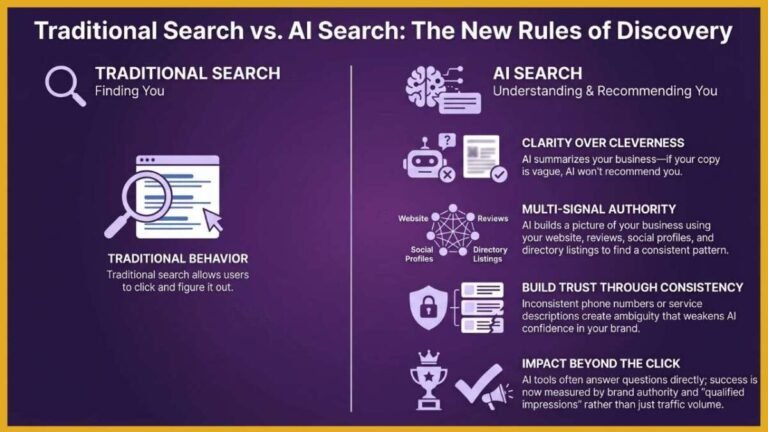
In artificial intelligence, agentic usually describes a system that can pursue a goal through multiple steps instead of giving only a one-time response.


An agentic AI system may be able to:
- Receive a goal
- Break the goal into tasks
- Choose or call tools
- Inspect results
- Revise its plan
- Take another step
- Stop when it reaches a condition or needs human input
For example, a basic chatbot may answer, “Here are three flight options.” An agentic system might search approved sources, compare the options, check stated preferences, and prepare a proposed itinerary.
The term is broad. It does not prove that a system is fully autonomous, reliable, or intelligent. A system can be described as agentic while still requiring approval before important actions.
Agentic AI versus automation
These terms overlap, but they are not the same.
| Term | Main feature | Typical behavior |
|---|---|---|
| Automation | Follows a set process | Runs the same approved steps when triggered |
| Generative AI | Produces new content | Writes, summarizes, classifies, or creates |
| Agentic AI | Pursues a goal through steps | Plans, uses tools, checks results, and acts within limits |
A rule-based program that sends a receipt after payment is automation. A language model that drafts an email is generative AI. A system that checks a request, gathers information, updates a record, and asks for approval may be agentic.
The boundaries are not fixed. Different companies use agentic in different ways, so ask what the system can actually do:
- Can it take action, or only suggest one?
- Can it use external tools?
- Can it choose the order of tasks?
- Can it retry after an error?
- What requires human approval?
- Can a person review its actions?
- What data can it access?
Why agentic AI needs limits
An agentic system can create more value than a single-turn tool because it can carry out a sequence. The same feature can increase risk. A wrong assumption may affect later steps, especially when the system can send messages, change records, spend money, or access private information.
Use approval checks for high-impact actions. Limit access to the data and tools the system needs. Keep logs, test failure cases, and provide a clear way for a person to stop or correct the process.

Agentic, Proactive, Autonomous, and Assertive: What Is the Difference?
These words are related, but they do not mean the same thing.
| Word | Core idea | What it emphasizes |
|---|---|---|
| Agentic | Acts with purpose and some control | Choice, initiative, and influence |
| Proactive | Acts before a problem or request requires it | Timing and anticipation |
| Autonomous | Operates with little or no outside control | Independence |
| Assertive | Expresses needs or views clearly | Communication |
| Independent | Relies less on others | Freedom from support or direction |
| Reactive | Responds after an event | Response rather than initiative |
A person can be agentic without being autonomous. For example, an employee may make a thoughtful decision within a manager’s rules.
A person can be proactive without being agentic in a broad sense. Someone may follow a required checklist early, but that action does not necessarily show much choice.
A person can be assertive without being agentic. Clear speech is not the same as taking purposeful action.
When choosing a word, ask what you want to stress:
- Use agentic for purposeful action and influence.
- Use proactive for acting early.
- Use autonomous for freedom from outside control.
- Use assertive for direct communication.


How to Use “Agentic” in a Sentence
Use agentic when you are describing a person, behavior, process, or system that acts toward a goal.
Examples:
- “The program supports agentic learning by letting students set goals and review their progress.”
- “Her agentic response turned a vague concern into a clear action plan.”
- “The research examines how people maintain an agentic sense of control.”
- “The company is testing an agentic workflow with human approval at key steps.”
- “The employee took an agentic role in solving the customer problem.”
- “The study discusses an agentic state under conditions of authority.”
Avoid using agentic when a simpler word is clearer. In many sentences, active, self-directed, proactive, or independent may fit better.
For example:
- “She took an agentic approach” is precise in an academic or professional context.
- “She took charge” is more natural in casual speech.
- “She acted early” is clearer if timing is the main point.
- “She worked independently” is better if freedom from help is the main point.
The word is useful, but it can sound like jargon. Define it when your readers may not know the term.

Common Misunderstandings About “Agentic”
Agentic does not mean selfish
An agentic person acts with intention. That person may still cooperate, care about others, and accept guidance.
Agentic does not mean fully independent
A person can act with agency while working within laws, policies, social rules, or physical limits.
Agentic does not mean correct
Purposeful action can still be based on poor information. Good judgment requires checking evidence and considering consequences.
Agentic does not always mean human
In technical writing, software can be called agentic when it performs goal-directed steps. The term describes the system’s behavior, not proof that it has human thoughts or feelings.
Agentic is not always positive
In education and work, the word often has a positive tone. In obedience research, agentic state has a specific and more complex meaning. Context controls the meaning.
Key Takeaways
- Agentic means able or inclined to act with purpose, choice, or influence.
- Agency is the ability to act; agentic describes behavior or systems that show that ability.
- In psychology, the word often relates to self-direction and perceived control.
- In education, agentic learners help guide their own learning.
- In artificial intelligence, agentic systems may plan and complete several steps toward a goal.
- Agentic is not the same as autonomous, proactive, assertive, or correct.
- The phrase agentic state can refer to acting under an authority’s direction in social psychology.
Frequently Asked Questions
Is “agentic” a real English word?
Yes. Agentic is an established English adjective. It is used in academic, professional, and technical writing, although it is less common in everyday conversation than words such as active or independent.
What is the opposite of agentic?
The best opposite depends on the context. Possible contrasts include passive, reactive, dependent, or fatalistic. None is a perfect opposite in every sentence.
Does agentic mean autonomous?
No. Autonomous suggests operating with little outside control. Agentic suggests purposeful action and some ability to choose or influence an outcome. An agentic person or system may still follow rules or need approval.
How do you pronounce agentic?
In common American English, agentic is often pronounced ay-JEN-tik. Pronunciation can vary slightly by speaker and field.
Can a group be agentic?
Yes. Researchers and organizations may describe a group as agentic when it acts collectively toward goals and can influence its conditions. The group’s agency may depend on communication, shared goals, resources, and decision-making power.
Conclusion
Agentic means acting with purpose and some power to choose, influence, or direct what happens. The word can describe a person, a behavior, a learner, an organization, or an AI system.
When you see it, identify the setting first. In everyday and educational writing, it often means self-directed or proactive. In psychology, it may refer to human agency or the specific idea of an agentic state. In AI, it usually points to a system that works through several steps toward a goal.
The safest plain-English substitute is often purposeful and self-directed, but the exact replacement should match the context.

Everett Ashford is a tech reviewer at mytechgrid.com specializing in SSDs, cameras, TVs, earbuds, headphones, and other consumer electronics. He provides honest, data-driven reviews based on hands-on testing and real-world performance analysis. Everett simplifies complex tech details to help readers make smart, confident buying decisions.