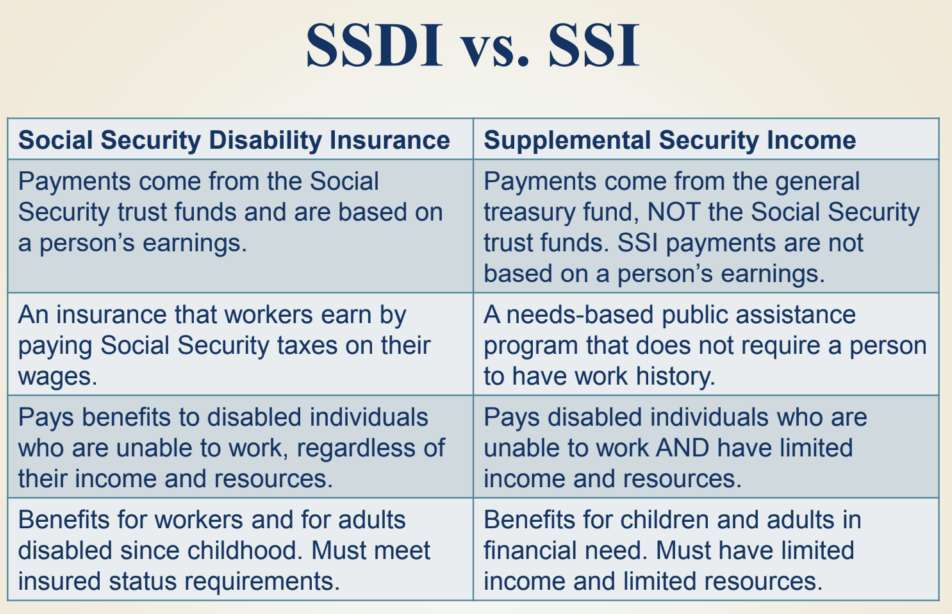
SSI pays need-based cash to low-income individuals; SSD pays earnings-based benefits for disabled workers.
I’ve helped many people sort out benefits, and I can tell you this topic confuses a lot of smart, capable people. This article clearly explains what is the difference between SSI and SSD, step by step. You’ll learn definitions, who qualifies, how payments work, how medical decisions differ, and practical tips to apply or appeal. Read on for clear, actionable guidance so you can make informed choices about Social Security benefits.
Understanding SSI vs SSD: Basic Definitions
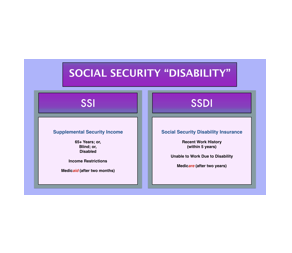
SSI stands for Supplemental Security Income. It is a federal program that pays cash to people who have low income and limited resources and who are aged, blind, or disabled.
SSD usually means Social Security Disability Insurance (SSDI). It pays benefits to people who have worked and paid Social Security taxes and who now have a medical condition that meets the Social Security disability rules.
Both programs serve people with disabilities, but they come from different pots of money and have different rules. Knowing what is the difference between ssi and ssd helps you pick the right path to apply and plan your finances.

Key Differences at a Glance
- Program type: SSI is need-based cash assistance. SSD is an earnings-based insurance benefit.
- Funding: SSI is funded by general tax revenue. SSD is funded by payroll taxes paid into Social Security.
- Work history: SSI has no work history requirement. SSD requires sufficient work credits.
- Resource limits: SSI has strict asset limits. SSD does not have resource limits.
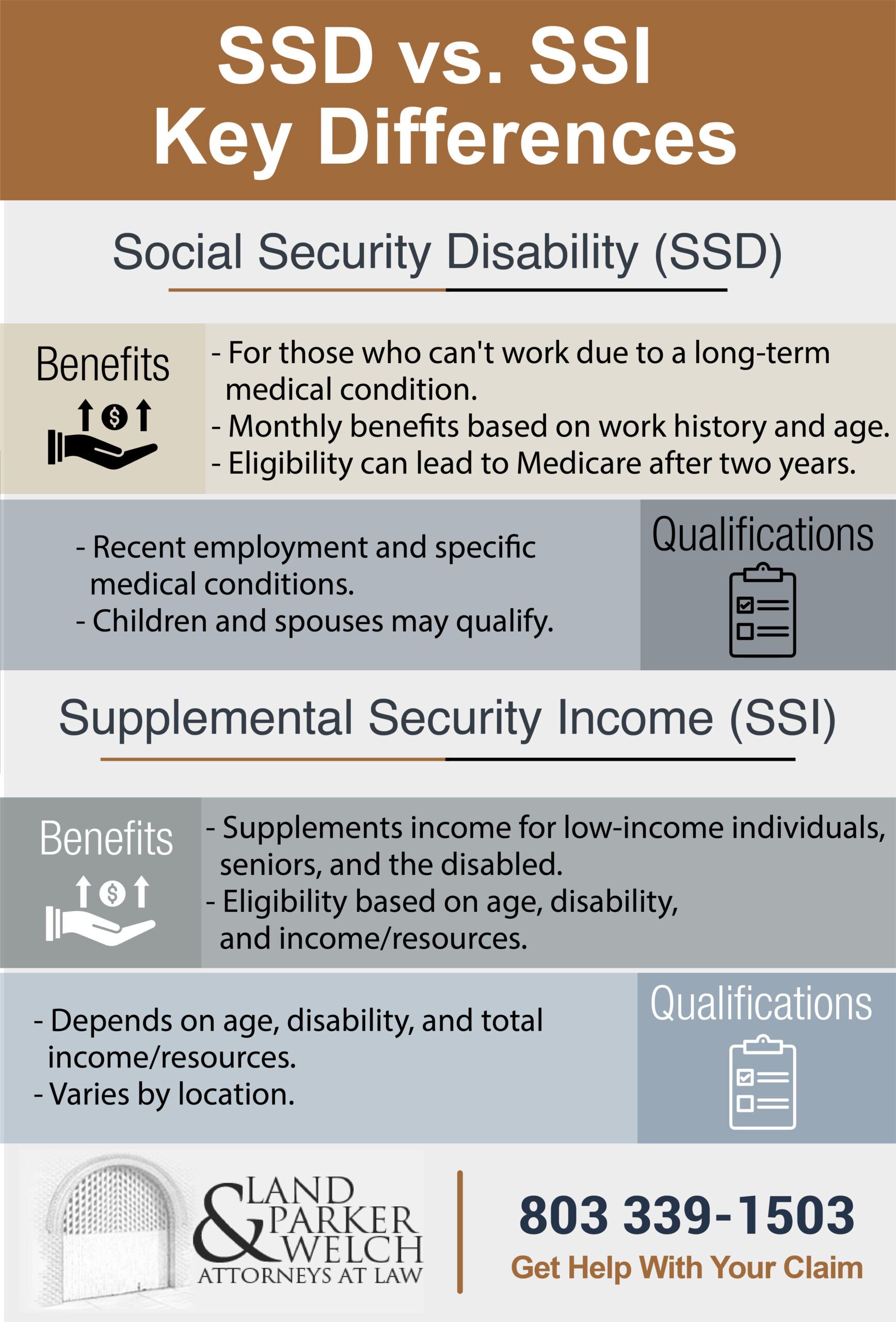
- Medicare vs Medicaid: SSD beneficiaries typically qualify for Medicare after 24 months. SSI recipients often qualify for Medicaid immediately in most states.
These core differences shape eligibility and long-term planning. If your question is what is the difference between ssi and ssd, these items give a quick framework to decide which program applies.
Eligibility: Who Qualifies
SSI eligibility depends on:
- Age or disability: You must be aged 65+ or disabled/blind.
- Income: Countable income must be low enough to meet limits.
- Resources: Assets generally must be below set thresholds.
- Citizenship: You must be a U.S. citizen or meet certain noncitizen rules.
SSD eligibility depends on:
- Work history: You need enough work credits earned through payroll taxes.
- Medical condition: Your condition must meet Social Security’s definition of disability.
- Insured status: You must be “insured” based on recent employment history.
Many people ask what is the difference between ssi and ssd for younger adults. The main answer: work credits vs resource limits. If you’ve worked long enough, SSD is often the path. If not and you have low assets, SSI might be available.

Benefit Amounts, Funding, and Payments
SSI benefits are tied to federal benefit rates and may be supplemented by states. Payments aim to meet basic needs for food and shelter. The amount adjusts with federal changes.
SSD benefits are based on your average lifetime earnings. Higher lifetime earnings lead to higher monthly benefits. SSD benefits can also provide family benefits for spouses and children in some cases.
Funding differences matter. SSI draws from general revenue, so payments respond to federal rules and state supplements. SSD is an earned benefit. This distinction is central when answering what is the difference between ssi and ssd, because it affects amount, eligibility, and dependents’ access.
Medical Criteria: How Disability Is Determined
Both programs use the Social Security disability definition in many ways. Key points:
- Severe impairment: Your condition must limit basic work activities for at least 12 months or be expected to cause death.
- Listed conditions: The Social Security listings describe impairments that automatically meet disability standards if criteria are met.
- Residual capacity: If your condition does not match a listing, SSA assesses your residual functional capacity and past work.
The mechanics of medical evaluation are similar, but SSD applicants sometimes have easier paths to approval because their work record supports a claim. When clarifying what is the difference between ssi and ssd, remember that both require strong medical evidence, but SSD ties the disease finding to an insured worker status.

Income, Resources, and Work Rules
SSI:
- Income counts include wages, benefits, and some in-kind support.
- Assets like cash, bank accounts, and some property are limited.
- Working can reduce SSI benefits, but work incentives and programs can help keep benefits while you try work.
SSD:
- Monthly SSD benefits do not have an asset test.
- If you work and earn above a set amount in substantial gainful activity (SGA), benefits can stop.
- SSD offers work incentives like trial work periods and return-to-work supports.
Understanding what is the difference between ssi and ssd here helps you plan. SSI’s resource limits mean savings and gifts matter. SSD focuses on earnings and work status.

Application Process and Appeals
How you apply:
- Both programs accept online, phone, and in-person applications through Social Security offices.
- SSD often requires detailed work history and employer information.
- SSI applications require detailed financial and household information.
Appeals:
- Denials are common for both programs. You can request reconsideration, hearing by an administrative law judge, review by Appeals Council, and federal court review.
- Medical records, treating physician statements, and consistent documentation raise approval chances.
From my experience helping claimants, preparing thorough medical records and organized work documentation is the single most helpful step to shorten delays and win appeals.

When SSI and SSD Overlap
You can receive both SSD and SSI in some situations. That happens when an SSD benefit is below the SSI payment level and the claimant also meets SSI’s resource and income rules. The SSI payment can supplement SSD to reach a base income floor.
This overlap is important when thinking about what is the difference between ssi and ssd. Even if you qualify for SSD, SSI can add a safety net if your SSD payment is low and your assets qualify.
Practical Examples and Personal Insights
Example 1: A worker with 20 years of employment becomes disabled at 50.
- Likely path: Apply for SSD because of work credits.
- Expectation: After 24 months on SSD, Medicare eligibility begins.
Example 2: A young adult without work history has a severe disability and little money.
- Likely path: Apply for SSI to meet immediate needs and access Medicaid.
Personal insight: I once helped a client assume SSD was the only option because they had a short job history. After checking, we found they qualified for SSI and Medicaid faster. That small shift sped up access to health care and stabilized housing.
Lessons learned:
- Start applications early. Medical reviews take time.
- Document everything. Dates, treatments, and functional limits matter more than labels.
- Ask about state supplements for SSI — they can make a big difference.
Common Mistakes and Practical Tips
Common mistakes:
- Assuming work history automatically disqualifies SSI.
- Hiding income or gifts when applying for SSI.
- Missing deadlines for appeals.
Practical tips:
- Keep a simple log of medical visits and symptoms.
- Save paystubs and employer contact info for SSD.
- Consult a benefits counselor if you have both programs in play.
When people ask what is the difference between ssi and ssd, these practical tips help avoid costly delays and errors.
Frequently Asked Questions
What is the main difference between SSI and SSD?
SSI is need-based and depends on income and resources. SSD is an earned benefit based on work credits and past earnings.
Can I get both SSI and SSD at the same time?
Yes, you can receive both if your SSD payment is low and you meet SSI income and resource rules; SSI may supplement SSD.
Does SSI provide health insurance?
SSI recipients usually qualify for Medicaid right away in most states, which helps with healthcare costs.
How long before SSD benefits include Medicare?
Generally, SSD beneficiaries become eligible for Medicare after 24 months of receiving SSD benefits.
Will working disqualify me from SSI or SSD?
Working can affect both programs, but each has rules and work incentives. SSI has asset and income limits; SSD has substantial gainful activity thresholds and trial work periods.
Is it harder to get approved for SSI or SSD?
Approval rates vary. SSD often hinges on work history and medical proof. SSI focuses on medical need plus strict financial limits. Both can be challenging without good documentation.
Conclusion
You now know what is the difference between ssi and ssd: SSI is need-based help tied to low income and assets, while SSD is an earned benefit tied to work history and disability. Both aim to protect people with disabilities, but they do so in different ways. Use this knowledge to pick the right application path, gather strong records, and plan financially.
Takeaway: Start applying early, document everything, and ask for help when needed. If you found this helpful, consider subscribing for more guides, or leave a comment with your situation so I can help clarify next steps.

Everett Ashford is a tech reviewer at mytechgrid.com specializing in SSDs, cameras, TVs, earbuds, headphones, and other consumer electronics. He provides honest, data-driven reviews based on hands-on testing and real-world performance analysis. Everett simplifies complex tech details to help readers make smart, confident buying decisions.
Similar Posts
Samsung T9 Portable SSD Review: Speed, Value & Verdict
Hands-on samsung t9 portable ssd review with real-world speeds, durability tests, and a clear verdict to help you decide fast.
How To Format Ssd On Mac: Step-By-Step Guide
Learn how to format ssd on mac safely with Disk Utility, APFS vs Mac OS Extended tips and a quick backup checklist to avoid data loss.
What Does 256GB SSD Mean: Storage Speed And Capacity Guide
Get a clear, simple answer to what does 256GB SSD mean, how much it holds, and whether it’s enough for you. See speed, capacity, and upgrade tips.
Lacie Rugged SSD Pro Review: Fast Durable Portable Drive
Hands-on Lacie Rugged SSD Pro review: Real speed tests, durability insights, and who should buy. Read the full verdict now.
Best Ssd Hub For Mac Mini M4: Top Picks & Guide
Find the best ssd hub for mac mini m4 to boost storage and speed – reviews, compatibility tips, and top picks to upgrade your Mac Mini.