Introduction
If you are in the United States and want search results without AI-written summaries, Mojeek is one of the clearest choices. Marginalia Search and some SearXNG instances are also useful, but each has limits.
The key detail is that “doesn’t use AI” can mean two different things:
- The search engine does not show AI-generated answers.
- The search engine does not use machine learning anywhere in crawling, ranking, spam control, or security.
The first goal is realistic. The second is hard to prove. Most modern search services use some form of automation or machine learning behind the scenes, even when they do not place an AI chatbot on the results page.

Which Search Engines Use Little or No Generative AI?
For most people, Mojeek is the best starting point. It runs its own web index and promotes a search experience without AI-generated answers. Marginalia Search is another independent option that focuses on finding smaller and less commercial websites.
SearXNG can also avoid an AI answer layer, but it is a metasearch tool. That means the selected instance sends your query to other search engines. The privacy and AI behavior can vary by instance and source.
| Search engine | AI-written answer by default | Own web index | Main limitation |
|---|---|---|---|
| Mojeek | No prominent generative answer feature | Yes | Smaller index than Google or Bing |
| Marginalia Search | No | Yes | Results can be niche or less polished |
| SearXNG | Usually no built-in answer | No; it uses other sources | The instance and source engines matter |
| DuckDuckGo | AI features may be available but are not required for normal links | No; it uses several sources | Its backend and optional AI tools can change |
| Brave Search | AI features are part of the product, but standard links remain available | Yes | Not the clearest choice for a strict no-AI goal |
| Kagi | AI tools are optional | Yes, with its own index and data sources | Paid service; some features use AI |
| Google Search | AI features may appear in results | Yes | AI Overviews and machine-learning systems are built into the service |
| Bing | Copilot and AI answers are integrated | Yes | Strong connection to Microsoft’s AI layer |
| Yahoo Search | Depends largely on Bing technology | No | Not a separate no-AI alternative |
This table separates generative AI from ordinary ranking software. A search engine can avoid writing an answer for you while still using automated systems to sort pages, detect spam, or understand a query.
Mojeek
Mojeek is an independent search engine based in the United Kingdom, but people in the United States can use it through its public website. It has its own crawler and index. Its main appeal is simple: it returns web pages rather than pushing an AI-written response above the results.
Mojeek also states that it does not track users in the same way as large advertising search engines. That does not mean it offers perfect privacy or complete independence from automated ranking systems. It means the service is a useful option for users who want direct links and less personalization.
Marginalia Search
Marginalia Search is designed to surface smaller, older, and less commercial websites. It does not present a standard AI chatbot answer as the main search experience.
Its results may feel less familiar than Google’s. You may see personal sites, hobby pages, and unusual layouts. That is a benefit when you want the open web, but it can be a drawback for local businesses, shopping, maps, or current news.
SearXNG
SearXNG is open-source metasearch software. It does not maintain one central web index. Instead, a public or private SearXNG instance can request results from sources such as Bing, Google, Brave, Mojeek, or other providers.
This makes SearXNG flexible, but it also creates a major limitation. You cannot judge every SearXNG instance as if it were one company. Check the instance’s settings, privacy policy, enabled engines, and whether it adds any AI features.

What “No AI” Really Means in Search
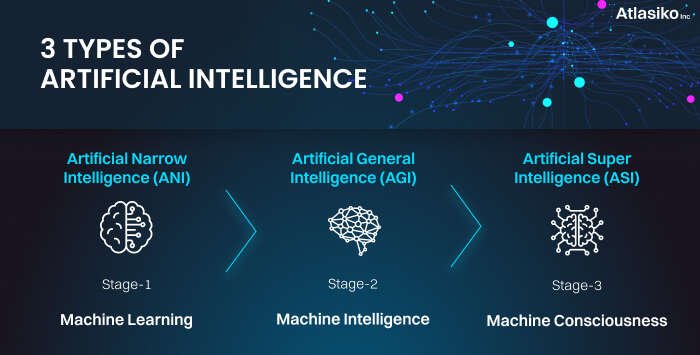
“No AI” usually means no generative AI answer appears in the results. It does not necessarily mean that every part of the service avoids machine learning.
Search engines use several layers of technology:
- Crawling: Finding pages on the web.
- Indexing: Storing and organizing page information.
- Ranking: Ordering results for a query.
- Spam control: Removing malware, scams, and low-value pages.
- Personalization: Adjusting results based on location, language, or past activity.
- Generative answers: Creating a written response from several sources.
The last item is what most users mean by “AI search.” It is the system that writes a paragraph, summary, or answer instead of showing only links.
A service can avoid that feature while still using algorithms that classify text or detect spam. Those systems may include machine learning. Therefore, a careful description is better than an absolute claim:
“This search engine does not provide a generative AI answer by default.”
That statement is easier to verify than:
“This search engine uses no AI anywhere.”
Machine learning is not the same as generative AI
Machine learning helps software identify patterns. A search engine may use it to spot duplicate pages or understand that “cheap flights” and “low-cost airfare” have related meanings.
Generative AI creates new text, images, or other material. An AI Overview, chatbot answer, or search summary is a generative feature.
The two systems can exist together. Avoiding AI-written answers does not guarantee that a search engine uses only human-made rules.
Why a strict guarantee is difficult
Search companies do not always publish every ranking, security, or moderation method. Their systems also change over time. A product page may explain its visible features without listing every internal tool.
This is why users should look for documented product behavior, not broad marketing claims. If a company says “no AI,” check whether it means:
- No AI summary.
- No chatbot.
- No AI-generated search result.
- No machine learning in ranking.
- No AI use by the company at all.
Those claims are not interchangeable.
Best Choice by Search Goal
The right option depends on what you want to avoid. A person who dislikes AI summaries may be happy with DuckDuckGo or Brave Search. A person who wants an independent index may prefer Mojeek or Marginalia.
Choose Mojeek for direct web links
Use Mojeek when you want:
- A separate search index.
- Traditional result pages.
- Less emphasis on AI-written answers.
- A simple alternative to Google and Bing.
Its main weakness is coverage. Some queries may return fewer useful results than large commercial engines.
Choose Marginalia for independent and small websites
Use Marginalia when you want:
- Personal websites.
- Specialist pages.
- Older web content.
- Less commercial search results.
It is not the best first choice for maps, shopping, breaking news, or large local databases.
Choose SearXNG for flexibility
Use SearXNG when you want:
- A metasearch interface.
- Control over search sources.
- The option to use a private instance.
- A results page without a built-in AI answer.
You must trust the instance operator. A public instance can log queries, limit access, or change its source engines.
Choose DuckDuckGo for an easy mainstream alternative
DuckDuckGo offers ordinary web links without requiring an AI answer for every search. It also provides optional AI-related tools.
That makes it a reasonable choice if your goal is to avoid mandatory AI summaries. It is not the strongest choice if you want a search company with no AI products at all.
Choose Kagi if you want control and can pay
Kagi offers a paid search service with strong controls over result quality and personalization. Its AI tools are separate from ordinary search.
However, Kagi is not a “no AI company” in the broad sense. It provides AI features, so it fits users who want AI optional, not users who want AI absent from the entire service.

How to Search Without an AI Summary
You can reduce AI-generated answers even when using a large search engine. The steps below work best for users who want source links and want to read the original pages.
-
Use a search engine with a traditional results mode.
Mojeek and Marginalia are direct options. DuckDuckGo can also work for normal link-based searches. -
Look for a web-only filter or tab.
Some services separate web pages from news, images, video, shopping, and generated answers. The exact label can change. -
Open the source page.
Do not treat a search snippet as the full source. Read the page, check its date, and compare key claims. -
Use exact phrases for known information.
Put a phrase in quotation marks when you need an exact name, law title, product model, or document heading. -
Add site limits when you need stronger sources.
For example,site:.govcan help find U.S. government pages.site:educan help find many university pages, though a domain alone does not prove quality. -
Compare more than one result.
Search engines can rank a popular page above a more careful one. For health, legal, financial, and safety topics, compare primary sources and seek qualified advice. -
Check whether the result came from an AI feature.
If a page shows a generated paragraph, treat it as a navigation aid. Follow its links and verify the claim in the original source.
Signs that you are seeing a traditional result
A normal result page usually shows:
- A page title.
- A web address.
- A short snippet taken from the page.
- Several separate links.
- No paragraph that claims to answer the whole question from multiple sources.
This does not prove that the ranking system uses no machine learning. It only shows that the visible result is a link-based search result.

Search Engines That Are Not Good Fits for a Strict No-AI Goal
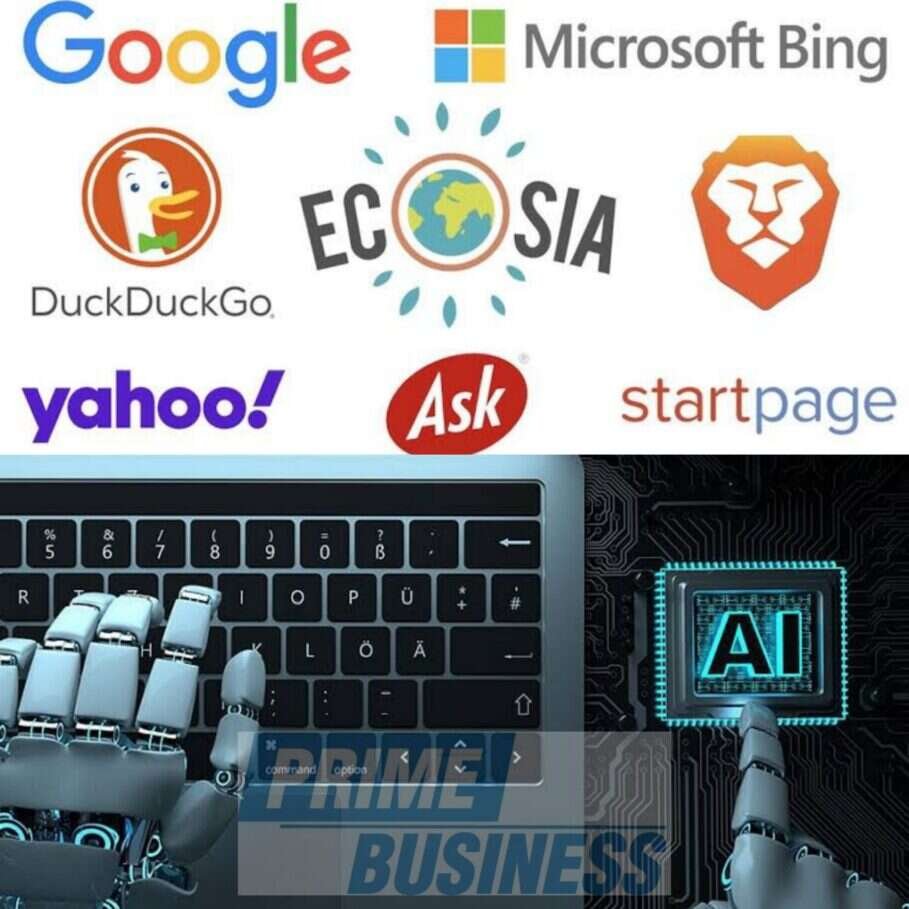
Google and Bing are not good choices if your rule is “the company must not use AI in search.” Both companies use large automated systems, and both have added generative features to search products.
That does not make their ordinary links useless. Google and Bing may still be the fastest way to find a local business, a government form, a map, or a current news report. The issue is that they do not meet a strict no-AI standard.
Brave Search is more difficult to classify. It has its own index and offers traditional links, but it also includes AI-assisted search features. It may suit people who want AI to be optional. It is not the clearest choice for someone who wants a service with no AI layer.
DuckDuckGo has a similar trade-off. It can provide ordinary links without requiring a generated answer, but its product line includes optional AI tools. Use it for “no forced AI,” not for “no AI exists.”
Yahoo Search is also not a strong independent alternative. Its search technology has long relied heavily on external providers, especially Bing-related systems. A different logo does not necessarily mean a different search index or ranking approach.

Common Mistakes When Looking for a No-AI Search Engine
Mistake 1: Treating “private” as “AI-free”
Privacy and AI are separate issues. A private search engine may still use AI to rank or summarize results. An AI-free results page may still collect data.
Check both the privacy policy and the visible search features.
Mistake 2: Assuming an independent index means no AI
An independent index means the company controls more of its crawling and storage process. It does not prove that the company avoids machine learning.
Mojeek and Marginalia are better described by their visible search design and published claims than by an absolute “zero AI” label.
Mistake 3: Using a metasearch engine without checking its sources
SearXNG can show results from several providers. If one selected source uses an AI summary or AI-assisted ranking, the metasearch page does not erase that fact.
Review the enabled engines before deciding whether the setup meets your goal.
Mistake 4: Trusting a short answer more than a source
A generated answer can sound clear while leaving out a condition, date, or exception. For important decisions, read the original source and check whether it applies to your state, agency, product, or situation.
Mistake 5: Expecting every niche engine to match Google’s coverage
Smaller search engines may have fewer pages, weaker local data, or slower updates. Try several engines for a week before deciding that one is unusable.

How to Verify a Search Engine’s AI Policy
Use this short check before relying on a service:
-
Read the official product page.
Look for statements about AI answers, summaries, chat, and ranking. -
Read the help center or privacy policy.
Search for terms such as “machine learning,” “artificial intelligence,” “generative AI,” and “automated systems.” -
Run the same five queries.
Try a fact question, a product search, a local search, a news search, and a niche topic. -
Record what appears above the links.
Note whether the page shows a generated summary, chatbot, sponsored result, or only ordinary results. -
Check the date of the documentation.
Search features can change. A past review may no longer describe the current product. -
Separate evidence from inference.
If the company documents “no AI-generated answers,” report that exact point. Do not expand it into “no machine learning anywhere” unless the company clearly supports that claim.
A simple decision rule
Use this rule if you want a quick answer:
- Want no visible AI answer? Try Mojeek, Marginalia, or standard DuckDuckGo.
- Want an independent search index? Try Mojeek or Marginalia.
- Want several sources in one interface? Try SearXNG, after checking its instance settings.
- Want optional AI tools? Consider DuckDuckGo, Brave Search, or Kagi.
- Want no AI of any kind inside the company’s systems? No major search engine can be confidently certified from public information alone.
Frequently Asked Questions
Is there a search engine that uses absolutely no AI?
There is no widely used search engine that can be independently confirmed to use no AI or machine learning in every internal system. Mojeek and Marginalia are stronger choices for avoiding visible generative answers, but that is a narrower claim.
Is DuckDuckGo an AI search engine?
DuckDuckGo offers ordinary web search and optional AI features. You can use it without relying on an AI-generated answer, but the company does provide AI-related tools. It is better for “AI optional” than “AI absent.”
Does Google use AI in search?
Yes. Google uses machine learning across search systems and has added generative features such as AI Overviews in some markets and queries. Its normal blue-link results can still be useful, but Google does not meet a strict no-AI standard.
Does Bing use AI?
Yes. Microsoft integrates AI features into Bing through Copilot and related search experiences. Bing also provides standard web links, but it is not a no-AI search engine.
Is SearXNG free from AI?
Not always. SearXNG itself is a metasearch tool, and its behavior depends on the instance and source engines selected. It can help you avoid a built-in AI summary, but it does not guarantee that every upstream source uses no AI.
What is the best no-AI search engine for privacy?
Privacy and AI use require separate checks. Mojeek and some SearXNG instances may be useful, but review the current privacy policy of the exact service or instance you plan to use. Do not assume that a no-AI interface is automatically private.
Bottom Line
For U.S. users who want traditional search results without a prominent AI-written answer, start with Mojeek. Try Marginalia Search when you want smaller and less commercial websites, and use SearXNG when you want control over multiple search sources.
No public search engine should be labeled completely AI-free without strong evidence about its private ranking, security, and moderation systems. The most accurate question is usually not “Which search engine uses no AI?” but “Which search engine lets me search without a generated answer?”
Check the official product documentation, test the current result page, and read the original sources before making important decisions.

Everett Ashford is a tech reviewer at mytechgrid.com specializing in SSDs, cameras, TVs, earbuds, headphones, and other consumer electronics. He provides honest, data-driven reviews based on hands-on testing and real-world performance analysis. Everett simplifies complex tech details to help readers make smart, confident buying decisions.