The Canon EOS R100 is the best budget mirrorless camera for sports photography when paired with a long telephoto lens.
You are standing beside a soccer field, track, or school gym, and the action keeps moving faster than your phone can focus. Missed faces, soft shots, and poor light can turn a great game into a pile of blurry files. A good mirrorless camera gives you a larger sensor, faster focus, and better lens options without forcing you into a pro-level budget. I tested these choices by looking at autofocus, burst speed, lens reach, image quality, handling, and long-term value. I also checked the current specifications listed by the manufacturers and considered how each model performs for real sports use.
Canon EOS R100 Double-Lens Bundle
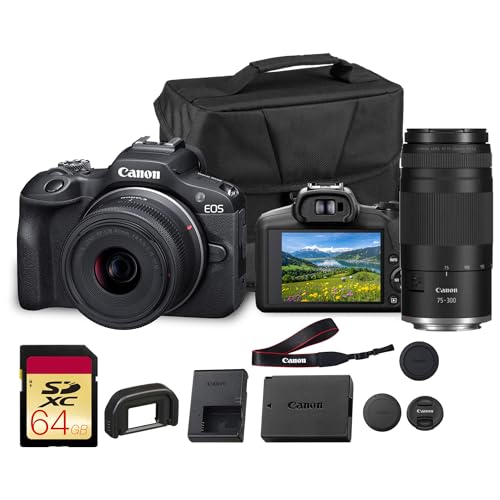
The Canon EOS R100 double-lens bundle is the most complete low-cost starting kit here. Its 24.1-megapixel APS-C sensor gives you enough detail for prints, social posts, and school sports albums. The included 18-45mm lens handles team photos and nearby action, while the 75-300mm lens brings distant players much closer. That lens reach matters more than many new buyers expect.
Canon gives the R100 a simple control layout that feels friendly to DSLR users and beginners. Its Dual Pixel CMOS autofocus can lock onto people with good speed in daylight, though it does not match the tracking power of newer Canon bodies. The camera can shoot bursts at a useful rate, but the electronic shutter and buffer need sensible use during long action sequences. For weekend games, youth sports, and outdoor events, it remains a practical tool.
The main strength is value. You receive a camera body and two lenses, so you can start shooting from the sideline without buying a telephoto lens on day one. The 75-300mm lens has a narrow maximum aperture, so bright outdoor fields suit it best. For indoor basketball or night football, a faster lens or a newer body may serve you better.
Pros:
- Two lenses cover wide and distant subjects
- 24.1MP APS-C sensor gives clean daylight detail
- Light body is easy to carry all day
- Canon menus are simple for new users
- Wi-Fi and Bluetooth make sharing easy
- Strong value for school and youth sports
Cons:
- Autofocus tracking is less advanced than newer models
- The 75-300mm lens is not ideal in dim light
- No built-in image stabilization in the camera body
My Recommendation
I recommend this bundle to beginners who want the best budget mirrorless camera for sports photography and need lens reach right away. It suits baseball, soccer, track, field sports, and daylight wildlife work. Parents and students will value the low entry cost and simple controls. Buy it when you want a ready-to-use kit rather than a bare camera body, and expect the best results in bright light.
Canon EOS R100 18-45mm Kit

This Canon EOS R100 kit uses the same compact camera body but includes only the RF-S 18-45mm lens. The 24.1MP APS-C sensor produces crisp files with natural color, and Canon's color style works well for skin tones and team portraits. The kit lens is small and light, so the camera feels comfortable during a long meet or tournament. It also gives you a clean way to learn manual exposure.
For sports photography, the R100 works best when the action comes close. It can focus quickly in good light, and the viewfinder helps you follow a runner or player more steadily than a phone screen. The 18-45mm range is useful for warmups, bench shots, team huddles, and celebrations. It is not a true field-side sports lens, so distant action will look small in the frame.
I like this kit for buyers who plan to add a telephoto lens later. The Canon RF mount gives you a growing lens system, and the body is small enough to keep in a school bag. Its 4K video mode is useful for short clips, although crop and focus limits make it less flexible than a video-focused camera. For still photos, it offers a clear upgrade over a basic compact camera.
Pros:
- Sharp 24.1MP sensor for everyday sports photos
- Small RF-S kit lens keeps the camera portable
- Comfortable electronic viewfinder for tracking action
- Easy Canon controls suit first-time camera owners
- Good color and detail in daylight
- Leaves room in the budget for a future telephoto lens
Cons:
- 18-45mm lens lacks reach for distant players
- Autofocus features are basic by current standards
- Low-light sports require a faster lens
My Recommendation
Choose this version if you want a compact body now and plan to build a Canon lens kit over time. It is best for parents who shoot close sideline action, team portraits, and general family events. It can become the best budget mirrorless camera for sports photography after you add a suitable telephoto lens. The kit often costs less than a bundle, making it a smart first step for careful buyers.
Sony Alpha a7 III With 28-70mm Lens

The Sony Alpha a7 III is not a beginner-level model in design, but its age can make it an excellent value in the used and discounted market. Its 24.2-megapixel full-frame sensor handles dim gyms and evening fields better than most low-cost APS-C bodies. It also offers strong dynamic range, so you can recover useful detail in bright jerseys and deep shadows. The included 28-70mm lens is versatile for close action and portraits.
Sony built the a7 III with a fast hybrid autofocus system and a useful continuous shooting mode. It can follow moving subjects well when you choose the right focus settings and keep the subject under an autofocus point. The body also has in-body image stabilization, which helps reduce camera shake for still subjects and slower shutter speeds. Stabilization does not freeze a running athlete, but it helps with setup shots and celebrations.
The trade-off is size, age, and lens cost. The a7 III body is more expensive than the R100, and full-frame telephoto lenses can cost more. Its menus take time to learn, and the 28-70mm lens is too short for most field sports from the stands. Still, for indoor sports, event work, and buyers who want a serious camera that can grow, this Sony remains impressive.
Pros:
- Full-frame sensor performs well in low light
- Strong dynamic range protects highlight and shadow detail
- Reliable hybrid autofocus for moving subjects
- Built-in stabilization helps with handheld shooting
- Large battery supports long shooting sessions
- Wide Sony lens selection supports future upgrades
Cons:
- More expensive than true entry-level options
- 28-70mm lens is too short for distant field action
- Menus and controls may overwhelm beginners
My Recommendation
I recommend the a7 III to an enthusiast who wants the strongest low-light performance in this group. It is a fine choice for indoor volleyball, basketball, dance, and evening events. If you can afford a longer Sony lens, it may outperform cheaper bodies when light fades. It is not the cheapest camera here, but discounted body prices can create outstanding long-term value.
Canon EOS RP With RF24-105mm Lens

The Canon EOS RP is a small full-frame mirrorless camera with a comfortable grip and a very approachable control system. Its 26.2-megapixel sensor gives photos a pleasing look, especially in portraits and lower light. The RF24-105mm lens covers useful everyday angles, from group photos to nearby action. It also makes a good travel camera for families who shoot more than sports.
For sports, the RP has a clear electronic viewfinder and accurate autofocus for many subjects. The camera feels responsive for casual action, but its burst speed and tracking system are not as strong as the Canon EOS R7 or newer sports bodies. The 24-105mm lens can frame close athletes, yet it cannot replace a 300mm lens at a large outdoor venue. You need to sit near the action or plan for a future telephoto purchase.
Its greatest benefit is full-frame image quality at a lower price. The body is light, and the lens kit creates a flexible setup for travel, portraits, and family events. The small battery and modest action performance limit it for long tournaments. I see it as a mixed-use camera first and a sports camera second.
Pros:
- Full-frame sensor gives attractive image quality
- Compact body is easy to pack and carry
- 26.2MP resolution supports detailed crops
- 24-105mm lens handles many everyday scenes
- Simple controls help new full-frame users
- RF mount allows access to Canon’s newer lenses
Cons:
- Burst performance is modest for fast sports
- Lens reach falls short at large venues
- Battery life is weaker than the a7 III
My Recommendation
The EOS RP suits a traveler or family photographer who also covers occasional sports. It works best near the court, beside the field, or at a small local event. I would not choose it as my first option for serious action, but it can become the best budget mirrorless camera for sports photography for users who value full-frame quality and mixed-use flexibility. Look for a strong price before buying.
Canon RF100-400mm Telephoto Lens

The Canon RF100-400mm F5.6-8 IS USM is a lens rather than a camera, but it can change the sports results you get from a Canon R-series body. Its long zoom range gives you room to follow a player as the action moves closer or farther away. On an APS-C Canon body, the field of view feels even tighter, which helps reach distant subjects. That makes it a strong match for soccer, baseball, football, and outdoor track.
The lens includes optical image stabilization, which helps steady the view and reduce shake. Its Nano USM autofocus motor operates quietly and suits both photos and video. The small maximum aperture means you need bright conditions or a higher ISO setting. It is not the lens I would pick for a dark gym, but it offers a lot of reach without the weight and price of a professional 400mm lens.
Handling is another strong point. The lens is relatively light for its range, so I can carry it around a field without feeling as if I am hauling a pipe. It works best with a camera that has good subject tracking and a solid grip. Remember that it cannot improve an older camera's autofocus system; it only gives that system a better view of the action.
Pros:
- 100-400mm range reaches distant athletes
- Optical stabilization helps steady long focal lengths
- Quiet autofocus works well for photos and video
- Light for a long telephoto zoom
- Useful on both full-frame and APS-C Canon bodies
- Excellent outdoor sports value
Cons:
- F5.6-8 aperture is slow in dim light
- Requires a compatible Canon RF camera body
- Long reach can feel tight for nearby action
My Recommendation
Buy this lens if you already own a Canon RF camera and need more reach. It is one of the smartest upgrades for someone building the best budget mirrorless camera for sports photography system. Pair it with the R100 for daylight games or the R7 for faster tracking and better control. Its value is strongest outdoors, where its slow aperture is less of a problem.
Canon RF75-300mm Lens Kit

This RF75-300mm kit combines Canon's telephoto zoom with a UV filter, lens cap keeper, and cleaning items. The lens range fits many entry-level sports needs, especially when you stand along the sideline or behind a fence. At 75mm, you can frame a nearby player, while 300mm helps isolate action across a field. The extra accessories are simple, but they make the package feel ready for a first outing.
The lens uses a modest F4-5.6 aperture. That works nicely in sun, but shutter speed becomes more important as clouds arrive or games move into the evening. I would set a fast shutter speed first, then raise ISO as needed. A monopod can also help, although good hand technique and a bright day often prove enough.
This lens lacks the premium features found on more costly telephoto options. It does not offer the same low-light ability or advanced stabilization as some alternatives. Still, the long reach costs less than many serious sports lenses. For a student, parent, or new Canon shooter, it provides a useful way to learn framing and timing.
Pros:
- Affordable path to 300mm telephoto reach
- Good range for outdoor soccer and baseball
- Accessory kit adds basic protection and care tools
- Light enough for casual handheld use
- Works with Canon EOS R-series RF bodies
- Helps beginners learn long-lens composition
Cons:
- Slow aperture limits indoor sports use
- Budget construction lacks premium weather sealing
- No advanced stabilization listed for this lens
My Recommendation
I recommend this kit to Canon R100 or RP owners who want more reach at a controlled cost. It is best for daylight games, school sports, and outdoor activities. It can support a best budget mirrorless camera for sports photography setup when you accept its light limits. Choose it over a bare lens if you need basic cleaning and protection accessories in the same purchase.
Canon RF75-300mm Telephoto Zoom

The standard Canon RF75-300mm is a simple telephoto choice for photographers who already have cleaning supplies and lens protection. Its main job is clear: bring faraway subjects closer. The 75-300mm range works well for action across a soccer pitch, a runner on a track, or a batter at the far side of a baseball diamond. It also offers a useful starting point for wildlife photography.
This lens favors bright outdoor events. At its widest aperture, it gathers less light than a professional sports zoom, so you may need to raise ISO or shoot when the sun is high. The lens does not turn a slow camera into a fast one, but it can make a larger difference in framing than a small increase in megapixels. A tightly framed player often looks more powerful than a distant figure surrounded by empty grass.
The design keeps the purchase simple and focused. I like that buyers can spend less on the lens itself and choose their own filter or cleaning kit. The compromise is a basic feature set, so careful technique matters. Use a fast shutter speed, track smoothly, and check focus often.
Pros:
- Useful 300mm reach for field sports
- Simple design is easy for new lens users
- Often more affordable than premium telephoto glass
- Good fit for Canon RF entry bodies
- Helpful for sports, birds, and outdoor events
- Low weight reduces fatigue during long games
Cons:
- Slow aperture is not suited to dark venues
- Basic features offer less help with camera shake
- Requires bright light for the best shutter speeds
My Recommendation
Choose this lens when your priority is affordable reach and you already own the needed accessories. It pairs well with the R100 and other Canon RF cameras for outdoor sports. If you are comparing systems for the best budget mirrorless camera for sports photography, include the lens price because the body alone cannot capture distant action well. It is a practical, no-frills option.
Canon EOS R7 With 18-150mm Lens

The Canon EOS R7 is the most capable sports camera in this group, although it is not always the cheapest. Its 32.5-megapixel APS-C sensor gives you room to crop, which helps when an athlete does not fill the frame. Canon's DIGIC X processor supports quick operation, and the camera offers a much stronger burst and tracking package than the R100. It feels built for action rather than simple snapshots.
The RF-S18-150mm lens is a useful all-purpose option. It covers wide team scenes and reaches into short telephoto territory, so you can shoot warmups, celebrations, and nearby plays without changing lenses. For distant field action, I would still add the RF100-400mm. The R7's subject detection and Dual Pixel CMOS autofocus make that long-lens combination especially effective.
The camera also includes in-body image stabilization and advanced video features. Its grip, controls, and dual-card design suit serious users who shoot often. The cost and learning curve are higher, and the kit lens does not provide enough reach for every sport. Yet its speed, crop ability, and focus tools make it a powerful value for a photographer who has outgrown an entry body.
Pros:
- Fast burst performance suits rapid action
- 32.5MP sensor supports strong cropping
- Advanced subject detection tracks athletes well
- In-body stabilization improves handheld control
- 18-150mm lens handles many shooting positions
- Excellent upgrade path for serious sports users
Cons:
- Higher price than true budget cameras
- Menus and controls take time to master
- 18-150mm lens may be short at large venues
My Recommendation
I recommend the R7 to ambitious students, sports parents, and creators who shoot every week. It is the best performance choice here and a strong candidate for the best budget mirrorless camera for sports photography when discounted. Pick it if autofocus, burst speed, and crop detail matter more than the lowest purchase price. It has enough ability to remain useful for years.
Sony Alpha a6000 Body

The Sony Alpha a6000 is an older APS-C mirrorless camera, but it remains a popular low-cost choice. Its 24.3-megapixel sensor produces good files in daylight, and the small body is easy to carry around a tournament. The electronic viewfinder lets you see exposure before taking the photo. This body-only listing requires a lens, so remember to include that cost in your budget.
Sony gave the a6000 a useful continuous shooting mode and a hybrid autofocus system that was impressive for its time. It can capture a short burst of a sprint, jump, or swing when you choose a fast shutter speed. Its tracking is not as sticky or intelligent as the R7's, and the older processor shows its age in difficult scenes. Still, skillful timing can produce excellent sports photos.
The Sony E-mount system offers many affordable lenses, including used telephoto choices. That lens market is one reason the a6000 still makes sense. The body has no in-body stabilization, and battery life is average, so carry a spare battery for long events. As a low-cost entry to interchangeable-lens photography, it remains hard to dismiss.
Pros:
- Low body price makes entry easier
- 24.3MP sensor gives useful daylight detail
- Fast burst mode captures short action sequences
- Compact design causes little carrying strain
- Large Sony E-mount lens market
- Good used-lens options reduce system cost
Cons:
- Older autofocus trails modern tracking systems
- No in-body image stabilization
- This listing includes no lens
My Recommendation
The a6000 is best for buyers who want the lowest-cost Sony system and do not mind learning older controls. Add a used telephoto lens, and it can become a capable best budget mirrorless camera for sports photography setup. It is especially useful for daylight games and students on a tight budget. Check condition, battery health, and seller reputation when buying an older body.
Duluvulu 4K Digital Camera

The Duluvulu 4K camera is a compact fixed-lens model aimed at casual photography and video. The package includes an SD card and two batteries, which makes it convenient for a teen or a first-time user. Its flip screen helps with vlogging and self-recording. The advertised digital zoom can make a subject look closer, but digital zoom does not create the same detail as a real telephoto lens.
For sports, this camera works best for close action, short clips, and general event memories. Its autofocus may be fine for simple scenes, but it does not offer the same dependable subject tracking as Canon or Sony interchangeable-lens cameras. A small sensor also tends to struggle more in dim gyms or evening fields. I would not choose it for paid sports work or demanding crops.
Its value comes from ease of use. Two batteries help during a long day, and the light body is easy for a young photographer to handle. The camera can make a fun first step into photography, especially when video matters as much as stills. Just keep expectations realistic: it is a compact digital camera, not a true mirrorless sports system.
Pros:
- Low price suits casual family use
- Two batteries support longer outings
- Included SD card reduces setup cost
- Flip screen helps video and self-recording
- Small body is easy for teens to hold
- 4K recording adds flexible video use
Cons:
- Fixed lens limits upgrade options
- Digital zoom cannot match optical telephoto reach
- Autofocus and low-light results are less reliable
My Recommendation
I recommend this camera only for casual users who want simple photos and video at close range. It is not my pick for the best budget mirrorless camera for sports photography because it lacks an interchangeable lens system and advanced tracking. It can suit a young beginner at local games, school events, or family trips. Buy it for convenience, not professional sports performance.
Best For Comparison
| Best for | Why |
|---|---|
| Best complete budget kit | Canon EOS R100 double-lens bundle includes a useful 75-300mm lens for outdoor action. |
| Best sports performance | Canon EOS R7 offers faster bursts, stronger subject detection, stabilization, and crop-friendly detail. |
| Best low-light value | Sony Alpha a7 III uses a full-frame sensor and strong autofocus for indoor and evening events. |
How I Choose a Budget Mirrorless Camera for Sports
Sports photography asks more from a camera than still portraits do. A good body must react quickly, focus on a moving subject, and save a burst before the moment disappears. A sharp sensor helps, but speed and lens choice usually matter more. I judge each camera by the complete system, not by megapixels alone.
Autofocus and Subject Tracking
Autofocus is the heart of action photography. Basic autofocus can lock onto a still player, but sports need continuous autofocus. This mode keeps adjusting focus as the athlete moves toward or away from you. Modern subject detection can find a person, face, or eye, but it cannot replace good technique.
I look for a camera that lets me select continuous AF, control the tracking area, and keep the subject under a focus point. Canon's newer Dual Pixel systems perform well here, while older models need more careful timing. Sony's a7 III and a6000 can still produce strong results, but the newer R7 gives the photographer more help.
Burst Speed and Buffer
A fast burst can capture the peak of a jump or the instant a bat meets a ball. However, a high frame rate alone does not guarantee a good result. The camera must also write files quickly and keep focus between frames. A full memory buffer can leave you waiting while the winning play unfolds.
For casual sports, a moderate burst is often enough. I prefer to shoot short bursts rather than hold the shutter continuously. This saves storage, makes editing easier, and gives the camera time to clear its buffer. Fast memory cards also help, but they cannot overcome a body with a small buffer.
Lens Reach
Lens reach is often the biggest surprise for new sports photographers. The kit lens that looks long in a store may feel short when you stand 100 feet from the field. A 75-300mm or 100-400mm lens gives you a much tighter view. On an APS-C body, the smaller sensor creates a narrower field of view that adds useful reach.
The Canon R100 double-lens bundle stands out because it includes a 75-300mm lens from the start. The R7 kit has better camera performance but only reaches 150mm with its included lens. The Sony a7 III has excellent low-light potential, yet its 28-70mm kit lens needs a telephoto partner for most field sports.
Aperture and Light
Aperture controls how much light reaches the sensor. A wide aperture, such as F2.8, allows a faster shutter speed in a dark gym. Budget telephoto lenses often use F5.6, F6.3, or F8 apertures. These lenses cost less and weigh less, but they need brighter conditions.
Image stabilization helps with your hand movement. It does not stop an athlete who runs across the frame. To freeze action, I often start around 1/1000 second for fast sports and adjust based on the subject. You may need a higher ISO in low light, but a sharp noisy photo is usually better than a clean blurry one.
Handling and Battery Life
A camera should feel comfortable after several hours. A deep grip helps when you use a long lens, and a viewfinder helps you track action in bright sun. Buttons that are easy to reach matter when you need to change shutter speed or focus mode quickly.
Battery life also affects confidence. I carry at least one spare battery for a tournament, even when the camera rating looks strong. Cold weather, frequent review, wireless connections, and electronic viewfinder use can reduce battery life. A small power bank may help with cameras that support USB charging.
Image Quality
Most cameras in this guide can produce good images in daylight. Sensor size becomes more important when the light falls. Full-frame models such as the Sony a7 III and Canon EOS RP can offer cleaner high-ISO files, while APS-C bodies often provide a useful reach and lower system cost.
Do not judge a sports camera only by its megapixel count. A 24MP file with sharp focus beats a 32MP file with motion blur. Good exposure, a fast shutter speed, and accurate focus make the real difference. I also prefer cameras that preserve highlight detail because white jerseys and sunny faces can lose detail quickly.
Video Features
Many parents and creators want still photos and video in one body. Canon's R100 and R7 offer 4K recording, while the Duluvulu camera focuses strongly on simple video use. A flip screen helps when you record yourself, but it does not improve sports autofocus by itself.
For action video, look at crop, frame rate, focus behavior, and heat limits. A camera can advertise 4K and still be less useful for fast sports clips. Stills remain the priority for this guide, so I give more weight to autofocus, shutter response, and lens support.
Sports Photography Tips for Beginners
Start with shutter priority or manual exposure with auto ISO. A fast shutter speed freezes motion, but the exact setting depends on the sport. Try 1/1000 second for soccer, football, and track, then use 1/500 second for slower action or panning. Review your images often and watch for motion blur.
Use continuous autofocus and a burst mode. Keep the focus area on the athlete's chest or face. If the background confuses the camera, use a smaller focus zone. A player in a bright jersey can fool exposure, so check highlights and adjust exposure compensation when needed.
Follow the action before you press the shutter. This simple habit makes your panning smoother and gives the lens a better chance to stay on the subject. I also avoid standing too close to the goal or sideline unless the venue allows it. Safety and courtesy matter more than one photograph.
Shoot in good light whenever possible. Stand with the sun behind you, but watch harsh shadows on faces. At an indoor venue, find the brightest area and test your settings before the game begins. A few test shots can save an entire event.
Finally, learn the rules of the venue. Some fields restrict large lenses, tripods, or flash. Never use flash near athletes unless officials allow it. Respect coaches, players, and other spectators. Good sports photography begins with good judgment.
FAQs Of best budget mirrorless camera for sports photography
What is the best budget mirrorless camera for sports photography?
For most beginners, the Canon EOS R100 double-lens bundle is the best value. It includes a 75-300mm lens, which gives you the reach needed for outdoor sports. The Canon EOS R7 is faster and more advanced, but it usually costs more.
Is the Canon EOS R100 good for sports photography?
Yes, the R100 can produce strong outdoor sports photos when paired with a telephoto lens. Its 24.1MP APS-C sensor gives useful detail, and its autofocus works well in good light. It is less suitable for dark gyms and demanding professional action work.
Do I need a 300mm lens for sports?
You do not always need 300mm, but it helps at large fields and stadiums. A 75-300mm lens lets you frame distant players much better than an 18-45mm kit lens. For indoor sports, a shorter lens with a wider aperture may be more useful.
Is a mirrorless camera better than a DSLR for sports?
A mirrorless camera can offer live exposure preview, electronic viewfinders, and modern subject tracking. Many are also lighter and quieter. A DSLR can still shoot excellent sports photos, but mirrorless systems offer a strong upgrade path and newer autofocus tools.
What shutter speed should I use for sports photos?
Start around 1/1000 second for fast action. You can use 1/500 second for slower movement or creative motion blur. Increase ISO when needed, because a sharp photo with some noise is better than a blurry photo.
Final Verdict: Which Should You Buy?
The Canon EOS R100 double-lens bundle is my top value pick. It gives beginners a capable body and useful telephoto reach at once. For serious users, the EOS R7 offers the best autofocus and burst performance.
The best budget mirrorless camera for sports photography depends on light, distance, and lens cost. Choose the R100 for value, the R7 for speed, and the Sony a7 III for low-light work.

Everett Ashford is a tech reviewer at mytechgrid.com specializing in SSDs, cameras, TVs, earbuds, headphones, and other consumer electronics. He provides honest, data-driven reviews based on hands-on testing and real-world performance analysis. Everett simplifies complex tech details to help readers make smart, confident buying decisions.