Introduction
A Canon camera is a digital camera made by Canon, a major imaging company whose products are sold widely in the United States. Canon makes several kinds of cameras, from small point-and-shoot models to professional mirrorless, DSLR, and cinema cameras.
The name Canon refers to the brand. It does not describe one single camera type. A Canon camera may use interchangeable lenses, a fixed lens, an optical viewfinder, or an electronic viewfinder. The right model depends on what you want to photograph, how much control you need, and your budget.
What does a Canon camera do?
A Canon camera captures light through a lens and records that light as a digital image or video file. The camera uses an image sensor to turn light into data.


Most Canon cameras let you choose between:
- Automatic modes, which set exposure for you
- Scene or guided modes, which simplify common subjects
- Manual controls, which let you set the shutter speed, aperture, and ISO
- Video modes, which record moving images with sound
Canon cameras are used for travel, family photos, wildlife, sports, portraits, weddings, school work, content creation, and filmmaking.
A camera’s main parts include:
- Lens: Focuses light onto the sensor
- Image sensor: Captures the image
- Shutter: Controls how long the sensor receives light
- Processor: Turns sensor data into an image file
- Viewfinder or screen: Shows the scene
- Memory card: Stores photos and videos
- Battery: Powers the camera
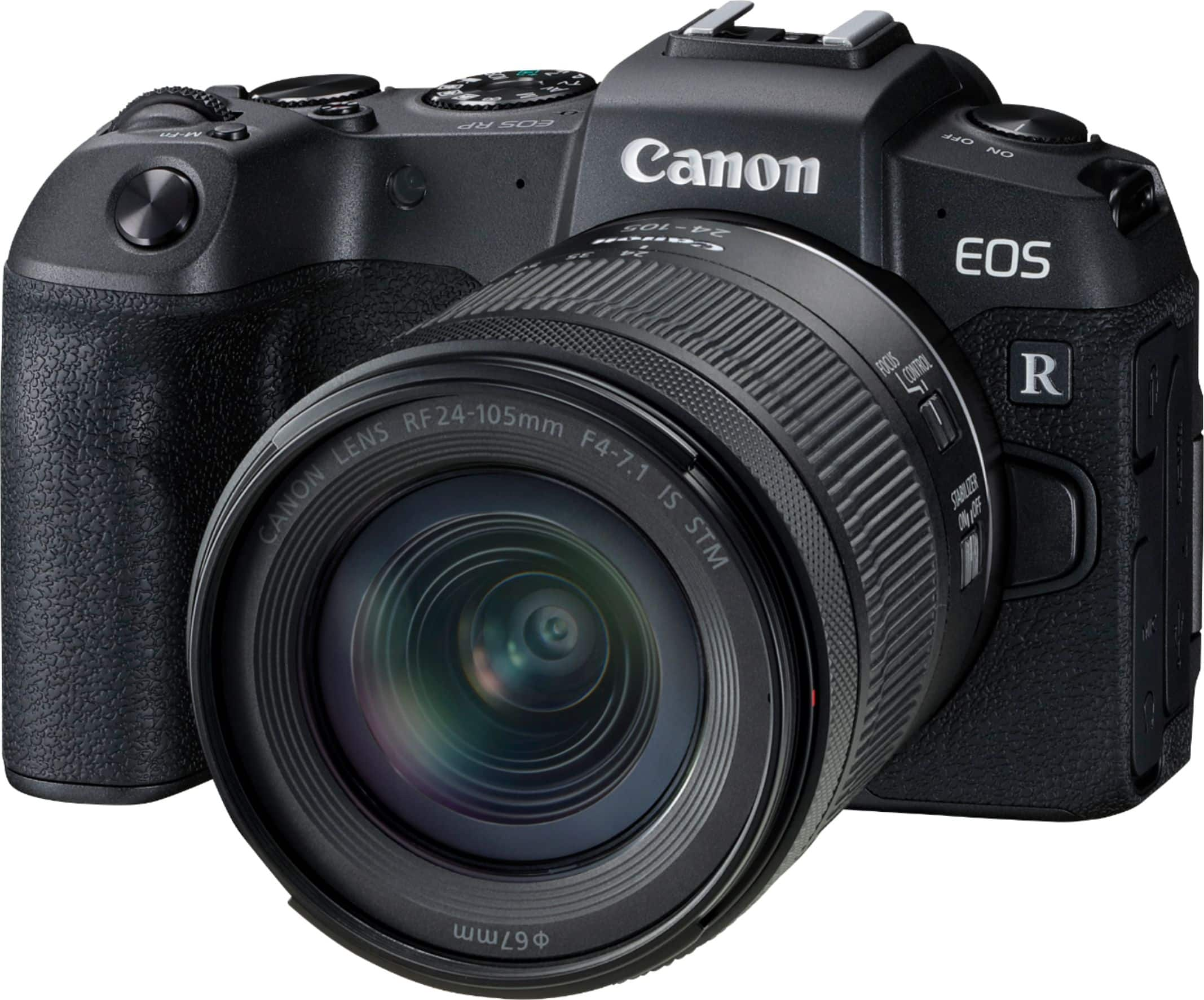
The model name tells you more than the Canon logo alone. For example, an EOS R camera is a mirrorless interchangeable-lens camera, while a PowerShot model is usually a compact camera with a built-in lens.
What are the main types of Canon cameras?
Canon cameras fall into four useful groups: mirrorless cameras, DSLRs, compact cameras, and cinema cameras.
Canon mirrorless cameras
Canon mirrorless cameras use a digital image sensor but do not use the internal mirror found in a DSLR. Light passes through the lens directly to the sensor.


Most current Canon interchangeable-lens models in this group use the EOS R system. These cameras use:
- RF lenses for full-frame cameras
- RF-S lenses for APS-C cameras
Mirrorless cameras can be small, quiet, and quick to focus. Their electronic viewfinders can also show how brightness, color, and exposure may look before you take the photo.
Popular Canon mirrorless lines include:
- EOS R series: Full-frame and APS-C models
- EOS R5 and R6 lines: Designed for advanced photo and video work
- EOS R7 and R10 lines: APS-C models with smaller sensors
- EOS R50 line: Compact models aimed at beginners and creators
Exact features vary by model. Check Canon USA’s product page and the camera manual before buying a lens or accessory.
Canon DSLR cameras
A Canon DSLR uses a mirror and an optical viewfinder. The mirror reflects light up to the viewfinder until you take a photo. It then moves out of the way so light can reach the sensor.
Canon’s DSLR system is called EOS, and many EOS DSLR cameras use:
- EF lenses
- EF-S lenses on compatible APS-C DSLR bodies
DSLR cameras remain useful because they offer strong lens support, long battery life in many situations, and a familiar optical viewing system. However, Canon’s newer development work is focused largely on its EOS R mirrorless system.
A used DSLR can still be a good choice for learning photography. Before buying one, check the shutter count, battery condition, sensor condition, included charger, and lens compatibility.
Canon compact cameras
A compact Canon camera has a built-in lens. You cannot remove the lens, but this makes the camera simple to carry and use.
Canon’s compact line is commonly known as PowerShot. Compact cameras may offer features such as:
- Optical zoom
- Automatic exposure
- A small body
- Simple controls
- Video recording
- Wi-Fi or Bluetooth on some models
A compact camera can be useful when a phone does not provide enough zoom or when you want a dedicated camera without carrying extra lenses.
Canon cinema cameras
Canon cinema cameras are made for professional video production. They may include features such as:
- Large image sensors
- Professional video codecs
- High-quality audio connections
- Built-in neutral-density filters
- Advanced monitoring tools
- Cinema-focused lens mounts
The Cinema EOS range is aimed at filmmakers, production crews, documentary teams, and serious video users. It is usually more complex and costly than a camera made mainly for still photos.

What do EOS, PowerShot, RF, EF, and DSLR mean?
These names describe different parts of Canon’s camera system.


| Term | Meaning | Why it matters |
|---|---|---|
| EOS | Canon’s interchangeable-lens camera system | Used for many DSLR and mirrorless models |
| PowerShot | Canon’s compact camera family | Usually has a built-in lens |
| RF | Lens mount used by Canon EOS R cameras | Made for newer mirrorless cameras |
| RF-S | Lens type for Canon APS-C EOS R cameras | Designed for smaller sensors |
| EF | Canon lens mount used by many full-frame DSLRs | Also works on some other Canon bodies with the right setup |
| EF-S | Lens type made for Canon APS-C DSLRs | Not suitable for every Canon camera |
| EF-M | Older mirrorless lens mount | Used by Canon’s EOS M system |
| APS-C | A smaller sensor format | Often allows smaller, lighter camera bodies |
| Full frame | A larger sensor format | Often helps with low-light work and wide-angle views |
The word mount means the physical and electronic connection between a camera body and a lens. A lens must match the camera mount, either directly or through a suitable adapter.
Do not assume that every Canon lens works on every Canon camera. Canon has made several lens systems over time. A lens may attach physically but still have limits with autofocus, image stabilization, or other functions.
How does a Canon camera compare with a phone camera?
A Canon camera and a smartphone can both produce high-quality photos, but they work best in different situations.
A dedicated Canon camera often offers:
- A larger sensor
- Better control over shutter speed and aperture
- Interchangeable lenses on many models
- More optical zoom choices
- A deeper hand grip
- Better control over focus and exposure
- More room to edit raw image files
A phone often offers:
- A smaller and lighter body
- Fast sharing
- Automatic image processing
- Built-in editing tools
- No need to carry extra lenses
The difference is not always visible in a small social media image. A phone may produce a pleasing result with strong automatic processing. A Canon camera becomes more useful when you need long lens reach, background blur, fast subject tracking, large prints, or detailed manual control.
The best choice depends on the task. A phone may be enough for casual travel photos. A Canon camera may be a better tool for wildlife, sports, portraits, and planned video work.
What should you look for when choosing a Canon camera?
Start with the type of subject you plan to shoot. The best Canon camera for family photos may not be the best choice for birds, sports, or filmmaking.
For beginners
Look for:
- A simple automatic mode
- A comfortable grip
- An electronic viewfinder or clear screen
- Easy wireless transfer
- Affordable lenses
- A manual or guided mode for learning
An entry-level EOS R camera may suit someone who wants to learn interchangeable-lens photography. A PowerShot camera may suit someone who wants a small camera with no lens changes.
For portraits
Prioritize:
- A lens with a wide maximum aperture
- Accurate eye detection
- A sensor size that fits your budget
- Good skin-tone rendering
- Comfortable handling
A lens with a wide aperture, such as f/1.8, can create a softer background. The result also depends on the distance between the subject, camera, and background.
For sports and wildlife
Look for:
- Fast autofocus
- Subject tracking
- A high burst rate
- A telephoto lens
- A strong grip
- Good battery performance
The lens often matters as much as the camera body. A basic camera with a suitable telephoto lens may be more useful than an expensive body with a short kit lens.


For travel
Consider:
- Body size
- Lens weight
- Battery life
- Weather resistance
- Charging options
- Image stabilization
- Wireless transfer
A smaller APS-C mirrorless camera can reduce the size of a travel kit. A full-frame camera may offer more low-light flexibility, but the body and lenses can be larger.
For video
Check:
- Video resolution
- Frame rates
- Recording limits
- Heat management
- Microphone input
- Headphone monitoring
- Autofocus behavior
- Stabilization
- File format and storage needs
Do not choose a video camera based only on resolution. Audio, focus reliability, heat control, battery life, and file size can matter more in real use.

Canon camera types at a glance
This table gives a simple starting point. It is not a substitute for the specifications of a particular model.
| Camera type | Lens | Best suited to | Main trade-off |
|---|---|---|---|
| Compact PowerShot | Built in | Travel and simple use | Less lens flexibility |
| APS-C mirrorless | Interchangeable | Beginners, travel, general photography | Smaller sensor than full frame |
| Full-frame mirrorless | Interchangeable | Portraits, events, advanced work | Higher body and lens cost |
| DSLR | Interchangeable | Learning, used-camera value, optical viewing | Older system and larger body |
| Cinema camera | Usually interchangeable | Film and professional video | More complex and costly |
The most important choice is often the lens system, not just the camera body. Once you buy several lenses, changing systems can cost more. Think about your future needs before choosing between Canon’s RF, EF, EF-S, or other mounts.
What accessories does a Canon camera need?
A new Canon camera may work with only its battery, lens, and memory card. Most users will still benefit from a few basic accessories.
Useful items include:
- A spare battery
- A compatible memory card
- A battery charger or USB charging cable
- A camera bag
- A lens cloth
- A strap
- A small tripod for long exposures or video
Use the memory card type and speed listed in the camera manual. A card that is too slow may limit burst shooting or video recording.
Avoid cleaning the sensor with household products or blowing dust into the camera with your mouth. For light dust, use a proper camera air blower and follow Canon’s instructions. If the sensor has marks that remain after safe cleaning, a camera service center can help.
Can you use old Canon lenses on a new Canon camera?
Sometimes. The answer depends on the lens mount and camera body.
Canon EF and EF-S lenses may work on some EOS R mirrorless cameras through a Canon EF-EOS R adapter. An adapter can preserve many electronic functions, but performance depends on the specific lens, body, and firmware.
An EF-S lens is designed for an APS-C image area. On a full-frame camera, the camera may use a crop mode, which reduces the recorded image area. This can affect resolution and field of view.
Before buying an adapter, confirm:


- The exact lens mount
- The exact camera model
- Autofocus support
- Image stabilization support
- Crop-mode behavior
- Firmware requirements
- Any limits listed in the manual
Third-party adapters may have different levels of support. Canon’s own compatibility information is the safest starting point.

Common mistakes when buying a Canon camera
Many buying mistakes come from focusing on the body alone.
Buying the highest resolution
More megapixels do not automatically mean better photos. Resolution matters for cropping and large prints, but lens quality, focus, light, technique, and subject movement also matter.
Ignoring lens cost
A camera body is only part of the system. A bright portrait lens, wide travel lens, or long wildlife lens can cost as much as—or more than—the body.
Choosing a full-frame camera without planning for its size
Full-frame cameras can offer strong low-light performance and a wide field of view. Their lenses may also be larger and heavier. A smaller camera that you carry often may produce more useful photos than a larger camera left at home.
Assuming every camera has the same video features
Video options can differ greatly between models. Check recording formats, frame rates, microphone ports, heat limits, and autofocus behavior before buying.
Buying used equipment without checking condition
For a used Canon camera, inspect:
- The sensor for scratches or marks
- The lens for fungus, haze, and deep scratches
- The battery for swelling or poor life
- The card slot and ports
- The screen and viewfinder
- The autofocus system
- The shutter count, when available
- The return policy
Buy from a source that clearly states the condition and gives you a way to return faulty equipment.
Canon camera FAQs
Is Canon a good camera brand?
Canon is an established camera brand with a broad range of products, lenses, accessories, manuals, and service resources. Whether a particular Canon camera is right for you depends on its size, sensor, lens mount, controls, price, and intended use.
Are Canon cameras good for beginners?
Yes. Canon sells cameras with automatic modes, guided controls, and interchangeable lenses. A compact PowerShot can be simple to use, while an entry-level EOS model can help you learn photography in more depth.
Is Canon better than Nikon or Sony?
There is no single winner for every photographer. Compare the specific models, lenses, autofocus behavior, controls, video features, body size, and total cost. A camera system is a long-term choice, so lens availability and comfort matter as much as brand name.
What is the difference between a Canon DSLR and mirrorless camera?
A DSLR uses a mirror and usually has an optical viewfinder. A mirrorless camera sends the image from the sensor to an electronic viewfinder or screen. Mirrorless cameras are often smaller and offer modern subject-detection tools, while DSLRs can provide long battery life and a familiar optical view.
Can a Canon camera take professional photos?
Yes. Professional results depend on the camera, lens, light, subject, settings, and photographer. Canon makes professional cameras, but an entry-level model can also produce excellent images when used within its limits.
Key takeaways
- A Canon camera is a camera made by Canon; the term covers several different camera types.
- Canon’s main groups include EOS mirrorless, EOS DSLR, PowerShot compact, and Cinema EOS cameras.
- Mirrorless cameras use RF or RF-S lenses, while many DSLRs use EF or EF-S lenses.
- The lens mount, sensor size, autofocus, video features, and total system cost matter more than the brand name alone.
- Check the exact Canon model manual before buying lenses, adapters, batteries, memory cards, or other accessories.
Conclusion
A Canon camera can be a small travel camera, a beginner mirrorless model, a professional DSLR, or a cinema tool. The name identifies the maker, not one fixed design.
For a sensible choice, decide what you want to photograph first. Then compare camera type, sensor size, lens mount, lens cost, video features, and body size. Start with Canon USA’s official specifications and manual for the exact model, especially when checking lens and accessory compatibility.

Everett Ashford is a tech reviewer at mytechgrid.com specializing in SSDs, cameras, TVs, earbuds, headphones, and other consumer electronics. He provides honest, data-driven reviews based on hands-on testing and real-world performance analysis. Everett simplifies complex tech details to help readers make smart, confident buying decisions.