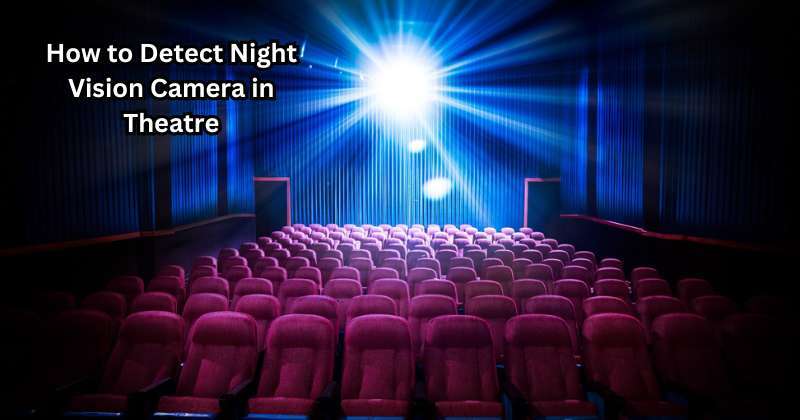
Scan for IR reflections, use phone-camera tests, and look for unusual tiny lenses or LEDs.
I have spent years advising venue security and testing covert-surveillance methods, so I know practical ways to find hidden night vision cameras in crowded spaces like a theatre. This guide shows clear, simple steps for how to detect night vision camera in theatre, explains the tools to use, shares real-world lessons, and helps you act confidently and legally if you spot something suspicious. Read on to learn reliable checks you can do discreetly before or during a show.
Practical steps: how to detect night vision camera in theatre
Start with quick, low-impact checks you can do while staying respectful of others. These steps focus on visibility, sound, and simple tech tests that work even in dim rooms.
-
Scan visible areas slowly.
Look at corners, ceiling fixtures, speakers, and seat backs for small lenses or out-of-place devices. Night vision cameras often hide behind dark glass or tiny openings. -
Use your phone camera.
Open your phone camera and point around suspicious spots. Many night vision cameras use infrared (IR) LEDs that show as a faint glow on phone screens even when invisible to your eye. -
Try a flashlight reflection test.
From a short distance, shine a low-power light briefly toward a suspected device. Lenses often reflect light differently than flat surfaces. Do not use high-beam lights that disturb others. -
Listen for subtle noise.
Some small cameras have faint mechanical or electronic hums. Hold your breath and cup your ear near area-safe spots like under armrests or behind panels.
These steps form a practical routine for how to detect night vision camera in theatre without disrupting the event or risking confrontation. Do each check calmly and with discretion.
Tools and tech to help find hidden night vision cameras
A few inexpensive tools boost your chances of finding night vision cameras fast. You can carry most of these in a small bag or pocket.
-
Smartphone with camera
Use front and back cameras. Front cameras often catch IR more strongly. Scan slowly and watch for tiny bright dots. -
Infrared detection apps
Some apps amplify IR light caught by your phone. They are not perfect, but they add a layer to basic camera checks. -
Small handheld RF detector
These detect radio frequencies from wireless cameras. Sweep the device near suspicious objects and watch for spikes. -
Lens finder or torch with polarized filter
A lens finder tool uses light reflection to reveal lenses. A polarized filter can reduce glare and help you focus on reflective lenses. -
Compact mirror or jeweler’s loupe
These let you inspect tight spaces without touching theater property. Look for curved glass or dark apertures.
Using these tools increases the reliability of how to detect night vision camera in theatre. Only use them in a way that respects venue rules and public safety.

Common signs and clues to watch for in a theatre
Many cameras are small and cunningly placed. These visual cues can point you to a hidden night vision camera before you need tools.
-
Tiny lenses or holes
Small circular openings in walls, speakers, vents, or decorative trim often hide lenses. -
Unusual wiring or battery packs
Extra wires, small boxes, or fresh adhesive can be a giveaway. -
Odd placement of objects
Look for props, smoke detectors, or signage that seem new or oddly positioned. -
Reflective pinpoints at night
In dim light, IR LEDs can cause a faint pinprick on glass or glossy surfaces. -
Repeated privacy violations
If you feel watched in certain rows or seats, note the pattern and inspect that zone.
Pay attention to pattern and placement. These clues help you prioritize where to check when learning how to detect night vision camera in theatre.

How to test discreetly during a performance
You need methods that don’t upset other guests or staff. Use subtle actions to check suspicious spots.
-
Use your phone camera while seated
Keep the phone low and angle it toward the suspected area. Scan slowly and silently. -
Use a small mirror or card
Angle it to see hidden surfaces without moving around. This is handy for checking frames and vents. -
Note lighting anomalies
Watch for small lights that blink or change during dark scenes. Infrared can flicker on camera equipment. -
Record time-stamped notes
If you suspect a device, note the seat, row, and timestamp quietly. This helps security verify later.
These discreet checks are central to a calm approach to how to detect night vision camera in theatre.

Legal, ethical, and safety considerations
Your safety and the law come first. Missteps can harm you or others, or create liability.
-
Know local laws
Recording and searching policies vary. Some venues have strict rules about electronic checks. Do not break locks or tamper with property. -
Avoid confrontation
If you find something, alert venue security or management immediately. Do not touch or remove devices. -
Respect privacy
Be mindful of other patrons’ privacy and comfort while you inspect. -
Document, don’t destroy
Take photos and notes. These help authorities or venue staff handle the situation legally.
Understanding these boundaries makes your efforts to learn how to detect night vision camera in theatre both effective and responsible.

When to call professionals or venue security
There are times to escalate. Call trained staff or professionals if you face any of the following.
- You find a suspicious lens or active device.
- The device is wired into venue systems.
- You detect RF signals that match camera frequencies.
- You feel threatened or see repeated spying behavior.
Venue security can handle device containment and evidence collection. If needed, law enforcement can take further steps. Professionals use spectrum analyzers and thermal imaging that most patrons do not have.

My experience and lessons learned
I have worked with theater managers and tested covert detection in live settings. Here are real lessons that make the advice practical.
-
Move slowly and observe first.
Rushing invites mistakes. Slow scans catch more clues. -
Use simple tools first.
My phone camera found hidden IR LEDs in two tests before any gadget did. -
Keep a calm record.
Managers appreciated time-stamped photos and seat numbers more than dramatics. -
Trust patterns, not a single sign.
A single loose wire does not prove spying, but several clues together do.
These hands-on lessons shape a clear path for how to detect night vision camera in theatre in a sensible way.
Common myths and what’s true
Theatre patrons often believe myths that waste time. Here are facts to clear confusion.
-
Myth: All IR lights are visible to naked eye.
Truth: Most IR is invisible, but shows up on cameras and some phone sensors. -
Myth: Fancy detectors are always needed.
Truth: Simple phone-camera checks often catch IR LEDs first. -
Myth: Any small hole must be a camera.
Truth: Many holes are vents or screws. Combine clues before deciding. -
Myth: Cameras always transmit live signals.
Truth: Some record locally and send no wireless signal.
Knowing the truth helps you be efficient when learning how to detect night vision camera in theatre.
Prevention: what venues can do to reduce risk
Theater staff can create clear policies and habits that cut the chance of hidden cameras.
-
Regular physical sweeps
Train staff to inspect nooks, fixtures, and new equipment. -
Use tamper-evident seals
Secure access panels and mark them so tampering shows. -
Limit public access to technical areas
Lock stage light rigs, speaker backs, and AV closets. -
Communicate clearly with patrons
Announce privacy policies and reporting procedures.
These steps help venues prevent problems and support guests who want to know how to detect night vision camera in theatre.
Frequently Asked Questions of how to detect night vision camera in theatre
How can I use my phone to find an infrared camera?
Open your phone camera and slowly scan the suspected area. Infrared LEDs often appear as small bright dots or purple/white specks on the screen.
Are there apps that reliably detect hidden cameras?
Some apps amplify infrared or use the phone sensor to find IR light. They are helpful but not foolproof; combine them with visual checks.
Is it legal to search for cameras in a theatre?
You can look visually, but laws vary on tampering or recording. Do not touch property; report suspicions to venue staff or police.
What should I do if I find a suspected camera?
Do not touch it. Note its location and time, discreetly take a photo, and notify security or management immediately.
Can RF detectors find all wireless cameras in a theatre?
No. RF detectors find transmitting devices but miss wired or offline recorders. Use RF detection alongside visual and phone-camera checks.
Conclusion
Detecting night vision cameras in a theatre is about calm observation, simple tools, and clear action. Use phone-camera scans, visual inspections, and discreet tool checks to spot signs. Respect the law, avoid confrontation, and report findings to venue staff so trained teams can handle the rest. Start with the straightforward steps shared here, practice them once or twice, and you will feel confident to act if something seems off. If you found this guide helpful, subscribe for more practical security tips or leave a comment about your experience.

Everett Ashford is a tech reviewer at mytechgrid.com specializing in SSDs, cameras, TVs, earbuds, headphones, and other consumer electronics. He provides honest, data-driven reviews based on hands-on testing and real-world performance analysis. Everett simplifies complex tech details to help readers make smart, confident buying decisions.