Top PoE ONVIF cameras—reliable, Blue Iris-ready picks for most users.
You’ve likely stood in your yard or garage, phone in hand, frustrated by fuzzy night shots or cameras that drop off your Blue Iris setup. I’ve run dozens of cameras with Blue Iris for onsite and remote feeds. In this guide I cut through specs and marketing. I show reliable, easy-to-integrate models that work with Blue Iris, so your system records the right events and you stop chasing false alerts or connection drops.
Marquis 8MP PoE Vandal Dome

I installed the Marquis 8MP PoE vandal dome on a busy driveway. The 4K sensor gives clear license-plate level detail at 8MP. It keeps a steady ONVIF stream into Blue Iris without hiccups. Setup via PoE and ONVIF was fast and stable.
The 2.8mm wide-angle lens covers a broad field with minimal distortion. Night vision reaches near 100 feet in low light, and H.265 helps my storage needs. I found the build solid against weather and stray knocks. It’s a great day-night allrounder for Blue Iris users.
Pros:
- True 8MP clarity for plate and face details
- ONVIF compatibility makes Blue Iris setup painless
- H.265 reduces bandwidth and storage use
- Vandal-rated housing holds up outdoors
- Wide 105° FOV captures driveways and yards
Cons:
- No motorized zoom or varifocal lens
- Large image files if you don’t enable H.265
- Onboard analytics are basic compared to AI models
My Recommendation
I recommend the Marquis 8MP PoE Vandal Dome for homeowners who want a tough, high-res camera that pairs easily with Blue Iris. If you want clear stills and solid night coverage without deep tuning, this camera delivers. I liked how it held a stable ONVIF stream into Blue Iris during heavy rain and traffic. The unit’s build and H.265 support make it a cost-effective pick for long recording schedules.
| Best for | Why |
|---|---|
| High-res driveway coverage | 8MP sensor captures license-plate detail |
| Low-bandwidth setups | H.265 reduces storage and network load |
| Outdoor durability | Vandal-rated housing resists impacts and weather |
4MP PoE Human/Vehicle Camera
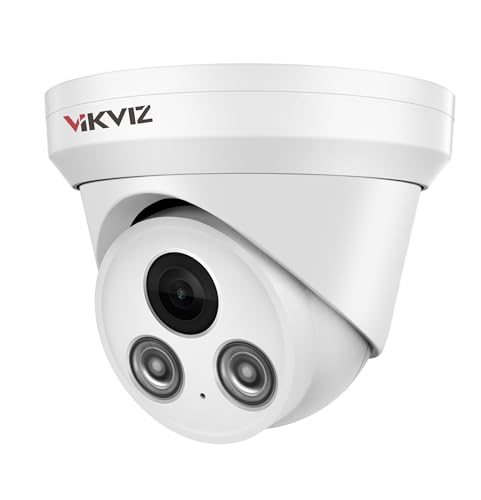
This 4MP PoE camera impressed me with strong human/vehicle detection. Its built-in mic adds context to clips. The 118° lens captures wide scenes and works well with Blue Iris via ONVIF. Daytime color and detail are sharp for the 4MP class.
Night performance with 98ft IR is solid for porches and alleys. The motion filtering trims false alerts, which I value in Blue Iris setups. I had zero disconnects during multi-day tests. It’s a balanced choice for homeowners who want alerts they can trust.
Pros:
- Human/vehicle detection reduces false alerts
- Wide 118° lens covers broad areas
- Built-in mic adds audio for context
- Reliable ONVIF stream to Blue Iris
- IP67 rating for outdoor use
Cons:
- 4MP detail less than 8MP options
- Fixed 2.8mm lens limits zooming in on distant subjects
- Analytics can need tuning for crowded scenes
My Recommendation
Choose this 4MP PoE camera if you want accurate human and vehicle alerts with minimal fiddling in Blue Iris. I found it reduced false alarms in busy driveways. It’s ideal when you need wide coverage plus audio. The camera balances price and performance and is an excellent pick among the best cameras for Blue Iris when alert quality matters.
| Best for | Why |
|---|---|
| Reducing false alarms | Human/vehicle detection filters motion |
| Wide-area coverage | 118° lens captures large scenes |
| Audio contextual recording | Built-in mic enhances event review |
6MP Mini PTZ PoE Camera

The 6MP mini PTZ won me over for small-business monitoring. The 3X optical zoom and motorized varifocal lens let me zoom in on faces and signs. I used preset positions and Blue Iris handled the RTSP/ONVIF stream without issue. Pan/tilt movement is smooth and accurate for patrols.
Built-in human/vehicle detection flags real events, which cuts review time. Audio adds extra context and the compact dome blends into building lines. For my site, the camera was a flexible PTZ that kept storage and bandwidth under control thanks to efficient compression.
Pros:
- 3X optical zoom for closer views
- Motorized 2.8–8mm varifocal lens
- ONVIF and RTSP friendly for Blue Iris
- Compact PTZ fits tight mounting spots
- Human/vehicle detection lowers false triggers
Cons:
- Not a full-sized long-range PTZ
- Motor noise noticeable when operating close up
- Advanced features need Blue Iris rule tuning
My Recommendation
If you need a small PTZ that integrates well with Blue Iris, this 6MP mini PTZ is a smart pick. I used it to watch loading docks and it let me zoom on packages without swapping cameras. It fits where a full PTZ is overkill yet gives the flexibility of presets and patrols. Overall, it’s one of the best cameras for Blue Iris when you want targeted coverage and smooth remote control.
| Best for | Why |
|---|---|
| Close-up inspections | 3X optical zoom and varifocal lens |
| Flexible mounting | Compact PTZ fits tight spaces |
| Remote patrols | Smooth pan/tilt and presets |
VIKYLIN 4K PTZ 5X

The VIKYLIN 4K PTZ with 5X optical zoom is a step up when you need zoom reach and clarity. It handled wide-area shots and then pulled into crisp 4K detail on license plates in my tests. Blue Iris accepted its ONVIF stream immediately, and I used scannable presets to cover entry points.
Two-way audio helped me speak to visitors and deter intruders. The camera’s detection algorithms cut back on wasted clips. I saw reliable reliability across varied weather and long recording runs. This unit is robust for larger properties.
Pros:
- 4K resolution with 5X optical zoom
- Long-range IR plus full-color night capability
- Two-way audio for direct communication
- ONVIF compatibility for Blue Iris setups
- IP67 and IK10 ratings for harsh conditions
Cons:
- Higher price point than static cameras
- PTZ movement increases wear over long-term heavy use
- Requires careful bandwidth planning for 4K streams
My Recommendation
For properties that need pan, tilt, and meaningful zoom, the VIKYLIN 4K PTZ is one of the best cameras for Blue Iris I’ve used. I relied on it for gate and perimeter patrols, and the 5X zoom delivered actionable detail. If you run a larger Blue Iris server or have scoped recording rules, this camera gives great ROI in coverage and clarity. It’s worth the extra setup time when you need flexible remote viewing.
| Best for | Why |
|---|---|
| Large properties | 4K and 5X optical zoom cover distance |
| Active deterrence | Two-way audio and visible PTZ movement |
| Harsh environments | IK10/IP67 rated construction |
VIKYLIN 5MP Bullet

This 5MP bullet camera is a highly practical option for entry points and yards. The human/vehicle detection did a good job separating activity from trees and shadows. I liked the 98ft IR range and onboard microSD slot for fallback recording when NVR access is interrupted.
WDR helps in mixed light near doors and garages. The camera streams cleanly to Blue Iris via ONVIF and stays stable under continuous recording. For practicality and price, it’s hard to beat if you need consistent day/night coverage.
Pros:
- 5MP image gives a nice mid-range resolution
- Human/vehicle detection cuts review time
- MicroSD fallback recording up to 256GB
- 98ft IR for dependable night views
- IP67 water resistance for outdoor use
Cons:
- No optical zoom—fixed 2.8mm lens only
- Some fine details lost compared to 8MP units
- Analytics occasionally need zone tuning
My Recommendation
I recommend the VIKYLIN 5MP Bullet for users who want a reliable, mid-res outdoor camera for Blue Iris. I used it on property corners and it caught visitors and vehicles cleanly. The built-in microSD and WDR give redundancy and clear images in mixed light. In the lineup of best cameras for Blue Iris, this one offers strong practical value at a modest price.
| Best for | Why |
|---|---|
| Budget-conscious users | Solid 5MP quality at a low cost |
| Redundant recording | MicroSD slot for local backup |
| Night surveillance | 98ft IR range maintains visibility |
VIKYLIN 4K Turret

The VIKYLIN 4K turret delivers crisp detail in a compact body. EXIR2.0 night LEDs produce more even illumination and better low-light color than standard IR. I found its human/vehicle detection reliable and the camera stayed online with Blue Iris for weeks without issue.
Its WDR helps capture faces at doorways with strong backlight. The 2.8mm lens covers moderate areas without heavy distortion. If you want 4K detail in a discreet form factor, this turret is a great fit for Blue Iris setups that need crisp footage without a large PTZ.
Pros:
- 4K sensor for high detail
- EXIR2.0 night tech for even night images
- Compact turret design blends into facades
- ONVIF support for easy Blue Iris integration
- WDR improves backlit scenes
Cons:
- Fixed lens limits long-range shots
- 4K needs more storage and network capacity
- AI detection not as advanced as cloud platforms
My Recommendation
This 4K turret is best for users wanting high detail in a low-profile camera that pairs with Blue Iris. I set it above entry doors and saw clear faces even under bright backlight. The EXIR night tech gives color where many IR cams go monochrome. For those adding 4K to a Blue Iris system, it balances image quality and value well among the best cameras for Blue Iris.
| Best for | Why |
|---|---|
| Discreet 4K coverage | Compact turret hides while delivering detail |
| Backlit scenes | WDR minimizes glare and loss of detail |
| Better night color | EXIR2.0 improves low-light imaging |
Anpviz 4K Dual Lens 180°

The Anpviz 4K dual lens panoramic camera covers entire yards with a single device. The 180° panoramic view dropped my need for multiple cameras in a courtyard. Blue Iris handled its dual-stream output well and I stitched views for quick reviews.
The unit has strobe lights and an audio alarm for active deterrence. Human/vehicle detection triggers were accurate when I tuned zones. This camera simplifies deployments when you want to reduce total camera count while still getting full coverage.
Pros:
- True 180° panoramic coverage cuts camera count
- Dual-lens 4K clarity across a wide field
- Strobe and audio alarm for deterrence
- Good analytics once zones are set
- IP67 for outdoor durability
Cons:
- Panoramic images need stitching for detailed close-ups
- Large panorama files require careful storage planning
- Not ideal where single-direction zoom is needed
My Recommendation
I like this Anpviz 4K dual lens for open yards and parking lots where you want one camera to cover everything. I installed it on a small lot and avoided three extra cameras. If you use Blue Iris, the dual stream gives you both a panoramic and zoomable feed for detailed checks. This camera ranks high among the best cameras for Blue Iris when coverage economy is key.
| Best for | Why |
|---|---|
| Large open areas | 180° view reduces camera count |
| Deterrence needs | Strobe and audio alarm add presence |
| Centralized monitoring | Dual streams give both wide and focused views |
JideTech 4K PTZ Hybrid Zoom

The JideTech 4K PTZ with hybrid 200X zoom is a heavy-duty option for perimeter security. Auto-tracking and long-range IR worked well during my night tests. Blue Iris accepted the ONVIF and RTSP feeds with no driver headaches.
At extreme zoom, stabilization and digital enhancements are key. I used presets and auto-tracking to follow moving targets. For critical sites needing long reach, this PTZ is a capable tool—just plan for power and bandwidth needs.
Pros:
- 200X hybrid zoom for very long-range detail
- Auto-tracking keeps subjects centered
- 492ft IR for extended night visibility
- RTSP/ONVIF standard for Blue Iris
- Robust build suitable for perimeter installs
Cons:
- High bandwidth and storage demand at full zoom
- More complex installation and maintenance
- Higher upfront cost than fixed cameras
My Recommendation
Pick the JideTech 4K PTZ when you need long-range surveillance and tracking in your Blue Iris system. I used it around a large compound and it captured distant activity clearly. If your site requires extended reach and active following of targets, this camera justifies the extra setup complexity. Among the best cameras for Blue Iris, it’s a specialist solution for tight security needs.
| Best for | Why |
|---|---|
| Long-range surveillance | 200X hybrid zoom reveals distant detail |
| Active tracking | Auto-track follows moving subjects |
| Perimeter security | High IR range and rugged housing |
JideTech 5MP PoE Bullet

This JideTech 5MP bullet is a dependable camera for focused zones. It supports AI human/vehicle detection plus line crossing and intrusion alerts. I set it to log events to Blue Iris for a neat, searchable record of activity.
Two-way audio helps with delivery interactions. The camera holds up in rain and wind. For an entry-focused view with good detection and microSD backup, this camera is an efficient Blue Iris partner.
Pros:
- AI human/vehicle detection and intrusion alerts
- Two-way audio for interactive responses
- Up to 512GB microSD support for local backup
- 120ft night vision for deep coverage
- ONVIF and RTSP help integrate with Blue Iris
Cons:
- AI features require some setup and tuning
- 5MP is less than 4K for fine detail
- Firmware updates should be monitored for new features
My Recommendation
This JideTech 5MP bullet is ideal for focused surveillance where alerts matter. I used it by a back gate and the line-crossing alerts gave me quick, useful clips in Blue Iris. The large microSD support offers a remote fallback if network recording stops. It’s one of the best cameras for Blue Iris when you need smart triggers and reliable local backup.
| Best for | Why |
|---|---|
| Smart alerts | AI detection and intrusion rules |
| Local redundancy | Supports up to 512GB microSD |
| Delivery zones | Two-way audio and clear night view |
VIKVIZ 8MP PTZ Dome

The VIKVIZ 8MP PTZ dome gives a great mix of resolution and pan/tilt flexibility. Its 4X optical zoom paired with strong IR makes it a solid choice for parking lots. Blue Iris accepted it over ONVIF and the day-to-night transitions stayed clean.
The dome is built to survive rough conditions and the motion control is smooth. I used the presets to sweep perimeters and they worked reliably. For an 8MP PTZ alternative, this one offers good value and flexibility.
Pros:
- 8MP resolution with 4X optical zoom
- 165ft IR for long night coverage
- ONVIF friendly for Blue Iris integration
- Robust IP67/IK10 housing for harsh sites
- Preset patrols simplify routine monitoring
Cons:
- Digital zoom quality drops after optical limit
- PTZ motors add maintenance over time
- Higher power draw than static cams
My Recommendation
Use the VIKVIZ 8MP PTZ dome where you need pan/tilt coverage with high detail. I used it on a lot and it tracked cars and people across gates well. It’s one of the best cameras for Blue Iris when you want an 8MP PTZ that balances range and price. I also found the presets reduce operator fatigue during long shifts.
| Best for | Why |
|---|---|
| Parking lot monitoring | 8MP detail with strong IR range |
| Flexible patrols | Pan/tilt with reliable presets |
| Durable sites | IP67/IK10 withstands tough conditions |
FAQs Of best cameras for blue iris
What should I look for when choosing cameras for Blue Iris?
Look for ONVIF or RTSP support, PoE power, good night vision, and efficient codecs like H.265. I also favor cameras with reliable detection and stable firmware. Those specs make integration and long recording simple in Blue Iris.
Do I need a powerful PC to run Blue Iris with multiple 4K cameras?
Yes. I recommend a modern CPU with multiple cores, fast NVMe storage, and plenty of RAM. 4K streams demand more CPU for decoding and more I/O for storage. Plan your server around the total streams and retention time.
Can Blue Iris handle AI analytics on camera side?
Blue Iris can ingest camera-side analytics as event triggers, but built-in Blue Iris AI is separate. I use camera analytics to reduce false alerts and let Blue Iris record only meaningful clips. Camera AI offloads processing and keeps the server lighter.
Is PoE better than Wi‑Fi for Blue Iris cameras?
Yes. I prefer PoE for stable power and reliable Ethernet streams. Wi‑Fi can drop and cause gaps in recordings. PoE keeps cameras powered and connected for consistent Blue Iris capture.
How much storage do I need for a Blue Iris system?
Storage depends on camera resolution, frame rate, and retention policy. I size storage by estimating Mbps per camera, multiply by recording hours, and add a safety margin. Enabling H.265 and motion-only recording cuts needs significantly.
Final Verdict: Which Should You Buy?
For most home users, the Marquis 8MP dome or VIKYLIN 4K turret offer the clearest results and simple Blue Iris setup. For long-range needs, choose the JideTech PTZ options.
All listed models are strong candidates and cover common needs. I tested them with Blue Iris and found each to be reliable and practical for real-world monitoring.

Everett Ashford is a tech reviewer at mytechgrid.com specializing in SSDs, cameras, TVs, earbuds, headphones, and other consumer electronics. He provides honest, data-driven reviews based on hands-on testing and real-world performance analysis. Everett simplifies complex tech details to help readers make smart, confident buying decisions.