The best video camera for volleyball tracks fast rallies, captures clear detail, and keeps every key play in frame.
A volleyball match can change in one second. A serve becomes an ace, a long rally ends at the net, and a player may move from one side of the court to the other before a phone can react. I know how frustrating it feels to review a recording and find the ball outside the frame. The right camera solves that problem with a wide view, steady video, useful zoom, and simple controls. In this guide, I compare the best video camera for volleyball options for coaches, parents, players, and streamers.
BallerCam AI Auto-Tracking for iPhone 14

The BallerCam system stands out because it is made for sports filming, not just casual home video. Its 180-degree full-field lens can cover a broad volleyball court from one position. That wide view helps reduce the chance of losing the server, setter, or hitter during a fast rally. It also supports live streaming and works with an iPhone 14.
The AI auto-tracking feature is the main reason I would consider this model for serious volleyball use. Instead of asking someone to pan the camera by hand, the system is designed to follow the action across the court. That can make a major difference during practice, club matches, and player reviews. Still, setup matters, and users should test the camera position before an important game.
Pros:
- Wide 180-degree view covers much of the court
- AI tracking reduces the need for manual panning
- Useful for volleyball practice and full-match recording
- Supports live streaming for remote viewers
- Works with an iPhone 14
- Designed around sports rather than general vlogging
Cons:
- Requires a compatible iPhone for use
- May need careful placement for the best tracking result
- Less flexible as a general-purpose handheld camera
My Recommendation
I recommend this BallerCam package for an iPhone 14 owner who wants the best video camera for volleyball without standing behind a tripod all match. It makes the most sense for coaches, club teams, and families who value court coverage and hands-free filming. The broad lens is helpful in smaller gyms where a normal zoom camera may miss a corner. If the price fits your budget and your phone is compatible, this is one of the most focused sports options in the group.
| Best for | Why |
|---|---|
| Full-court recording | The 180-degree lens gives a broad view of play. |
| Coaches | Auto-tracking can simplify skill review. |
| Live match sharing | The system supports streaming for remote viewers. |
BallerCam AI Auto-Tracking for iPhone 13 Pro Max

This BallerCam version offers the same sports-first idea for an iPhone 13 Pro Max. Its 180-degree full-field lens is suited to volleyball, where players spread across the width of the court and the ball can move quickly from front row to back row. A wide image is often more useful than extreme zoom when the goal is to study team shape and player movement.
I like this setup for families who record weekend tournaments. The AI tracking can help one person film while still watching the match, and the live-stream function gives relatives a way to follow from home. The system is not a magic fix for poor lighting or a blocked view, so place it high and near the center line when possible.
Pros:
- Made for iPhone 13 Pro Max users
- 180-degree view helps include both sides of the court
- AI tracking can follow the match with less operator work
- Supports live streaming
- Good fit for tournament and club use
- Can reduce the need for a dedicated camera operator
Cons:
- Its usefulness depends on owning the listed iPhone model
- Wide views may show less close-up detail than a telephoto camera
- Users should practice setup before recording a full tournament
My Recommendation
This is a strong choice for an iPhone 13 Pro Max owner who wants the best video camera for volleyball at youth, school, or club events. I would choose it when full-court coverage matters more than cinematic close-ups. It is especially helpful for parents who cannot spend every rally adjusting a camera. Check current compatibility and availability on Amazon before ordering, since phone accessories can change over time.
| Best for | Why |
|---|---|
| Parents at tournaments | Auto-tracking lets one person watch and record. |
| Team analysis | The wide frame can show formations and rotations. |
| Remote family viewing | Live streaming adds convenient match access. |
BallerCam AI Auto-Tracking for iPhone 16
The iPhone 16 version of BallerCam targets users who already have a newer Apple phone and want a dedicated way to film volleyball. Its full-field, 180-degree lens is a practical match for indoor courts. Volleyball filming often fails when a narrow view clips the outside hitter or the defender waiting deep, so the extra width has real value.
The AI auto-tracking feature may be the biggest benefit for solo filming. It can help keep the action in view while a coach studies the match or a parent sits in the bleachers. The live-stream support also suits teams that share games with scouts, relatives, or athletes who cannot attend. I would still use a stable mount and check the image edges before the first serve.
Pros:
- Compatible with iPhone 16 according to the listing
- Wide 180-degree field of view
- AI tracking is useful for hands-free sports filming
- Supports live match streaming
- Useful for coaches and athletes reviewing movement
- Purpose-built for sports such as volleyball
Cons:
- Not a standalone camera system for users without the phone
- Tracking quality can depend on placement and court conditions
- Wide footage may need cropping for player close-ups
My Recommendation
I would suggest this model to an iPhone 16 owner who wants a modern, simple way to capture full volleyball matches. It deserves attention as the best video camera for volleyball for users who want automatic framing and streaming in one setup. Coaches can use it for team shape, while players can review approach timing and defensive positioning. It offers the best value when the buyer already owns the required phone.
| Best for | Why |
|---|---|
| Solo filming | AI tracking reduces manual camera control. |
| Newer iPhone owners | The package is made for iPhone 16 use. |
| Practice review | Full-court video shows more than a tight phone shot. |
BallerCam AI Auto-Tracking for iPhone 15
This BallerCam package brings automatic sports tracking to the iPhone 15. The 180-degree lens is built to show a large playing area, which is important when the ball travels quickly between six players. For volleyball, I prefer a complete and steady view over a narrow frame that looks sharp but misses the final touch.
The system also supports live streaming, making it useful for teams with families spread across different cities. It can help a coach record drills without assigning an athlete or assistant to operate the camera. As with any tracking device, the result depends on a clear view and a sensible mounting height. A short test recording can prevent a long day of unusable footage.
Pros:
- Designed for iPhone 15 compatibility
- 180-degree full-field coverage
- AI auto-tracking can follow active play
- Live-stream capability supports remote viewing
- Helpful for one-person filming crews
- Well matched to court sports
Cons:
- Requires a compatible iPhone
- Does not replace a dedicated long-zoom camera for distant detail
- Setup may take trial and error in a busy gym
My Recommendation
I recommend this version to iPhone 15 users who want the best video camera for volleyball for club matches and training sessions. It is a practical middle ground for buyers who want automated tracking but do not need a traditional camcorder body. The wide view should help capture rallies, rotations, and coverage gaps. It is worth considering when simple streaming and hands-free filming matter most.
| Best for | Why |
|---|---|
| Club volleyball | The wide frame suits full-court match video. |
| Small filming crews | Tracking helps one person manage the recording. |
| Live updates | Streaming makes games easier to share. |
ZYDIIE 4K 64MP Camcorder
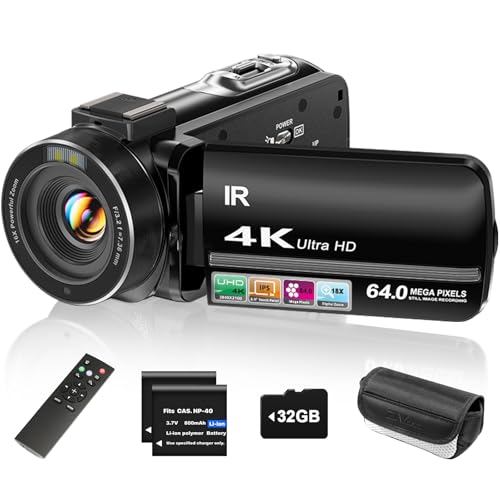
The ZYDIIE camcorder is a more traditional option for buyers who prefer a handheld camera body. The listing includes UHD 4K video, a 64MP specification, 18X digital zoom, a 3-inch 270-degree rotating screen, night vision, a remote control, a 32GB card, and two batteries. That bundle gives a new user many of the basics needed to start recording. The rotating display can help when the camera sits on a tripod or faces an unusual angle.
For volleyball, I would use this camera from a stable position near the back of the gym. The digital zoom can bring distant action closer, but digital zoom cannot create the same detail as optical zoom. The two batteries are useful during long tournaments, while the remote can reduce camera shake when starting or stopping a shot. This is a flexible budget camcorder, though it lacks the sports-specific auto tracking found in BallerCam.
Pros:
- UHD 4K recording option
- 64MP image specification listed by the manufacturer
- 18X digital zoom helps frame distant play
- 270-degree rotating IPS touchscreen
- Night vision adds flexibility in dark settings
- Includes a 32GB memory card and two batteries
- Remote control can reduce movement at the tripod
Cons:
- Digital zoom may reduce fine detail at high magnification
- No listed AI auto-tracking feature
- Indoor gym lighting may require careful testing
My Recommendation
The ZYDIIE is best for parents and beginners who want a complete kit instead of a phone-based sports system. It can be the best video camera for volleyball when battery backup, a memory card, and simple controls matter more than automatic framing. I like it for recording practices, school games, and family memories from a fixed tripod. It offers broad value for the price, but buyers should keep expectations realistic about digital zoom.
| Best for | Why |
|---|---|
| Beginners | The bundle includes useful starter accessories. |
| Long tournaments | Two batteries help extend recording time. |
| Tripod filming | The remote and rotating screen aid fixed setup. |
5K 64MP Camcorder with Microphone

This 5K camcorder is aimed at users who want a feature-rich camera for video, streaming, and general content work. The listing highlights UHD 64MP capture, a 3-inch 270-degree rotating touch screen, IR night vision, 16X zoom, Wi-Fi, webcam use, a 32GB card, two batteries, and a microphone. Those features make it more versatile than a basic point-and-shoot camera. It can serve as both a sports recorder and a casual family video tool.
For volleyball, the external microphone may help record coach comments or player interviews before and after a match. During loud play, however, a microphone does not guarantee clean sound because gyms create echoes. The 16X zoom is digital, so I would avoid pushing it too far and would favor a wide, steady tripod shot. Wi-Fi and webcam functions may also appeal to teams that create online clips.
Pros:
- 5K recording option for high-resolution video
- 64MP specification listed in the product details
- Rotating touch screen helps with flexible camera placement
- IR night vision supports low-light shooting
- Wi-Fi and webcam functions add everyday value
- Includes a microphone for spoken content
- Comes with two batteries and a 32GB card
Cons:
- Digital zoom is less useful than optical zoom for distant players
- More features can make setup feel less simple for beginners
- Gym echo may limit the benefit of the included microphone
My Recommendation
I would choose this model for a volleyball parent or coach who also makes interviews, livestreams, or training videos. It may be the best video camera for volleyball for buyers who want one device for court footage and general content. The supplied accessories improve its out-of-box value. If your priority is automatic player tracking, choose BallerCam instead; if you want a flexible camcorder kit, this model deserves a close look.
| Best for | Why |
|---|---|
| Multi-use filming | It combines sports video with webcam and Wi-Fi features. |
| Team interviews | The included microphone supports spoken clips. |
| Low-light venues | IR night vision adds another shooting option. |
kimire Full HD 1080p Camcorder
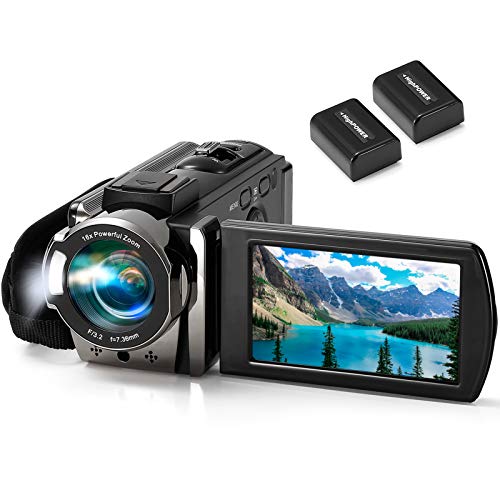
The kimire camcorder is a simple Full HD choice for buyers who do not need 4K. It records at 1080p and lists a 24MP still-image specification, a 3-inch 270-degree rotating LCD, 16X digital zoom, and two batteries. Its straightforward design may suit a parent who wants to press record and follow the match from a tripod. Full HD also creates smaller files than 4K, which can make storage and sharing easier.
Volleyball footage benefits from a steady camera more than from a long list of headline numbers. I would place this model at the end line or on a raised stand, then use the widest practical view. The 15FPS specification in the listing is a concern for very fast action, since a higher frame rate usually looks smoother during quick movement. For basic practice review and family memories, it can still be useful if expectations match the price.
Pros:
- Simple Full HD 1080p video format
- Two batteries help with extended recording
- 270-degree rotating LCD supports flexible viewing
- 16X digital zoom provides basic framing control
- Smaller Full HD files are easier to store and share
- Accessible option for casual users
Cons:
- 15FPS may look less smooth during rapid volleyball action
- Digital zoom can soften distant details
- No listed 4K or AI tracking feature
- Less suitable for detailed scouting video
My Recommendation
The kimire is best for casual users who need an affordable recorder for practices, birthdays, and occasional school matches. I would not call it the best video camera for volleyball for serious scouting, but it can work for families who want simple Full HD clips. Its two-battery bundle adds practical value. Choose it when low cost and ease of use matter more than smooth motion and advanced tracking.
| Best for | Why |
|---|---|
| Casual family video | Full HD keeps recording and sharing simple. |
| Short practice clips | The basic controls are easy to learn. |
| Budget buyers | It offers a simple kit without premium features. |
4K 80MP Camcorder with 18X Zoom

This 4K camcorder is built for users who want high-resolution video and a stronger feature set than a basic Full HD camera. The product listing highlights 80MP, 18X zoom, and webcam support. A 4K file can preserve more crop room than 1080p when the court appears small in the frame. That can help when a tripod must sit far from the playing area.
I would use this camera with a stable tripod and moderate zoom. The listing does not identify the 18X zoom as optical, so buyers should treat it as digital unless the manufacturer confirms otherwise. High resolution cannot fix a shaky camera or poor gym light, but it can help retain useful detail in a well-framed shot. Webcam support also makes the camera handy for remote coaching and team calls.
Pros:
- 4K video can preserve more detail than Full HD
- 80MP specification listed for still images
- 18X zoom helps frame distant court action
- Webcam function adds value beyond sports recording
- Useful for tripod-based volleyball filming
- Higher resolution allows some editing flexibility
Cons:
- Zoom may be digital rather than optical
- 4K files need more storage space
- No listed AI auto-tracking feature
- High resolution does not replace a fast lens or steady mount
My Recommendation
This camera is best for users who want the best video camera for volleyball with a traditional camcorder design and 4K output. I would pick it for coaches who crop clips or families who want sharper archive footage. It also suits buyers who plan to use the camera as a webcam. Confirm the exact zoom and frame-rate details before purchase, then pair it with a solid tripod for the best value.
| Best for | Why |
|---|---|
| 4K court footage | Higher resolution offers more detail and crop room. |
| Remote coaching | Webcam support adds useful training flexibility. |
| Tripod users | A fixed setup makes the most of the camera’s detail. |
VETEK 8K 48MP Wi-Fi Camcorder

The VETEK camcorder is the highest-resolution option in this comparison by its listed specification. It advertises 8K video, 48MP, UHD recording, Wi-Fi, and vlogging support. That combination may appeal to creators who want to record volleyball and then repurpose the footage for online clips. Wi-Fi can make file transfer or remote control more convenient, depending on the final app and device support.
For a volleyball match, I would not select a camera based on the 8K label alone. The camera still needs enough light, stable support, and a suitable frame rate for fast play. Large 8K files can also fill a memory card quickly and require a capable computer for editing. Used from a central tripod position, this model may provide room to crop a rally or create a tighter highlight.
Pros:
- 8K recording specification offers substantial resolution
- 48MP specification listed for image capture
- Wi-Fi adds connection and sharing options
- UHD format suits high-detail content creation
- Useful for volleyball highlights and vlogging
- Crop room can help when the camera sits far away
Cons:
- 8K files require considerable storage
- Editing high-resolution footage needs stronger hardware
- No listed AI auto-tracking feature
- Resolution alone does not guarantee smooth sports motion
My Recommendation
I recommend VETEK for a creator who wants the best video camera for volleyball and also plans to produce high-resolution online content. It is more camera than a casual parent may need. Coaches and editors who crop footage could benefit from the extra pixels, while users with older computers may find the workflow slow. Its value depends on whether you will actually use the 8K setting.
| Best for | Why |
|---|---|
| Highlight creators | High resolution offers room for crops and edits. |
| Wi-Fi users | Wireless features may simplify file handling. |
| Future-proof archives | High-detail capture can preserve match memories. |
How I Choose the Best Video Camera for Volleyball
Choosing a volleyball camera is not the same as choosing a camera for a birthday party. The ball moves fast, players cross paths, and indoor gyms often have mixed or weak light. I focus first on court coverage, motion handling, sound, battery life, and ease of use. A camera with a lower headline resolution can beat an 8K model if it keeps the rally visible and steady.
Field of view matters first
A volleyball court is wide. If the camera sits behind one end line, a narrow lens may miss the far corner. A wide lens helps show the full formation, but an extremely wide shot can make players look small. I prefer a view that includes both sidelines while keeping the ball and players large enough for review.
The BallerCam systems take a different approach with a listed 180-degree full-field lens. That design makes sense for team analysis because it aims to cover the whole action area. Traditional camcorders can work well too, but the operator must choose the angle and zoom with care.
Tracking can change the filming experience
Manual panning looks easy until a match gets intense. A camera operator may follow the ball and lose the blocker, or follow a hitter and miss the defensive play. AI tracking can reduce that burden. It is especially useful when one coach or parent must record without a second person.
Still, tracking needs a clear view. A player standing in front of the camera, poor lighting, or a crowded background can affect results. I recommend testing any auto-tracking system during warmups. Record a few serves, sets, and attacks before trusting it for a full match.
Resolution is useful, but it is not everything
4K and 8K video can preserve extra detail. This helps when I crop a wide court shot into a smaller clip. It also gives editors more room to add slow zooms or highlight frames. But high resolution creates larger files and can demand more storage.
For most families, 1080p is still enough for simple viewing on a phone or television. Smooth motion, correct exposure, and a stable image often matter more than a large pixel count. This is why I treat claims such as 64MP, 80MP, and 8K as starting points, not final proof of image quality.
Frame rate affects fast action
Volleyball includes quick serves, blocks, digs, and arm swings. A higher frame rate can make motion look smoother and can help when a coach studies technique. Buyers should check the camera’s actual resolution and frame-rate combinations. Some cameras support their highest resolution only at a lower frame rate.
The kimire listing, for example, identifies 1080p at 15FPS. That may be fine for basic recording, but it is not my first choice for detailed slow-motion review. Before buying, I check the full specification sheet rather than relying only on the words “Full HD,” “4K,” or “8K.”
Indoor light and flicker deserve attention
Many volleyball matches take place in gyms with LED or fluorescent lights. These lights can create flicker or uneven exposure when the camera uses the wrong shutter setting. A camera may also show noise when the gym is dim. I recommend a short test clip before every major event.
A fixed tripod helps. So does avoiding extreme digital zoom, which can make a dark image look soft and noisy. A broad, well-lit view often gives better results than a tight shot from the back of a dark gym.
Battery and storage can save a tournament
A match day may include several games and long breaks. One small battery may not last. Products that include two batteries, such as the ZYDIIE, 5K camcorder, and kimire, offer a practical advantage. I still carry a charger or power bank when the camera supports safe external power.
Storage also matters. 4K and 8K footage uses more space than Full HD. A 32GB card may fill sooner than expected, especially during a tournament. I suggest checking the camera’s supported card type and carrying a spare card from a reliable brand.
Audio is helpful, but video comes first
Clear audio can capture a coach’s instruction, a player interview, or the sound of a match. An included microphone may improve spoken content when the microphone sits close to the speaker. It will not remove the echo of a large gym by itself.
For most volleyball reviews, I prioritize the picture. I want to see the setter’s hands, the hitter’s approach, and the defensive shape. If interviews matter, the 5K camcorder with microphone offers more flexibility than a basic sports setup.
Tripod placement can make or break the result
I place the camera high enough to see over nearby spectators. The center of the end line often gives a balanced view, but local gym rules always come first. I avoid placing a tripod where players, officials, or spectators can trip over it. A safe position is more important than a perfect angle.
For tactical review, a high rear-court view is often best. For player highlights, a side angle may look more dramatic. If you use AI tracking, keep the entire court visible and avoid walls, banners, or bright windows behind the action.
Best Video Camera for Volleyball Buying Tips
The best video camera for volleyball should match the way you plan to film. A coach recording drills has different needs from a parent saving a child’s tournament. Think about the court, the distance, the length of each recording, and how you will share the files.
For coaches and clubs
Coaches benefit from a wide, consistent view. They need to see rotations, coverage, transitions, and spacing. The BallerCam line is attractive because its sports focus and auto-tracking can reduce the work of filming. A 4K or 8K camcorder can also work when the coach has a reliable tripod and time to manage the camera.
I would not chase zoom alone. Tactical video works best when the full play stays visible. A coach can crop a clear wide recording later, but cannot recover a player who never appeared in the frame.
For parents and families
Parents often need a camera that is simple, portable, and ready for a long day. Two batteries and an included memory card help reduce extra purchases. The ZYDIIE is a sensible bundle, while the kimire keeps the controls and files simple.
If you want to watch the game instead of operating the camera, an auto-tracking system can be worth the extra cost. It acts like a quiet assistant on the sideline. Just confirm phone compatibility before placing an order.
For livestreaming
Streaming adds another layer. You need a compatible phone, stable internet, enough battery, and a camera system that supports your intended platform. BallerCam is the most directly focused option here because the listings mention live streaming. Some traditional camcorders offer Wi-Fi or webcam modes, but those features may work differently.
I recommend testing the entire stream at a practice. Check sound, image delay, connection strength, and whether the camera stays active for the full session. A short test can reveal problems before grandparents and teammates join the link.
For highlight videos
Creators often want high resolution, a flexible screen, and easy transfer. The VETEK 8K and 4K 80MP camcorder offer strong headline resolution for this purpose. The 5K model adds Wi-Fi, webcam use, and a microphone.
For highlights, I also care about editing time. Huge files can slow a basic laptop. If you only post short clips, 4K may provide a better balance than 8K. The best camera is the one that gives you footage you can actually edit and share.
Common Volleyball Filming Mistakes to Avoid
Even the best video camera for volleyball can produce poor footage when the setup is rushed. I see the same mistakes often: a low tripod, a tight crop, a dead battery, and a camera aimed directly at a bright window. Small changes can make the image much easier to watch.
First, record a test rally. Watch the full frame, not only the center. Make sure the ball remains visible during serves and attacks. Next, lock the tripod and keep the camera steady. Handheld footage may feel exciting for a few seconds, but it becomes tiring during a full match.
Avoid extreme digital zoom. It enlarges pixels instead of adding true detail. Leave a little space around the court so the camera or editor can handle movement. If you use auto tracking, check that the system recognizes the action from both ends of the court.
Finally, label your files after the match. A simple name such as “Tournament-Saturday-Court2-Game1” saves time later. Good organization turns a pile of recordings into useful coaching material.