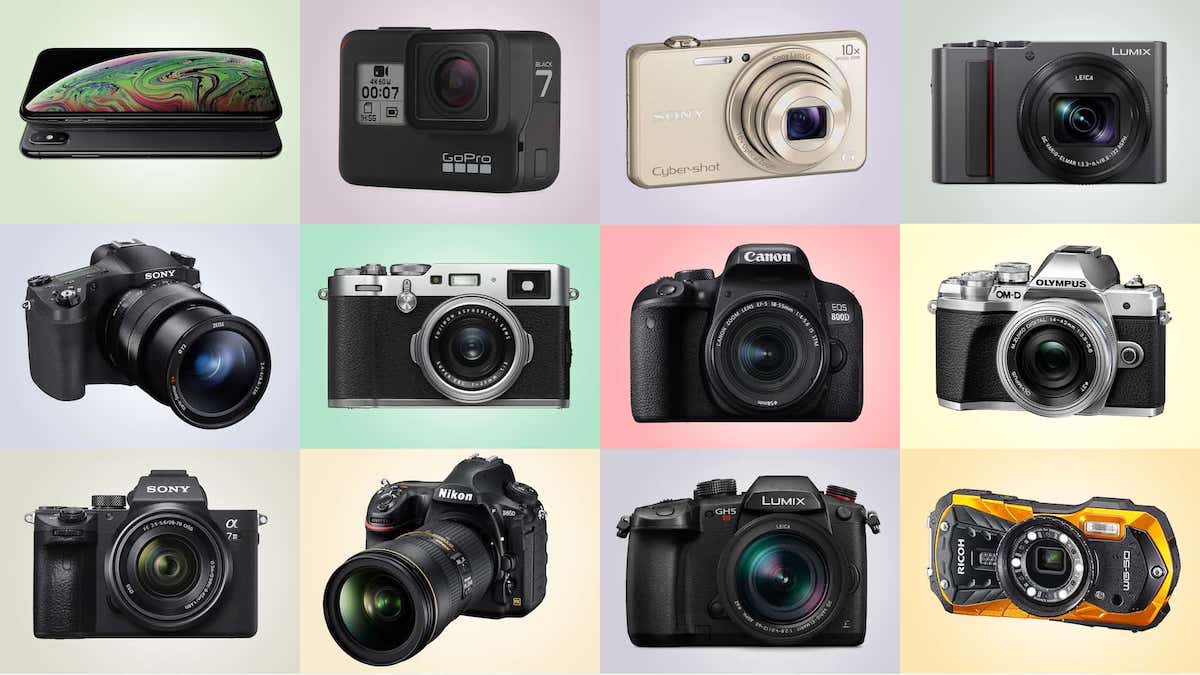
There are seven main types of digital cameras, although the count changes when smartphones and hybrids are included.
The answer to “how many types of digital cameras are there” depends on how experts group them. Camera design, lens type, sensor size, and intended use all matter. This guide breaks down each major category in simple terms, with practical examples to help you choose the right camera for travel, family photos, video, sports, or professional work.
How Many Types of Digital Cameras Are There?
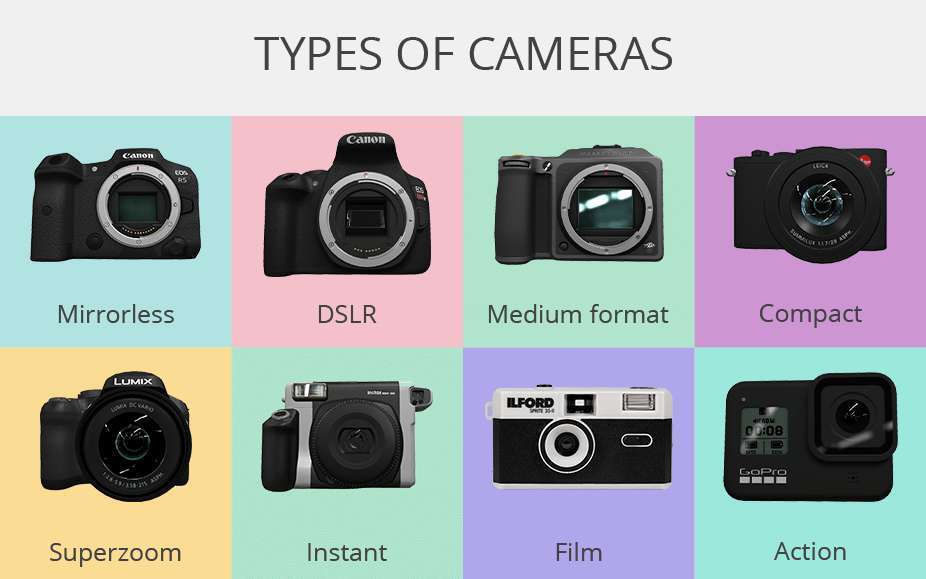
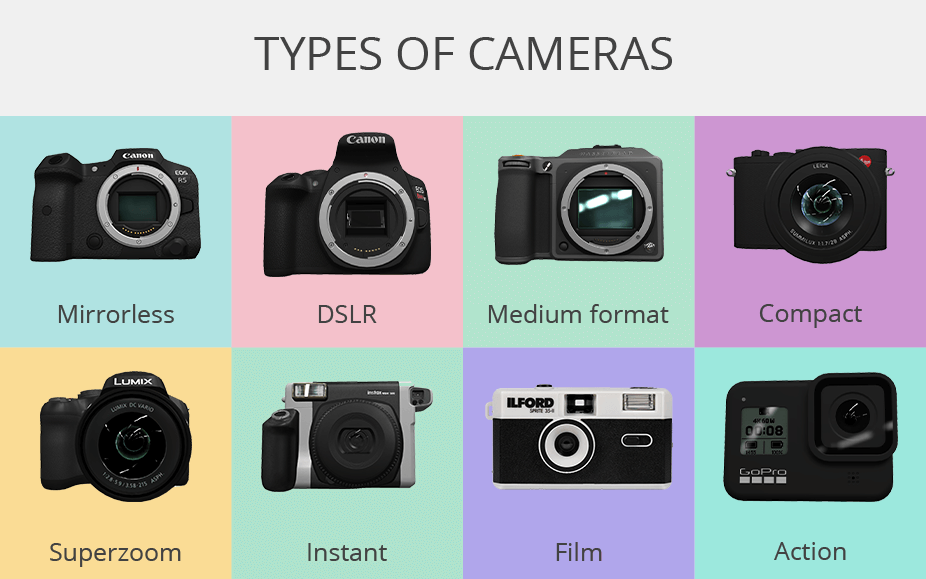
Most photographers recognize seven main types of dedicated digital cameras:
- Compact point-and-shoot cameras
- Bridge cameras
- Mirrorless cameras
- Digital single-lens reflex cameras, or DSLRs
- Action cameras
- 360-degree cameras
- Medium-format digital cameras
Some lists also include smartphone cameras, instant digital cameras, and cinema cameras. That is why the answer to how many types of digital cameras are there is not one fixed number.
The best approach is to focus on how each camera works. A compact camera is built for ease. A DSLR is built around an optical mirror system. A mirrorless camera removes that mirror to create a smaller, more modern design. These differences affect image quality, speed, size, cost, and control.
The 7 Main Types of Digital Cameras
1. Compact point-and-shoot cameras
Compact cameras are small, simple, and easy to carry. They usually have a built-in lens, automatic modes, and a small image sensor.
These cameras are useful for:
• Family events
• Vacations
• Everyday snapshots
• School trips
• Casual photography
Many compact cameras offer better zoom than a smartphone. Some premium models also use larger one-inch sensors, which can produce cleaner images in low light.
Their main limit is control. You may not be able to change lenses or adjust every setting. Still, a good compact camera can be a smart choice for someone who wants more reach than a phone without carrying a large kit.
2. Bridge cameras
Bridge cameras sit between compact cameras and interchangeable-lens cameras. They often look like small DSLRs, but their lens is permanently attached.
A bridge camera may include:
• A long optical zoom
• Manual exposure controls
• An electronic viewfinder
• Image stabilization
• 4K video recording
The long zoom is their biggest strength. One bridge camera can cover wide landscapes, portraits, and distant wildlife. This makes it useful for travel or nature watching.
The trade-off is a smaller sensor than most mirrorless and DSLR cameras. Images may look less detailed in dim light. The fixed lens also means you cannot replace it with a faster portrait lens or a wide lens.
3. Mirrorless cameras
Mirrorless cameras use a digital sensor and electronic display instead of the mirror and optical viewfinder found in a DSLR. Light reaches the sensor all the time, which lets you preview exposure, color, and depth of field before taking a picture.
Mirrorless cameras are now popular with beginners, enthusiasts, and professionals. They often provide:
• Interchangeable lenses
• Fast autofocus
• Excellent video tools
• Electronic viewfinders
• Silent shooting modes
• Smaller bodies than many DSLRs
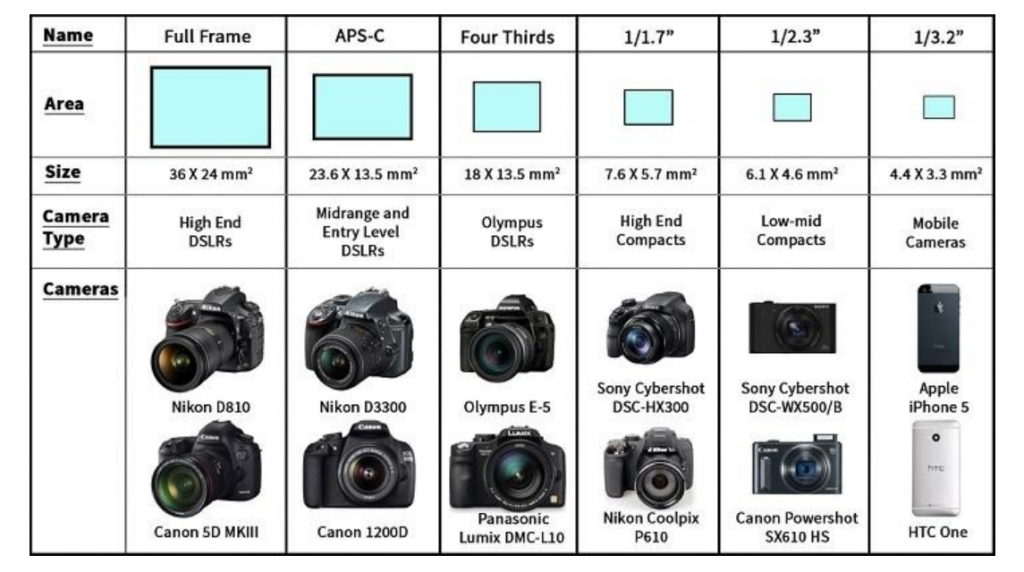
Sensor sizes range from Micro Four Thirds to full frame and medium format. A larger sensor can improve detail and low-light quality, but it often increases cost and camera size.
A common mistake is to buy a camera body without checking lens prices. The lens system is the long-term investment. A modest camera with a high-quality lens can outperform an expensive body with a weak lens.
4. DSLR cameras
DSLR cameras use a mirror and prism to show the scene through an optical viewfinder. When you press the shutter button, the mirror lifts, and light reaches the image sensor.
DSLRs became widely popular because they offered strong image quality, reliable controls, and a broad range of lenses. They remain useful for:
• Portrait photography
• Studio work
• Sports photography
• Wildlife photography
• Learning manual exposure
Many DSLRs have excellent battery life because the optical viewfinder uses little power. Their optical view also feels natural because you see the subject directly through the lens.
The main drawback is size. DSLRs are usually larger and heavier than mirrorless cameras. New lens and body development has also shifted strongly toward mirrorless systems, although used DSLRs can offer excellent value.
5. Action cameras
Action cameras are small, tough cameras designed for movement and difficult conditions. Many are waterproof, shock resistant, and easy to mount on helmets, bikes, cars, or surfboards.
They are ideal for:
• Hiking
• Cycling
• Skiing
• Swimming
• Motorsports
• Travel videos
Action cameras use very wide lenses. This helps capture the full scene but can make faces and straight lines look distorted. Many newer models use digital correction to reduce this effect.
Their small sensors are not ideal for dark rooms or night scenes. In bright daylight, however, they can produce sharp and engaging video. Their strength is freedom: you can place them where a larger camera would be unsafe or too difficult to use.
6. 360-degree cameras
A 360-degree camera records the scene in every direction. It normally uses two or more wide lenses, then combines the views into one spherical image.
You can use a 360 camera for:
• Virtual tours
• Creative travel videos
• Real estate marketing
• Immersive sports footage
• Social media clips
The camera captures everything around it, so you choose the final viewing angle later. This can save a shot when you did not aim perfectly at the moment of recording.
The editing process is more complex than standard photography. You may need special software to reframe, crop, and export the footage. Image quality can also drop when the final image is heavily cropped.
7. Medium-format digital cameras
Medium-format digital cameras use sensors larger than full-frame sensors. They are made for photographers who need exceptional detail, tonal range, and depth.
They are common in:
• Commercial photography
• Fashion photography
• Fine-art photography
• High-end portraits
• Large advertising projects
A larger sensor can capture more information, especially in highlights and shadows. It can also create a distinctive sense of depth when paired with a suitable lens.
These systems are expensive, heavy, and less convenient for fast action. They are not automatically better for every person. For a travel photographer, a full-frame or APS-C camera may be more practical.
Other Categories That Affect the Count
The answer to how many types of digital cameras are there can change when special-purpose devices are counted.
Smartphone cameras
Smartphones are digital cameras, but they are usually discussed as a separate category. A modern phone may include wide, ultra-wide, telephoto, and macro cameras in one device.
Phones rely heavily on computational photography. Software combines several frames, corrects color, reduces noise, and improves dynamic range. This is why a phone can produce a strong image even with a small sensor.
However, a dedicated camera still offers larger sensors, better physical controls, stronger optical zoom, and more lens choices. The best tool depends on the situation rather than the price alone.
Digital instant cameras
Digital instant cameras combine a digital sensor with built-in printing. They let you preview an image before printing it, unlike classic instant film cameras.
These cameras are popular at:
• Parties
• Weddings
• Family gatherings
• School events
• Creative workshops
Print quality is usually limited compared with a full-size photo printer. Their appeal comes from the physical memory they create. A printed photo can feel more personal than an image that stays on a phone.
Cinema cameras
Cinema cameras are designed mainly for professional video production. They may record high-quality formats with wide color range, timecode support, advanced audio options, and professional connections.
They are used for films, television, documentaries, commercials, and online productions. They often require extra equipment such as a rig, external monitor, audio recorder, and large batteries.
A cinema camera may be a poor choice for casual family photos. It is a specialized tool, much like a commercial kitchen oven is different from a home toaster.
Webcam and studio cameras
Webcams and studio cameras are made for streaming, video calls, broadcasting, and live production. Many connect directly to a computer or production switcher.
They focus on stable video, easy connection, and continuous operation. They may not offer the lens range or still-image quality of a dedicated photo camera, but they serve a clear purpose.

Digital Camera Types Compared
A quick comparison can make the answer to how many types of digital cameras are there easier to understand.
| Camera type | Lens | Main strength | Main limitation |
|---|---|---|---|
| Compact | Fixed | Small size and simple use | Limited control |
| Bridge | Fixed | Very long zoom | Smaller sensor |
| Mirrorless | Interchangeable | Modern features and strong image quality | Battery use and lens cost |
| DSLR | Interchangeable | Optical viewfinder and battery life | Larger body |
| Action | Usually fixed | Tough design and movement capture | Weak low-light performance |
| 360-degree | Fixed multi-lens system | Captures every direction | More complex editing |
| Medium format | Interchangeable | Extreme detail and tonal range | High price and weight |
| Smartphone | Built-in multi-camera system | Always available and computational processing | Small sensors and limited ergonomics |
No category wins in every area. A camera is a tool, and each tool solves a different problem.
How to Choose the Right Digital Camera
Knowing how many types of digital cameras are there is useful, but choosing one requires a closer look at your needs.