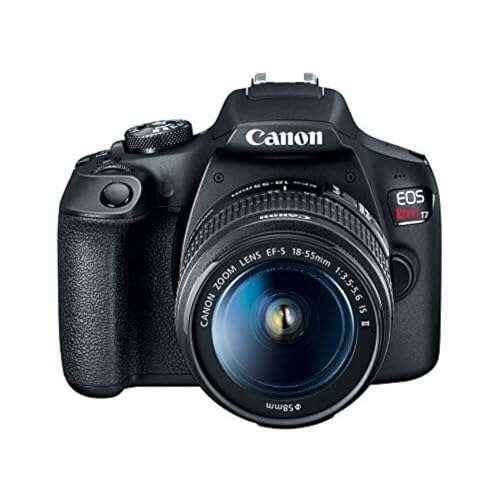
Yes. Canon still makes and sells digital cameras in the United States. Its main focus is now on mirrorless cameras in the EOS R system, though Canon also offers select compact PowerShot cameras and continues to support many older DSLR models.
For U.S. shoppers, the biggest change is not that Canon stopped making cameras. The change is that Canon has moved most of its research, development, and new product releases from DSLRs to mirrorless cameras.

What types of digital cameras does Canon make now?
Canon’s current digital camera range has three main groups:
- EOS R mirrorless cameras for interchangeable lenses
- PowerShot compact cameras with built-in lenses
- Professional and specialty cameras for sports, wildlife, video, and commercial work
A digital camera records photos or video electronically. Both a DSLR and a mirrorless camera are digital cameras. The main difference is how they show the image before you take the photo.
A DSLR uses a mirror and an optical viewfinder. A mirrorless camera has no mirror and usually uses an electronic viewfinder or the rear screen.
Canon EOS R mirrorless cameras
The EOS R system is Canon’s main camera platform. It uses Canon’s RF and RF-S lens mounts.
Examples include:
| Camera type | Examples | Typical buyer |
|---|---|---|
| Entry-level APS-C mirrorless | EOS R50, EOS R10 | Families, students, travel, first interchangeable-lens camera |
| Advanced APS-C mirrorless | EOS R7 | Wildlife, sports, action, long-lens users |
| Full-frame mirrorless | EOS R8, EOS R6 Mark II | Enthusiasts, weddings, events, serious video |
| High-resolution full-frame | EOS R5 Mark II | Landscape, studio, commercial, hybrid photo/video work |
| Professional full-frame | EOS R1 | Sports, news, and professional photographers |
Canon also makes cinema cameras, such as models in the EOS C line. These are designed mainly for professional video production and are separate from regular EOS still cameras.
Canon PowerShot compact cameras
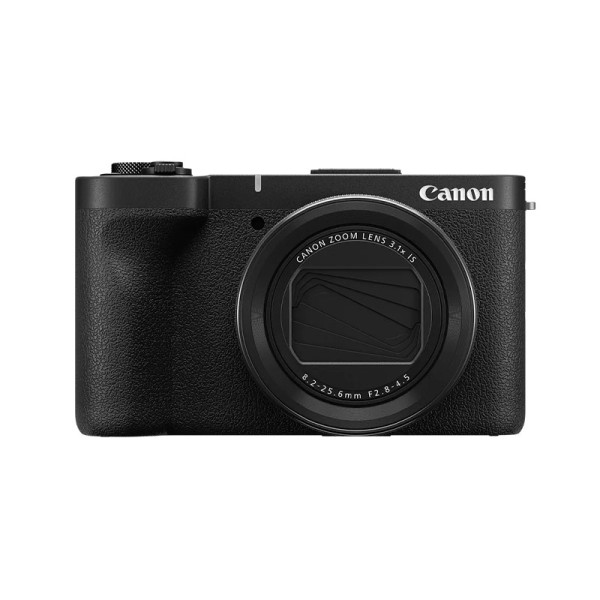
Canon still makes some fixed-lens digital cameras under the PowerShot name.
These cameras do not accept interchangeable lenses. Their lens is built into the body, which makes them smaller and easier to carry.
Depending on current U.S. stock, buyers may encounter models such as:
- PowerShot V10, a small video-focused camera
- PowerShot V1, a compact camera aimed at creators and video users
- PowerShot G7 X Mark III, a premium compact camera
- PowerShot SX740 HS, a travel camera with a long zoom
Availability can change. Some PowerShot models may be listed on Canon’s website but be difficult to find at major U.S. retailers. Others may be sold mainly through remaining dealer stock.
Is Canon still making DSLR cameras?
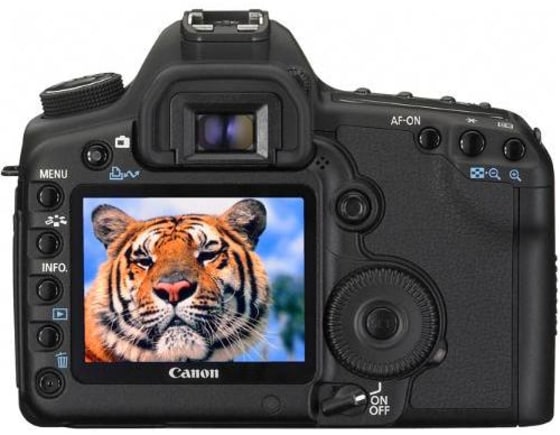
Canon still supports many DSLR cameras, but mirrorless cameras are now its main development priority.
Canon has not released a new mainstream DSLR generation in the same way it releases new EOS R mirrorless models. Older DSLR cameras, including the EOS Rebel series, EOS 90D, EOS 5D Mark IV, and EOS-1D X Mark III, remain useful and may still be available used or through remaining inventory.
The distinction matters:
- Made and actively developed: Mainly EOS R mirrorless cameras
- Still supported: Many older Canon DSLR bodies and EF lenses
- Available used: A large range of Rebel, 90D, 5D, 6D, and professional DSLR models
- New DSLR releases: Much less common than in the past
Canon’s DSLR system is not suddenly useless. A good DSLR can still produce excellent images. However, the newest autofocus features, video tools, and lens releases are generally found in the EOS R system.
Why did Canon shift from DSLRs to mirrorless?
Mirrorless cameras let Canon place the autofocus system directly on the image sensor. This supports features such as:
- Face and eye detection
- Subject recognition
- Continuous autofocus during video
- Electronic viewfinder previews
- Smaller camera bodies in some designs
- Faster communication between the camera and newer lenses
A mirrorless camera also has fewer moving parts than a DSLR. That does not automatically make every mirrorless camera better, but it gives Canon more room to develop modern autofocus and video functions.

What is Canon’s current mirrorless camera system?
Canon’s current interchangeable-lens system is the EOS R system.
It has two main sensor sizes:
- Full-frame: A sensor close in size to 35mm film
- APS-C: A smaller sensor that can allow smaller bodies and lower prices
Canon uses two related lens mounts:
- RF mount: Used by full-frame EOS R cameras
- RF-S mount: Used by APS-C EOS R cameras
RF and RF-S lenses are designed for EOS R mirrorless cameras. A full-frame EOS R camera can also use RF-S lenses, but the camera will usually switch to a smaller crop area.
Can Canon DSLR lenses work on Canon mirrorless cameras?
Yes. Canon EF and EF-S DSLR lenses can work on EOS R cameras with a compatible Canon EF-EOS R mount adapter.
The adapter does not add optical magnification. It creates the correct physical distance between the old EF lens and the camera sensor while allowing electronic communication.
With a genuine Canon adapter, many EF lenses can retain functions such as:
- Autofocus
- Aperture control
- Image stabilization
- Lens data communication
- Some camera-based correction features
Compatibility can vary by camera, lens, and firmware. Very old third-party lenses may not work perfectly. Check the exact lens and camera combination before buying.
RF versus EF lens choice
| Lens system | Designed for | Main advantage | Main limitation |
|---|---|---|---|
| RF | EOS R mirrorless cameras | Newer designs and direct compatibility | Often costs more |
| RF-S | APS-C EOS R cameras | Smaller options for APS-C bodies | Not ideal for full-frame use |
| EF | Canon DSLRs and EOS R cameras with adapter | Large used market and many choices | Requires an adapter on EOS R bodies |
| EF-S | Canon APS-C DSLRs and compatible EOS R cameras with adapter | Affordable used lenses | Designed for smaller sensors |
For someone starting from scratch, RF or RF-S lenses are usually the simplest choice. For someone who already owns several EF lenses, an EOS R body with an adapter can preserve much of that investment.

Which Canon digital camera should you buy?
The best Canon camera depends on your subject, budget, lens collection, and need for video. There is no single best model for every U.S. buyer.
For a first Canon camera: EOS R50
The EOS R50 is a small APS-C mirrorless camera aimed at beginners and casual creators. It is a strong fit for:
- Family photos
- Travel
- School events
- Pets
- Basic video
- Users moving up from a phone
Its small size makes it easier to carry than many full-frame cameras. Its main trade-off is that advanced users may want more controls, stronger battery life, or a larger lens selection.
For travel and learning photography: EOS R10
The EOS R10 offers more direct controls and faster operation than an entry-level body. It can suit users who want to learn manual exposure, photograph moving subjects, or use the camera for both stills and video.
It uses an APS-C sensor. That can help wildlife photographers because a telephoto lens gives a narrower field of view than it would on a full-frame body. The same feature is less useful for wide-angle landscape work.
For wildlife and sports: EOS R7
The EOS R7 is an APS-C model with features aimed at fast action and long-lens photography.
Its sensor size can be useful when a subject is far away. However, the crop does not create extra optical detail. A longer lens, good light, steady technique, and accurate focus still matter.
The R7 is a practical choice for a photographer who wants strong subject tracking without moving to Canon’s more expensive professional bodies.
For full-frame value: EOS R8
The EOS R8 is a full-frame mirrorless camera designed for enthusiasts who want strong image quality without buying Canon’s largest professional body.
Full-frame models can offer advantages in:
- Low-light photography
- Background blur
- Wide-angle lens design
- High-resolution image capture
Full-frame cameras and lenses are often larger and more expensive than APS-C systems. The camera body is only part of the cost.
For weddings, events, and demanding hybrid work: EOS R6 Mark II
The EOS R6 Mark II is aimed at photographers who need fast autofocus, strong low-light performance, and capable video tools.
It can fit wedding, portrait, event, documentary, and general professional work. Its resolution is lower than the R5 Mark II, but that can keep file sizes more manageable.
For high-resolution work: EOS R5 Mark II
The EOS R5 Mark II is designed for users who need high resolution and advanced photo and video features.
It may suit:
- Commercial photographers
- Landscapes
- Studio work
- Detailed portraits
- Professional video production
- Hybrid shooters who need both stills and video
High resolution creates larger files. It also places greater demands on storage, computer hardware, lenses, and technique.
For professional sports and news: EOS R1
The EOS R1 is Canon’s professional flagship mirrorless camera. It is aimed at demanding sports, news, and action work.
Its value depends less on having the highest pixel count and more on speed, autofocus behavior, reliability, handling, and professional workflow. For most hobbyists, its price and specialized design are unnecessary.

Should you buy a Canon DSLR or mirrorless camera?
For most new Canon buyers in the United States, a mirrorless EOS R camera is the safer long-term choice. It gives you access to Canon’s current body designs, newer RF lenses, and the company’s main development path.
A DSLR can still make sense in several cases:
- You already own several Canon EF lenses
- You want a low-cost used camera
- You prefer an optical viewfinder
- You mainly take still photos
- You want long battery life
- You do not need the newest autofocus or video features
DSLR versus mirrorless comparison
| Factor | DSLR | Mirrorless |
|---|---|---|
| Viewfinder | Optical | Electronic or rear screen |
| Camera size | Often larger | Often smaller, but not always |
| Battery life | Often strong | Can be lower because the viewfinder uses power |
| New Canon development | Limited | Main focus of Canon’s current system |
| Used-market prices | Often attractive | Wider range of new and used options |
| Lens mount | EF or EF-S | RF or RF-S |
| DSLR lens use | Native | EF lenses need an adapter |
| Video autofocus | Varies by model | Usually stronger on newer models |
The most important practical question is not only, “Which camera body is better?” Ask, “Which lens system do I want to build around?”
Are Canon digital cameras being discontinued?
Canon is not discontinuing digital cameras as a whole. It is changing which camera types receive the most attention.
The company has reduced its emphasis on:
- New consumer DSLRs
- Some older compact-camera categories
- Older lens mounts as the center of future development
Canon continues to release and support mirrorless bodies, RF lenses, accessories, software, and firmware updates.
Some individual models may be discontinued without warning when a replacement arrives. A camera being marked discontinued does not mean it stops working. It usually means Canon no longer produces it or sells it as a current model.
Why do some Canon cameras disappear from stores?
Several factors can affect availability:
- A newer replacement model has launched
- Canon has limited production
- Retail inventory is low
- A model is sold only in selected markets
- Demand for compact cameras is uneven
- The product remains supported but is no longer actively manufactured
Before buying, check the model on Canon USA, confirm whether it is listed as current, and compare stock at established U.S. retailers.

How to check whether a Canon camera is current in the United States
Use this quick process before ordering:
- Open the official Canon USA website.
- Search for the exact camera model.
- Check whether the page shows current product information, support, firmware, and manuals.
- Look for a U.S. warranty statement.
- Confirm that the camera is compatible with your planned lenses.
- Compare the price with authorized U.S. dealers.
- Check whether the seller is offering a U.S. model or an imported gray-market unit.
A gray-market camera may be genuine, but it may not include the same U.S. warranty or service options. The product can also have regional accessories, menus, power supplies, or support terms that differ from the U.S. version.
What does “discontinued” mean?
A discontinued Canon camera is no longer in regular production. It may still be:
- Sold by a retailer
- Available refurbished
- Available used
- Covered by support documents
- Eligible for firmware updates, depending on the model
A discontinued camera can be a good value if the price is low and the condition is clear. Avoid buying solely because a seller claims it is “rare” or “collectible” unless you have checked the model’s actual market value.

How much should you budget for a Canon digital camera?
The camera body is only one part of the cost. You may also need a lens, memory card, spare battery, charger, bag, and editing software.
A simple budget plan looks like this:
| Buyer type | Main cost to expect | What can raise the cost |
|---|---|---|
| Beginner | Body plus basic kit lens | Extra battery, travel lens |
| Enthusiast | Body plus two or three lenses | Telephoto and fast prime lenses |
| Wildlife photographer | APS-C or full-frame body | Long telephoto lens, tripod, monopod |
| Wedding photographer | Reliable body and several lenses | Backup body, batteries, cards, flashes |
| Video creator | Camera and suitable lens | Microphone, tripod, lights, storage |
| Professional | Multiple bodies and a lens system | Service, backup gear, high-capacity storage |
A practical total-cost example
Suppose a buyer purchases:
- One APS-C EOS R body
- One standard zoom lens
- One spare battery
- Two memory cards
- A basic camera bag
The total cost will be higher than the advertised body price. A telephoto lens can cost as much as, or more than, the camera body. This is why comparing complete kits gives a more realistic picture than comparing camera bodies alone.

Common mistakes when buying a Canon camera
Buying the body without checking the lens mount
An RF camera does not accept EF lenses directly. If you own EF lenses, include the cost and size of an adapter.
Assuming more megapixels always means better photos
Resolution matters for cropping and large prints. It does not replace good light, focus, lens quality, or steady technique.
Choosing a full-frame camera without budgeting for lenses
Full-frame bodies can be affordable compared with their earlier prices, but full-frame lenses may be larger and more expensive.
Buying an old DSLR for the wrong reason
A used DSLR can be a smart deal. It is less attractive if you want the newest subject detection, modern video autofocus, or access to Canon’s newest RF lens designs.
Trusting a marketplace listing without checking the seller
Confirm the exact model, included accessories, return policy, shutter condition for used cameras, and warranty status.
Ignoring video needs
If you plan to record yourself, stream, or make short videos, check autofocus behavior, microphone support, overheating limits, recording formats, and screen movement before buying.

Frequently asked questions
Does Canon still make point-and-shoot digital cameras?
Yes, Canon still offers some compact PowerShot cameras, although the range is smaller than it was in the past. Availability differs by model and retailer in the United States.
Is Canon stopping the EOS R system?
No. The EOS R system is Canon’s main interchangeable-lens camera platform. Canon continues to develop EOS R bodies, RF lenses, firmware, and accessories.
Can I still buy a new Canon DSLR?
Some older Canon DSLRs may remain available through retailers or remaining inventory, but new DSLR releases are much less common. Used and refurbished markets offer more choices.
Are Canon DSLR lenses still worth buying?
They can be worth buying when the price is right, especially if you already own a Canon DSLR or plan to use an EF-to-EOS R adapter. New buyers should compare the used EF price with the long-term cost and size of building an RF system.
Is Canon better than Nikon or Sony?
There is no universal winner. Canon may be the better choice if you prefer its ergonomics, autofocus behavior, color, lens options, service network, or existing accessories. Compare complete systems rather than comparing camera bodies alone.
What is Canon’s best digital camera?
The answer depends on the job. The EOS R50 suits many beginners, the EOS R7 suits action and wildlife users, the EOS R8 offers a smaller full-frame option, and higher-end EOS R models target professional and high-resolution work.

Bottom line: Canon still makes digital cameras
Canon absolutely still makes digital cameras for the U.S. market. Its current strategy centers on EOS R mirrorless cameras, while PowerShot compacts and older DSLRs serve more specific needs.
For a new buyer, start by choosing the system:
- Choose EOS R mirrorless for Canon’s current direction and newest features.
- Choose APS-C for a smaller, often lower-cost kit.
- Choose full-frame for stronger low-light performance and wider lens options.
- Consider a used DSLR when price, battery life, or existing EF lenses matter most.
- Consider PowerShot when portability and a built-in lens matter more than lens flexibility.
The best next step is to decide what you photograph, list any lenses you already own, and then check current Canon USA availability for the exact camera and lens combination.

Everett Ashford is a tech reviewer at mytechgrid.com specializing in SSDs, cameras, TVs, earbuds, headphones, and other consumer electronics. He provides honest, data-driven reviews based on hands-on testing and real-world performance analysis. Everett simplifies complex tech details to help readers make smart, confident buying decisions.