The GoPro HERO12 Black is the best GoPro camera for cycling because it combines sharp video, strong stabilization, and long battery life.
A bike ride can change in seconds. One moment you enjoy a smooth road, and the next you hit a rough trail, sudden rain, or a close pass from a car. A good action camera helps you record the ride without adding much weight or fuss. I tested the key features that matter most to riders, such as stabilization, battery life, mounting, sound, weather protection, and video quality. This guide compares the best GoPro camera for cycling options, plus several budget action cameras for riders who want clear footage at a lower cost.
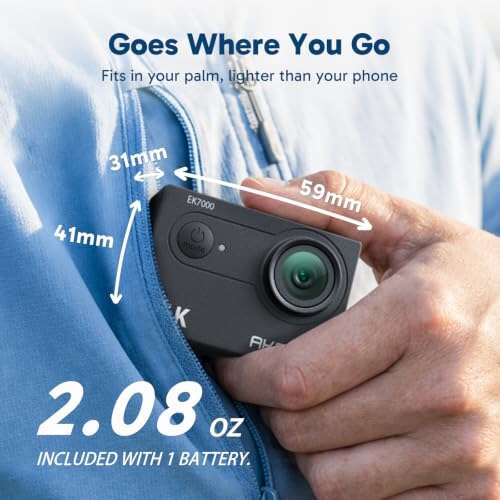
AKASO EK7000: Best Budget 4K Cycling Camera

The AKASO EK7000 is a simple and affordable way to record road rides, weekend trips, and casual trail runs. It records 4K video at 30 frames per second and takes 20MP photos. That gives riders plenty of detail for viewing a route, saving a memory, or showing a road hazard. The wide field of view also captures more of the lane and the scenery around you.
I like the included remote control for riders who want to start or stop recording without reaching toward the camera. The waterproof case supports use in wet conditions and underwater settings, although the case can reduce microphone quality. Wi-Fi makes it easier to move clips to a phone. For a low-cost cycling setup, this camera offers a useful feature mix without a large investment.
Pros:
- Affordable choice for new cycling camera users
- 4K video at 30 frames per second
- High-resolution 20MP photos
- Remote control helps with easy operation
- Wide view records more of the road
- Waterproof housing supports wet rides
- Wi-Fi makes file transfers more convenient
Cons:
- Stabilization is not as smooth as premium GoPro models
- The waterproof case may reduce sound quality
- Low-light video can look soft
My Recommendation
I recommend the AKASO EK7000 for beginners, students, casual riders, and cyclists who want a backup camera. It works well on a handlebar or helmet when the light is good. It is also a smart pick for riders who do not want to risk an expensive camera on a rough commute. If your main goal is reliable daytime recording at a low price, this can be a practical alternative to the best GoPro camera for cycling.
GoPro HERO12 Black: Best Overall for Cycling

The GoPro HERO12 Black is my top overall choice for most cyclists. Its 5.3K video can preserve fine road details, signs, trail texture, and fast movement. The 1/1.9-inch sensor supports a versatile image format, while HDR video can help hold detail in bright sky and darker road areas. Its 27MP photo mode also lets you pull sharp still images from your ride experience.
HyperSmooth stabilization is the major reason I place this camera near the top. It helps smooth handlebar shake, rough pavement, and quick turns so the footage feels more watchable. The waterproof body removes the need for a case during normal wet-weather rides, though I still check the door and seals before every trip. It also supports live streaming and webcam use, which adds value beyond cycling.
Pros:
- Excellent 5.3K video quality
- Strong stabilization for road and trail vibration
- Waterproof body for rain and splash protection
- HDR mode can improve difficult lighting
- High-resolution 27MP photos
- Useful for live streaming and webcam work
- Large accessory and mount ecosystem
Cons:
- Higher price than basic action cameras
- High-resolution recording uses more storage
- Wind noise can still affect open-air audio
My Recommendation
The HERO12 Black is best for road cyclists, gravel riders, mountain bikers, and content creators who want one camera for nearly every ride. I especially recommend it for riders who value smooth footage more than the lowest price. It gives you strong image quality, useful crop room, and dependable weather protection in a compact body. For many buyers, this is the best GoPro camera for cycling because it balances performance, ease of use, and long-term value.
GoPro MAX: Best 360 Camera for Cycling

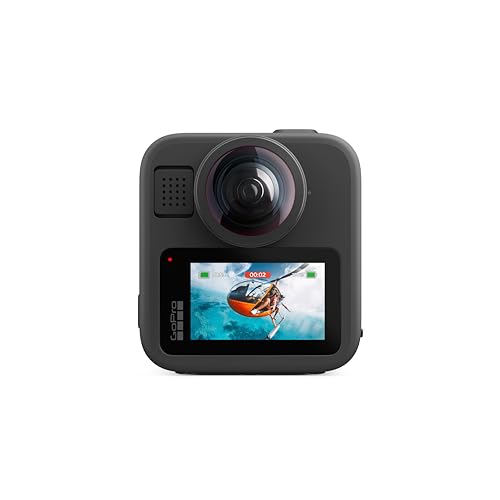
The GoPro MAX gives cyclists a different way to record a ride. Instead of choosing one view before leaving, its 360-degree system records around the camera. You can select the best angle later during editing. That is useful when you want to show yourself, the road, nearby riders, and the landscape in one clip.
The camera supports 5.6K spherical video and 16.6MP 360 photos. It also offers a traditional action-camera mode for more familiar recording. Its touch screen helps with setup, while stabilization makes moving footage easier to watch. The trade-off is a more involved editing process, and the exposed lenses need careful handling when you mount the camera on a bike.
Pros:
- 360-degree recording captures the full surroundings
- Reframe clips after the ride
- 5.6K spherical video provides editing room
- Traditional camera mode adds flexibility
- Touch screen supports quick setup
- Stabilization helps reduce motion shake
- Useful for creative cycling and travel videos
Cons:
- 360 footage takes more time to edit
- Exposed lenses are easier to scratch
- Battery life depends heavily on recording mode
My Recommendation
I recommend the GoPro MAX for cyclists who want creative angles, social media clips, or a record of everything around them. It is especially useful on scenic roads, group rides, and mountain trails where the action may happen outside a normal forward view. It is not the simplest option for quick clips. Still, if you want a 360 camera instead of a standard view, the MAX offers a strong reason to choose it over a conventional best GoPro camera for cycling.
TIROL SUPPLIES Action Camera: Best Lightweight Bike Camera

The TIROL SUPPLIES action camera focuses on portability and simple bike mounting. Its small body can fit a handlebar, helmet, or bag without feeling like a heavy extra device. The 170-degree lens gives a broad view of the route. It records Full HD 1080p video, which is enough for basic ride records and daily commuting.
This camera uses a USB-rechargeable design, so charging is simple at home, in a car, or from a power bank. The lower resolution also creates smaller files than 4K footage, which can help riders with limited storage. It will not match a premium GoPro in detail or stabilization. For short rides and practical recording, however, it can act like a small digital witness on the bike.
Pros:
- Lightweight design adds little handlebar weight
- Wide 170-degree view captures the road
- Full HD video uses less storage than 4K
- USB charging is simple and widely supported
- Works with handlebar and helmet setups
- Good fit for commuting and short rides
Cons:
- 1080p footage has less detail than 4K video
- Basic stabilization may show strong bumps
- Sound and low-light quality may be limited
My Recommendation
I recommend this camera for commuters, casual riders, and anyone who wants the lightest possible setup. It suits riders who mainly need a record of traffic events or daily routes. The small size can also make it easier to leave mounted without drawing much attention. If you do not need cinematic video, this is a low-cost alternative to the best GoPro camera for cycling.
GoPro HERO13 Black Bundle: Best Cycling Starter Kit
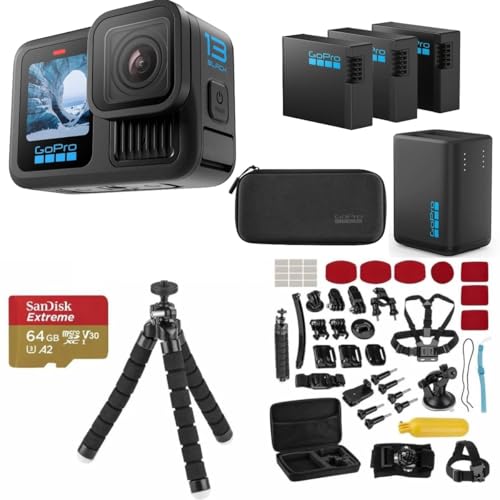
The GoPro HERO13 Black bundle is aimed at riders who want a complete kit from the start. The package includes three Enduro batteries, a dual charger, a 64GB memory card, and a large accessory set. That matters because a camera alone does not create a good cycling setup. You also need secure mounts, spare power, and a way to charge between rides.
The camera records 5.3K HDR video and takes 27MP photos. HyperSmooth stabilization helps keep the view steady on rough roads and trails. The waterproof design supports riding in rain and splash, while the included batteries can make a long day more manageable. I still advise checking every mount before a downhill run, because even the best camera cannot protect against a loose clamp.
Pros:
- 5.3K HDR video captures strong detail
- Three batteries support longer riding days
- Dual charger saves time between rides
- 64GB card helps you start recording quickly
- Accessory kit can reduce extra setup costs
- HyperSmooth stabilization supports trail footage
- Waterproof body handles normal wet conditions
Cons:
- Bundle price may be high for casual riders
- Some included accessories may not suit every bike
- High-resolution clips need large storage space
My Recommendation
This HERO13 bundle is best for serious cyclists, tour riders, vloggers, and buyers who want a ready-to-use package. It makes sense if you expect long rides and do not want to buy batteries, a charger, and mounts one by one. The bundle can offer better value than building a kit from separate parts. For a complete setup, it may be the best GoPro camera for cycling package available to riders who plan to record often.
GoPro LIT Hero: Best GoPro With Built-In Light

The GoPro LIT Hero is designed for riders who often record in dim streets, at dusk, or indoors. Its built-in light adds a useful feature without requiring a separate light mounted beside the camera. The camera records 4K video at 60 frames per second and takes 12MP photos. Its compact body should feel comfortable on a helmet or handlebar.
HyperSmooth stabilization helps keep the footage steady as you move. The touch screen makes it easier to frame a shot and change settings before a ride. The waterproof build gives it extra confidence for changing weather. A built-in light is not a replacement for a bike headlight, but it can brighten nearby subjects and make short clips more usable.
Pros:
- Built-in light helps in low-light scenes
- 4K60 video supports smooth motion
- Compact body is easy to carry
- Touch screen simplifies camera control
- HyperSmooth stabilization reduces visible shake
- Waterproof design suits outdoor cycling
Cons:
- Built-in light has limited range
- 12MP photos are less detailed than flagship models
- Light use can reduce battery runtime
My Recommendation
I recommend the LIT Hero for commuters, evening riders, and cyclists who want a small camera with extra visibility for close subjects. It is also a good fit for quick social clips after sunset. Riders should still use a dedicated front and rear bike light for safety. If low-light convenience matters more than maximum resolution, this can be the best GoPro camera for cycling for your routine.
Jadfezy Action Camera: Best Low-Cost Helmet Camera

The Jadfezy action camera is a basic option for riders who want a low-cost camera and a useful accessory kit. It records Full HD 1080p video and captures 12MP photos. The wide-angle view can show more of the road than a narrow phone camera. Its small shape works well for helmet, bicycle, and outdoor sports use.
The included two-battery setup is helpful for riders who want to keep recording without waiting for a charge. Its waterproof housing supports use in wet conditions and offers protection during outdoor activity. This is not a premium camera for detailed 4K edits. It is better viewed as a simple recorder for commutes, family rides, and occasional trips.
Pros:
- Low purchase cost for new riders
- Two batteries extend useful recording time
- 1080p video is easy to store and share
- Wide-angle view covers more of the route
- Accessory kit supports helmet and bike mounting
- Waterproof housing helps in rain and splash
Cons:
- Video detail is below 4K action cameras
- Stabilization may not handle rough trails well
- Sound can suffer inside the waterproof case
My Recommendation
The Jadfezy is best for families, children, casual cyclists, and riders testing camera recording for the first time. The two batteries and accessory kit add practical value at a low cost. Choose it for simple ride records rather than professional video production. It is a sensible starter if the price of the best GoPro camera for cycling feels too high.
GoPro HERO12 E-Commerce Package: Best HERO12 Value

This HERO12 Black e-commerce package offers the same core camera features as the standard HERO12 listing. It records 5.3K video at up to 60 frames per second and captures 27MP photos. HDR support can help when a ride moves from shade into bright sun. The 1/1.9-inch sensor gives the camera a flexible base for action footage and still images.
HyperSmooth stabilization is valuable for cycling because bikes pass over cracks, joints, gravel, and uneven pavement. The waterproof body lets you keep the setup small during wet rides. Live streaming and webcam functions also make this camera useful away from the bike. Check the package contents before ordering, since e-commerce bundles can vary in included accessories.
Pros:
- Sharp 5.3K60 video
- Strong stabilization for moving bikes
- HDR helps balance bright and dark areas
- 27MP photos provide useful detail
- Waterproof body supports outdoor use
- Can work as a webcam or live-stream camera
- Compact design fits many cycling mounts
Cons:
- Bundle contents need checking before purchase
- Premium video settings use more battery
- Wind noise remains a challenge without an external solution
My Recommendation
I recommend this package for riders who want HERO12 quality and find the listing price attractive. It is a strong choice for road footage, gravel routes, bikepacking, and regular content creation. It suits buyers who already own mounts or who want to choose accessories separately. In performance terms, it remains one of the best GoPro camera for cycling choices for riders who want flagship-style footage without moving to a newer bundle.
GoPro HERO: Best Compact GoPro for Casual Rides

The compact GoPro HERO is made for riders who want the GoPro name in a smaller and simpler body. It records 4K video and captures 12MP photos. That is enough for route clips, short trail videos, and everyday cycling memories. The touch screen gives you direct control without forcing you to use a phone for every setting.
A smaller body can make a real difference on a helmet or chest mount. It may feel less distracting during a long ride, and it is easy to carry as a spare camera. The trade-off is lower photo resolution and fewer advanced features than the HERO12 or HERO13 lines. For riders who value ease over maximum control, this camera keeps the experience simple.
Pros:
- Compact and light for daily cycling
- 4K video gives clear ride footage
- Touch screen makes settings easy to change
- Waterproof body supports outdoor rides
- Simple design suits new users
- Easy to carry as a backup camera
Cons:
- 12MP photos offer less detail than flagship models
- Fewer advanced controls than HERO12 and HERO13
- Small body may limit battery capacity
My Recommendation
I recommend the compact GoPro HERO for casual cyclists, commuters, travelers, and riders who dislike bulky gear. It is a good match for short rides where you want quick 4K clips and simple controls. It will not satisfy riders who need the best crop room or advanced image tools. For light daily use, it can be a more comfortable best GoPro camera for cycling than a larger flagship model.
GoPro MAX2: Best Advanced 360 Cycling Camera
The GoPro MAX2 is built for riders who want high-end 360 footage and more freedom during editing. Its listed 8K spherical video and 29MP 360 photos provide strong resolution for reframing. You can capture first and decide on the view later. That feature is valuable when a turn, jump, rider, or landscape appears outside the front of the bike.
Replaceable lenses add a practical benefit because 360 cameras expose their lenses during normal use. Six microphones can help create a fuller sound field, while HyperSmooth stabilization supports smoother movement. The touch screen gives quick access to controls. Like any 360 camera, it asks more from your computer and your editing time, so it suits committed creators more than riders who want instant clips.
Pros:
- 8K spherical video offers high editing detail
- 29MP 360 photos capture large scenes
- Reframing allows many views from one ride
- Replaceable lenses improve long-term serviceability
- Six microphones support immersive sound capture
- HyperSmooth stabilization helps moving footage
- Traditional and 360 modes add flexibility
Cons:
- More expensive than standard action cameras
- 360 clips require more editing skill and storage
- Lens care is essential on bike mounts
My Recommendation
The MAX2 is best for cycling filmmakers, travel creators, group-ride storytellers, and riders who want to create fresh camera angles. It is also useful for recording unpredictable moments on a trail. I would not choose it only for simple evidence footage or quick daily commuting. If you want the most flexible 360 workflow, the MAX2 may be the best GoPro camera for cycling in this guide, provided you accept the editing work.
What Makes the Best GoPro Camera for Cycling?
Cycling places unusual demands on an action camera. The camera must deal with constant vibration, rapid changes in light, wind, rain, and limited battery access. A model that looks excellent in a room may disappoint when mounted to a handlebar on broken pavement. I judge cycling cameras by how well they handle real movement, not just by the largest number on the box.
Video Resolution and Frame Rate
Resolution controls the amount of detail in the image. A 4K camera can show more detail than a 1080p model, which helps when you crop a clip or read a road sign. Higher frame rates, such as 60 frames per second, can make fast motion look smoother. They also give you more room for slow-motion edits.
For most riders, 4K is a strong balance. It looks sharp and does not fill a memory card as quickly as 5.3K or 8K footage. Choose 5.3K if you edit often or want to crop into the frame. Choose 1080p if you need smaller files, longer recording, or a very low-cost camera.
Stabilization Matters More Than Extra Pixels
A shaky 5K clip is hard to watch. This is why stabilization often matters more than a small resolution gain. GoPro’s HyperSmooth system is one reason the HERO12 and HERO13 models suit cycling so well. It helps turn road buzz into a smoother view that feels closer to a floating camera than a device fixed to a vibrating bike.
Handlebar mounts show more vibration than chest mounts. A helmet mount can produce smoother footage when you look naturally through a turn, but it also moves with your head. I suggest testing the mount on a short ride before recording an important event. A tight mount and a strong stabilization mode work together.
Battery Life and Charging
High resolution, high frame rate, stabilization, Wi-Fi, and bright screens all use power. Cold weather can reduce battery performance even more. Riders who take long trips should carry at least one spare battery or a small power bank. The HERO13 bundle stands out here because it includes three Enduro batteries and a dual charger.
Do not judge battery life only by a brand estimate. Your settings and weather change the result. I often record in short clips instead of one long file. This makes file handling easier and lets me stop recording during breaks, traffic stops, and route checks.
Waterproofing and Weather Protection
Rain can arrive when the sky looks clear. A waterproof camera body gives peace of mind, but you still need to check the battery door and USB cover. If you use a waterproof housing, make sure the seal stays clean. A tiny grain of sand can create a path for water.
Waterproof does not mean invincible. Salt water, mud, pressure, and impact can still cause trouble. Dry the camera after a wet ride and avoid opening it while water sits on the body. These small habits protect your investment better than a marketing number alone.
Mounting Options for Bikes
A handlebar mount gives a low, forward view. It can show the road clearly, but it also receives strong vibration. A helmet mount gives a higher point of view and follows your head. A chest mount feels stable and shows the bars, but it may hide part of the road when you lean forward.
Use a tether on every expensive camera. The tether will not stop vibration, but it can save the camera if the main mount breaks. Check the screws before every ride. I also recommend a mount with a rubber insert because it can reduce small rattles and improve grip.
Audio and Wind Noise
Wind noise is the weak spot of many cycling videos. At normal bike speed, air hits the microphone with force. A waterproof case can make voice sound dull, while an open camera can collect more wind. If spoken commentary matters, record voice later or use a suitable external microphone setup.
For road safety footage, clear video often matters more than perfect sound. A camera with several microphones can help, but it cannot remove all wind at high speed. Place the camera so your body or helmet blocks some direct airflow when possible.
Image Quality in Sun and Shade
Bike routes often move between bright sky, dark trees, and deep shadow. HDR can help keep detail in these mixed scenes. It may show more texture in a dark road while limiting blown highlights in the sky. Still, strong sunlight can create lens flare, so clean the lens before recording.
Low light remains difficult for small action cameras. The GoPro LIT Hero adds a built-in light for nearby scenes, but no small light can turn a dark road into daylight. Use proper bike lights for safety and treat the camera light as a help for close subjects, not as your main road light.
Standard View or 360 View?
A standard action camera is easier. You aim it, record, and share the clip. This works well for commuting, training, and simple road documentation. A 360 camera offers more creative freedom, but you must edit the footage and protect its exposed lenses.
I prefer a standard GoPro for most riders. I choose a MAX or MAX2 when the rider wants to show the full scene or create moving camera effects. Both styles can work, but the best choice depends on how much time you want to spend after the ride.
Best Cycling Camera Settings
Start with 4K at 30 frames per second for general road riding. This setting gives good detail and moderate file size. Use 4K60 when you want smoother motion, fast descents, or slow-motion options. Use 5.3K when you plan to crop the video or create a polished edit.
Keep the lens wide enough to show the road, but avoid an extreme view if nearby objects look stretched. Turn on stabilization for handlebar use. Use a higher shutter speed only when you understand how it changes motion blur. Most new riders get better results by leaving advanced exposure controls alone until they learn the basics.
Before a long ride, format a quality memory card in the camera. Carry a spare card for trips where you cannot transfer files. Use a fresh battery, clean the lens, and test the mount. These simple steps prevent the most common recording failures.
Best for Table
| Best for | Why |
|---|---|
| Overall cycling video | GoPro HERO12 Black offers sharp 5.3K footage, strong stabilization, HDR, and waterproof protection. |
| Long rides and full kits | GoPro HERO13 Black bundle includes three batteries, a dual charger, storage, and many accessories. |
| Creative 360 footage | GoPro MAX2 records a full spherical view, supports reframing, and offers high-resolution 8K video. |
How I Would Mount a GoPro for Cycling
For road riding, I prefer a chest or helmet mount when I want smoother footage. A helmet mount shows where I look, which makes turns and climbs feel natural. A chest mount gives a steady view and includes the handlebar in the frame. It also keeps the camera lower and may offer some protection from wind.
I use a handlebar mount when the road view matters most. This setup works well for route reviews, commuting evidence, and bike component tests. However, it can shake on rough ground. If you ride gravel or technical trails, choose a sturdy mount and use a safety tether.
Place the camera level before you start. A tilted horizon can make a smooth ride look careless. Take a ten-second test clip, watch it on your phone, and adjust the angle. This small check often improves the result more than buying a new accessory.
How to Protect Your Camera on a Bike
Dust and grit can damage a lens faster than most riders expect. Keep a soft lens cloth in your saddle bag. Never wipe dry mud with a rough shirt because it can leave fine scratches. Rinse away salt or dust with clean water before wiping the camera.
Use a protective lens cover when the camera is stored. For 360 models, lens protection matters even more because the lenses sit outside the body. Do not place a MAX or MAX2 face down on a table. Store it in a small padded case when it is not on the bike.
Review your mount after a crash, even if the camera still works. Plastic arms can develop small cracks that fail later. Replace any part that looks bent, loose, or worn. A new mount costs less than replacing a camera and losing an important ride.
Who Should Buy a GoPro for Cycling?
A GoPro makes sense for riders who record often, care about smooth footage, or want a camera that can handle rain and dust. It is also useful for bikepacking, race training, travel, and route reviews. A premium model gives you more room to crop and edit later. That flexibility can save a ride when the camera angle is not perfect.
Not every rider needs a flagship camera. If you only record a few short clips each month, a basic 1080p model may be enough. The AKASO, TIROL SUPPLIES, and Jadfezy cameras can cover simple needs at a lower cost. Think about how often you ride, how you edit, and how much weight you want to carry.
If safety documentation matters, choose clear video, stable mounting, and enough battery for the full route. A camera that runs out of power before a key moment offers little help. For that reason, battery planning can matter just as much as resolution when choosing the best GoPro camera for cycling.
FAQs Of best gopro camera for cycling
What is the best GoPro camera for cycling?
The GoPro HERO12 Black is the best overall choice for most cyclists. It offers sharp 5.3K video, strong HyperSmooth stabilization, HDR, high-resolution photos, and waterproof construction.
Is 4K enough for cycling videos?
Yes. 4K gives clear detail for most rides and uses less storage than higher resolutions. Choose 5.3K if you plan to crop footage or make more advanced edits.
Should I mount a GoPro on my helmet or handlebars?
A helmet mount follows your view and often gives a natural angle. A handlebar mount shows the road and bike clearly but can show more vibration. A chest mount offers a stable middle ground.
Do I need a 360 camera for cycling?
No. A standard GoPro is easier for most riders. Choose a 360 model such as the MAX or MAX2 if you want to reframe the view after the ride or capture everything around the bike.
How can I reduce wind noise on a bike?
Use a wind-resistant microphone setup when possible, place the camera behind some airflow, and keep the camera out of a direct wind stream. For important voice work, record narration after the ride.
Final Verdict: Which Should You Buy?
The GoPro HERO12 Black is my top pick and the best GoPro camera for cycling for most riders. Choose the HERO13 bundle for long trips, the MAX2 for 360 video, or a budget model for simple recording.
Focus on stabilization, battery life, mounting, and weather protection before chasing resolution. The right cycling camera should make your ride easier to remember, share, and review.

Everett Ashford is a tech reviewer at mytechgrid.com specializing in SSDs, cameras, TVs, earbuds, headphones, and other consumer electronics. He provides honest, data-driven reviews based on hands-on testing and real-world performance analysis. Everett simplifies complex tech details to help readers make smart, confident buying decisions.