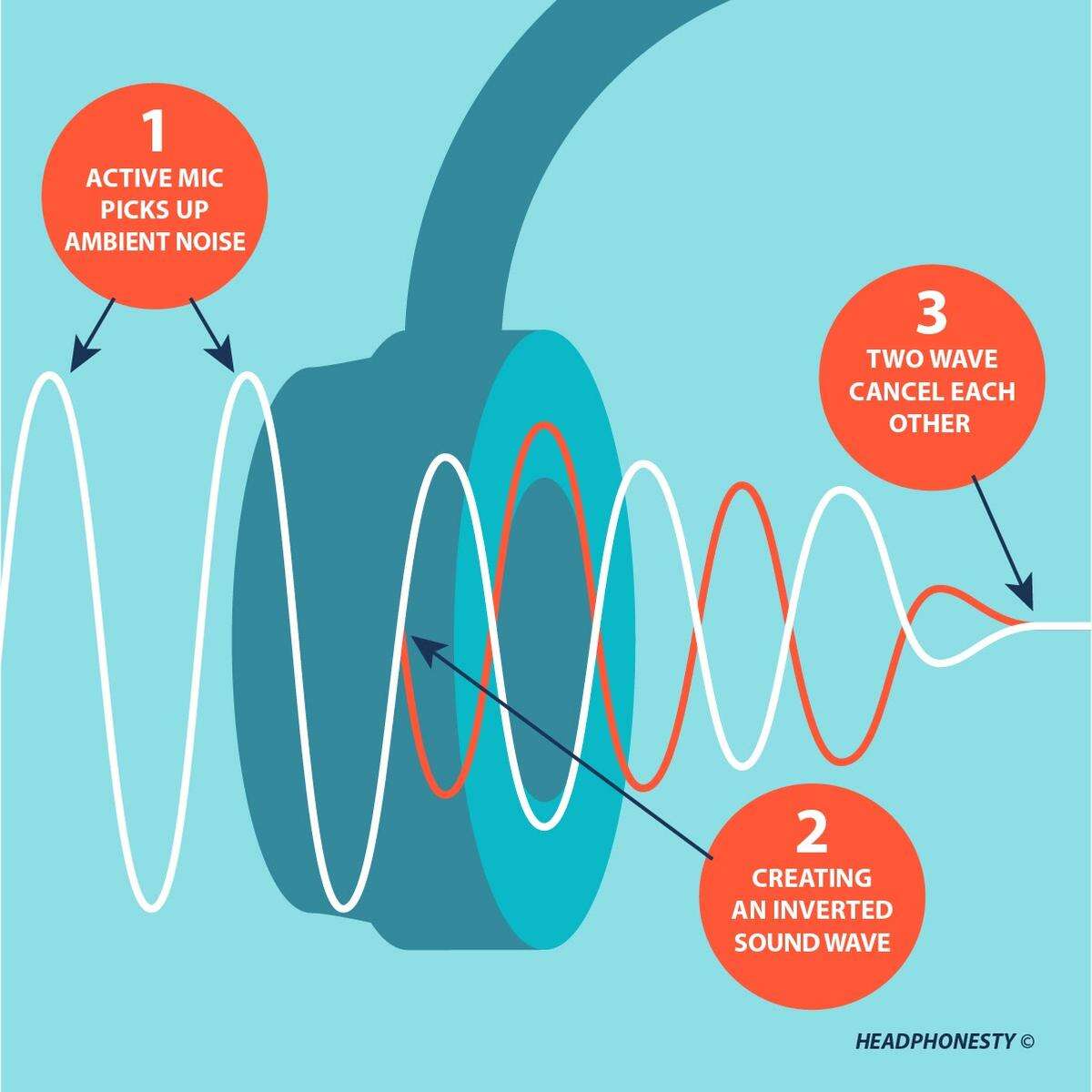
Active noise cancellation uses microphones and inverse sound waves to reduce steady outside noise before it reaches your ears.
If you have used earbuds on a plane, train, or busy street, you have felt this effect: the world seems to fade without the need to turn up your music. Understanding how active noise cancellation works in earbuds helps you choose the right model, use it safely, and know what its limits are. The technology combines microphones, signal processing, and tiny speakers in a fast feedback loop. This guide explains each part in clear terms, with practical examples from everyday listening.
What Is Active Noise Cancellation?
Active noise cancellation, often called ANC, is an electronic system that lowers unwanted sound. It does not simply block noise with foam or silicone. Instead, it listens to outside sound and creates a second sound wave designed to reduce it.
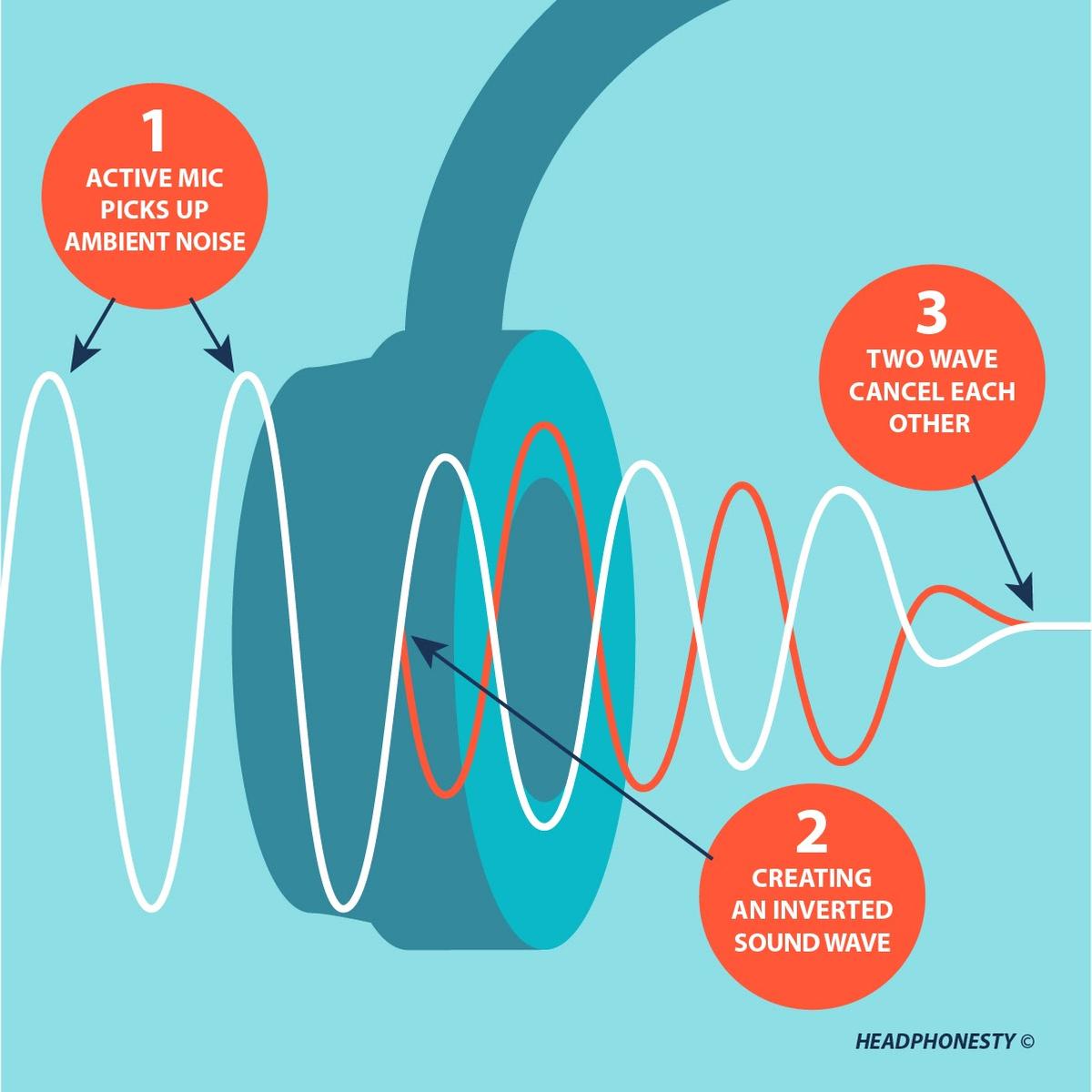
Think of two waves meeting in a pool. If the crest of one wave meets the trough of another, they partly cancel each other. ANC uses the same basic idea with sound waves. The earbuds produce an “anti-noise” signal with a similar shape but an opposite phase.
This process is different from passive noise isolation:
• Passive isolation uses ear tips, earbud shells, and physical barriers to block sound.
• Active noise cancellation uses microphones, a processor, and speakers to reduce sound electronically.
• The best earbuds use both methods at the same time.
ANC works best with steady, low-pitched sounds. An airplane engine, air conditioner, bus motor, or office fan produces fairly predictable noise. Sudden sounds, such as a cough or a clattering plate, are harder to cancel because they change too quickly.
How Active Noise Cancellation Works in Earbuds
The answer to how active noise cancellation works in earbuds comes down to four steps: capture, analyze, create, and reduce. Each step happens in a fraction of a second.
1. Microphones capture unwanted sound
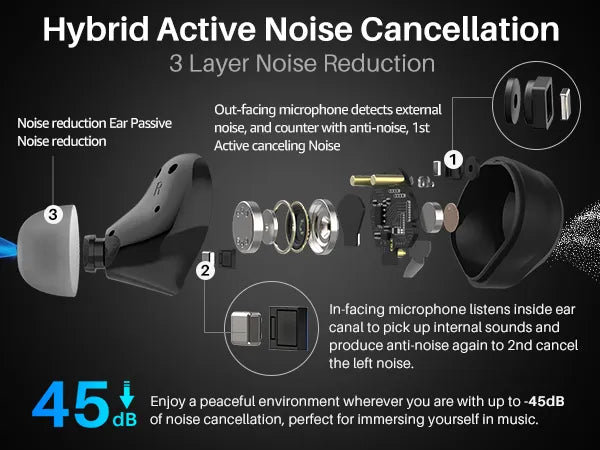
ANC earbuds contain small microphones. Some sit on the outside of the earbud, while others sit inside the ear canal. Many advanced models use both.
The outside microphone hears noise before it reaches your ear. The inside microphone checks what sound remains inside the earbud. This gives the system two views of the same problem.
2. A processor studies the sound
A small digital signal processor analyzes the incoming sound. It looks at the sound’s frequency, volume, and timing.
The processor then estimates which anti-noise signal will best reduce it. This calculation must be extremely fast. Even a small delay can make ANC less useful or create an odd pressure-like feeling.
3. The speaker creates anti-noise
The earbud speaker plays the anti-noise along with your music or podcast. The anti-noise is not silence. It is a carefully shaped sound wave that targets the unwanted noise.
When the outside noise and anti-noise meet near your eardrum, their energy is reduced. The result is a quieter background.
4. The system checks and adjusts
In earbuds with inner microphones, the system measures the sound inside your ear. It can then adjust the anti-noise signal.
This is called a feedback system. It helps account for changes in ear tip fit, movement, and ear shape. That is one reason a tight, stable seal can improve ANC performance.

Feedforward, Feedback, and Hybrid ANC
Not all ANC earbuds use the same microphone design. The three main systems are feedforward, feedback, and hybrid ANC.
Feedforward ANC
Feedforward ANC uses microphones on the outside of the earbuds. These microphones hear outside noise before it enters the ear canal.
Benefits include:
• Fast detection of outside sound
• Useful performance across many noise types
• No microphone placed directly inside the ear canal
Its main weakness is that it cannot directly measure the sound reaching your eardrum. Wind can also strike the outer microphones and create noise.
Feedback ANC
Feedback ANC uses microphones inside the earbuds. These microphones listen to the sound that remains near your ear.
Benefits include:
• Better control of sound inside the ear
• More accurate adjustment for some ear shapes
• Useful correction when the earbud fit changes
Feedback ANC can be more sensitive to poor tuning. If the system is not designed well, it may affect music quality or create a faint electronic sound.
Hybrid ANC
Hybrid ANC combines outside and inside microphones. It gives the processor more information and usually provides stronger, more flexible noise control.
Many premium earbuds use hybrid ANC. However, more microphones do not automatically mean better ANC. Software quality, microphone placement, speaker design, and ear tip fit matter just as much.
Why ANC Works Best on Low, Steady Sounds
The effectiveness of ANC depends on the nature of the noise. Low-frequency sound has long waves and changes more slowly. This gives the earbuds time to measure it and generate a matching anti-noise signal.
Common examples include:
• Jet and airplane cabin noise
• Train and subway rumble
• Bus and car engines
• Air conditioners and heating systems
• Office fans and ventilation units
High-frequency sounds have shorter waves and can change very quickly. By the time an earbud detects and processes a sharp sound, part of it may already have reached your ear.
That is why ANC may reduce an airplane engine to a soft hum but do little against a baby crying nearby. Passive isolation helps with those higher sounds, especially when the ear tips create a strong seal.
In my own earbud testing, the biggest difference often appears before music starts. With a good seal and strong ANC, steady room noise drops first. Voices and sudden sounds remain easier to notice, which is useful when someone speaks to you.

The Role of Ear Tips and Passive Noise Isolation
Good ANC cannot fix a poor physical fit. If outside sound enters around the ear tips, the electronic system has more work to do.
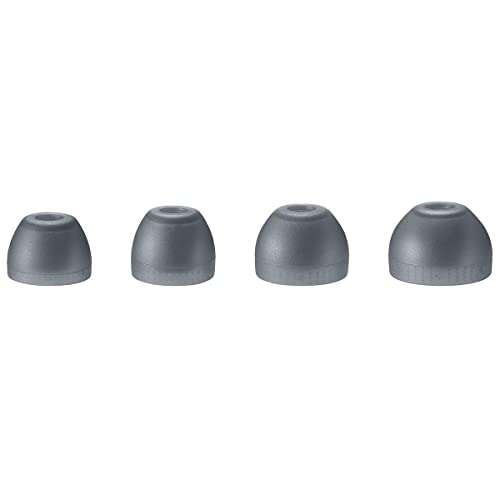
Ear tips affect both comfort and performance. Silicone tips are common and easy to clean. Foam tips can expand inside the ear canal and may improve passive isolation for some listeners.
Try these practical steps:
-
Test every ear tip size included with the earbuds.
-
Choose the smallest tip that creates a secure seal without pain.
-
Run the fit test in the companion app if one is available.
-
Twist the earbuds gently into place instead of pushing them too deeply.
-
Replace worn or loose tips.
A tight seal can improve bass, speech clarity, and ANC at the same time. A loose seal often creates weak bass and makes noise cancellation seem disappointing.
One common mistake is choosing ear tips based only on comfort in the first 30 seconds. Walk, talk, and move your jaw while testing them. The best fit should stay stable during real use.
Adaptive Noise Cancellation Explained
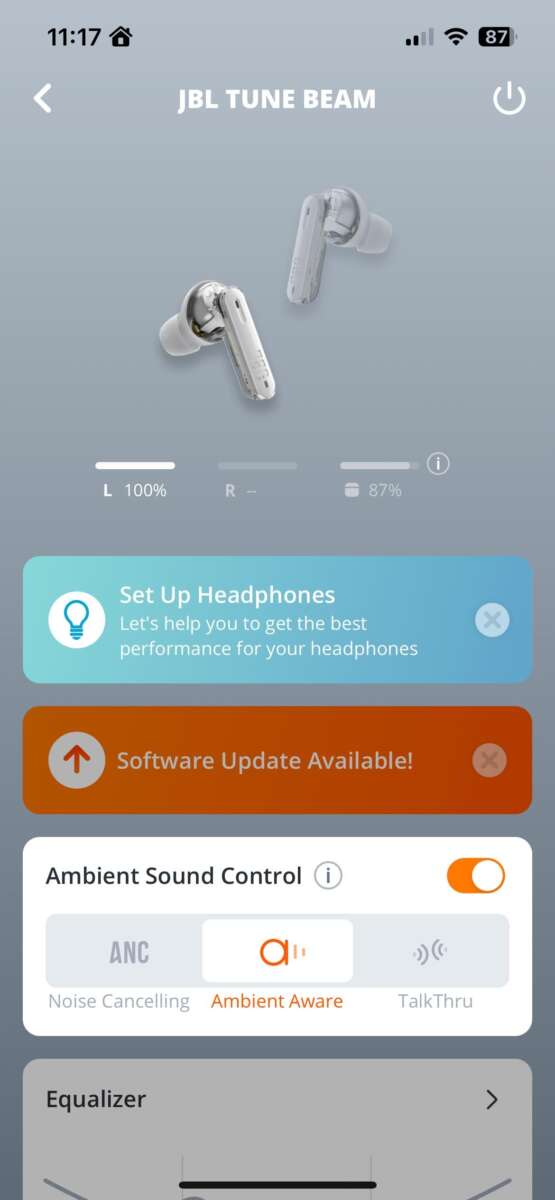
Adaptive ANC changes its level or tuning based on the environment. The earbuds monitor surrounding sound and adjust the anti-noise signal as conditions change.
For example, the earbuds may use stronger cancellation on a loud flight. In a quiet café, they may reduce the effect to preserve battery life and sound quality.
Some adaptive systems also respond to movement. Wind noise, walking, and changes in fit can affect the microphones. Better software may identify these conditions and change the processing.
Adaptive ANC can be useful, but it is not always perfect. You may notice small changes in background sound as the system reacts. If that bothers you, a fixed ANC mode may feel more natural.
Transparency mode uses a related microphone system in the opposite way. Instead of reducing outside sound, it feeds selected outside sound into the earbuds. This lets you hear announcements, traffic, or a conversation without removing the earbuds.

What Affects ANC Performance?
The answer to how active noise cancellation works in earbuds also depends on the complete earbud design. The same ANC chip can perform very differently in two products.
Important factors include:
• Ear tip seal: A poor seal allows more noise to enter.
• Microphone quality: The microphones must capture sound clearly.
• Processing speed: Slow processing can reduce cancellation accuracy.
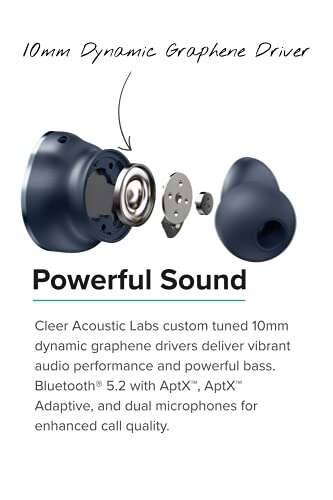
• Speaker performance: The drivers must produce clean anti-noise.
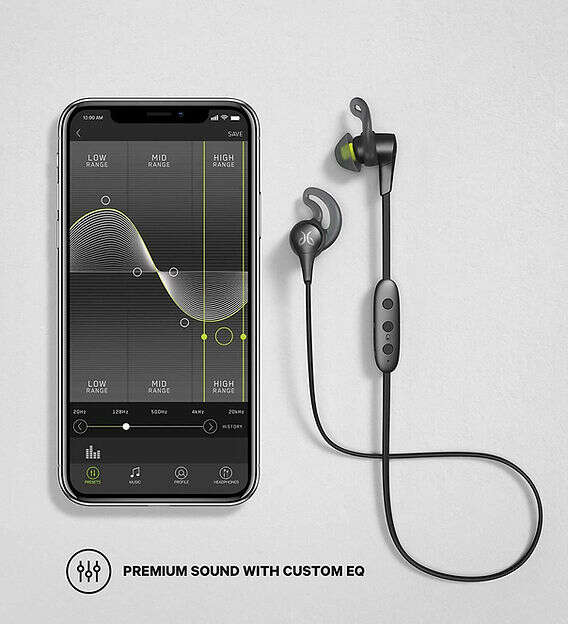
• Software tuning: Digital filters shape how the system responds.
• Wind control: Outdoor microphones need protection from wind blasts.
• Battery power: ANC uses energy, so low battery may affect some features.
• Ear shape: Every ear is different, and fit can change the result.
Bluetooth audio quality does not directly determine ANC strength. A pair of earbuds can support high-quality music codecs and still have weak ANC. Likewise, excellent ANC does not guarantee excellent music.
Independent tests often measure noise reduction across different frequencies. These tests are useful, but your own fit remains important. Earbuds that perform well in a lab may work less well if their tips do not seal your ears.

Benefits of Active Noise Cancellation
ANC can make daily listening easier and more comfortable. It reduces the need to fight against background noise.
Key benefits include:
• Lower listening volume: You may not need to turn music up to overcome an engine or fan.
• Better focus: Less background rumble can help during work, study, or travel.
• Clearer calls: Some earbuds use ANC and voice microphones to improve call quality.
• More relaxed travel: Reducing cabin noise can make long flights feel less tiring.
• Better detail at lower volume: Quiet backgrounds let you hear podcasts and music more clearly.
A quieter background may also reduce listening fatigue. This does not mean ANC protects your hearing by itself. High volume can still harm hearing, even when the background is quiet.
The World Health Organization recommends safe listening habits, including reasonable volume and regular breaks. Treat ANC as a comfort feature, not a license to listen loudly for hours.
Limitations and Possible Drawbacks
Active noise cancellation is impressive, but it has clear limits. It cannot remove every sound, and performance varies by person and product.
Some users notice a pressure-like sensation when ANC is turned on. ANC does not create dangerous air pressure inside your ears. The feeling may come from the reduced low-frequency sound, the sealed ear tips, or the brain adjusting to the changed sound balance.
Other possible drawbacks include:
• Battery drain: ANC requires microphones and signal processing.
• Wind noise: Outdoor airflow can overload external microphones.
• Audio changes: Some earbuds sound slightly different with ANC enabled.
• Processing artifacts: Poor tuning can cause hiss, flutter, or a watery sound.
• Fit problems: A weak seal reduces both ANC and bass.
• Reduced awareness: ANC can make it harder to hear traffic, alarms, or announcements.
Do not use strong ANC when you need full awareness of your surroundings. In busy streets, near traffic, or at work sites, transparency mode or no earbuds may be safer.
If ANC causes pain, dizziness, or lasting discomfort, stop using it and consider speaking with a health professional. Comfort problems should not be ignored.
How to Use ANC Safely and Effectively
The best results come from combining good settings with good habits. Start by selecting the correct ear tips and checking the fit.
Use these tips:
-
Turn on ANC in a steady-noise setting, such as a plane or office.
-
Keep the earbuds clean, especially around microphone openings.
-
Avoid covering the external microphones with hair, hats, or your fingers.
-
Use transparency mode when walking near roads or speaking with others.
-
Keep the volume moderate even when ANC is active.
-
Take breaks during long listening sessions.
-
Update the earbud firmware when the manufacturer provides a trusted update.
-
Clean ear tips according to the manufacturer’s instructions.
A useful test is to play a familiar podcast at a low level. Turn ANC on and off. If you need to raise the volume sharply when ANC is off, the feature is helping reduce background noise.
Do not judge ANC in a silent bedroom. Test it in the place where you plan to use it. A pair that works well on a train may not handle wind well during a walk.
ANC in Earbuds Versus Noise-Canceling Headphones
Both earbuds and headphones use the same basic ANC principle. The main difference is the physical design around your ears.
Over-ear headphones have larger ear cups. These cups can provide stronger passive isolation and more space for microphones and speakers. They often perform very well against low-frequency noise.
Earbuds are smaller and easier to carry. Their performance depends more on the ear tip seal and the shape of your ear canal.
Earbuds may be the better choice when you want:
• A light design for commuting
• A small case that fits in a pocket
• Easy use during exercise
• A discreet option for daily travel
Headphones may be better when you want:
• Longer comfort during flights
• Strong passive isolation
• Larger batteries
• A more immersive listening experience
Neither design wins in every situation. Fit, tuning, comfort, and use case matter more than marketing terms alone.
Common ANC Mistakes to Avoid
Many complaints about how active noise cancellation works in earbuds come from setup issues rather than faulty technology.
Avoid these mistakes:
• Using the wrong ear tip size: A loose tip lets noise leak around the seal.
• Expecting total silence: ANC reduces noise; it does not create a silent room.
• Testing only with music: Music can hide problems with the ANC system.
• Ignoring wind: Wind can create noise that ANC cannot fully remove.
• Wearing earbuds too loosely: Small movements can break the seal.
• Using maximum volume: ANC is not a reason to listen dangerously loud.
• Covering microphones: Fingers and clothing can block or confuse the microphones.
• Comparing products without checking fit: A different ear shape can change the result.
In my experience, fit is the most overlooked factor. People often compare two pairs while wearing different tip sizes. Before judging ANC, use the fit test and make sure both earbuds sit evenly.
Frequently Asked Questions About How Active Noise Cancellation Works in Earbuds
Does active noise cancellation block all outside sound?
No. ANC mainly reduces steady, low-frequency noise, such as engines and fans. Ear tips provide extra passive isolation, while voices and sudden high-frequency sounds may still be audible.
Is active noise cancellation safe for your ears?
ANC is generally safe when the earbuds fit well and you listen at a safe volume. It does not protect your ears from loud music, so take breaks and avoid raising the volume too high.
Does ANC use more battery?
Yes. ANC powers microphones and digital processing, so it usually reduces battery life compared with standard listening. Battery impact varies by model and by features such as adaptive ANC and transparency mode.
Why does ANC sometimes feel like pressure?
The pressure feeling usually comes from the sealed ear tips and the change in low-frequency sound, not from actual air pressure. If the sensation is painful or continues after use, stop wearing the earbuds and seek medical advice if needed.
Does ANC work without music?
Yes. ANC can reduce outside noise even when no music is playing. The earbuds still need power to run the microphones and processing system.
Is transparency mode the same as ANC?
No. ANC reduces selected outside sounds, while transparency mode uses microphones to bring outside sound into the earbuds. Transparency mode helps you hear people, announcements, and nearby traffic.
Conclusion
Active noise cancellation works by capturing outside sound, creating an opposite sound wave, and reducing the result near your ears. It works best with steady, low-frequency noise and performs better when the ear tips create a strong seal.
The most important lesson is simple: ANC quality depends on more than a product label. Fit, microphone design, software, wind control, comfort, and safe listening habits all matter. Test earbuds in the places where you will use them, keep the volume moderate, and use transparency mode when awareness is important.
Now that you understand how active noise cancellation works in earbuds, you can make a smarter buying choice and get more from your current pair. Explore reliable product tests, compare fit and battery life, and share your own ANC experience in the comments.

Everett Ashford is a tech reviewer at mytechgrid.com specializing in SSDs, cameras, TVs, earbuds, headphones, and other consumer electronics. He provides honest, data-driven reviews based on hands-on testing and real-world performance analysis. Everett simplifies complex tech details to help readers make smart, confident buying decisions.