
The smallest earbuds you can buy are the JLab JBuds Mini, Soundcore Sleep A20, and 1More ComfoBuds Mini.
Finding the smallest earbuds you can buy is not just about choosing the lightest model. Earbud shape, nozzle length, case size, battery life, comfort, and sound quality all matter. After comparing compact true wireless earbuds, sleep earbuds, and small in-ear designs, I found that the best choice depends on how and where you plan to wear them.
What are the smallest earbuds you can buy?
For most people, the JLab JBuds Mini are among the smallest everyday wireless earbuds available in the United States. They have a tiny body, a small charging case, and a low weight that suits small ears and active use.
The Soundcore Sleep A20 are also very small, but they serve a different purpose. They are made for sleeping and have a slim, low-profile shape that creates less pressure when you rest on your side.
Other compact options include the 1More ComfoBuds Mini and Skullcandy Dime 3. These models are small enough for daily use, but each one makes different trade-offs in sound, noise control, battery life, and fit.
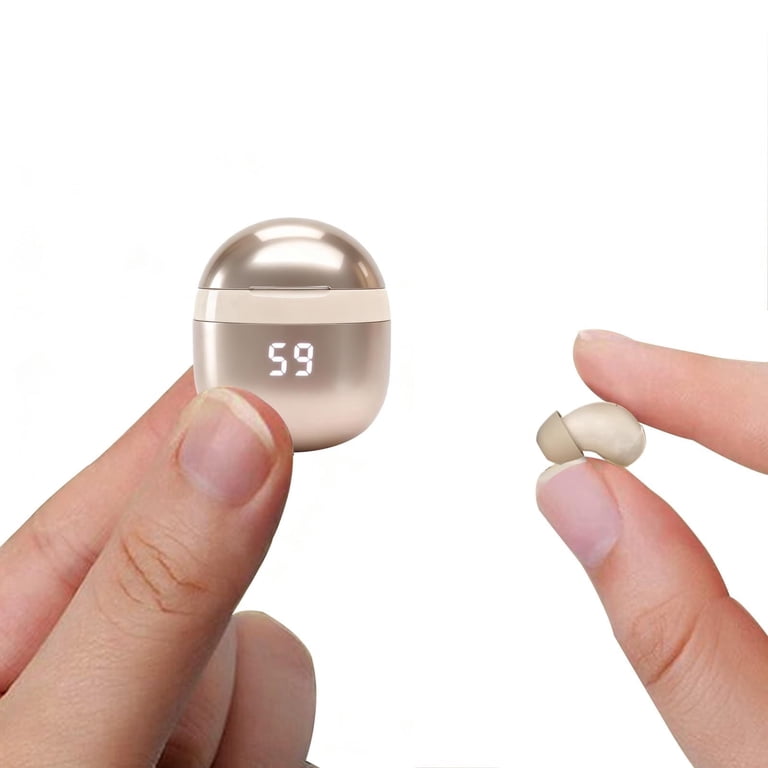
Smallest earbuds at a glance
The table below gives you a quick way to compare the smallest earbuds you can buy for different needs.
| Earbuds | Best for | Main advantage | Main limitation |
|---|---|---|---|
| JLab JBuds Mini | Everyday listening | Very small size and case | Basic noise control |
| Soundcore Sleep A20 | Sleeping | Slim, comfortable design | Not ideal for phone calls |
| 1More ComfoBuds Mini | Small ears and ANC | Compact fit with noise cancellation | Shorter battery than some rivals |
| Skullcandy Dime 3 | Low-cost use | Small case and simple controls | Fewer premium features |
| Sony LinkBuds S | Small premium earbuds | Light build and strong features | Less compact than the smallest models |
| Earin A-3 | Minimalist design | Extremely small earbud profile | Limited availability and support |
The JLab JBuds Mini are usually the safest answer for shoppers who want one small pair for music, calls, travel, and exercise. The Soundcore Sleep A20 are better if your main goal is sleeping comfort.

JLab JBuds Mini: best tiny earbuds for everyday use
The JLab JBuds Mini are one of the strongest answers to the question, “What are the smallest earbuds you can buy?” Their earbud housings are noticeably smaller than those on many popular models, and the charging case can fit easily in a coin pocket.
They are a good match for:
• Small ears
• Gym sessions
• Walking and commuting
• Casual music and podcasts
• People who dislike bulky charging cases
Their small size does mean you should keep expectations realistic. You do not get the same sound depth, microphone quality, or noise cancellation found on larger premium earbuds. Still, they offer a useful balance of comfort, cost, battery life, and portability.
One practical lesson is that a tiny earbud can be easier to lose. I recommend using the included case every time you remove them. A small case is convenient, but it can disappear quickly in a backpack or couch cushion.

Soundcore Sleep A20: smallest earbuds for sleeping
The Soundcore Sleep A20 are designed for sleep rather than general-purpose listening. Their low-profile shape helps reduce pressure when your head rests against a pillow. They also focus on soft sounds, sleep tracks, and wireless audio instead of powerful bass or high-volume music.
These earbuds are a strong choice if you:
• Sleep on your side
• Share a room with a snoring partner
• Need gentle background sounds
• Travel often and sleep in noisy places
• Want a less intrusive alternative to standard earbuds
They are not the smallest earbuds you can buy for every use. Their technology, case, and sleep-focused features make them more specialized. They also lack the full feature set you may expect from premium music earbuds.
A key safety point matters here. Avoid listening at high volume while sleeping, especially for many hours. Long exposure to loud sound can increase the risk of hearing damage. Keep the volume low enough that the audio feels like background sound, not a concert in your ear.

1More ComfoBuds Mini: compact earbuds with noise cancellation
The 1More ComfoBuds Mini are among the smallest earbuds you can buy if active noise cancellation is important. They use a small, rounded design that sits inside the ear without extending too far outward.
Their main strengths include:
• Active noise cancellation
• A compact charging case
• Wireless charging on supported versions
• A comfortable fit for many small ears
• A discreet appearance
The trade-off is battery life. Compact earbuds have less room for batteries, microphones, and processors. This is why small earbuds often need more frequent charging than larger models.
Noise cancellation also depends on the seal created by the ear tips. Even the best ANC system will work poorly if the tips are too small or too large. Try each included tip size before judging the earbuds.

Skullcandy Dime 3: small earbuds on a budget
The Skullcandy Dime 3 are a practical choice for shoppers who want small earbuds without paying for premium extras. They have a compact case and a simple control system that works well for music, calls, and podcasts.
They are best suited to people who want:
• An affordable backup pair
• Small earbuds for school or commuting
• Simple controls
• A case that takes little space
• A recognizable brand at a modest price
The Dime 3 do not offer the same level of noise cancellation or refined sound as more expensive models. Their microphones may also struggle in heavy wind or busy streets.
For many buyers, that is acceptable. A small, affordable pair can be more useful than an expensive model that feels uncomfortable. Comfort should be treated as a major feature, not a bonus.

Sony LinkBuds S: a lightweight premium option
The Sony LinkBuds S are not the smallest earbuds you can buy, but they remain among the lightest premium true wireless earbuds. Their rounded shape sits close to the ear, and they offer features such as noise cancellation, ambient sound, app controls, and high-quality Bluetooth support.
They are a better choice than ultra-small budget earbuds if you want:
• Stronger sound quality
• Better noise control
• Useful phone call features
• A secure fit for travel
• App-based sound adjustment
The case and earbuds are still compact, but they are larger than the JLab JBuds Mini. Sony has also changed its earbud lineup over time, so stock and pricing may vary.
This is a common buying mistake: choosing premium features before checking fit. If the earbud presses against your ear or slowly works loose, advanced audio performance will not matter much.

What makes an earbud truly small?
The smallest earbuds you can buy are not always the ones with the lowest listed weight. Size has several parts, and each one affects comfort.
Earbud housing
The housing is the main outer shell. A smaller housing usually feels less noticeable and may fit better in small ears.
Nozzle length
The nozzle is the part that holds the ear tip. A long nozzle can create pressure deep inside the ear canal, while a short nozzle may feel more comfortable for some people.
Earbud height
Some earbuds sit far outside the ear. Others stay nearly flush with the outer ear. Low-profile earbuds are often better for sleeping, wearing hats, or resting your head against a pillow.
Ear tip size
The correct tip can make a medium-sized earbud feel smaller. A poor tip can make even the smallest earbuds feel tight or unstable.
Charging case size
A tiny earbud with a large case is not very portable. Look at both the earbud dimensions and the case dimensions before buying.

How to choose the smallest earbuds for your ears
Choosing the smallest earbuds you can buy starts with your ear shape, not the product photo. Ear canals vary in width, depth, and angle. A model that fits one person may fall out of another person's ears.
Use this process:
- Check the earbud weight and shape. Look for a low-profile body and a short nozzle.
- Confirm that the box includes several ear tip sizes.
- Start with the medium tips, then test smaller and larger tips.
- Wear the earbuds for at least 20 minutes.
- Walk, turn your head, and open your mouth while testing the fit.
- Check whether the earbud causes pressure or pain.
- Buy from a retailer with a clear return policy.
A secure fit should feel stable but not tight. If you need to push the earbud deep into your ear, it is probably the wrong shape or tip size.
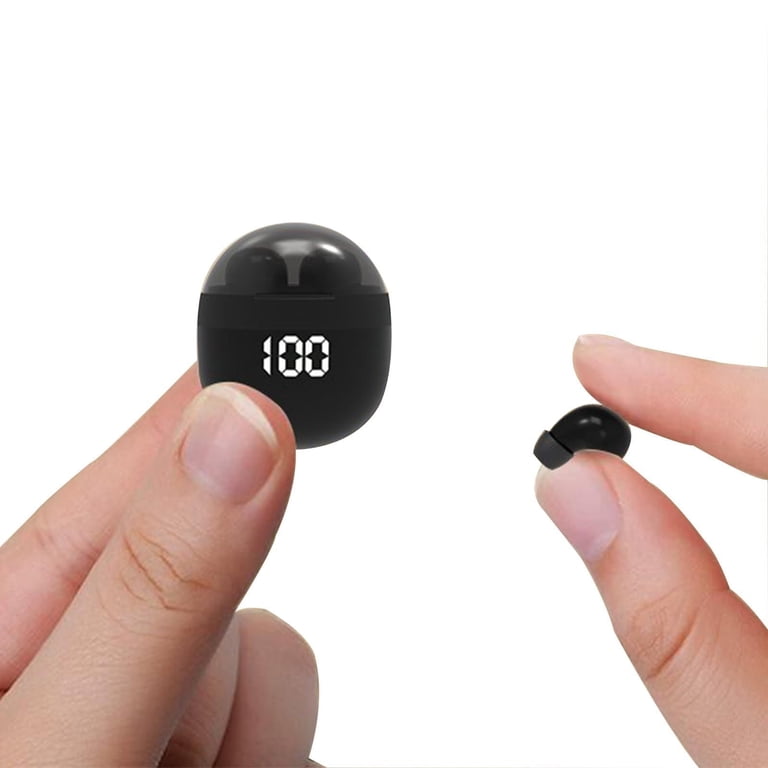
Small earbuds versus large earbuds
Small earbuds offer clear benefits, but they cannot beat larger models in every category.
Benefits of small earbuds
• Better comfort for small ears
• Less pressure during long listening
• Easier storage and travel
• A more discreet look
• Better comfort under hats and helmets
• Less interference when lying down
Limitations of small earbuds
• Smaller batteries
• Shorter playback time in some models
• Less room for powerful speakers
• Smaller microphones
• Fewer physical controls
• A greater chance of being misplaced
Large earbuds may provide stronger bass, better microphones, longer battery life, and more advanced processors. Think of small earbuds as compact cars. They are easy to park and efficient to use, but they may not carry as much equipment.
Do small earbuds sound worse?
Not always. Earbud size affects the available battery, speaker chamber, and microphone space, but it does not decide sound quality by itself.
Tuning, driver design, software, and the ear tip seal often matter more. A small earbud with a good fit can sound better than a large earbud that leaks sound.
The smallest earbuds you can buy may produce clear vocals and strong detail. They may not deliver the same deep bass or wide soundstage as larger models, but most listeners will find them suitable for podcasts, pop, calls, and daily streaming.
For the best sound, select the correct ear tip first. A good seal improves bass and blocks outside noise without requiring unsafe volume levels.
Battery life and charging expectations
Tiny earbuds usually have smaller batteries. Many compact models provide several hours of listening per charge, while the case adds several more charges. Exact results depend on volume, noise cancellation, call use, Bluetooth settings, and battery age.
Noise cancellation often uses more power. Phone calls can also reduce runtime because the microphones and wireless connection work harder.
Before buying, check:
• Earbud playback time
• Total case battery life
• Charging connector
• Wireless charging support
• Fast-charge time
• Battery replacement options
Battery claims are normally measured under controlled conditions. Your real-world results may be lower, especially at high volume or with ANC enabled.
Smallest earbuds for calls, exercise, and travel
The smallest earbuds you can buy for calls should have stable microphones and a secure fit. A tiny body is helpful, but it does not guarantee clear speech. Wind reduction and microphone software are just as important.
For exercise, choose earbuds with a secure seal and some level of water or sweat resistance. Check the exact rating. Water resistance does not mean the earbuds are safe for swimming unless the manufacturer clearly says so.
For travel, active noise cancellation can reduce engine noise. However, you should use transparency or ambient mode near roads, train platforms, and busy public spaces. Small earbuds are easy to carry, but awareness of your surroundings remains essential.
Mistakes to avoid when buying tiny earbuds
Many buyers focus only on size and regret the purchase later. Avoid these common errors:
• Choosing based only on the product photo
• Ignoring the return policy
• Assuming all small earbuds fit small ears
• Buying without checking case size
• Expecting premium ANC from a budget model
• Wearing earbuds at high volume to overcome poor fit
• Sleeping with bulky earbuds
• Forgetting that small earbuds are easier to lose
The best small earbuds should disappear in your ears, not disappear from your life because they are uncomfortable or difficult to charge.
Frequently asked questions about what are the smallest earbuds you can buy
What are the smallest wireless earbuds for daily use?
The JLab JBuds Mini are among the smallest wireless earbuds for everyday listening. They combine a tiny earbud design with a compact charging case and a simple feature set.
Are the smallest earbuds good for small ears?
Yes, small earbuds can work well for small ears, but shape matters as much as size. Try different ear tips and choose a model with a short nozzle and low-profile housing.
What are the smallest earbuds for sleeping?
The Soundcore Sleep A20 are designed specifically for sleeping and side-sleeping comfort. They are slimmer than many standard true wireless earbuds and focus on gentle audio rather than full music features.
Do tiny earbuds have shorter battery life?
Often, yes. Small earbuds have less internal space for batteries, so they may provide less listening time per charge than larger models. The charging case can make up for this by providing several extra charges.
Are small earbuds safe to wear all day?
They can be safe when used at a moderate volume and kept clean. Take regular breaks, avoid loud listening, and stop using them if you notice pain, ringing, or muffled hearing.
Which small earbuds have noise cancellation?
The 1More ComfoBuds Mini and Sony LinkBuds S are compact options with active noise cancellation. ANC performance depends heavily on getting a proper seal with the correct ear tips.
Conclusion
The smallest earbuds you can buy depend on your main goal. Choose the JLab JBuds Mini for everyday portability, the Soundcore Sleep A20 for sleeping, the 1More ComfoBuds Mini for compact ANC, and the Skullcandy Dime 3 for a lower-cost option.
Do not judge size by weight alone. Compare the housing, nozzle, ear tips, case, battery life, microphone quality, and return policy. Start with comfort, then choose the features you will truly use. Explore current prices and fit options from trusted retailers, and share your favorite compact earbuds in the comments.

Everett Ashford is a tech reviewer at mytechgrid.com specializing in SSDs, cameras, TVs, earbuds, headphones, and other consumer electronics. He provides honest, data-driven reviews based on hands-on testing and real-world performance analysis. Everett simplifies complex tech details to help readers make smart, confident buying decisions.