If you are shopping for a Canon camera in the United States, the numbers in names such as Canon EOS Rebel T8i, Canon EOS 90D, Canon EOS R7, or Canon EOS R5 Mark II mainly identify the camera’s model family, market level, and generation.
They do not usually tell you the megapixel count, sensor size, or exact release year.
Canon’s naming system can feel like a code. The key is to read the full name, including the letters. A number such as 7, 50, 90, or 5 only has meaning when you know which Canon family it belongs to.


The short answer: Canon camera numbers identify model families
Canon uses numbers to separate cameras within different product lines. In many families, a larger number suggests a higher position in that family. However, you should not compare numbers across different families as if they were on one simple scale.
For example:
- An EOS 90D is a high-level Canon DSLR.
- An EOS Rebel T8i is an entry-level or enthusiast Rebel DSLR.
- An EOS R7 is an advanced APS-C mirrorless camera.
- An EOS R5 is a higher-resolution full-frame mirrorless camera.
- An EOS R8 is a lighter full-frame mirrorless camera, despite having a larger number than the R5.
So, R8 is not automatically “better” than R5. The cameras serve different needs.
The number is best treated as a model label, not a complete rating.
How Canon camera model names are built
A Canon model name usually contains several parts:
Canon + product family + model number + generation or special suffix


Examples include:
- Canon EOS R6 Mark II
- Canon EOS R7
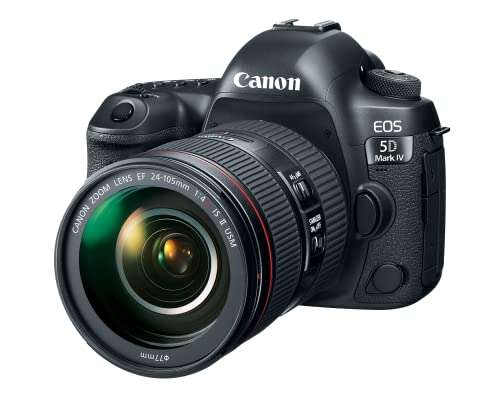
- Canon EOS 5D Mark IV
- Canon EOS Rebel T7
- Canon EOS M50 Mark II
Each part gives a different clue.
| Part of the name | What it usually tells you |
|---|---|
| EOS | Canon’s interchangeable-lens camera system |
| Rebel | Canon’s U.S. name for many entry-level DSLR models |
| R | Canon’s modern mirrorless camera system |
| M | Canon’s older compact mirrorless system |
| Number | The model family or position within that family |
| Mark II, Mark III, or Mark IV | A later version of the same basic model line |
| D | A DSLR designation used in many Canon model names |
| C | A cinema or video-focused model in some product lines |
| S | A special model suffix that may signal a different design or feature set |
Canon has used these labels over many years, so the exact meaning can vary by model.
What the EOS label means
EOS is Canon’s name for its camera system. It appears on many Canon DSLR and mirrorless cameras.
EOS does not describe the camera’s price, sensor size, or quality. It mainly identifies the camera system and its compatibility with Canon lenses and accessories.
Two cameras can both carry the EOS name but use different mounts:
- Canon EOS DSLR cameras commonly use the EF or EF-S lens mount.
- Canon EOS R mirrorless cameras use the RF or RF-S lens mount.
- Canon EOS M mirrorless cameras use the EF-M lens mount.
A lens mount is the physical and electronic connection between the lens and camera. It affects which lenses fit directly and whether an adapter may be needed.

What numbers mean on Canon Rebel cameras
Canon uses the Rebel name in the United States for many entry-level DSLR cameras. Examples include:
- Rebel T3
- Rebel T5
- Rebel T6
- Rebel T7
- Rebel T8i
The number and letter combination identifies the model line. It is not a direct score.
What the T number suggests
Within the Rebel series, a newer model often has a newer processor, improved autofocus, better wireless features, or a revised body. But the number alone does not tell you every difference.
For example, a Rebel T7 and a Rebel T8i may both be beginner-friendly DSLR cameras, but the T8i offers a more advanced feature set than the T7.
The T is part of the Rebel model name. It does not mean the camera has a particular sensor size or a fixed number of megapixels.
What the four-digit numbers mean
Canon has also sold Rebel cameras with four-digit names in other markets, such as:
- EOS 2000D
- EOS 250D
- EOS 800D
In the United States, the same or closely related cameras may use Rebel names instead. For example, Canon often uses Rebel T7 in the U.S. while related versions may carry a numeric name in other regions.


This means you should check the exact regional model before buying a battery, grip, remote, or other accessory.
Is a higher Rebel number better?
Usually, a newer or higher-positioned Rebel model has more features. Still, the number does not guarantee better image quality in every situation.
A lower-priced camera may produce similar images in good light if it uses a sensor with a similar size and resolution. The larger differences may appear in:
- Autofocus tracking
- Burst speed
- Video functions
- Viewfinder design
- Touchscreen controls
- Wireless connections
- Battery life
- Body controls and build
For a beginner, the lens and shooting skill can matter as much as the camera number.

What numbers mean on Canon DSLR cameras
Canon DSLR model numbers are grouped into several families. The family tells you more than the number by itself.
Canon EOS 1D series
The 1D family represents Canon’s professional DSLR line. These cameras were built for demanding work such as sports, news, and wildlife photography.
The exact model name adds more detail:
- EOS-1D X Mark II
- EOS-1D X Mark III
- EOS-1D Mark IV
The X in the 1D X line identifies a particular professional series. Mark II and Mark III indicate later generations.
Canon EOS 5D series
The 5D family is known for full-frame DSLR bodies used by professionals, wedding photographers, portrait photographers, and serious enthusiasts.
Examples include:
- EOS 5D Mark II
- EOS 5D Mark III
- EOS 5D Mark IV
The 5D number does not mean five megapixels or a five-inch sensor. It identifies the product family.
Canon EOS 6D series
The 6D series is another full-frame DSLR family. It generally sits below the 5D line in body features and price, although the exact differences depend on the generation.
The 6D series has been popular with photographers who want a full-frame sensor in a smaller and often less costly body than a 5D-series camera.
Canon EOS 7D series
The 7D family was designed for advanced photographers, with strong autofocus and fast shooting features. It used an APS-C sensor rather than a full-frame sensor.


The 7D and 7D Mark II were especially relevant to sports, wildlife, and action photographers who valued speed and reach.
Canon EOS 80D and 90D series
The 80D and 90D are advanced APS-C DSLRs. The 90D is a later model than the 80D and adds newer processing, resolution, and video features.
Within this family:
90D generally represents a newer generation than 80D.
That does not mean every feature is twice as good. It means Canon updated the product line.
Canon EOS 10D, 20D, 30D, 40D, 50D, and 60D
These older two-digit DSLR models belong to earlier generations of Canon’s enthusiast camera lines.
The number usually increases with the generation:
- 20D came after 10D
- 30D came after 20D
- 40D came after 30D
- 50D came after 40D
The 60D changed the position of the line in several ways, including its body design and feature set. Therefore, the number should not be used as a precise quality score across every generation.
Canon EOS 100D, 200D, and 250D
These are compact DSLR models in some markets. In the United States, related models may use Rebel names.
For example, the EOS 250D is closely associated with the Rebel SL3 name in the U.S. The regional naming difference can make online shopping confusing.

What numbers mean on Canon EOS R mirrorless cameras
Canon’s EOS R system is its modern interchangeable-lens mirrorless platform. It includes full-frame and APS-C cameras.
Common models include:
- EOS R
- EOS RP
- EOS R3
- EOS R5
- EOS R6
- EOS R7
- EOS R8
- EOS R10
- EOS R50
- EOS R100
The number gives a general clue about the camera’s position, but there is no simple “higher is always better” rule.
Canon EOS R3
The R3 is a high-end professional mirrorless camera designed for fast action and demanding work.


The number 3 places it in Canon’s high-performance R-series range. It does not mean the camera has three times the performance of an R6 or three megapixels.
Canon EOS R5
The R5 is a high-resolution full-frame mirrorless model. It is aimed at photographers and hybrid creators who need detailed still images and strong video features.
The R5 Mark II is a later generation of the R5. The Mark II label matters because it signals a significant updated version, not a separate camera family.
Canon EOS R6
The R6 is a full-frame mirrorless camera focused on general photography, action, low light, and hybrid use.
The R6 Mark II is a later generation. It is not simply an R6 with a cosmetic change. Canon updated major internal features, including processing and autofocus functions.
Canon EOS R7
The R7 uses an APS-C sensor and sits near the advanced end of Canon’s APS-C mirrorless range.
Because APS-C sensors are smaller than full-frame sensors, the R7 can give a narrower field of view with the same lens. This can help wildlife and sports photographers who want extra apparent reach.
The R7’s number does not mean it ranks above every full-frame model. Sensor size, speed, resolution, lens choice, and video needs all change the comparison.
Canon EOS R8
The R8 is a compact full-frame mirrorless camera. Its larger number than the R6 does not make it a higher-tier replacement for the R6.
The R8 and R6 series differ in areas such as body design, controls, battery type, stabilization features, and other functions. Always compare the specifications that affect your work.
Canon EOS R10 and R50
The R10 and R50 are APS-C mirrorless cameras aimed at beginners and enthusiasts.
The R50 is positioned as a small, simple entry model. The R10 offers more direct controls and a more advanced feature set.
Here, the lower number does not mean the R10 is older or worse than the R50. The models occupy different places in Canon’s lineup.
Canon EOS R100
The R100 is an entry-level APS-C mirrorless camera. Its number identifies its position in the EOS R range.
It should not be compared directly with an R5 or R6 by number alone. Those models use different sensors, bodies, controls, and intended users.

What “Mark II,” “Mark III,” and “Mark IV” mean
Mark indicates a later version of a Canon camera model.
Examples:
- EOS R6 Mark II
- EOS R5 Mark II
- EOS 5D Mark IV
- EOS-1D X Mark III
A later Mark version often includes updates to several major systems:
- Image processor
- Autofocus
- Burst shooting
- Video recording
- Wireless functions
- Viewfinder
- Battery management
- Body controls
However, “Mark II” does not mean every part is completely new. Some features may remain similar to the earlier model.
When comparing two Mark versions, check the official Canon specifications and manual. Do not assume that a newer Mark model has the exact same accessories or battery.

What the letters mean in Canon camera names
Canon uses letters as well as numbers. These letters can be just as useful as the number.
What “R” means
R identifies Canon’s EOS R mirrorless camera system. It is also used in lens names such as RF and RF-S.
An EOS R camera does not have a DSLR mirror box. It uses an electronic viewfinder or rear screen to show the image.
What “D” means
The D in names such as 90D generally identifies a DSLR model.
A DSLR uses a mirror and an optical viewfinder. Canon’s newer mirrorless models use the EOS R naming system instead.
What “M” means
M identifies Canon’s EOS M mirrorless line, such as the EOS M50 and EOS M6 Mark II.
EOS M cameras use the EF-M lens mount. Canon’s current mirrorless focus has shifted to the EOS R system, so buyers should check future lens and accessory compatibility before choosing an EOS M body.
What “C” means
A C suffix can identify a cinema-oriented Canon model or a version aimed at video production. The meaning depends on the exact product name.
For example, Canon uses Cinema EOS names for dedicated video cameras. A camera with a C designation may have different cooling, recording, connectivity, and workflow features than a standard stills-focused model.
What “S” means
An S suffix does not have one universal meaning across all Canon cameras. It can identify a special version within a particular family.
Check the exact Canon product page rather than assuming that “S” always means faster, smaller, or more professional.
What “a” or regional suffixes mean
Some Canon cameras have small suffixes or different names in different regions. These may indicate:
- A regional naming variant
- A revised model
- A special finish
- A feature change
- A bundled or market-specific version
For accessories, use the exact model name printed on the camera and shown in its manual.

What the numbers on the camera screen mean
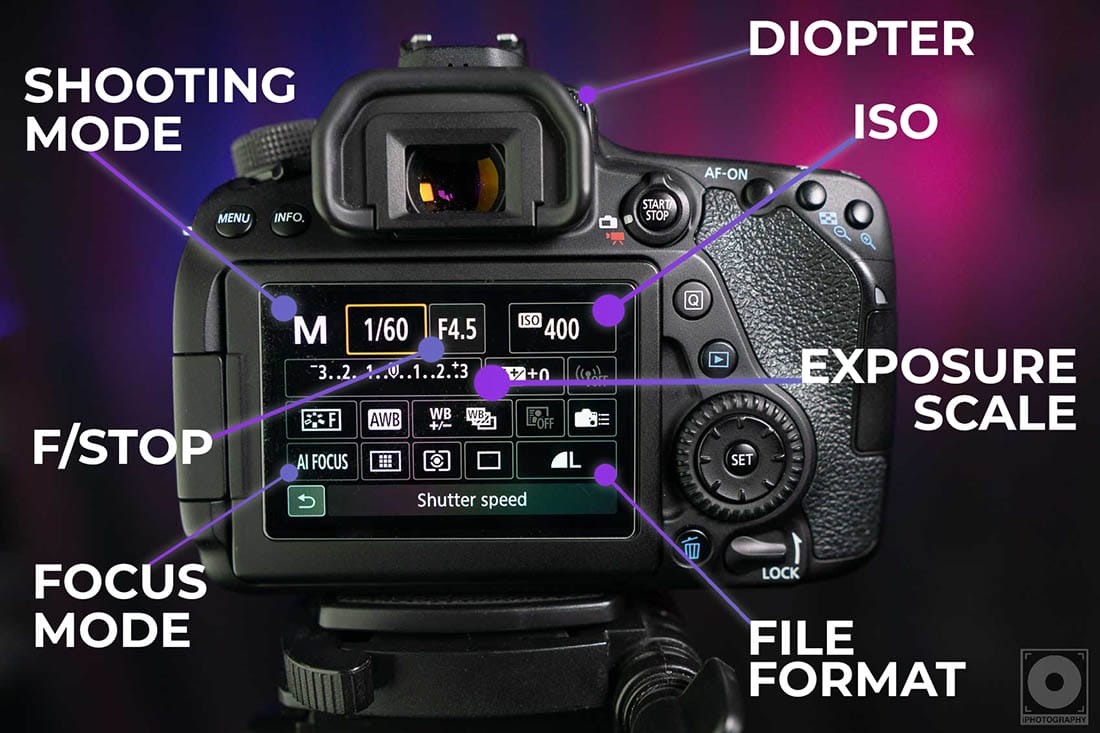
If you mean the numbers shown while taking a photo, they are not model numbers. They are exposure settings.
The three main numbers are:
Shutter speed
Shutter speed controls how long the sensor records light.
It may appear as:
- 1/1000
- 1/250
- 1/60
- 1"
A value such as 1/1000 means the shutter is open for one one-thousandth of a second. A value such as 1" means one second.
A faster shutter speed can help freeze motion. A slower speed can create blur if the camera or subject moves.
Aperture
Aperture controls the size of the lens opening. It appears as an f-number, such as:
- f/1.8
- f/2.8
- f/5.6
- f/11
A smaller f-number means a wider opening. A wider opening lets in more light and can create a softer background.
A larger f-number means a narrower opening. It lets in less light but can increase the area that appears sharp.
ISO
ISO controls the sensor’s light sensitivity setting. Common values include:
- ISO 100
- ISO 400
- ISO 1600
- ISO 6400
A higher ISO can help you shoot in dim light or use a faster shutter speed. The trade-off is that high ISO settings can produce more visible image noise.
ISO is not the same as sensor quality. A newer camera may handle high ISO better, but the result also depends on exposure, lens choice, subject, and image processing.
What the numbers on the mode dial mean
Canon cameras may show letters and symbols rather than numbered modes. Common settings include:
- P: Program
- Av: Aperture priority
- Tv: Shutter priority
- M: Manual
- Auto: The camera selects most settings
- B: Bulb mode on supported cameras
- Scene icons: Preset modes for common subjects
The letters Av and Tv are especially important for Canon users:
- In Av mode, you choose the aperture and the camera chooses a shutter speed.
- In Tv mode, you choose the shutter speed and the camera chooses an aperture.
- In M mode, you choose the main exposure settings yourself.
If the camera shows a number that blinks, it may be warning that the selected exposure cannot be reached within the available settings.

What numbers mean on Canon lenses
Numbers on Canon lenses describe different parts of the lens.
Focal length
A lens may show a focal length such as:
- 24mm
- 50mm
- 85mm
- 24–105mm
A single number, such as 50mm, describes a prime lens with one focal length.
A range, such as 24–105mm, describes a zoom lens. The lower number gives a wider view. The higher number gives a narrower view with more apparent magnification.
Maximum aperture
A lens may show an aperture such as:
- f/1.8
- f/2.8
- f/4–5.6
A single value usually describes a fixed maximum aperture. A range means the maximum aperture changes as you zoom.
For example, a lens marked f/4–5.6 may allow f/4 at its wide end and f/5.6 at its long end.
Filter size
A lens may show a symbol such as Ø67mm. This identifies the filter thread size.
A 67mm filter is designed to screw onto a lens with a 67mm front thread. This number does not describe image quality or focal length.
“II” on a lens
II usually means a second version of a lens design. It does not automatically mean the lens is sharper in every condition.
The newer version may have changes to:
- Optical design
- Coatings
- Autofocus
- Image stabilization
- Weather resistance
- Size or weight
Check the full lens specifications before replacing one version with another.

How to compare two Canon cameras correctly
Use the model number as a starting point, then compare the features that affect your photos.
Step 1: Identify the camera family
First, decide whether the camera is:
- A Rebel DSLR
- An enthusiast DSLR
- An EOS R APS-C mirrorless camera
- An EOS R full-frame mirrorless camera
- An EOS M mirrorless camera
- A professional or cinema model
This prevents misleading comparisons between unrelated numbers.
Step 2: Check the sensor format
The sensor affects field of view, low-light performance, depth of field, and lens choices.
Common formats include:
- Full frame
- APS-C
- Smaller sensor formats in some compact cameras
Do not assume that a higher model number means a larger sensor.
Step 3: Compare autofocus and speed
For moving subjects, look at:
- Continuous autofocus
- Subject detection
- Burst rate
- Buffer capacity
- Viewfinder performance
A camera with a lower number may suit action better than a higher-numbered model if its autofocus and speed match your needs.
Step 4: Compare video features
For video, check:
- Maximum resolution
- Frame rates
- Recording limits
- Microphone input
- Headphone output
- Heat management
- Crop factors
- Stabilization
A camera designed for high-resolution still photos may not be the best video choice.
Step 5: Check the lens mount
Before buying, confirm whether the camera uses:
- EF
- EF-S
- RF
- RF-S
- EF-M
An adapter may allow some lenses to work, but compatibility can vary by lens and camera. An adapter also does not turn an APS-C lens into a full-frame lens.
Step 6: Compare the total system cost
The camera body is only part of the cost. Include:
- One or more lenses
- Batteries
- Memory cards
- Charger
- Camera bag
- Tripod
- Flash or microphone
- Adapter, if needed
A less expensive body with a useful lens may be more practical than a costly body with no suitable lens.
A simple Canon camera number comparison
The table below shows why model numbers should be compared within their own families.
| Camera example | General type | What the number tells you | What it does not tell you |
|---|---|---|---|
| Rebel T7 | Entry DSLR | Rebel model designation | Exact image quality or lens quality |
| Rebel T8i | Later Rebel DSLR | A newer Rebel model line | That it beats every non-Rebel Canon |
| EOS 90D | Advanced APS-C DSLR | Enthusiast DSLR family | That “90” means 90 megapixels |
| EOS R50 | Entry APS-C mirrorless | EOS R APS-C family | That it is above an R5 |
| EOS R7 | Advanced APS-C mirrorless | Higher-positioned APS-C R model | That it is full frame |
| EOS R8 | Compact full-frame mirrorless | Full-frame R model | That it is a higher tier than the R5 |
| EOS R5 Mark II | High-resolution full-frame mirrorless | Later R5 generation | That Mark II only changes the body shell |
The main lesson is simple: compare camera families, sensor formats, generations, and features—not numbers alone.

Common mistakes when reading Canon camera numbers
Mistake 1: Assuming a larger number means a better camera
Canon does not use one universal ranking system. The R50, R7, R8, R6, and R5 belong to related but different positions in the EOS R range.
Compare the features that match your subject and workflow.
Mistake 2: Treating the number as megapixels
A Canon EOS 5D does not have five megapixels. An EOS 90D does not have 90 megapixels.
Megapixels are listed separately in the camera specifications.
Mistake 3: Assuming a newer model always gives better photos
A newer body may improve autofocus, speed, video, or handling. But the final image also depends on the lens, light, focus, exposure, and editing.
A skilled photographer with an older camera can still make strong images.
Mistake 4: Ignoring the regional model name
Canon may sell closely related cameras under different names in the United States, Europe, Japan, or other regions.
Use the exact model number when checking:
- Batteries
- Chargers
- Grips
- Cages
- Remotes
- Manuals
- Firmware
- Lens compatibility
Mistake 5: Confusing lens numbers with camera numbers
The number 50mm on a lens describes focal length. The number f/1.8 describes maximum aperture. Neither number identifies the camera body.
Mistake 6: Buying an old model without checking support
Older cameras can still work well. However, check the condition, battery health, card type, software support, repair options, and lens availability before buying used equipment.

Frequently asked questions
Does a higher number mean a better Canon camera?
No. A higher number may indicate a newer model or a different product position, but Canon’s families do not use one universal ranking scale. Compare the sensor, autofocus, speed, video tools, controls, and lens mount.
What does “Mark II” mean on a Canon camera?
“Mark II” means the camera is a later version of an earlier model. Canon may update the processor, autofocus, video, controls, or other systems. It does not mean every component is completely new.
Is Canon R better than Canon EOS?
“EOS” identifies Canon’s camera system, while “R” identifies the EOS R mirrorless family. R is not a general quality rating. An EOS R camera can be entry-level, advanced, or professional depending on the model.
What is the difference between Canon Rebel and EOS?
Rebel is the name Canon uses in the United States for many entry-level DSLR cameras. EOS is the wider Canon camera system name. A Rebel camera is also an EOS camera.
Can I use any Canon lens on any Canon camera?
No. Canon lenses use different mounts, including EF, EF-S, EF-M, RF, and RF-S. Some lenses can work through adapters, but compatibility depends on the camera, lens, adapter, and desired features.
Conclusion: read the full Canon name, not just the number
Canon camera numbers identify a model family, generation, or market position. They are useful clues, but they are not a universal quality score.
To understand a Canon camera, read the complete name:
- Identify the family, such as Rebel, DSLR, EOS R, or EOS M.
- Check the model number within that family.
- Look for a Mark designation.
- Confirm the sensor format and lens mount.
- Compare autofocus, speed, video, controls, and total system cost.
If you are comparing two specific Canon models, place their full names side by side and check Canon’s official specifications and manuals. That will give you a much clearer answer than the numbers alone.

Everett Ashford is a tech reviewer at mytechgrid.com specializing in SSDs, cameras, TVs, earbuds, headphones, and other consumer electronics. He provides honest, data-driven reviews based on hands-on testing and real-world performance analysis. Everett simplifies complex tech details to help readers make smart, confident buying decisions.