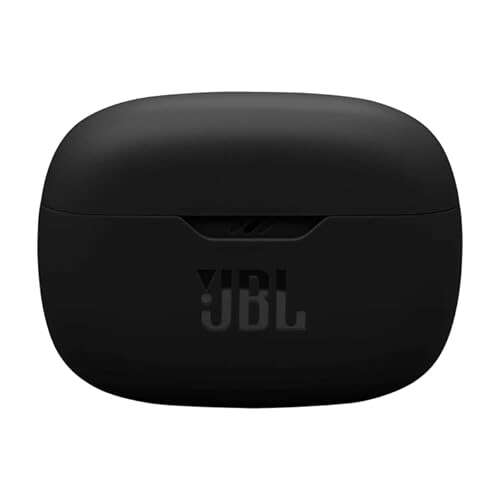
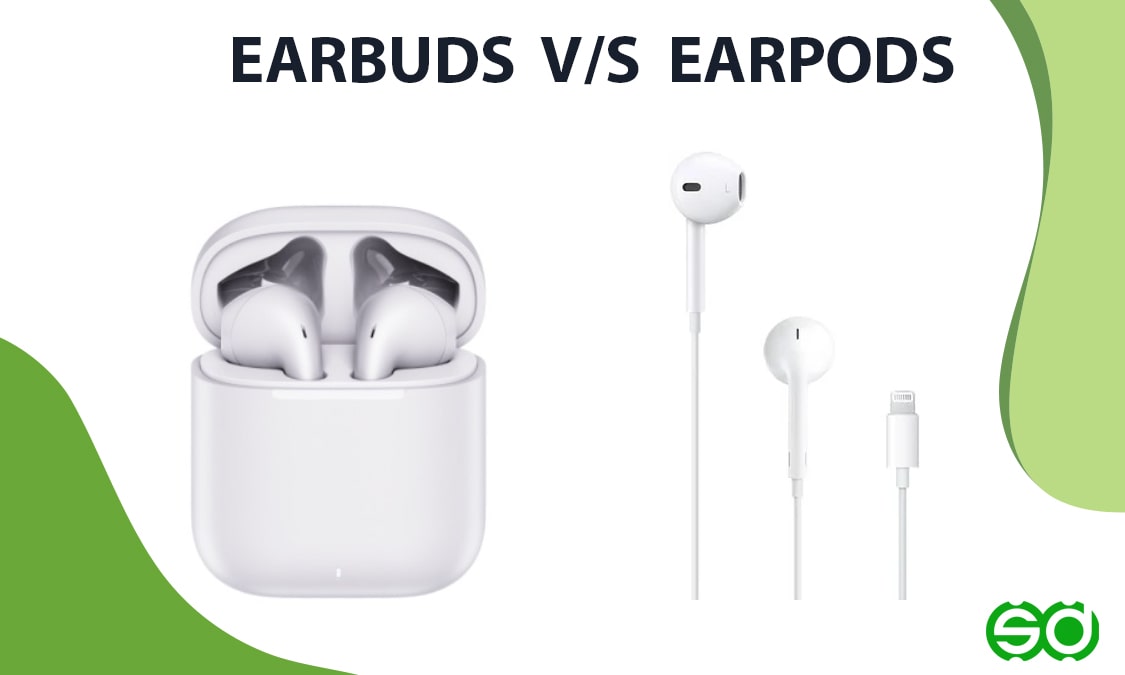
For shoppers in the United States, earbuds and earphones are often the same thing in everyday speech. Both are small headphones that sit in or near the ear. However, many people use earbuds to mean small wireless devices that rest at the ear opening, while earphones often means wired in-ear headphones with silicone tips.
The biggest difference is not the name. It is how the device fits, connects, sounds, and stays in place.

Earbuds and earphones: the basic definitions
The terms earbuds, earphones, and in-ear headphones do not have one universal definition. Brands, retailers, and consumers use them in different ways.
What are earbuds?
Earbuds are compact listening devices that usually sit in the outer ear or at the entrance to the ear canal. Traditional earbuds have a hard plastic shell and do not use a silicone tip that seals inside the ear canal.
Many modern earbuds are wireless. They may connect to a phone, tablet, or computer through Bluetooth and often come with a charging case.
Common examples include:
- Open-fit wireless earbuds
- Traditional wired earbuds
- Stem-style Bluetooth earbuds
- Earbuds with touch controls
- Earbuds with microphones for calls
Because earbuds usually do not create a tight seal, they may let in more outside sound. This can help you remain aware of traffic, announcements, or people nearby.
What are earphones?
Earphones are a broad term for small headphones worn in or around the ear. In the United States, people often use “earphones” to describe wired in-ear headphones with soft ear tips.
Many earphones fit inside the ear canal and use silicone, foam, or rubber tips. This design can create a stronger seal than open-fit earbuds.
Earphones may be:
- Wired or wireless
- In-ear or open-fit
- Designed for music, calls, gaming, or exercise
- Equipped with a microphone and remote
- Sold with several ear-tip sizes
The word “earphone” can therefore include many designs. A pair of wireless earbuds is technically a type of earphone, even though shoppers often treat the terms as separate categories.
Earbuds vs. earphones: the main differences
The clearest differences involve fit, connection, isolation, sound, comfort, and maintenance.
| Feature | Earbuds | Earphones |
|---|---|---|
| Typical fit | Rest in the outer ear or at the ear opening | Often fit inside the ear canal |
| Ear seal | Usually little or no seal | Often creates a stronger seal |
| Connection | Commonly wireless, but wired models exist | Commonly wired, but wireless models also exist |
| Outside sound | Usually easier to hear | Often reduced by the ear-tip seal |
| Bass response | Can be lighter without a seal | Often stronger with a good seal |
| Stability | May shift in some ears | Usually more secure when the tips fit well |
| Comfort | Can feel less intrusive | May feel more secure but more noticeable |
| Charging | Wireless models need charging | Wired models do not need a battery for sound |
| Sweat and debris | Easy to expose to dirt and moisture | Ear tips may collect wax and moisture |
| Best for | Awareness, simple use, and people who dislike sealed tips | Isolation, bass, stable fit, and noisy places |
These are general patterns, not rules. A well-designed open-fit earbud may sound better than a cheap in-ear earphone. A wired earphone may also last longer than a wireless earbud because it has fewer electronic parts and no built-in battery.
Fit is the most important difference
The fit often matters more than the label on the package. A device that fits your ears well can sound clearer, stay in place, and feel more comfortable at a lower volume.
Open-fit earbuds
Open-fit earbuds rest near the ear canal instead of sealing it. This design has several practical effects:
- More outside sound reaches your ears.
- Bass may sound lighter.
- Some users feel less pressure.
- The fit may be comfortable for long periods.
- The earbuds may move during exercise if your ear shape does not hold them securely.
Open-fit earbuds can suit people who want to hear their surroundings. They may work well for walking in a public place, working at a desk, or listening for announcements.
They are not automatically safer than in-ear earphones. You can still listen at a harmful volume with an open design, especially in a loud place where you increase the volume to overcome background noise.
In-ear earphones
In-ear earphones use a tip that enters the ear canal. The tip may be made from silicone or foam.
A good seal can provide:
- More consistent bass
- Lower outside noise
- A more stable fit
- Better performance in noisy environments
- Less need to raise the volume to hear detail
A poor seal can cause the opposite result. Music may sound thin, the earphones may fall out, and you may turn up the volume to compensate.
The right tip should feel secure without causing pain. If you feel pressure, soreness, itching, or a blocked sensation, try another size or a different style.
Which fit is better?
Choose an open-fit earbud if you:
- Dislike the feeling of something inside your ear canal
- Need to hear nearby sounds
- Prefer quick removal
- Use headphones in quiet or moderately busy places
- Want a simple fit with little adjustment
Choose an in-ear earphone if you:
- Want stronger bass
- Need more outside-noise reduction
- Exercise and need a stable fit
- Travel in noisy settings
- Prefer a more sealed listening experience
Sound quality and noise isolation
Earbuds and earphones do not have a fixed sound-quality difference. Design, driver quality, fit, software, and source audio all affect the result.
Why earphones may have stronger bass
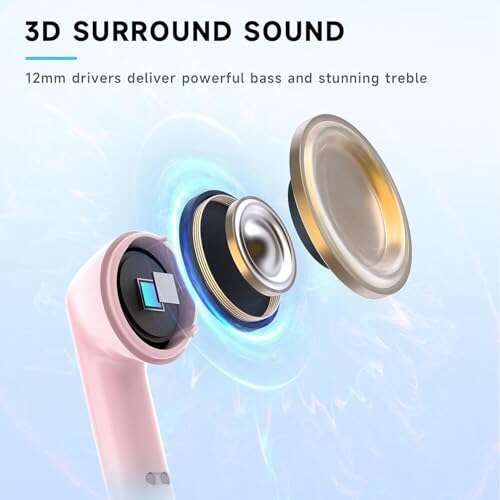
Bass depends partly on the seal between the earphone and the ear canal. A sealed fit reduces the amount of low-frequency sound that escapes. This can make bass sound fuller and more controlled.
Open-fit earbuds allow more air movement around the ear canal. As a result, low bass may sound weaker. The effect differs from person to person because every ear has a different shape.
Passive isolation and active noise cancellation
Passive isolation comes from the physical design. A sealed earphone tip blocks some outside sound without electronic processing.
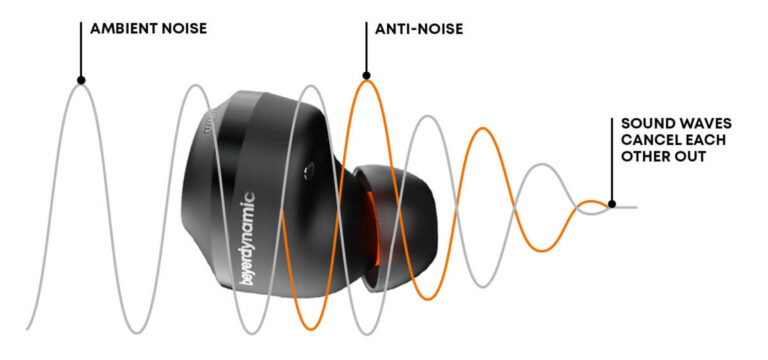
Active noise cancellation, or ANC, uses microphones and electronic processing to reduce certain outside sounds. ANC works best against steady, low sounds such as:
- Airplane engine noise
- Bus or train rumble
- Air-conditioning noise
- Road noise inside a vehicle
ANC does not remove every sound. Voices, sudden noises, and high-pitched sounds may still be heard.
Open-fit earbuds can include ANC, but their lack of a full seal may limit how much outside noise they reduce. An in-ear design usually has a better physical base for noise cancellation.
Does a wired connection sound better?
Not automatically. A wired connection can provide:
- No Bluetooth battery drain
- No wireless pairing step
- Low delay for some uses
- Compatibility with devices that have a headphone jack
Wireless audio can also sound very good. Actual performance depends on the device, Bluetooth codec, software, recording quality, and the listener’s hearing.
For gaming or music production, connection delay and monitoring accuracy may matter more than whether the product is called an earbud or earphone.

Wireless earbuds vs. wired earphones
The connection type creates another important difference.
Wireless earbuds
Wireless earbuds usually connect through Bluetooth. Most true wireless models have two separate earpieces and a charging case.
Advantages include:
- No cable to catch on clothing
- Easy use with many modern phones
- Controls for calls and music
- A charging case for portable power
- Greater freedom during exercise
Limitations include:
- The earbuds and case must be charged.
- Small parts are easier to lose.
- Batteries lose capacity over time.
- Some features require a companion app.
- Compatibility can vary by device and operating system.
- Repair may be difficult after battery failure.
Wireless earbuds may continue to work for several hours per charge, but battery life varies by model and by features such as ANC, call use, and high volume. Check the manufacturer’s specifications for both earbud and case battery life.
Wired earphones
Wired earphones connect through a cable, usually with a 3.5-millimeter plug, USB-C connector, or another device-specific connection.
Advantages include:
- No charging for the audio connection
- Usually lower purchase cost
- Less risk of losing one separate earpiece
- Simple connection with compatible devices
- Useful as a backup when wireless batteries are empty
Limitations include:
- The cable can tangle or snag.
- Some newer phones lack a headphone jack.
- USB-C models may not work with every device or adapter.
- A damaged cable can stop the earphones from working.
- Some devices need a digital-to-analog converter for wired audio.
A wired earphone is not necessarily less advanced. It may be the better option for someone who values low cost, simple use, or no battery charging.
Which should you choose?
The best choice depends on where you listen and what bothers you most.
| Your priority | Usually the better starting point |
|---|---|
| Hear traffic and nearby people | Open-fit earbuds |
| Stronger bass | Sealed in-ear earphones |
| Use during travel | In-ear earphones with isolation or ANC |
| No charging | Wired earphones |
| No cable | Wireless earbuds |
| Exercise stability | Sport earbuds or in-ear earphones with secure tips |
| Quick calls | Wireless earbuds with a good microphone |
| Lowest cost | Basic wired earphones |
| Gaming with low delay | Wired earphones or a low-latency wireless model |
| Long-term simplicity | Wired earphones |
| Small pocket size | Wireless earbuds with a charging case |
For walking and outdoor use
Open-fit earbuds may help you hear your surroundings. However, headphones can still reduce awareness, even when they allow some outside sound.
When walking near roads, parking lots, bicycles, or other hazards, keep the volume low and stay alert. Do not assume that transparency or ambient modes make a device safe in every situation.
For commuting and flying
In-ear earphones with a good seal often work better in loud settings. They can reduce outside noise and may let you listen at a lower level.
Noise cancellation can make travel more comfortable, but it does not replace attention to announcements or safety instructions. Remove one earphone or use an awareness mode when you need to hear people or public messages.
For exercise
Look for a secure fit, sweat resistance, and simple controls. A product’s water-resistance rating has limits. It may protect against sweat or light rain but not swimming or full submersion.
Check the manufacturer’s rating and care instructions. Do not charge wet earbuds or place wet earbuds in a closed case.
For calls and online meetings
Microphone quality depends on microphone placement, wind handling, software, and the surrounding environment. A pair that sounds good for music may not produce clear speech on a busy street.
Before an important call, test:
- Whether the microphone works with your phone or computer
- Whether the other person hears wind or clothing noise
- Whether the earbuds switch correctly between music and calls
- Whether the battery can last through the meeting

Earbuds and earphones: hearing safety
Both earbuds and earphones can contribute to hearing damage when they play sound too loudly for too long. The risk comes mainly from sound level, listening time, and how often you listen, not from the product name.
The National Institute for Occupational Safety and Health uses 85 decibels over an eight-hour workday as a recommended occupational exposure limit, with less allowable time as sound levels rise. Personal listening devices do not display sound levels in a perfectly consistent way, so treat volume estimates as approximate.
Practical steps can reduce risk:
- Keep the volume as low as you can while still hearing clearly.
- Take regular quiet breaks.
- Avoid raising the volume to overcome loud background noise.
- Use well-fitting earphones in noisy places if they help you listen at a lower level.
- Do not share ear tips without cleaning them.
- Stop listening if you notice ringing, pain, muffled hearing, or unusual sensitivity.
- Seek medical advice if symptoms continue after you stop listening.
The National Institute on Deafness and Other Communication Disorders explains that loud noise exposure can cause noise-induced hearing loss. Hearing protection and sensible listening habits matter more than whether you choose earbuds or earphones.
A simple rule is useful: if someone nearby can clearly hear your music, the volume may be higher than necessary. This is not a precise hearing-safety test, but it is a good reason to turn the volume down.
Comfort, hygiene, and maintenance
Comfort depends on ear shape, tip size, pressure, heat, and how long you wear the device.
Keep earbuds and earphones clean
Earwax, sweat, skin oil, and dust can collect on the sound outlet. This buildup may reduce volume or make one side sound quieter.
For routine care:
- Remove silicone tips before cleaning them.
- Wipe the outside with a soft, dry cloth.
- Follow the manufacturer’s cleaning instructions.
- Let parts dry fully before reconnecting or charging.
- Keep moisture away from charging contacts.
- Do not push pins or sharp tools into the speaker opening.
Avoid using large amounts of liquid, alcohol, or household cleaners unless the manufacturer specifically allows them.
Replace worn ear tips
Silicone tips can stretch, tear, harden, or become loose. A damaged tip may reduce comfort and weaken the seal.
Replace the tips when they:
- No longer stay attached
- Feel sticky or cracked
- Become difficult to clean
- Cause an uneven fit
- Stop sealing properly
Do not force a tip onto a nozzle if it does not match the device. A loose tip can remain in the ear canal.
Avoid sharing in-ear devices
Sharing earphones can transfer wax, skin oils, and microbes. If another person must use them, clean the parts that touch the ear and use fresh tips when possible.
Do not insert an earphone into an irritated, painful, or infected ear. A health professional can help if ear discomfort, discharge, or hearing changes occur.

Common mistakes when buying earbuds or earphones
Mistake 1: Treating the names as technical standards
Retail listings do not use “earbud” and “earphone” in a consistent way. Read the product description for the actual fit:
- Open fit
- In-ear
- Sealed
- Silicone tips
- Foam tips
- Ear-hook design
- Noise cancellation
The physical design matters more than the heading on the product page.
Mistake 2: Choosing by battery life alone
A long battery rating may exclude ANC, calls, high volume, or repeated charging of the case. Compare the conditions behind the stated number.
Also check whether the listing gives:
- Earbud battery life
- Total battery life with the case
- Charging time
- Case charging method
- Battery replacement or warranty information
Mistake 3: Assuming ANC blocks all noise
Noise cancellation reduces some sounds. It does not make you fully isolated or guarantee privacy.
Use awareness features when you need to hear traffic, coworkers, announcements, or alarms.
Mistake 4: Ignoring device compatibility
Before buying, check:
- Bluetooth support
- USB-C or 3.5-millimeter compatibility
- Required operating system
- App requirements
- Microphone support
- Multipoint support, if you need two devices connected
- Codec support, if it matters for your equipment
A feature listed on the box may require a specific phone, app, or software version.
Mistake 5: Buying a poor fit and compensating with volume
If the sound is weak because the earphones do not fit, turning up the volume is not the best fix. Try another tip size, adjust the position, or choose a different design.
A secure fit should not cause pain. Comfort is a performance feature, not a minor extra.
Frequently asked questions
Are earbuds and earphones the same thing?
Sometimes. “Earphone” is a broad term for a small headphone worn in or near the ear. “Earbud” often describes a smaller open-fit model, especially a wireless one. Retailers and manufacturers do not apply the terms consistently.
Are earphones better than earbuds?
Neither is always better. In-ear earphones may be better for bass, stability, and noise isolation. Open-fit earbuds may be better for comfort and awareness of nearby sounds. The right choice depends on your ears, listening environment, and connection needs.
Are earbuds safer for your hearing?
Not by default. Any device can be too loud. Hearing risk depends mainly on volume, listening time, and exposure frequency. Keep the volume low, take breaks, and get medical advice about persistent ringing or muffled hearing.
Can earbuds and earphones be used for phone calls?
Yes. Wireless earbuds often include built-in microphones, and many wired earphones include an inline microphone. Call quality varies with microphone design, wind, software, and the connected device.
Do wired earphones sound better than wireless earbuds?
Not automatically. Wired earphones avoid Bluetooth compression and battery limits, but sound quality also depends on the drivers, fit, recording, device, and software. A well-designed wireless model can sound better than a poorly made wired model.
Final answer: which one is right for you?
The difference between earbuds and earphones is mainly fit and common usage, not a strict technical category.
Choose open-fit earbuds when you want a light design and more awareness of nearby sound. Choose in-ear earphones when you want a secure seal, stronger bass, or more passive noise reduction. Choose wired earphones when you want no battery charging and simple operation. Choose wireless earbuds when freedom from cables matters most.
Before buying, check the fit, connection, microphone, battery, water-resistance limits, device compatibility, and return policy. The best model is the one that stays comfortable, works with your devices, and lets you listen without turning the volume too high.

Everett Ashford is a tech reviewer at mytechgrid.com specializing in SSDs, cameras, TVs, earbuds, headphones, and other consumer electronics. He provides honest, data-driven reviews based on hands-on testing and real-world performance analysis. Everett simplifies complex tech details to help readers make smart, confident buying decisions.