SSD stands for Solid State Drive — a fast storage device that uses flash memory instead of spinning disks.
If you’ve ever wondered what does SSD stand for and why it matters, you’re in the right place. I’ve worked with consumer and enterprise storage for years, tested dozens of drives, and in this article I’ll explain what does SSD stand for, how SSD technology works, why it’s faster than hard drives, and how to pick the right SSD for your needs. Read on to get clear, actionable guidance and practical tips you can use today.
What SSD stands for and a simple definition
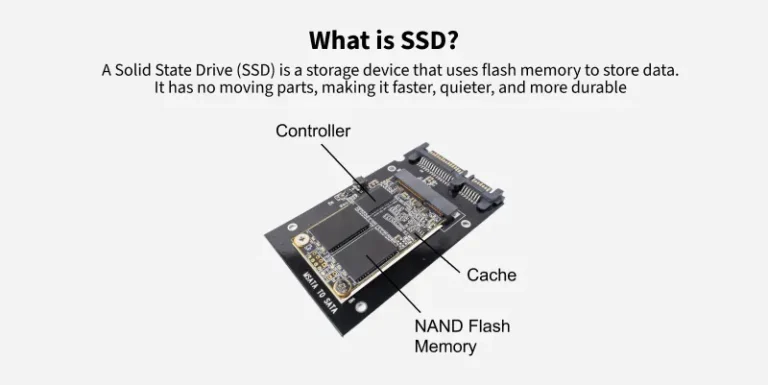
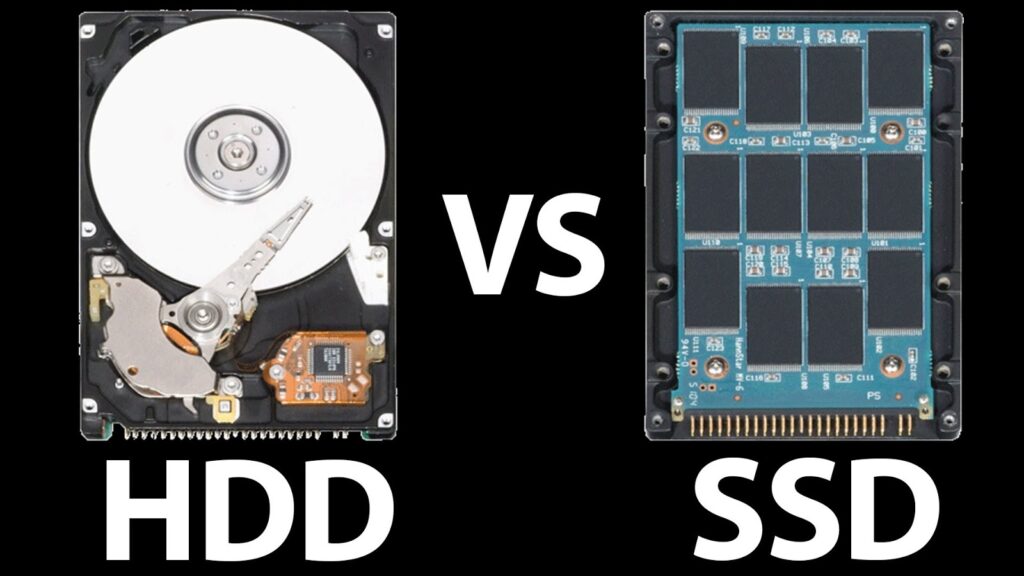
SSD stands for Solid State Drive. It’s a storage device that holds data on flash memory chips without any moving parts. When someone asks what does SSD stand for, you can answer that it identifies drives built from solid-state electronics rather than magnetic platters. SSDs come in many shapes and speeds but share the same basic idea: faster, quieter, and more durable storage.
How an SSD works — the basics
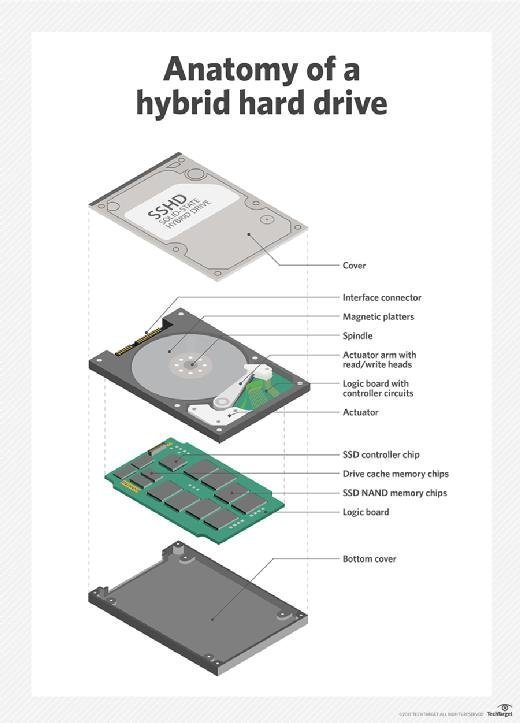
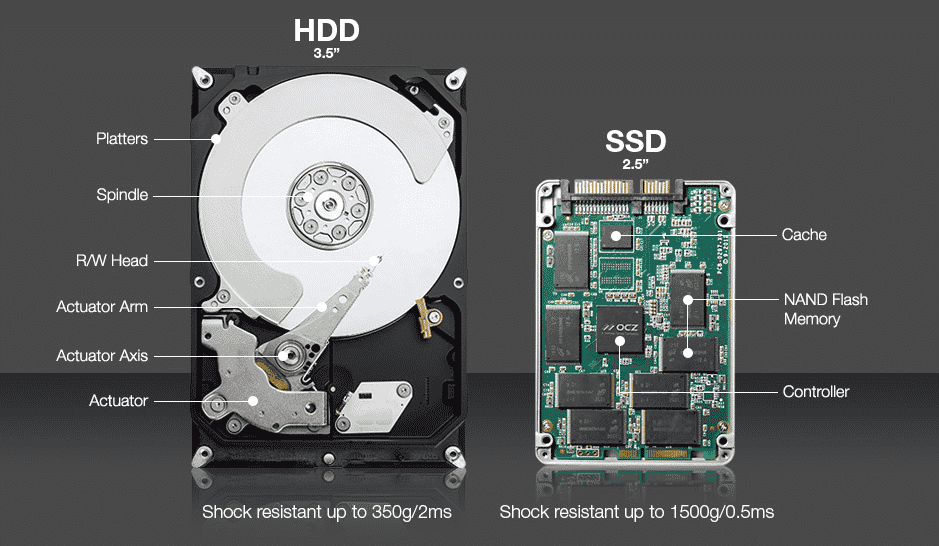
SSDs store data on NAND flash memory cells. A controller chip manages read and write operations, error correction, and wear-leveling. That controller is what makes SSDs fast and reliable when properly designed. When you ask what does SSD stand for in a technical sense, remember it implies both the flash memory and the supporting electronics that replace mechanical parts.
PAA-style quick questions about SSD operation
What makes SSDs faster than HDDs?
SSDs have no moving parts, so access time is much lower and throughput is higher. Reads and writes happen electronically, not mechanically.
What is wear-leveling?
Wear-leveling is a technique SSD controllers use to spread writes evenly across memory cells to extend drive life.
What is TRIM and why is it important?
TRIM lets the operating system tell an SSD which blocks are unused, improving performance and reducing unnecessary wear.
Types and form factors of SSDs
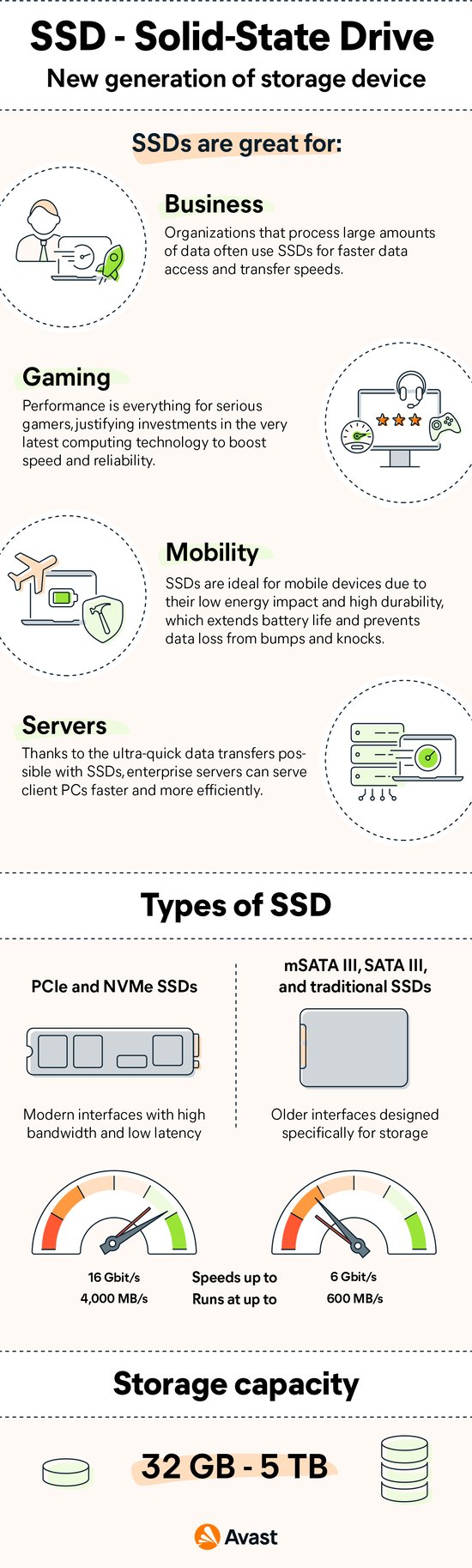
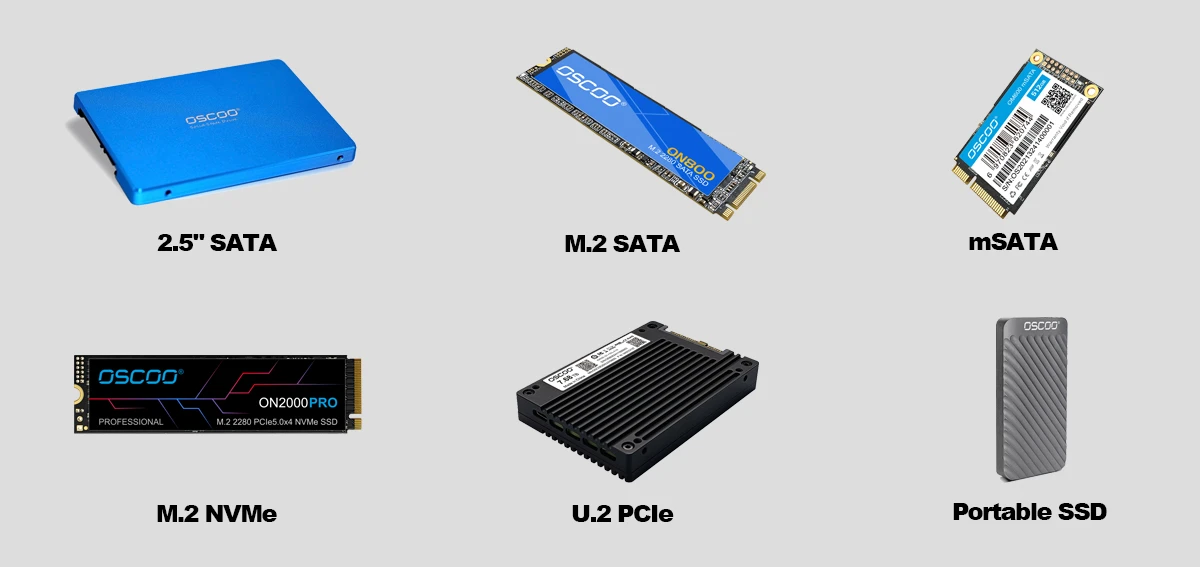
SSDs come in several interfaces and shapes. Common types include:
- SATA SSDs. Compatible with most older desktops and laptops.
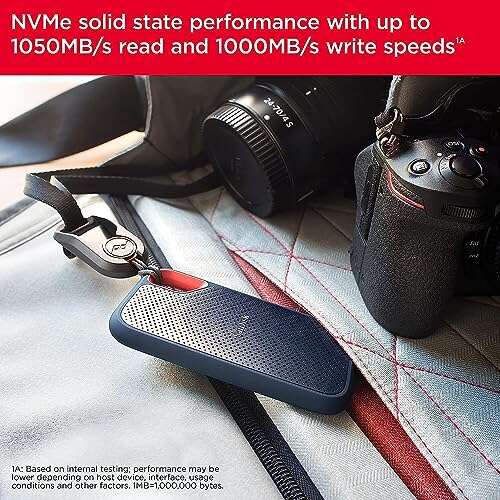
- NVMe SSDs. Use the PCIe bus for much higher speed.
- M.2 SSDs. Small stick-like modules that can use SATA or NVMe.
- U.2 and PCIe add-in cards. Often used in servers or high-end workstations.
When people ask what does SSD stand for in shopping guides, they usually want to know which type fits their machine. Check your device’s slots and supported interfaces before buying.
Source: cyberhoot.com
Benefits of using an SSD
Switching to an SSD delivers clear gains:
- Faster boot and app launch times.
- Better responsiveness under load.
- Lower power draw and quieter operation.
- Improved shock resistance due to no moving parts.
If the question is what does SSD stand for in practical terms, think “speed and reliability improvements.” In my tests, everyday tasks feel noticeably snappier after replacing an HDD with an SSD.
Source: gov.ng
Limitations and trade-offs of SSDs
No technology is perfect. Consider these limits:
- Cost per gigabyte is higher than HDDs, though prices keep falling.
- Finite write endurance; some models are rated for a limited number of terabytes written.
- Performance varies by controller and NAND type.
When you ask what does SSD stand for when planning backups, remember SSDs still need backups like any storage medium. They can fail, so include redundancy and backups in your plan.

Source: acronymsandslang.com
How to choose the right SSD for your needs
Pick based on use case and budget:
- For general laptops: a SATA or NVMe M.2 drive with 250–1,000 GB is common.
- For gaming or content creation: choose NVMe with higher sequential speed and larger capacity.
- For servers: look for enterprise-grade endurance and power-loss protection.
- Check warranty, TBW (terabytes written), and controller reputation.
If you’re wondering what does SSD stand for in buying advice, it’s shorthand for a category; then you must compare specs and real-world tests.
Source: baustil-gmbh.at
Personal experience, tips, and mistakes to avoid
I’ve upgraded many machines from HDDs to SSDs. A few lessons I learned:
- Always back up before migrating. A cloned drive can still fail during transfer.
- Update the SSD firmware after installation to fix bugs and improve performance.
- Enable TRIM in your OS to keep steady performance.
- Don’t fill the drive to capacity; leave free space for wear-leveling and cache.
When friends ask what does SSD stand for and whether to upgrade, I recommend an NVMe M.2 for modern laptops and SATA for older systems. The speed jump is worth it for most users.
Frequently Asked Questions of what does ssd stand for
What does SSD stand for exactly?
SSD stands for Solid State Drive, a storage device using flash memory and no moving parts.
How much faster is an SSD than an HDD?
SSDs are often several times faster for booting and launching apps; NVMe drives can be an order of magnitude faster for some tasks.
Can I replace my HDD with an SSD in my laptop?
Most laptops support SSD upgrades, but check the form factor (2.5-inch or M.2) and interface compatibility before buying.
Do SSDs wear out over time?
Yes, SSDs have finite write cycles, but modern drives include wear-leveling and often last many years under normal use.
Is an SSD better for gaming?
Yes, SSDs reduce load times and improve responsiveness, though FPS depends on the GPU and CPU more than storage.
Conclusion
Solid State Drive technology changed how we think about storage. Knowing what does SSD stand for is the first step to understanding its speed, reliability, and role in modern computers. If you plan upgrades, prioritize interface compatibility, capacity, and endurance. Try an SSD in your daily machine—you’ll notice the difference fast. If you found this helpful, leave a comment about your SSD experience, subscribe for more guides, or explore upgrade options and benchmarks to pick the best drive for your needs.

Jamie Lee is a seasoned tech analyst and writer at MyTechGrid.com, known for making the rapidly evolving world of technology accessible to all. Jamie’s work focuses on emerging technologies, product deep-dives, and industry trends—translating complex concepts into engaging, easy-to-understand content. When not researching the latest breakthroughs, Jamie enjoys exploring new tools, testing gadgets, and helping readers navigate the digital world with confidence.