what compact camera should i buy? Choose one with a one-inch sensor, useful zoom, and simple controls.
Choosing what compact camera should I buy depends on how you travel, what you photograph, and how much control you want. After comparing sensor sizes, lenses, autofocus systems, video tools, and real-world handling, this guide will help you avoid paying for features you may never use. You will find clear picks for travel, family photos, street work, beginners, and premium image quality.
How to choose the right compact camera
A compact camera is a small digital camera with a built-in lens. Unlike a phone, it often gives you a larger sensor, a real optical zoom, better physical controls, and more room to edit your photos.
The best choice is not always the camera with the most megapixels. A good compact camera should feel easy to carry, start quickly, focus well, and produce clean images in the light you actually use.
Before deciding what compact camera should I buy, ask yourself these questions:
• Do I want a pocket camera for travel?
• Do I need a long zoom for wildlife or sports?
• Will I shoot video as well as photos?
• Do I prefer automatic shooting or manual control?
• Is a built-in electronic viewfinder important to me?
• How much can I spend on the camera, batteries, and memory cards?
A camera is like a good pair of shoes. The perfect model is the one you will carry and use often, not the one with the longest feature list.
Best compact cameras for different buyers
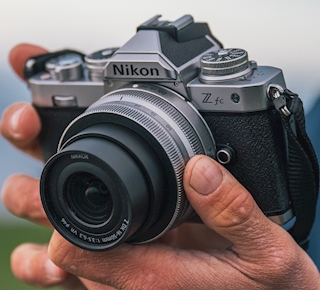
There is no single winner for every photographer. Compact cameras vary greatly in price, lens range, sensor size, autofocus, and video quality.
The following categories make it easier to decide what compact camera should I buy for your needs.
Best overall compact camera
The Sony RX100 VII remains a strong all-round option for buyers who want a very small body, a one-inch sensor, fast autofocus, and a useful 24–200mm equivalent zoom.
It is well suited to travel, family photos, city walks, and casual wildlife shots. Its small buttons can feel cramped, and its price is high, but its combination of speed and reach is hard to match.
Best compact camera for image quality
The Fujifilm X100VI is a premium fixed-lens camera with an APS-C sensor and a 35mm equivalent lens. It produces excellent images and has a classic design that encourages careful, thoughtful photography.
It is not the best choice if you need a long zoom. The fixed lens also means you must move your feet to change the framing. For street photography, portraits, food, and travel scenes, though, it is outstanding.
Best compact camera for beginners
The Canon PowerShot G7 X Mark III is easy to learn and offers a one-inch sensor, a bright zoom lens, a flip-up screen, and simple automatic modes.
It works well for family use, travel, and casual video. Availability and pricing can change, so check current stock before buying. Older versions may offer good value if the condition is excellent.
Best compact camera for travel zoom
The Panasonic Lumix ZS200, also sold as the TZ200 in some regions, offers a long 15x optical zoom in a compact body. Its 24–360mm equivalent range covers wide landscapes, portraits, and distant subjects.
The lens is not as bright at the long end as a shorter zoom. Still, it is one of the most practical choices for travelers who want one camera for many situations.
Best rugged compact camera
The OM System Tough TG-7 is designed for outdoor use. It is waterproof, shockproof, freezeproof, and easy to use near water, dust, and rough trails.
Its smaller sensor cannot match the low-light quality of premium one-inch or APS-C cameras. It is a smart choice for kayaking, hiking, beach trips, skiing, and family adventures where damage is a real risk.
Best premium pocket camera
The Ricoh GR III and GR IIIx offer large APS-C sensors in very small bodies. The GR III uses a 28mm equivalent lens, while the GR IIIx uses a 40mm equivalent lens.
These cameras are fast, discreet, and excellent for street photography. Their fixed lenses and limited battery life require a clear understanding of your shooting style.
Sensor size matters more than megapixels
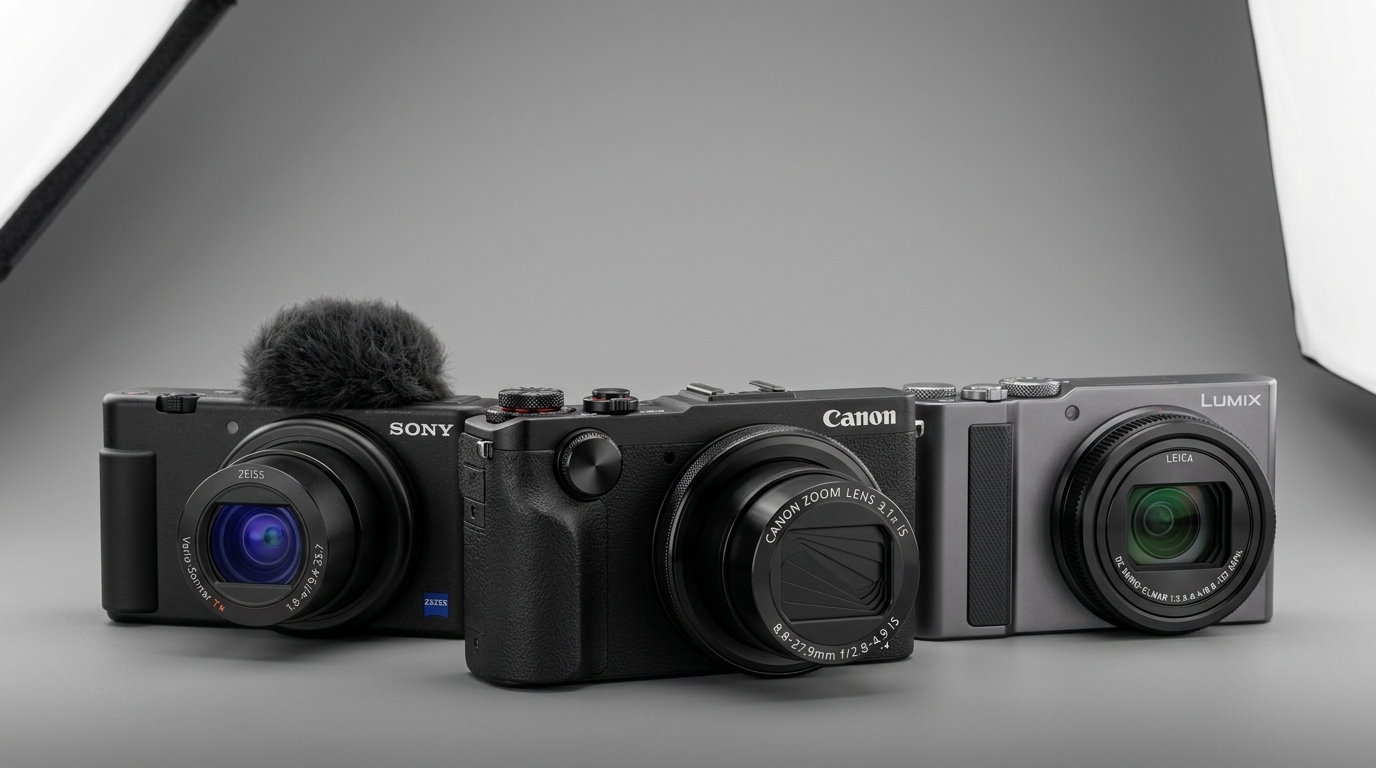
Sensor size is one of the most important factors when deciding what compact camera should I buy. A larger sensor usually captures more light and gives you better image quality in dim conditions.
Common sensor sizes include:
• 1/2.3-inch sensors in basic travel zooms and rugged cameras
• One-inch sensors in many advanced compact cameras
• Micro Four Thirds sensors in some fixed-lens models
• APS-C sensors in premium compact cameras
A one-inch sensor is much larger than the sensor in most basic point-and-shoot cameras. It can give you cleaner shadows, better detail, and softer background blur.
An APS-C sensor usually offers even better image quality. However, the camera and lens may be larger, heavier, and more expensive.
Megapixels still matter, but only to a point. A 20-megapixel camera can make excellent prints and high-quality web images. Lens quality, light, focus, and technique often matter more than a small difference in resolution.
What sensor size should you choose?
Choose a small sensor if you mainly want a cheap, light camera for bright outdoor use.
Choose a one-inch sensor if you want a strong balance of size, price, and image quality.
Choose an APS-C sensor if image quality, background blur, and low-light performance matter most.
When people ask what compact camera should I buy, sensor size is often the best place to begin. It quickly narrows the choices without getting lost in minor features.

Zoom range and lens speed
The lens determines what your compact camera can see. A wide lens is useful for landscapes, rooms, buildings, and group photos. A telephoto lens helps you photograph details, portraits, stage events, and distant animals.
Compact camera lenses are often described with equivalent focal lengths. A 24–200mm equivalent zoom is wide at one end and strongly telephoto at the other.
A wide aperture, shown by a smaller f-number, lets in more light. For example, f/1.8 is brighter than f/2.8, and f/2.8 is brighter than f/5.6.
A bright lens helps you:
• Photograph indoors with less blur
• Keep shutter speeds faster
• Create a softer background
• Shoot in the evening
• Reduce the need for high ISO settings
Long zoom cameras often become less bright as you zoom in. This is a normal trade-off. A camera with a 24–200mm f/2.8–4.5 lens is still useful, but it will not perform the same way at 200mm as it does at 24mm.
For travel, a 24–200mm range is highly flexible. For street photography, a fixed 28mm, 35mm, or 40mm lens may produce better results because it keeps the camera small and encourages a consistent style.

Autofocus, image stabilization, and speed
Modern compact cameras can focus quickly, but performance varies. Autofocus is especially important for children, pets, street scenes, and moving subjects.
Look for these features:
• Phase-detection autofocus for faster subject tracking
• Face and eye detection for people
• Animal detection on selected models
• Continuous autofocus for moving subjects
• Optical or sensor-shift image stabilization
Image stabilization reduces blur from your hand. It does not freeze a moving person or car. For moving subjects, you still need a fast shutter speed.
A camera with strong autofocus can make a bigger difference than a camera with more megapixels. In real use, a sharp 20-megapixel photo is more valuable than a blurry 40-megapixel photo.
One lesson that often comes from camera testing is simple: try the grip and controls before judging the specification sheet. A camera that feels natural is quicker to operate. That can be the difference between capturing a moment and missing it.

Choosing a compact camera for travel
Travel photography demands flexibility. You may photograph a bright plaza at noon, a dark restaurant at night, and a distant mountain before the same day ends.
For travel, prioritize:
• A useful zoom range
• A one-inch or larger sensor
• Optical image stabilization
• A built-in flash or hot shoe
• A viewfinder for bright sunlight
• USB charging
• Good battery life
• A tough, comfortable body
A small camera with a 24–200mm equivalent lens is often more useful than a larger camera with several lenses. It saves space and reduces the chance that you will leave equipment in your hotel room.
If you travel in wet or dusty places, weather sealing is valuable. However, weather resistance is not the same as waterproofing. Read the manufacturer’s limits and use a protective case when conditions are severe.
When deciding what compact camera should I buy for travel, think about your actual trip. A long zoom is useful on safari. A bright fixed lens may be better for city walks. A rugged body makes sense near water.
Choosing a compact camera for video
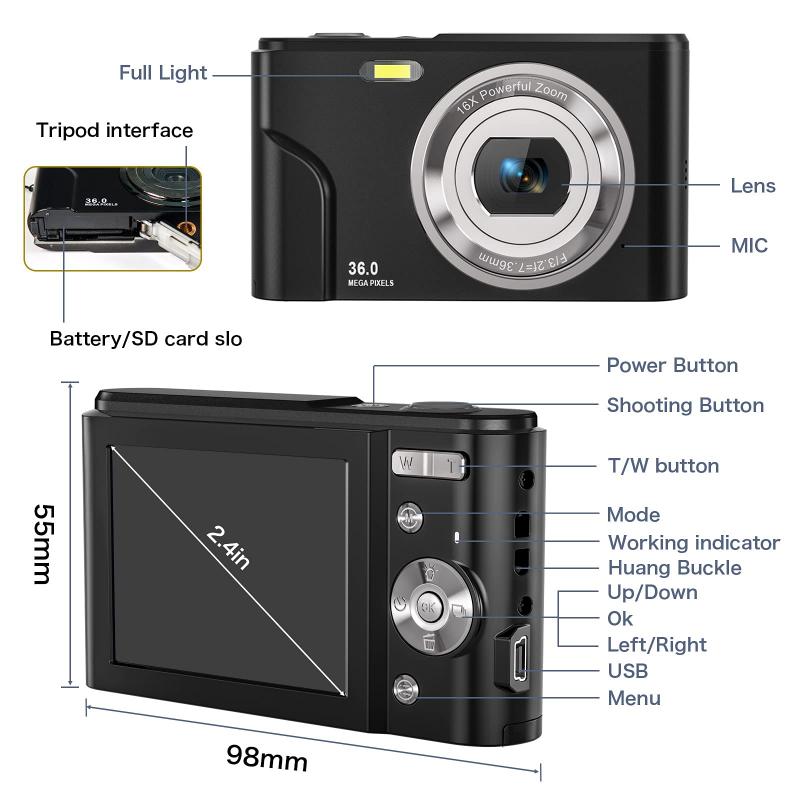
Compact cameras can be useful for short videos, interviews, family clips, and travel films. They are often easier to carry than interchangeable-lens cameras.
Important video features include:
• 4K recording
• A microphone input
• A flip screen
• Reliable autofocus
• Image stabilization
• Headphone support
• Reasonable recording limits
A microphone input is important if clear speech matters. Built-in microphones are convenient, but they can pick up wind, handling noise, and crowded background sounds.
A flip screen helps when recording yourself. A viewfinder is less important for video, but it can still help when shooting outdoors in strong sunlight.
Small cameras can overheat during long 4K recordings. They may also have weaker battery life than larger models. For short clips, this may not matter. For events or long interviews, check independent tests and the camera’s recording limits.
What compact camera should I buy on a budget?
Your budget should include more than the camera body. You may also need a memory card, spare battery, charger, case, and small cleaning kit.
A practical budget breakdown looks like this:
• Under $300: Look for used older models, basic point-and-shoot cameras, or rugged cameras on sale.
• $300 to $700: Consider used one-inch models, entry-level travel zooms, and older premium compacts.
• $700 to $1,200: Look for advanced one-inch cameras, premium fixed-lens models, and strong travel cameras.
• Above $1,200: Consider current premium compacts with APS-C sensors or advanced autofocus.
Used cameras can offer excellent value. Check the lens for scratches, test the zoom, inspect the screen, examine the battery door, and take sample photos at different focus distances.
Avoid buying a very old camera only because it has a large zoom. Older models may have slow autofocus, poor smartphone connection, weak battery life, or limited video features.
If you are unsure what compact camera should I buy, buying a recent model with a one-inch sensor is often a safe middle path. It delivers a visible quality gain without the size and cost of a larger interchangeable-lens system.
Common mistakes to avoid
Many buyers focus on specifications and overlook daily use. These mistakes can lead to an expensive camera that stays at home.
Buying only for megapixels
More megapixels do not guarantee better photos. The lens, sensor design, image processing, focus, and lighting all affect the result.
Choosing the longest zoom
A long zoom is useful, but it may have a slower aperture and weaker low-light performance. Consider whether you really photograph distant subjects often.
Ignoring the grip
A small camera can be hard to hold if the body is too flat or the buttons are poorly placed. Comfort matters during long walks and travel days.
Forgetting battery life
Small bodies often use small batteries. Carrying one spare battery is wise, especially when traveling.
Assuming every camera is pocketable
Some premium compacts fit in a jacket pocket but not in jeans. Check the actual dimensions and consider the lens shape.
Buying without checking availability
Some compact cameras are difficult to find new. Prices can rise when demand is high. Compare new, used, and refurbished options before paying too much.
The biggest mistake is buying for an imaginary version of yourself. Choose the camera that matches what you photograph now. You can always upgrade later when your needs become clearer.
A simple compact camera buying checklist
Use this checklist before you place an order:
-
Set your total budget, including accessories.
-
Choose the smallest sensor you can accept.
-
Decide whether you need a zoom or fixed lens.
-
Pick a focal-length range that suits your subjects.
-
Check the maximum aperture.
-
Test or research the grip and controls.
-
Confirm autofocus performance for your subjects.
-
Check image stabilization.
-
Review battery life and charging options.
-
Confirm video features if you plan to record clips.
-
Read independent reviews for overheating, menus, and real-world handling.
-
Compare the camera with a modern smartphone.
That last step matters. A compact camera should offer a clear benefit over your phone. That benefit may be a long optical zoom, a larger sensor, better controls, a flash, a viewfinder, or a more enjoyable shooting experience.
Ask yourself what compact camera should I buy after identifying that benefit. If the answer is only “because it is smaller,” your phone may already meet your needs.
Compact camera versus smartphone
Smartphones are excellent for quick photos. They offer automatic HDR, computational night modes, easy sharing, and strong software processing.
A compact camera can still win in several areas:
• Optical zoom without losing as much detail
• Better physical controls
• Larger sensors
• More natural depth of field
• Faster access to exposure settings
• Better ergonomics for serious shooting
• More control over raw files
The gap is not equal in every situation. In bright daylight, a modern phone may produce a photo that looks just as good on a social media feed.
A camera becomes more valuable when you want control, reach, low-light quality, or a dedicated photography tool. Think of a phone as a smart automatic assistant and a compact camera as a small creative instrument.
How to get better photos from any compact camera
Even the best compact camera cannot replace good light and careful timing. Simple habits can improve your photos quickly.
Keep the lens clean. A fingerprint can lower contrast and create a hazy image.
Use the widest aperture when you want a softer background. Use a smaller aperture when you need more of a scene in focus.
Watch your shutter speed. If the subject moves, use a faster shutter speed. Image stabilization cannot stop subject movement.
Use exposure compensation when bright snow, pale walls, or dark clothing confuse the automatic meter.
Learn one manual control at a time. Start with exposure compensation, then explore aperture, shutter speed, and ISO.
Shoot raw files when you plan to edit. Use JPEG when you want small files and quick sharing.
Back up photos during trips. A camera does not protect your memories from lost cards or damaged equipment.
A useful practice is to spend one week using only one focal length. This teaches you to move, frame, and notice light. It also helps you learn whether a fixed-lens camera would suit you.
Frequently asked questions about what compact camera should i buy
What compact camera should I buy for travel?
Choose a camera with a one-inch sensor, image stabilization, USB charging, and a 24–200mm equivalent zoom. The Sony RX100 VII and Panasonic Lumix ZS200 are strong examples, while rugged cameras suit wet or rough trips.
Is a compact camera better than a smartphone?
It can be better for optical zoom, manual control, low-light work, and handling. A smartphone may still win for automatic processing, fast sharing, and convenience in bright light.
Is a one-inch sensor good enough?
Yes. A one-inch sensor offers a strong balance of image quality and camera size, especially for travel and family photography. It is much more capable than the small sensors used in many basic point-and-shoot cameras.
Should I buy a compact camera with a fixed lens?
Buy a fixed-lens model if you value image quality, a bright lens, and a small body more than zoom flexibility. Models such as the Fujifilm X100VI and Ricoh GR series suit photographers who enjoy street, travel, and everyday photography.
Are used compact cameras worth buying?
Used compact cameras can be excellent value, especially when buying an older premium model. Check the lens, zoom mechanism, battery, screen, buttons, sensor, and sample images before completing the purchase.
How much should I spend on a compact camera?
A useful starting range is $500 to $1,000 for a capable one-inch model, though used cameras can cost less. Premium APS-C compact cameras often cost more because of their larger sensors, lenses, and advanced controls.
Conclusion
The right compact camera depends on your subjects, budget, and willingness to carry extra equipment. Choose a one-inch model for a balanced travel camera, an APS-C model for top image quality, a long-zoom model for flexibility, or a rugged camera for outdoor use.
Do not buy based on megapixels alone. Compare the sensor, lens, autofocus, stabilization, battery life, controls, and real-world size. The best answer to what compact camera should I buy is the camera that you will carry, understand, and enjoy using.
Set your budget, choose your ideal lens type, and compare two or three models before you buy. Then take the camera outside and start making photographs.

Everett Ashford is a tech reviewer at mytechgrid.com specializing in SSDs, cameras, TVs, earbuds, headphones, and other consumer electronics. He provides honest, data-driven reviews based on hands-on testing and real-world performance analysis. Everett simplifies complex tech details to help readers make smart, confident buying decisions.