Yes, you can usually hear bone conduction headphones while wearing earplugs. The headphones send sound through vibrations in the bones near your ears. Earplugs block sound that enters through the ear canal, but they do not fully block vibrations that reach the inner ear through bone.
For many people, earplugs may even make bone conduction audio seem stronger. This happens because blocking the ear canal can change how you hear low sounds and vibrations. Still, the result depends on the headphone fit, earplug type, volume, hearing ability, and the sound around you.
How bone conduction headphones work
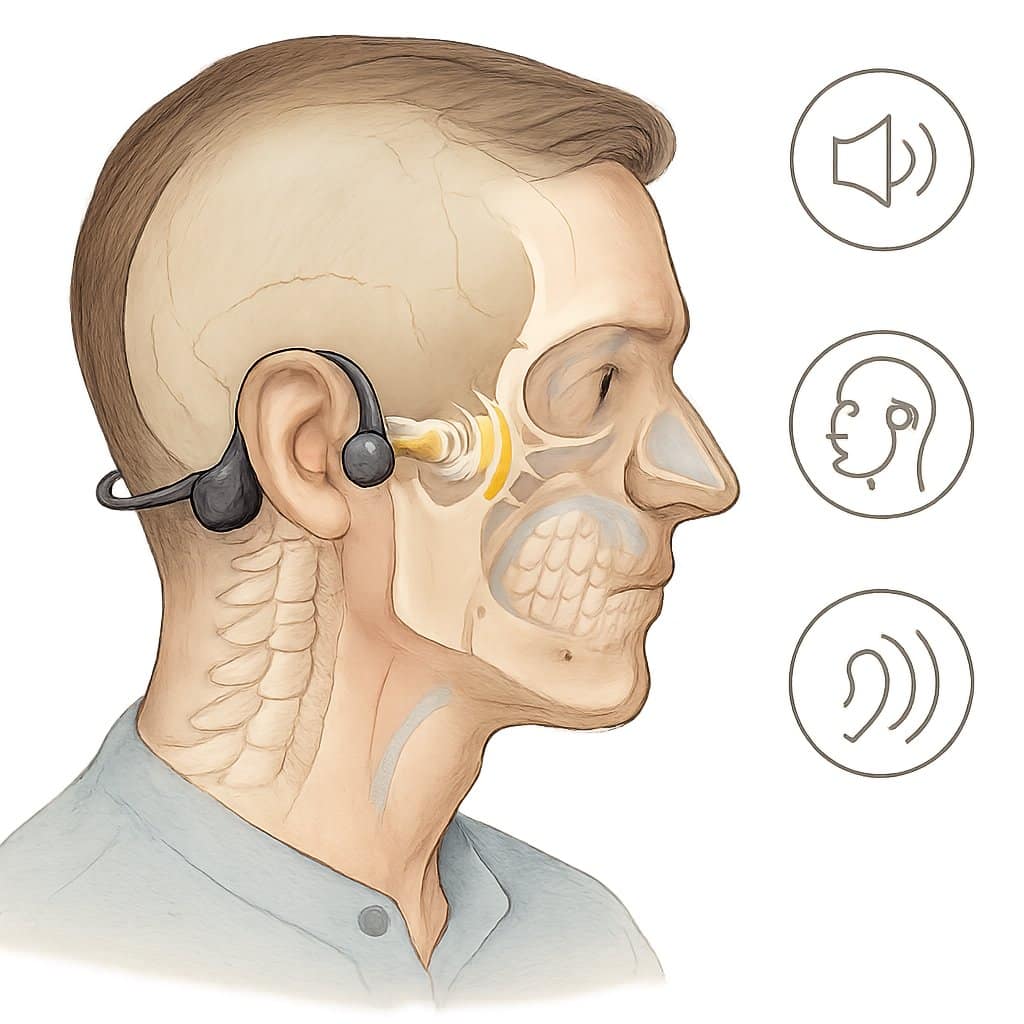
Bone conduction headphones sit near the cheekbones, usually just in front of the ears. Instead of sending sound through the ear canal, small transducers vibrate the skull. These vibrations travel to the cochlea, the inner-ear structure that changes movement into nerve signals.
The path is different from that of regular headphones:
- Regular headphones: Speaker → ear canal → eardrum → middle ear → cochlea
- Bone conduction headphones: Transducer → skull bones → cochlea
This means bone conduction headphones can work without sealing the ear canal. They may help some people who cannot use standard earbuds because of ear-canal discomfort or certain outer-ear problems.
However, bone conduction headphones do not bypass the entire hearing system. The cochlea and hearing nerve still need to work. They are not a universal solution for hearing loss.

What happens when you wear earplugs with them?
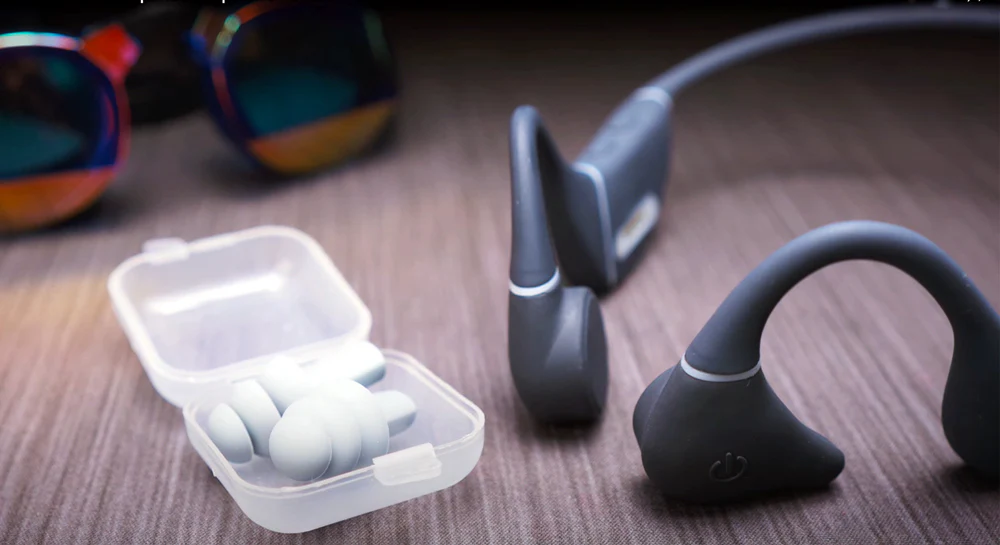
Earplugs reduce airborne sound. They do not act like a wall around the whole head. Bone vibrations can still reach the cochlea, so the headphones can remain audible.
The exact experience varies:
| Situation | Likely result |
|---|---|
| Foam earplugs with bone conduction headphones | Audio is usually still clear, though outside sound is reduced |
| Silicone or reusable earplugs | Audio usually remains audible; comfort depends on the fit |
| Noise-blocking earplugs | Music or speech may sound more noticeable than outside noise |
| Very loud surroundings | The headphone audio may still be hard to hear |
| Loose headphone placement | Audio may sound weak, thin, or uneven |
| Hearing loss affecting the cochlea | The headphones may not provide clear sound |
Earplugs can also create an occlusion effect. This is the louder, fuller sound people may notice when the ear canal is blocked. Your own voice, chewing, footsteps, and some low-frequency sounds can seem stronger.
That effect does not mean the earplugs are amplifying the headphones in every case. It changes the way sound and body vibrations are perceived. Some people hear a clearer signal, while others notice a strange or muffled tone.
Why the audio may sound different
Bone conduction headphones often have less deep bass than sealed headphones. Earplugs can change that balance.
When your ears are open, you hear a mix of:
- Bone-conducted sound from the headphones.
- Small amounts of sound leaking from the transducers.
- Environmental sound around you.
When you add earplugs, the third part becomes quieter. The headphone signal may seem more prominent. At the same time, your voice and body sounds may become louder.
The result can be helpful for spoken audio, podcasts, and calls. Music may sound less natural than it does through well-fitted in-ear or over-ear headphones. This is not because the earplugs stop bone conduction. It is because earplugs change the sound balance inside and around your ears.
The headphone position also matters. Most bone conduction models need firm contact with the skin near the cheekbones. Hair, glasses, hats, sweat, or a loose fit can reduce the vibration that reaches the skull.
When should you use bone conduction headphones with earplugs?
This setup can be useful when you want to hear audio while reducing outside noise. Common examples include:
- Listening to a podcast during light travel.
- Hearing spoken instructions in a noisy work area.
- Wearing hearing protection while using a device approved for that work setting.
- Listening to audio while keeping the ear canal free from earbuds.
- Using earplugs for comfort, wind reduction, or personal noise control.
For work, do not assume that consumer bone conduction headphones count as hearing protection. In the United States, workplace hearing protection must fit the risk and the employer’s safety program. Use hearing protection with a suitable noise reduction rating when required.
Earplugs may also help in a loud place, but they do not guarantee safe hearing. If you raise the headphone volume to overpower machinery, traffic, or concert sound, your ears may still receive too much exposure.
How to hear bone conduction headphones more clearly with earplugs
Follow these steps if the audio sounds weak or unclear.
1. Put the earplugs in correctly
Foam earplugs need to be rolled, inserted, and held in place while they expand. If they are not seated well, outside noise will remain loud and the audio may seem harder to hear.
Reusable earplugs should form a comfortable seal without causing pain. Do not force them deep into the ear canal.
2. Place the transducers on bare skin
Position the vibrating pads on the bony area just in front of each ear. They should not sit too far back, too high, or on thick hair.
A small position change can make a large difference. Move each side a few millimeters until speech sounds clear.
3. Check the fit
The headphones should stay in place when you turn your head. If the band is loose, the pads may lose contact. If it is too tight, the pressure may become uncomfortable.
A good fit should feel firm but not painful. Stop using the headphones if they cause skin pain, numbness, headaches, or lasting pressure.
4. Start with moderate volume
Begin at a low level and increase it only as needed. Do not use volume as the first fix for a poor fit or loud surroundings.
The CDC warns that loud sound can damage hearing. The NIOSH recommended exposure limit is 85 dBA over an eight-hour workday, with less safe exposure time as sound levels rise.
Consumer headphones do not always show the actual sound level at your ears. Treat a high volume setting as a warning sign, not a measurement.
5. Test speech before music
Play a spoken recording first. Speech makes it easier to tell whether the headphone position and earplug fit are working.
If speech is clear but music sounds thin, the issue may be the normal sound profile of bone conduction headphones. If speech is also weak, adjust the fit before raising the volume.

Can earplugs improve bone conduction sound?
They can improve perceived clarity in some situations, but not for everyone.
Earplugs reduce outside sound, which may help the headphone signal stand out. They can also make low-frequency vibrations feel more noticeable because of the occlusion effect.
However, earplugs may make the experience worse when:
- Your own voice becomes distracting.
- Chewing or walking sounds seem unusually loud.
- The headphones already have weak bass.
- The plugs create pressure or pain.
- You need to hear warning sounds around you.
- The surrounding noise is so loud that you turn up the volume.
The best result often comes from a moderate earplug seal and a stable headphone fit. A very tight plug does not always produce better audio.
Are bone conduction headphones safe with earplugs?
They can be used together, but the combination is not automatically safer. Earplugs protect against some outside sound. They do not prevent excessive sound exposure from the headphones or make loud listening harmless.
Use these safety rules:
- Keep the volume as low as practical.
- Take listening breaks.
- Stop if you notice ringing, muffled hearing, pain, or sound sensitivity.
- Do not use the setup to mask very loud machinery.
- Follow your employer’s hearing-protection rules at work.
- Keep enough awareness for traffic, alarms, coworkers, and other hazards.
- Do not wear the setup while driving if it reduces your ability to hear important sounds.
The Occupational Safety and Health Administration provides U.S. workplace noise guidance. Employers may need to measure noise and provide a hearing conservation program when exposure reaches regulated levels.
One hidden risk is overconfidence. Because your ear canals are covered and the audio may still sound clear, you may underestimate how loud the environment is. Bone conduction headphones do not create a safety barrier around the rest of your hearing system.
Can people with hearing loss hear them?
Some people with conductive hearing loss may hear bone conduction devices better than standard headphones. Conductive hearing loss affects the outer or middle ear, where bone conduction can partly bypass the problem.
That does not mean bone conduction headphones work for every type of hearing loss. Sensorineural hearing loss affects the cochlea or hearing nerve, and mixed hearing loss involves more than one part of the hearing system.
Consumer headphones are also not the same as medically prescribed bone-anchored hearing systems. If you have hearing loss, sudden hearing changes, one-sided hearing problems, dizziness, or persistent ringing, speak with an audiologist or medical professional.
Do not use ordinary headphones as a substitute for a hearing evaluation.
What if you cannot hear them through the earplugs?
Check the problem in this order:
-
Remove the earplugs briefly.
If you still cannot hear the headphones, the issue is likely the device, connection, battery, or fit. -
Check the Bluetooth connection.
Confirm that the headphones are connected to the correct phone, tablet, or computer. Make sure the media volume is on. -
Clean the contact area.
Sweat, sunscreen, hair, and dirt can reduce contact between the transducers and skin. Follow the manufacturer’s cleaning instructions. -
Reposition the transducers.
Move them toward the flat bone just in front of the ears. Avoid placing them on soft tissue. -
Try a spoken recording.
A voice track is easier to judge than music with heavy effects. -
Test another device.
This helps separate a headphone problem from a phone or app problem. -
Check for hearing symptoms.
If one side sounds much weaker, or sound becomes suddenly muffled, seek medical advice rather than increasing the volume.
If the headphones work without earplugs but not with them, the plugs may be causing too much internal noise or discomfort. Try a different size or style. Do not keep increasing the volume to compensate.
Bone conduction headphones versus regular headphones with earplugs
Both setups can work, but they serve different needs.
| Feature | Bone conduction headphones | Regular headphones |
|---|---|---|
| Ear canal access | Usually remains open | Earbuds or seals may block it |
| Works with earplugs | Usually yes | Often less comfortable, especially with earbuds |
| Outside sound | Often easier to hear without plugs | Often reduced by the headphones |
| Bass response | Often lighter | Usually stronger with a good seal |
| Fit sensitivity | Strong contact near cheekbones is needed | Ear-tip or ear-cup fit is key |
| Hearing-loss benefit | May help with some conductive problems | May not bypass the outer or middle ear |
| Safety in loud places | Still requires hearing protection | Still requires hearing protection |
Choose bone conduction headphones when keeping the ear canal open matters. Choose regular headphones when sound quality, bass, or strong isolation matters more. Neither type is automatically safer at high volume.
Common mistakes to avoid
Wearing earplugs that are too tight
A painful seal can create pressure, irritation, or a strong occlusion effect. Comfort matters because discomfort often leads to poor fit or unsafe volume changes.
Assuming “open ear” means “hearing safe”
Bone conduction headphones leave the ear openings open, but they still deliver sound to the inner ear. Open ears do not remove the risk from loud listening.
Using them near hazards without a sound check
You may still hear some surroundings, but not all sounds equally. Earplugs can reduce alarms, speech, and warning signals. Use the setup only where it is safe and allowed.
Judging sound quality only by volume
A better fit often improves clarity more than a louder setting does. Reposition the headphones before turning up the volume.
Treating a hearing problem as a headphone problem
A sudden change in hearing, severe ringing, ear pain, discharge, or dizziness needs medical attention. Do not try to solve those symptoms with a different headphone style.
Key takeaways
- Yes, you can usually hear bone conduction headphones with earplugs.
- Bone conduction sends vibrations through the skull to the cochlea, while earplugs mainly block sound in the ear canal.
- Earplugs may make the audio seem clearer, but they can also make your own voice and body sounds louder.
- Fit the headphones on the cheekbones and keep the volume as low as practical.
- Do not treat bone conduction headphones as hearing protection.
- In loud workplaces, use approved hearing protection and follow U.S. safety rules.
- If you have hearing loss or sudden hearing changes, consult an audiologist or medical professional.
FAQs
Do bone conduction headphones work with foam earplugs?
Yes. Foam earplugs block much of the sound entering the ear canal, but bone conduction headphones send vibrations through the skull. Correct insertion and headphone placement are important.
Can I wear bone conduction headphones with noise-canceling earplugs?
Usually, yes, if the earplugs are comfortable and the headphones remain firmly against the cheekbones. Active noise-canceling earbuds may create fit problems because they occupy the ear, but passive earplugs generally do not.
Will earplugs make bone conduction headphones louder?
They may make the headphones seem louder or fuller by reducing outside noise and changing the way low-frequency vibrations feel. This is a perception change, not proof that the headphones are producing a safer or stronger output.
Can I use this combination at a construction site?
Only if it follows the site’s rules and does not replace required hearing protection. Consumer bone conduction headphones are not a substitute for approved hearing protection. Ask the site supervisor or safety officer before using them.
Why do I hear my voice loudly with earplugs and bone conduction headphones?
The earplugs block part of the sound that normally leaves through the ear canal. Your voice then reaches your inner ear more through body vibration, which can make it sound louder or boomy.
Conclusion
Bone conduction headphones and earplugs are generally compatible. The earplugs block airborne sound in the ear canal, while the headphones deliver sound through vibration near the cheekbones.
Use a secure fit, moderate volume, and the right hearing protection for the environment. If the audio is unclear, adjust the fit before raising the volume. For hearing loss, pain, sudden muffling, or persistent ringing, get advice from an audiologist or other qualified health professional.

Everett Ashford is a tech reviewer at mytechgrid.com specializing in SSDs, cameras, TVs, earbuds, headphones, and other consumer electronics. He provides honest, data-driven reviews based on hands-on testing and real-world performance analysis. Everett simplifies complex tech details to help readers make smart, confident buying decisions.