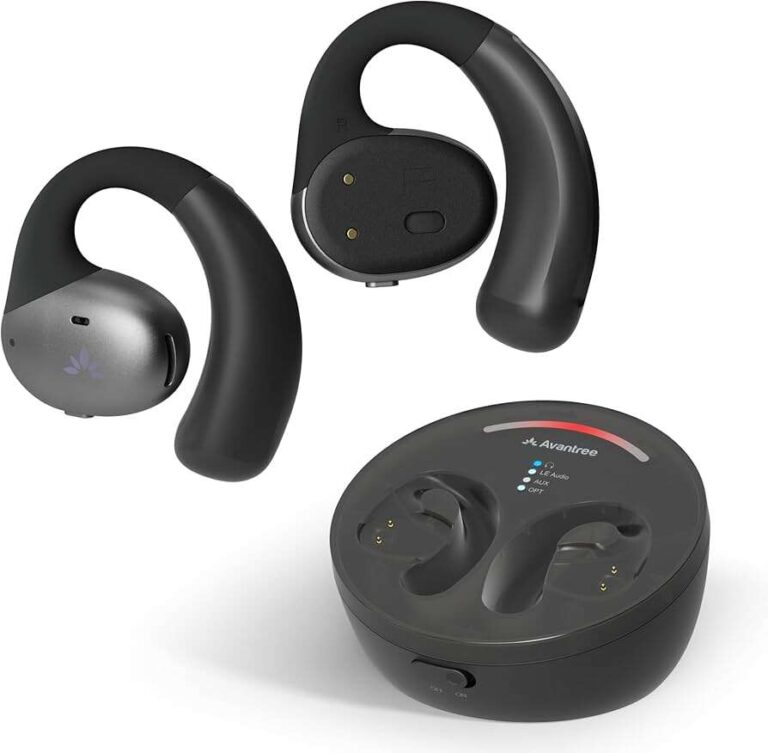
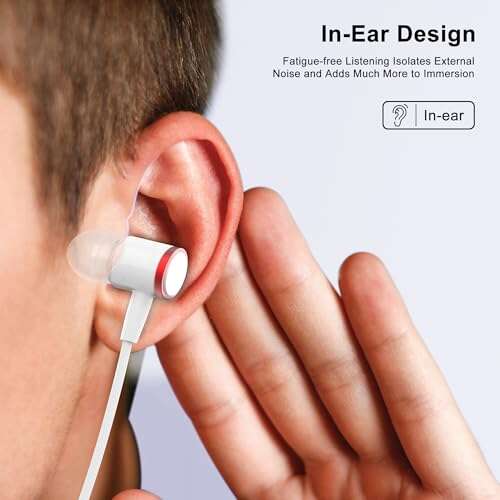
For most cyclists in the United States, bone conduction headphones can be safer than sealed earbuds because they leave the ear canals open. You may still hear traffic, bells, horns, and other riders. But they are not risk-free. Loud audio, poor road awareness, one-sided hearing loss, and state headphone laws can still make cycling unsafe or illegal.
The safest approach is to use them at a low volume, wear only one device when practical, keep both eyes on the road, and follow the laws where you ride.
How Bone Conduction Headphones Work
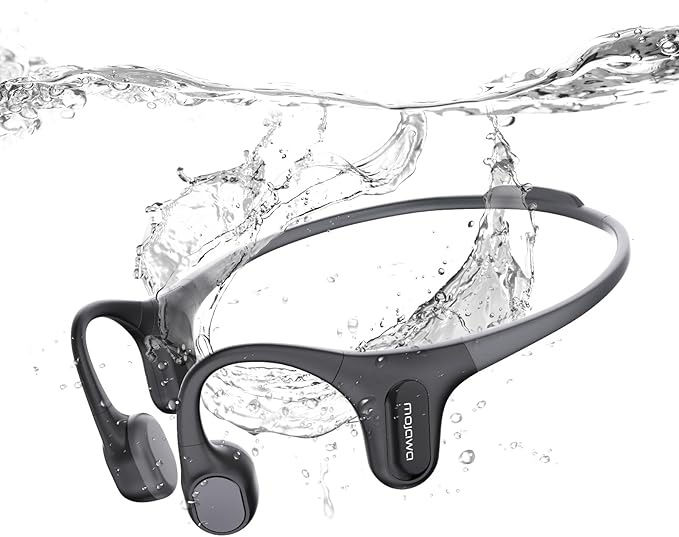
Bone conduction headphones send sound through vibrations in the bones near your cheek or temple. These vibrations reach the inner ear without sending sound through the ear canal in the usual way.
Traditional earbuds and over-ear headphones use air conduction. Their speakers send sound through the ear canal, then the eardrum and middle ear carry the sound inward.
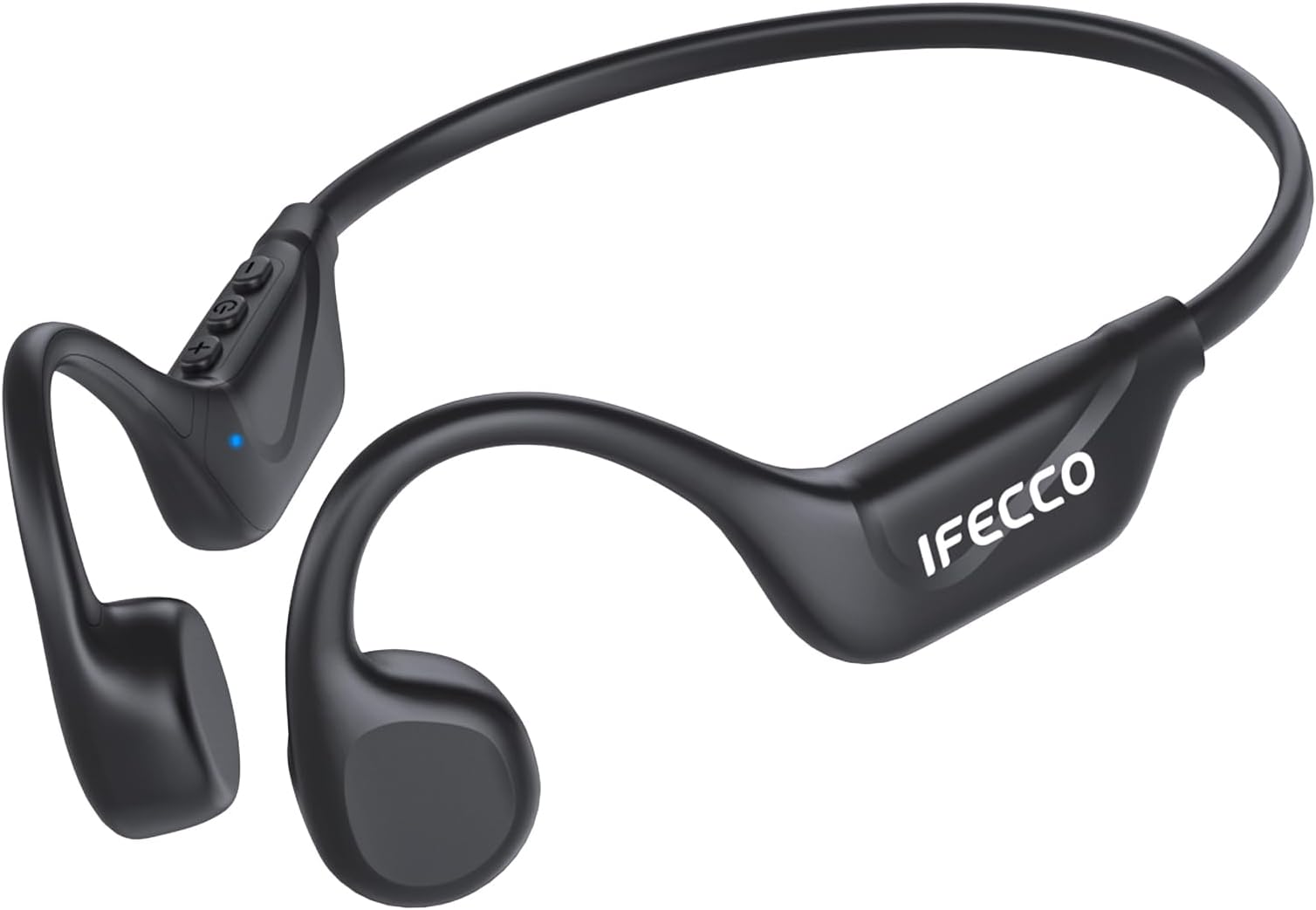
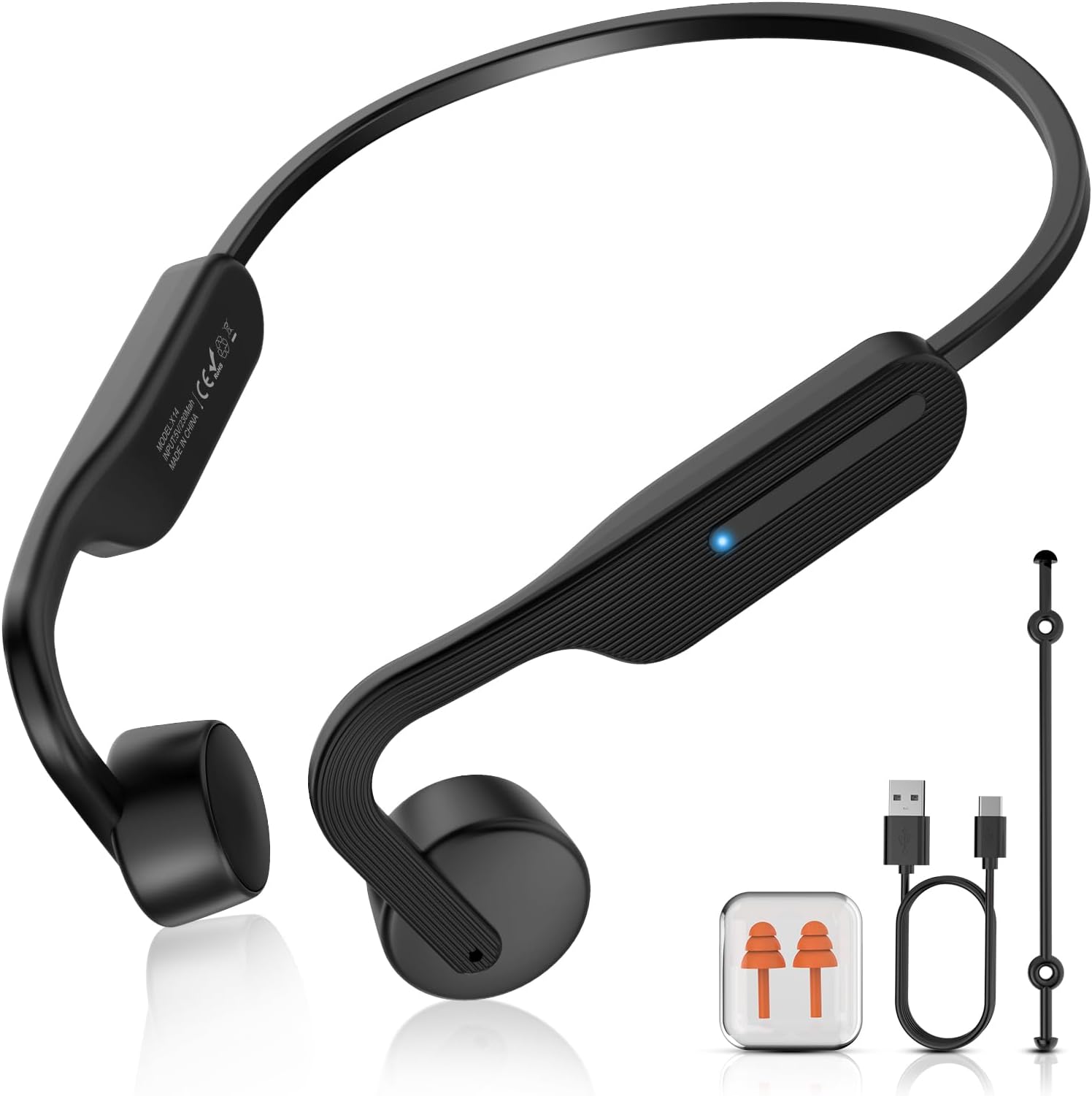
Consumer bone conduction headphones usually sit in front of the ears. This design leaves the ear openings uncovered. As a result, outside sounds can enter naturally.
That design can help a cyclist hear:
- A car approaching from behind
- A bicycle bell
- A police, fire, or ambulance siren
- A fellow rider calling out
- A warning from a pedestrian
- Changes in road noise and traffic flow
Bone conduction headphones do not create a private “safety channel,” though. Music still adds sound to the environment. A loud podcast can mask a warning just as loud music from earbuds can.
Bone conduction headphones are not the same as hearing implants
Consumer bone conduction headphones rest on the skin. Bone-anchored hearing systems use a medical implant or a surgically placed fixture. They serve different purposes and should not be treated as the same product.
If you use a bone-anchored hearing device, cochlear implant, hearing aid, or other hearing technology, follow the instructions from your audiologist and device maker.
Are Bone Conduction Headphones Safer Than Earbuds for Cycling?
Usually, yes—but only in one important way: they do not block the ear canals.
That difference may improve awareness of nearby sound. It does not prove that every cyclist will react faster or avoid every crash. Road safety depends on speed, traffic, lighting, visibility, riding position, weather, fatigue, and many other factors.
A cyclist who wears bone conduction headphones at full volume may still miss a warning. A cyclist who uses earbuds at a low volume on a quiet trail may notice more than someone using loud bone conduction headphones beside a busy road.
The practical comparison looks like this:
| Listening option | Ear canals open? | Outside sound access | Main cycling concern |
|---|---|---|---|
| Bone conduction headphones | Yes | Usually better than sealed earbuds | Audio can still mask warnings |
| Open-ear air-conduction headphones | Yes | Usually good | Sound may be louder to nearby people |
| Sealed earbuds | No | Reduced | Traffic and warnings may be harder to hear |
| Noise-canceling earbuds | No | Often greatly reduced | Poor fit for traffic-heavy riding |
| No headphones | Yes | Best possible access | No added audio distraction |
This is an analysis of how each design works. It is not a guarantee of crash prevention.

The Main Safety Risks While Cycling
The biggest risk is not the vibration itself. The main risks are excessive volume, distraction, reduced attention, and poor judgment about the riding environment.
1. High volume can damage hearing
Bone conduction headphones can still expose the inner ear to loud sound. The route into the ear is different, but the cochlea still receives the sound signal.
Repeated exposure to loud audio can contribute to noise-induced hearing loss and ringing in the ears. The National Institute on Deafness and Other Communication Disorders explains that loud sound can harm hearing over time.
Consumer headphone volume controls do not provide a universal safe level. The real exposure depends on:
- Volume setting
- Listening time
- Headphone model
- Fit and placement
- Music or speech content
- Wind and road noise
- Whether you turn the volume up to compete with traffic
If you must raise the volume because of wind or traffic, the setting may be too high for that ride.
2. Audio can divide your attention
Cycling requires visual focus, balance, route planning, and quick decisions. A gripping audiobook, phone call, or complex podcast can pull attention away from the road even when your ears remain open.
Music may also affect how fast you ride. A strong beat can encourage a higher pace, while an intense conversation can reduce attention to intersections and parked cars.
Avoid phone calls while riding in traffic. A hands-free call can still be distracting because the problem is mental attention, not just holding the phone.
3. Wind noise can hide important sounds
At moderate and high speeds, wind can become louder than expected. It may cover a bell, tire noise, or a vehicle approaching from behind.
Bone conduction headphones do not remove wind noise. In fact, wind can lead riders to increase the volume. That creates a harmful cycle:
- Wind makes outside sound harder to hear.
- The rider raises the audio volume.
- Loud audio masks more outside sound.
- The rider may miss a warning.
A lower volume is especially important on fast descents, open roads, bridges, and routes near heavy traffic.
4. One ear can hear better than the other
A cyclist with hearing loss in one ear may not detect where a sound comes from. Bone conduction headphones do not correct all forms of hearing loss.
If you often miss speech, need captions, hear ringing, or cannot locate traffic sounds, arrange a hearing check. Do not rely on headphones to compensate for a hearing problem.
How to Use Bone Conduction Headphones More Safely
Use the headphones as a low-level audio aid, not as a way to create a private listening space.
Before the ride
-
Check the route.
Use no audio, or use the lowest setting, on busy streets, complex intersections, shared paths, and unfamiliar roads. -
Test the fit.
The transducers should sit in the position described by the manufacturer. A loose fit may make speech unclear and tempt you to increase the volume. -
Pair and control the device before moving.
Start the music, podcast, or navigation prompt before you ride. Do not handle the phone in traffic. -
Set a low volume.
You should still hear a person speaking near you. If you cannot, lower the volume or stop the audio. -
Turn off unnecessary alerts.
Repeated notifications can distract you. Use only navigation or ride information you truly need. -
Check battery life.
A dead device should not leave you reaching for your phone while riding.
During the ride
- Keep your eyes on the road.
- Scan behind you with a mirror or by looking over your shoulder when safe.
- Use hand signals and communicate clearly.
- Slow down before intersections and driveways.
- Pause audio near crossings, construction zones, and crowded paths.
- Stop in a safe place before changing tracks or taking a call.
- Remove the headphones if you feel less aware of traffic.
A useful rule is simple: If the audio competes with the road, the audio is too loud or the route is too demanding for headphones.
After the ride
Pay attention to warning signs such as:
- Ringing or buzzing in the ears
- Muffled hearing
- Ear pain or pressure
- Headache from the device
- Skin irritation near the contact points
- Unusual dizziness
- Trouble understanding speech after listening
Stop using the headphones if symptoms continue. Seek medical advice for sudden hearing loss, severe dizziness, persistent pain, or new one-sided hearing changes.
Volume, Route, and Rider Risk: A Practical Decision Guide
The right choice depends more on the riding setting than on the headphone label.
| Riding situation | Safer audio choice |
|---|---|
| Quiet bike path with low speed | Low-volume bone conduction may be reasonable |
| Shared path with walkers and runners | Low volume or no audio; keep hearing clear |
| City streets with heavy traffic | No audio is the safer choice |
| Fast downhill ride | No audio |
| Group ride | Keep volume low enough to hear calls and signals |
| Night riding | Reduce distractions and focus on lights and traffic |
| Unfamiliar route | Use navigation prompts only, or ride without audio |
| Wet, stormy, or low-visibility conditions | No audio is preferable |
This table is a risk guide, not a legal rule. Your ability, route, local traffic, and weather may change the answer.
Can one earbud make cycling safer?
Using one conventional earbud may leave one ear open, but it does not automatically make the setup safe or legal. It can also reduce awareness on the side where the earbud sits.
Bone conduction headphones already leave both ear canals open. Even so, some riders choose a lower volume, pause audio in traffic, or use a single speaker setting where the device supports it.
The best option is the one that lets you hear and respond to the environment without effort.
U.S. Cycling Laws About Headphones
Headphone laws differ by state and sometimes by local rule. Some states restrict wearing headphones in both ears while operating a bicycle. Others have exceptions for hearing aids, emergency duties, or a single ear.
For example, California Vehicle Code section 27400 generally restricts wearing earphones that cover, rest on, or are inserted in both ears while operating a bicycle or other listed vehicle, subject to exceptions.
That wording matters. A law may regulate devices that cover or rest on the ears, not only earbuds that seal the ear canal. A bone conduction headset could therefore raise a different legal question from a sealed earbud.
Do not assume that “open ear” means “legal.” Before riding, check:
- Your state vehicle code
- Local bicycle rules
- Rules for parks and shared-use trails
- Whether the law covers one ear or both
- Whether the law applies to bone conduction devices
- Whether an exception applies to your situation
The Governors Highway Safety Association provides state-level traffic safety information, but the official state code is the better source for the exact legal text. Laws can change, so confirm the rule before relying on it.

Do Bone Conduction Headphones Work With a Bicycle Helmet?
They can work with some helmets, but fit varies by model and head shape.
The headset should not:
- Push hard against the helmet straps
- Shift when you turn your head
- Cover or interfere with reflective elements
- Prevent a secure helmet fit
- Create pain at the temples or behind the ears
Put on the helmet and headphones before the ride. Move your head left and right. Check that the helmet remains level and that the headphones do not loosen.
Never modify the helmet shell, straps, or retention system to make room for headphones. The Consumer Product Safety Commission recommends using a properly fitted bicycle helmet that meets the applicable safety standard. A headset should never reduce helmet protection.
Weather and water limits
Many cycling headphones resist sweat or light rain, but water resistance is not the same as waterproofing. Check the exact model’s instructions before riding in rain.
Do not charge a wet device. Dry the charging contacts and follow the manufacturer’s care instructions.
When You Should Not Use Headphones on a Bike
Skip headphones when you need every available sense or when the environment changes quickly.
Do not use them, or remove them, when:
- You ride in dense traffic
- You cross many driveways or intersections
- You cannot hear nearby people
- You are riding at night with poor visibility
- You feel tired, dizzy, or distracted
- You are learning to ride in traffic
- You are carrying out delivery or work duties that require full awareness
- You need to listen for a child, guide, teammate, or emergency instruction
- Your hearing is impaired and the device makes sound localization harder
No headphone design can replace a rear light, front light, reflectors, a helmet, predictable riding, and active scanning.
Common Mistakes to Avoid
Mistake 1: Treating open ears as complete awareness
Open ears help, but they do not guarantee that you will hear a quiet vehicle, fast e-bike, or warning behind you.
Mistake 2: Turning the volume up to beat the wind
If wind noise is forcing a higher volume, pause the audio. Do not use louder sound to solve a route problem.
Mistake 3: Wearing headphones on a difficult route
A quiet trail and a six-lane urban road demand different levels of attention. Apply a stricter rule as traffic and speed increase.
Mistake 4: Touching the phone while moving
Music control, navigation changes, and calls should wait until you stop in a safe place.
Mistake 5: Assuming the law only applies to earbuds
Some laws refer to earphones or devices worn on the ears. Read the wording for your state instead of relying on product marketing.
Mistake 6: Ignoring hearing symptoms
Ringing, muffled sound, pain, or sudden hearing changes are reasons to stop and reassess. Persistent or sudden symptoms need medical attention.
Key Takeaways
- Bone conduction headphones are often a better cycling option than sealed earbuds because they leave the ear canals open.
- They can still distract you and can still contribute to hearing damage at high volume.
- Keep audio low enough to hear nearby speech and important road sounds.
- Avoid calls and phone handling while riding.
- Use no headphones on busy roads, fast descents, or routes that demand full attention.
- Check your state and local rules. Open-ear design does not automatically make a headset legal.
- A secure helmet, lights, visibility, and active traffic scanning remain essential.
FAQs
Are bone conduction headphones safer than AirPods for cycling?
They may be safer for awareness because they leave the ear canals open, while standard AirPods can block some outside sound. The comparison changes if the AirPods are used in transparency mode at a low volume or if the bone conduction headphones are played loudly. Design alone does not determine safety.
Can bone conduction headphones cause hearing loss?
Yes, loud bone conduction audio can expose the inner ear to harmful sound. Keep the volume low, limit listening time, and stop if you notice ringing or muffled hearing.
Can I wear bone conduction headphones while riding in a bike lane?
Possibly, but the answer depends on your state and local law. A bike lane does not remove the need to hear traffic. Check the exact rule and use no audio when traffic is dense or unpredictable.
Can I hear cars with bone conduction headphones?
You may hear more outside sound than with sealed earbuds, but you may not hear every vehicle. Wind, traffic, music, road surfaces, and vehicle noise all affect awareness. Use visual checks and a mirror rather than relying only on hearing.
Should I use bone conduction headphones on a group ride?
Use them only at a low volume that allows you to hear ride leaders and nearby riders. If the group uses spoken warnings or hand signals, pause the audio or ride without headphones.
Conclusion
Bone conduction headphones can be a reasonable choice for some U.S. cyclists because they leave the ear canals open. They are not a substitute for attention, safe speed, visual scanning, or knowledge of local law.
For the lowest-risk setup, ride without audio in complex traffic. If you listen on a quiet route, keep the volume low, secure the headset under your helmet setup, and stop before touching your phone. When in doubt, choose awareness over entertainment.

Everett Ashford is a tech reviewer at mytechgrid.com specializing in SSDs, cameras, TVs, earbuds, headphones, and other consumer electronics. He provides honest, data-driven reviews based on hands-on testing and real-world performance analysis. Everett simplifies complex tech details to help readers make smart, confident buying decisions.