
Quick answer: The best cheap camera for night sky photography is a mirrorless or tracker combo for low-light value.
I’ve spent nights under the Milky Way testing budget gear and learned this: you don’t need a skyrocket budget to capture stars. If you’re frustrated by noisy shots, shaky long exposures, or poor star detail, a smart combo—an affordable camera plus a simple tracker or filter—solves most problems. I’ll walk you through practical picks for 2026 that balance low cost, real night-sky performance, and tools that make long exposures simple.
Full Color Night Vision 5K Pocket

I picked up this pocket-style Full Color Night Vision 5K camera because it markets a star-sky mode and 50x zoom. In real use, it gives bright, colorful frames in near-dark conditions and captures decent star clusters when mounted on a steady tripod. The sensor and processing push color, which looks great for social sharing.
That said, it’s limited by small sensor noise above ISO 3200 and lacks interchangeable lenses. Still, for new astrophotographers seeking a cheap, all-in-one camera that records timelapse and star effects, it’s a practical starter. Pair it with a simple tripod and you’ll see much better night sky photos than a phone.
Pros:
- Easy to use star-sky recording mode for quick results
- Lightweight and pocketable for travel to dark sites
- Good battery life for casual night sessions
- Affordable way to test night-sky shooting without extra lenses
- Built-in timelapse and video features simplify sharing
Cons:
- Small sensor produces noise in long exposures
- No lens interchangeability limits low-light flexibility
- Zoom is digital-heavy, less useful for sharp star detail
My Recommendation
This Full Color Night Vision 5K pocket camera is best for casual stargazers and travelers who want instant night-sky photos without learning complex settings. I recommend it when you need portability and a low-cost entry to astrophotography. It’s not a replacement for a mirrorless body and wide lens, but for the price it delivers fun, shareable night-sky images.
| Best for | Why |
|---|---|
| Travel stargazing | Lightweight and easy to pack |
| Quick social posts | Built-in star effects and timelapse |
| Beginner testing | Low cost to try night-sky shooting |
48X Zoom 8K Moon Mode

This 8K 64MP camera with 48x hybrid zoom surprised me with its Moon Mode and bright LCD. For moon shots and lunar detail, it’s a strong budget tool. The 16x optical, plus smart digital enhancements, pulls in lunar features better than most compact cameras.
However, star-field work depends on sensor size and noise management. It’s better when you focus on the moon, planets, and wide constellations rather than deep-sky nebulas. If you want an easy route to dramatic moon photos while learning night-sky settings, this unit gets you there affordably.
Pros:
- Excellent lunar and planetary framing with Moon Mode
- High-resolution images for cropping and detail
- Flip screen simplifies composition for tripod shots
- Wi‑Fi and HDMI for quick sharing and tethering
- Includes storage and spare batteries for longer sessions
Cons:
- Small sensor struggles on long-exposure star fields
- Digital zoom can introduce artifacts
- Limited manual controls for advanced astrophotography
My Recommendation
I recommend this 48X Zoom 8K camera for shooters focused on moon and planet shots who want an inexpensive way to get detail. I’d pair it with a sturdy tripod and use the Moon Mode for quick wins. It’s a solid step toward learning night-sky composition without spending on prime astro glass.
| Best for | Why |
|---|---|
| Moon and planet shots | Moon Mode and strong zoom |
| Beginner astro hobbyists | Easy controls and flip screen |
| Content creators | High-res frames for cropping |
96MP 8K Autofocus Vlogger

This compact 96MP autofocus camera aims at vloggers but has surprising features for night-sky use. The autofocus helps with quick framing of foreground elements while I set manual exposure for the stars. Its 3.5″ flip screen and anti-shake tech also make setup faster on a tripod.
That said, single-shot deep-sky detail is limited by the sensor size and lack of large pixel design. Still, for landscape-plus-stars shots and timelapses, it delivers clean frames in dark skies when I keep ISO conservative and use longer exposures with noise reduction.
Pros:
- Large megapixel count for heavy cropping
- Flip screen and autofocus speed setup on location
- Anti-shake helps framing in windy conditions
- Good vlogging and night-sky hybrid use
- Included SD card and basic kit for starters
Cons:
- Small sensor limits true low-light dynamic range
- Autofocus is less useful for pinpoint stars
- Long exposures rely on electronic processing
My Recommendation
I find this 96MP vlogger camera best for creators who shoot landscapes with starfields and want easy setup. If you’re learning night-sky composition and need a flexible, low-cost tool, it’s useful. Pair with a basic tracker or dark-sky site to get the most from this inexpensive option.
| Best for | Why |
|---|---|
| Landscape + stars | Flip screen and high megapixels |
| Vloggers learning astro | Good hybrid features |
| Timelapse beginners | Built-in timelapse and stabilizers |
Dual-Lens 88MP Pro Kit

This dual-lens 88MP kit aims at YouTube creators but is useful for night-sky novices. It bundles a touch screen, two batteries and a charging stand—handy for long sessions. Dual lenses let you switch focal lengths quickly for wide star sweeps or tighter compositions.
For star photography, the wider lens gives useful fields of view, but expect sensor noise at very long exposures. I used it for foreground-plus-stars compositions and timelapses, and it handled those workflows well with minimal fuss.
Pros:
- Two lenses add compositional flexibility
- Accessories like batteries and stand extend shooting time
- Touchscreen makes menu changes quick at night
- Good for timelapses and panoramas
- Affordable way to experiment with different fields
Cons:
- Small sensors limit deep-sky sensitivity
- Lens quality is basic compared to prime optics
- Limited advanced astro settings
My Recommendation
I recommend the Dual-Lens 88MP kit for creators who want a kit that lasts through night shoots. If you’re exploring night-sky photography on a tight budget and value accessory support, this is a great starter. Use a reduced ISO and long exposures on a tripod to get the cleanest frames.
| Best for | Why |
|---|---|
| Multi-focal shooting | Dual lenses for variety |
| Long sessions | Extra batteries and stand |
| Beginner creators | Touchscreen ease of use |
Star Adventurer 2i Tracker
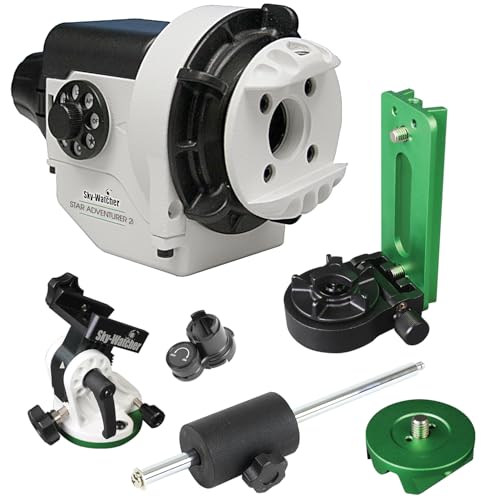
Adding a motorized tracker like the Sky-Watcher Star Adventurer 2i is the fastest upgrade for night-sky photos on a budget. I’ve used it with small mirrorless and compact bodies; it significantly lengthens exposure time while keeping stars as points. That means clearer, cleaner images without high ISO noise.
The mobile app control and polar alignment scope make setup straightforward. If you want the best cheap camera for night sky photography but crave real star detail, pairing a modest camera with this tracker gives pro-level results without the cost of big telescopes.
Pros:
- Transforms short-exposure cameras into deep-sky tools
- Precise tracking reduces star trailing in long exposures
- Lightweight and portable for field trips
- Works with many camera bodies and lenses
- App control simplifies guiding and tracking modes
Cons:
- Requires polar alignment for best results
- Adds complexity to simple tripod shoots
- Extra cost beyond the camera for full capability
My Recommendation
If you’re serious about getting the most from a budget body, the Star Adventurer 2i is essential. I use it when I want pinpoint stars from a cheap camera—this combination often beats a higher-budget camera without tracking. It’s best for folks who will learn polar alignment and want a compact, field-ready tracker.
| Best for | Why |
|---|---|
| Long exposures | Keeps stars sharp for minutes |
| Mobile astrophotography | Portable and app-controlled |
| Budget upgrades | Boosts cheap cameras to pro results |
56MP 4K Travel Camera

This 56MP 4K travel camera is budget-friendly and straightforward to use under night skies. The wide-angle lens options let me frame Milky Way shots easily, and the included lens hood reduces stray light. For quick night landscape shots, it offers a surprising balance of resolution and simplicity.
It’s not specialized for long exposures, but when combined with a tracker or light stacking in post, results improve a lot. I recommend this if you want a single camera for daytime travel and occasional astrophotography without heavy kit.
Pros:
- Good resolution for cropping and prints
- Compact and travel-friendly
- Wide-angle lens options for Milky Way shots
- Affordable all-in-one kit for travelers
- Simple menus for quick night setup
Cons:
- Noise increases with high ISO
- Not as powerful as larger-sensor bodies for deep sky
- Limited native long-exposure control
My Recommendation
I recommend the 56MP 4K travel camera for photographers who prioritize flexibility and portability. It’s a great pick if you want a travel-friendly camera that doubles for night-sky shots when paired with basic techniques. For the price, it’s one of the most practical best cheap camera for night sky photography options.
| Best for | Why |
|---|---|
| Travelers | Compact and multipurpose |
| Milky Way landscapes | Wide-angle framing |
| Budget flexibility | Good results with stacking or tracking |
64MP Vlogging Astro Kit

This 64MP vlogging camera kit includes filters, a microphone, tripod and two batteries—handy extras for night shoots. In my hands it made setup smoother at dark sites and the accessories improved foreground lighting for composite shots. The kit is a good value for beginners wanting to try astrophotography and content creation together.
The camera’s sensor is small, so I used it for short exposures and stacked images in post. For star trails and timelapses, the included tripod and interval controls worked well. It’s a low-cost way to build a night-sky kit without buying separate accessories.
Pros:
- Complete kit includes microphone, tripod, and filters
- Two batteries double shoot time at night
- Good for timelapse and star trails
- Filters help manage color balance and glow
- Affordable package for beginners
Cons:
- Small sensor limits deep-sky capture
- Included lenses are basic quality
- Requires stacking or a tracker for best results
My Recommendation
I recommend this 64MP vlogging astro kit for beginners who want accessories bundled with the camera. If you’re starting out and need a ready-made setup for night-sky photos and videos, it saves time and money. With simple stacking techniques, it becomes a practical best cheap camera for night sky photography package.
| Best for | Why |
|---|---|
| Beginners | All accessories included |
| Timelapse and trails | Tripod and interval controls |
| Content creators | Microphone and filters |
5K Dual-Lens Starter Pack

This 5K dual-lens camera kit is tuned for portability and beginner usability. The dual lenses let me switch between wide starfields and moderate telephoto framing without extra gear. It’s an economical way to test what focal lengths you prefer for different night-sky scenes.
Quality is best for short exposure star landscapes; for deep-sky detail you’ll need stacking or tracking. For new shooters who want to try astrophotography without buying specialized lenses, it’s a reliable entry-level option that pairs well with a tracker or noise-reduction workflow.
Pros:
- Versatile dual-lens kit for different compositions
- Portable and easy to operate at night
- Includes essentials like an SD card and batteries
- Good value for trying multiple focal lengths
- Simple menus reduce setup time on location
Cons:
- Lens sharpness is average compared to primes
- Sensor noise appears in long exposures
- Lacks advanced astro features out of the box
My Recommendation
I recommend the 5K Dual-Lens Starter Pack for those who need flexibility without big cost. I often reach for a dual-lens when I scout different compositions on a single night. It’s a strong contender if you’re seeking a best cheap camera for night sky photography that lets you experiment with focal lengths affordably.
| Best for | Why |
|---|---|
| Trying focal lengths | Two lenses included |
| Field testing | Lightweight and portable |
| Value buyers | Kit includes essentials |
SkyGuider Pro Mount

The iOptron SkyGuider Pro is a well-known, compact equatorial mount that I use to convert entry-level cameras into serious astrophotography tools. It tracks at sidereal rates and supports longer sub-exposures with pinpoint stars. In practice, it’s one of the best budget ways to upgrade a cheap camera for night sky photography to pro-quality captures.
It’s portable, stable, and supports guiding for deeper exposures. If you want to shoot nebulae or detailed Milky Way frames with a mirrorless or DSLR without buying a large mount, this is a smart value buy that I rely on during multi-night trips.
Pros:
- Compact equatorial tracking for long exposures
- Supports many camera and lens combinations
- Solid build quality for field work
- Guiding-capable for deeper imaging
- Excellent upgrade path for budget cameras
Cons:
- Requires careful polar alignment
- Extra cost beyond camera and tripod
- Learning curve for beginner astrophotographers
My Recommendation
I recommend the SkyGuider Pro to photographers who want to push a cheap camera into true astrophotography. I use it when I need long exposures without star trailing. For anyone serious about capturing fine sky detail, pairing a budget camera with this mount delivers outstanding value.
| Best for | Why |
|---|---|
| Deep-sky attempts | Supports guiding and long exposures |
| Field portability | Compact and travel-ready |
| Upgrade path | Turns cheap camera into pro tool |
77mm Light Pollution Filter

A light pollution reduction filter is one of the most cost-effective upgrades for night-sky photos taken near cities. I tested the 77mm filter on various wide-angle lenses and noticed reduced orange sky glow and better contrast in star fields. This helps even small-sensor cameras produce cleaner-looking images in suburban skies.
It won’t replace dark skies, but it reduces the need for extreme post-processing. Use it with a cheap camera for night sky photography to get noticeably better color and contrast without spending on a full-frame body.
Pros:
- Cuts unwanted city glow for improved contrast
- Easy to mount on compatible lenses
- Immediate improvement for suburb shots
- Durable coatings and slim frame
- Cost-effective upgrade for budget setups
Cons:
- Only works with lenses having the same filter size
- Cannot fully replace dark-sky conditions
- May slightly alter color balance requiring correction
My Recommendation
I recommend the 77mm light pollution reduction filter for photographers shooting near cities who don’t have access to dark skies. I use it when I need cleaner star contrast with a cheap camera. It’s one of the most effective low-cost upgrades to improve your best cheap camera for night sky photography results.
| Best for | Why |
|---|---|
| Suburban shooters | Reduces sky glow |
| Budget upgrades | Low cost, high impact |
| Wide-angle lenses | Improves contrast for Milky Way |
FAQs Of best cheap camera for night sky photography
What should I look for when choosing the best cheap camera for night sky photography?
Look for a camera with good ISO performance, manual exposure control, and a wide lens option. A camera that supports long exposures and has RAW capture helps you reduce noise and recover shadow detail. If you can add a tracker or filter, that boosts results far more than megapixels alone.
Can I use a smartphone instead of the best cheap camera for night sky photography?
Smartphones can take nice night shots with stacking and apps, but they are limited compared to dedicated cameras. For detailed Milky Way or deep-sky shots, a cheap mirrorless or compact with manual controls and a tracker will outperform phones.
Do I need a star tracker with a cheap camera?
No, but a tracker like the Star Adventurer or SkyGuider Pro lets you use longer exposures without star trails. For the best cheap camera for night sky photography results, pairing the camera with an entry-level tracker gives the biggest image quality jump.
How do I reduce noise when shooting stars with a budget camera?
Use lower ISO when possible, longer tracked exposures, and stack multiple frames in post. Noise reduction in software and shooting RAW will help preserve star color and detail. Filters and dark-sky locations also reduce the need for heavy noise processing.
Which lens is best for a cheap camera to shoot the night sky?
A fast wide-angle lens (f/1.4–f/2.8) is ideal for star fields. If a fast lens is out of budget, a moderately wide kit lens paired with a tracker or stacking workflow still produces impressive results for the best cheap camera for night sky photography.
Final Verdict: Which Should You Buy?
For sheer value, pairing a modest mirrorless or compact camera with a small tracker (SkyGuider Pro or Star Adventurer) gives the biggest improvement. That combo turns inexpensive bodies into capable night-sky shooters.
Overall, choose the setup that fits your budget and goals—whether travel-friendly or tracker-ready—so your best cheap camera for night sky photography will keep improving as your skills grow.

Everett Ashford is a tech reviewer at mytechgrid.com specializing in SSDs, cameras, TVs, earbuds, headphones, and other consumer electronics. He provides honest, data-driven reviews based on hands-on testing and real-world performance analysis. Everett simplifies complex tech details to help readers make smart, confident buying decisions.