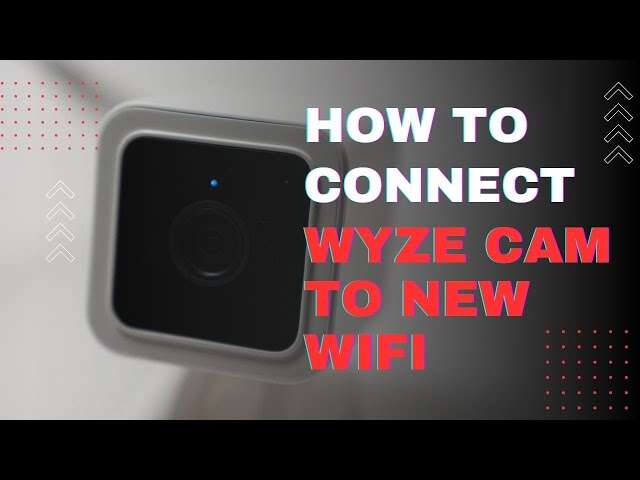
Connect your Wyze camera to Wi-Fi fast: use the Wyze app, a 2.4GHz network, and guided setup.
I’ve set up dozens of home cameras and fixed tricky network issues for friends and clients. This guide explains how to connect Wyze camera to WiFi step by step, with clear prep steps, real troubleshooting tips, and security advice. Read on and you’ll finish setup without frustration.

What you need before you start
- A compatible Wyze camera and its power adapter.
- A smartphone with the Wyze app installed and an account ready.
- A home Wi-Fi network on 2.4GHz. Wyze cameras usually do not support 5GHz.
- Your Wi‑Fi name (SSID) and password handy.
- Basic tools: a ladder for high mounting and a stable USB power source if needed.

Step-by-step: How to connect Wyze camera to WiFi
- Plug in your Wyze camera and wait for the status light to blink yellow.
- Open the Wyze app and tap the + icon to add a device. Choose your camera model.
- Follow the app prompts to enter your Wi‑Fi SSID and password. Make sure the network is 2.4GHz.
- Scan the QR code on your phone with the camera when prompted. Hold your phone 6–12 inches away.
- Wait for the app to confirm a successful connection and name the camera.
- Place the camera where you want it and plug it into power. Confirm live video in the app.
Practical tips:
- If the camera fails to hear the phone, lower the phone volume so the QR tone is distinct.
- Put your phone on the same 2.4GHz network before starting.
- Keep the camera near the router during setup to avoid signal dropouts.
I often see people try to use a 5GHz SSID. Remember, how to connect Wyze camera to WiFi almost always needs the 2.4GHz band. If you have a dual-band router, enable a separate 2.4GHz SSID while you set up the camera. This simple step prevented many setup errors in my experience.

Troubleshooting common setup problems
- Camera not blinking yellow: Unplug and replug the camera for 30 seconds. If still no light, try another power adapter or port.
- Wrong Wi‑Fi band error: Confirm your phone is on 2.4GHz and disable any VPN apps during setup.
- QR scan fails: Clean your phone screen and the camera lens. Move the phone slowly and keep the camera steady.
- Camera connects but shows “offline”: Check the router’s device limit and restart your router.
- Weak signal after setup: Move the camera closer to the router or add a Wi‑Fi extender.
PAA-style quick questions:
What if my router hides the SSID?
- Temporarily unhide the SSID during setup or add a guest 2.4GHz network with a visible name.
Can I change Wi‑Fi after setup?
- Yes. Use the Wyze app: go to Device Settings > Device Info > Change Wi‑Fi and follow the prompts.
I’ve fixed setups by powering the camera from a phone charger with a higher amperage. That often helps unstable booting during initial pairing.

Advanced tips and network settings
- Assign a static IP for stability. Reserve an IP on your router for the camera’s MAC address. This reduces dropped connections.
- Use a separate guest network for smart devices. This limits access if a device is compromised.
- Turn on Quality of Service (QoS) for video traffic if your router supports it. Prioritize the camera’s IP or port.
- Port forwarding is rarely needed for live view, but can help with advanced integrations. Only enable it if you understand the risks.
- Firmware updates: keep the camera firmware current via the Wyze app. Updates fix bugs and add features.
From my experience, labeling each camera’s location and MAC address saves time when juggling several devices. Doing the static IP step once prevents hours of random disconnect hunting later.

Security and privacy best practices
- Use a strong, unique Wi‑Fi password and WPA2 or WPA3 encryption.
- Enable two-factor authentication on your Wyze account.
- Change default device names that reveal location, like “LivingRoomCam.” Use neutral labels.
- Review device access and shared users in the Wyze app regularly. Remove unused accounts.
- Store recordings securely and clear them when no longer needed.
Be transparent about limits: Wyze cameras offer strong features for the price, but they still rely on network security. If your network is weak, the camera can be a point of entry. Protect your router and IoT devices together.

Frequently Asked Questions of how to connect wyze camera to wifi
How do I switch my Wyze camera from one Wi‑Fi network to another?
Open the Wyze app, go to Device Settings, choose Device Info, and tap Change Wi‑Fi. Follow the guided steps to reconnect the camera to the new 2.4GHz network.
Why does my Wyze camera say it can’t find the Wi‑Fi network?
Most often your phone is on 5GHz or the SSID is hidden. Switch your phone to the 2.4GHz network or unhide the SSID during setup.
Can I use a mobile hotspot to set up my Wyze camera?
Yes, but only if the hotspot broadcasts on 2.4GHz and you turn off mobile data VPNs. Hotspot stability can vary, so router setup is preferred.
What if the camera stays offline after setup?
Power-cycle the camera and router, ensure no MAC filtering blocks the device, and check for firmware updates in the Wyze app.
Is 5GHz supported for Wyze cameras?
Most Wyze cameras require 2.4GHz. Check your camera model’s specs, but plan to use a 2.4GHz SSID for setup and operation.
Conclusion
You now have a clear path on how to connect Wyze camera to WiFi, from prep to advanced fixes. Follow the steps, use a 2.4GHz network, and apply simple security habits to keep your feed stable and private. Try the setup now, and if you hit a snag, revisit the troubleshooting tips. Share your setup wins or questions in the comments, and subscribe for more practical smart-home guides.

Everett Ashford is a tech reviewer at mytechgrid.com specializing in SSDs, cameras, TVs, earbuds, headphones, and other consumer electronics. He provides honest, data-driven reviews based on hands-on testing and real-world performance analysis. Everett simplifies complex tech details to help readers make smart, confident buying decisions.